


In the world of e-commerce, the most coveted metric isn’t a single purchase, but the Customer Lifetime Value (CLV).
A one-time buyer is good, but a repeat customer is the foundation of a scalable business. You can spend millions on marketing to drive new traffic, but if your website’s user experience (UX) is poor, you’re simply pushing customers into a leaky bucket.
A strategic UX design for e-commerce goes far beyond a beautiful website. It’s an investment in a streamlined and intuitive buying journey that transforms one-time shoppers into brand advocates. For product leaders and technical executives in the e-commerce space, understanding this journey is the key to unlocking sustainable growth.
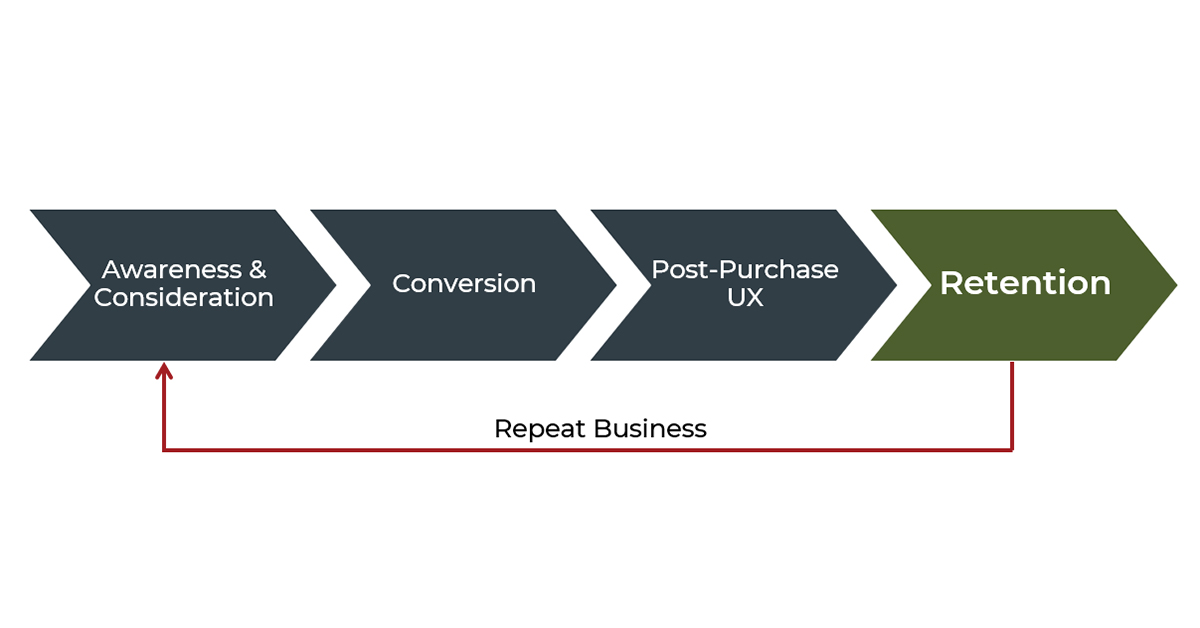
The modern e-commerce journey is not a straight line; it is a multi-stage process where design must proactively address user needs, anxieties, and friction points.
Figure 1. The E-commerce CLV Funnel: How UX Drives Retention
Caption: This diagram shows how strategic UX guides the customer through the conversion funnel, with the ultimate goal of maximizing Customer Lifetime Value (CLV) through an optimized retention cycle.
The first impression is everything. A high cart abandonment rate—which averages nearly 70% globally—is often triggered by issues that occur before the shopper even adds an item to their cart.
This is where the magic happens, and every element of your user interface design must be optimized for speed and trust.
For many businesses, particularly those operating highly-regulated services, the digital checkout or enrollment path is a major bottleneck. Through a rigorous UX audit, expert firms have successfully streamlined major digital transformation initiatives, such as the effort to redesign high-friction enrollment funnels in online retail banking. This work proved that complex, highly-regulated conversion paths can be streamlined without sacrificing trust or security. This disciplined approach is critical for any e-commerce platform facing high abandonment rates.
Beyond security badges, technical integrity is a silent UX feature. For a sophisticated audience, this includes ensuring the code base supports the design for maximum performance and accessibility standards. Accessibility (A11y) is no longer a niche concern; it is a legal and ethical mandate. Designing the interface to meet WCAG guidelines ensures a broader market reach and protects the business from risk. This commitment to technical excellence is fundamental to converting a shopper into a committed customer.
This stage is the most critical for driving repeat business and boosting your CLV. The journey doesn’t end at the sale; it ends when the customer is delighted enough to return.
The most successful e-commerce companies treat their platform as a living product. Strategic user experience design services incorporate continuous data analysis and testing to refine the platform. A major pillar of this work is Conversion Rate Optimization where design decisions are rigorously tested to ensure they are driving tangible business results.
Finally, the continuous iteration cycle must include a focus on design system maturity and technical debt. As an e-commerce platform evolves, the UI code often fragments, creating inconsistencies that slow down new feature development. An effective UX-driven iteration process includes regular audits of the design system itself, ensuring that every front-end component is consistent, documented, and reusable. This technical discipline is what prevents the platform from collapsing under its own weight and guarantees long-term development velocity.
By investing in a strategic UX design, you are not just improving your website; you are building a scalable, resilient business that thrives on customer loyalty.





