

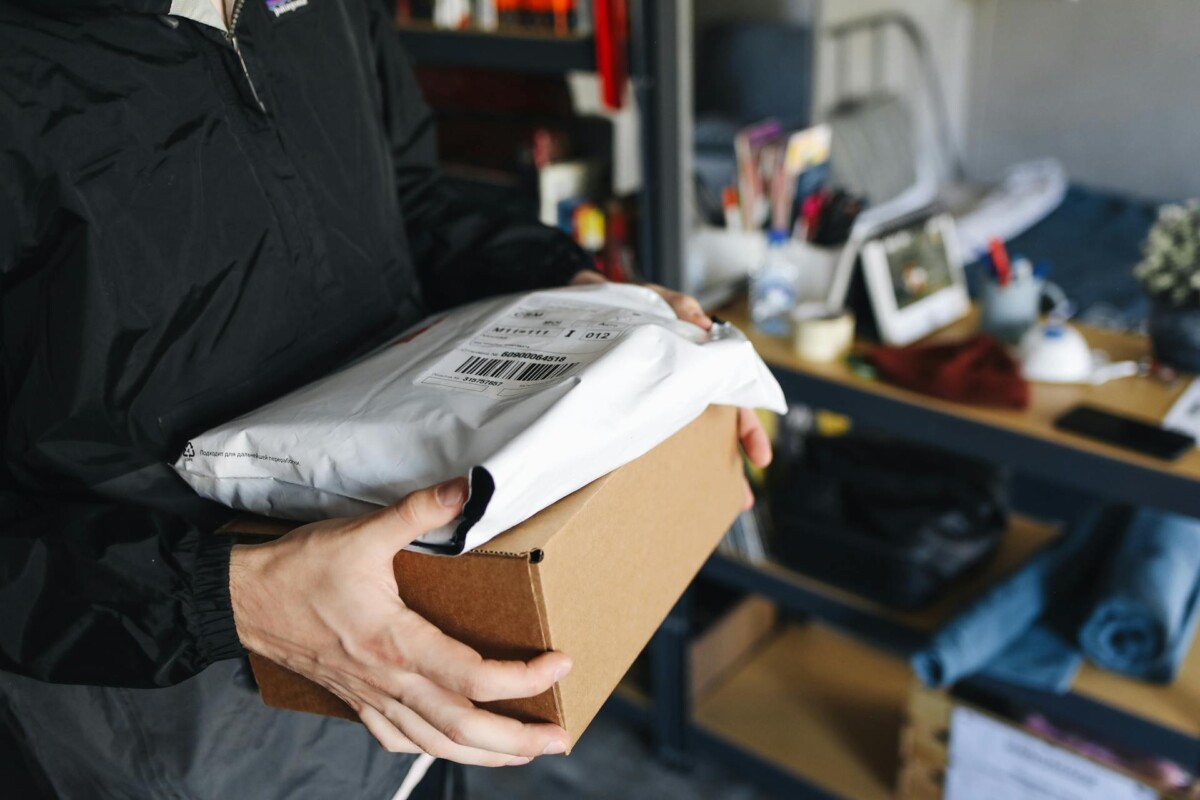
An estimated 85 million parcels arrived damaged in the United States in 2024, a 30 percent year-over-year jump, and damage now drives roughly 52 percent of all ecommerce returns. For fragile categories the math is harsher: damage rates on unprotected fragile goods reach 15 to 30 percent. Packaging is no longer a branding decision. It is a margin decision.
Customers expect online orders to arrive in perfect condition, especially when purchasing fragile or premium products. A damaged shipment creates frustration and often leads to refund requests, negative reviews, and lost trust in the brand. Businesses that fail to protect items during transit risk higher costs and lower customer retention over time.
This issue has become more important as online sales continue to grow across industries that depend on delicate packaging and temperature-sensitive inventory. Products such as skincare, cosmetics, candles, supplements, and glass-packaged goods require careful storage and secure transportation to prevent leaks, cracks, and spoilage. Many growing e-commerce brands now invest in specialized fulfillment solutions focused on inventory protection, accurate packing methods, and climate-controlled storage.
Fragile products face several risks before they reach the customer’s doorstep. During transit, packages move through sorting centers, delivery trucks, and warehouse checkpoints. At every stage, products may experience vibration, sudden drops, stacking pressure, or changes in temperature and humidity. Because of this constant movement, even a small handling mistake can damage the packaging or the product itself. Cracked containers, leaking liquids, and broken seals not only increase return rates but also leave customers disappointed with their shopping experience.
These risks become even greater for beauty and skincare brands because many cosmetic products require extra protection during storage and shipping. Glass bottles can crack under pressure, while creams, serums, and pressed powders may lose their quality when exposed to excessive heat or freezing temperatures. As online beauty sales continue to grow, businesses are realizing that standard fulfillment methods may not provide enough protection for delicate inventory. If you are looking for a company that offers cosmetics fulfillment services, there are plenty of options available. Choosing the right professionals who specialize in handling delicate and temperature-sensitive inventory can make a significant difference in reducing shipping damage.
Damaged shipments create expenses that extend far beyond replacing a broken item. Businesses must often cover return shipping costs, replacement inventory, repackaging labor, and expedited reshipping fees. These repeated expenses quickly reduce profit margins, especially for brands with high shipping volumes or fragile inventory categories. Small businesses may feel these losses even more because they operate with tighter margins and fewer logistics resources.
Customer trust also suffers when delivery problems happen repeatedly. Many online shoppers expect fast resolutions, but they may still hesitate to purchase again after a negative experience. Poor reviews and social media complaints can influence future buyers and damage a company’s reputation over time. In highly competitive e-commerce markets, businesses cannot afford to ignore how delivery quality affects customer loyalty.
Many e-commerce businesses use oversized packaging because it simplifies warehouse operations and reduces the number of box sizes they stock. However, extra space inside a package allows products to shift during transportation. Movement increases the likelihood of cracked containers, dented packaging, or broken seals. Fragile products require packaging that matches their size, shape, and weight to minimize unnecessary motion in transit.
Right-sized packaging also improves shipping efficiency and sustainability efforts. Smaller, properly fitted boxes often require less filler material and lower dimensional shipping costs. Businesses can reduce waste while still maintaining strong product protection standards. In addition, compact packaging helps carriers stack and transport shipments more securely.
Protective filler materials play a major role in preventing damage during shipping. Air pillows work well for lightweight products because they fill space and reduce movement inside the box. Kraft paper offers better stability for medium-weight items and provides an eco-friendly alternative for brands focused on sustainability. Foam inserts deliver stronger shock absorption and are often used for fragile glass containers or electronics that require additional protection.
Choosing the wrong cushioning material can increase the risk of product damage during transit. Lightweight fillers may collapse under pressure, while excessive packaging can create unnecessary shipping costs. E-commerce businesses should test packaging combinations regularly to identify which materials provide the best balance between product safety, operational efficiency, and customer expectations.
Certain products require protection from more than physical impact during transportation. Cosmetics, skincare items, candles, and supplements can lose quality when exposed to extreme temperatures or humidity. Heat may cause melting, leakage, or separation of ingredients, while freezing conditions can damage packaging and affect product performance. Seasonal weather changes make temperature control even more important for online retailers shipping across multiple regions.
Businesses can reduce these risks by using insulated packaging, cold packs, and temperature-aware shipping schedules. Climate-controlled storage facilities also help preserve product quality before orders leave the warehouse. Companies that combine strong inventory management practices with environmental monitoring and careful product handling often experience fewer customer complaints and lower product loss rates throughout the fulfillment process.
The transition between warehouse operations and shipping carriers is another stage where damage can occur. Packages may be stacked incorrectly, rushed through loading areas, or mishandled during transportation preparation. Weak pallet configurations and poor labeling practices increase the likelihood of crushed boxes and damaged products before deliveries even begin moving through carrier networks.
E-commerce businesses can improve this process by training warehouse staff on proper handling procedures and implementing stricter quality control checks before shipment pickup. Clear labeling for fragile inventory also helps carriers identify packages that require extra care.
Tracking shipping performance helps businesses identify the root causes behind damaged orders. Return data, carrier reports, and customer feedback can reveal patterns linked to specific products, packaging materials, or shipping routes. Without accurate tracking systems, companies may continue using ineffective packaging methods that increase operational costs and customer dissatisfaction.
Analytics also help businesses measure the effectiveness of packaging updates and warehouse process improvements. Monitoring damage-related metrics allows teams to adjust fulfillment strategies before problems grow larger. Companies that regularly review shipping performance data often improve customer satisfaction while reducing unnecessary replacement and return expenses over time.
Normal shipping damage rates for ecommerce fragile products typically run between 3 and 8 percent, well above the general ecommerce baseline of 1 to 3 percent reported by ShipScience and other industry benchmarks. Unprotected fragile goods can reach 15 to 30 percent damage rates per ParcelPath’s 2026 fragile shipping analysis. Beauty brands shipping glass containers, pressed-powder palettes, or temperature-sensitive products without proper protective packaging and fragile-experienced fulfillment typically sit at the high end of this range. A target damage rate for a well-run fragile-category operation is 1 percent or lower, which requires right-sized packaging, appropriate dunnage selection, climate-controlled storage where needed, and a fulfillment partner with documented fragile-category experience.
A damaged shipment costs ecommerce brands roughly 21 to 65 percent of the order value to process, far beyond just the cost of the broken item. The Eightx 2026 returns analysis puts the average cost per return at $10 to $65, including return shipping, inspection labor, replacement inventory, repackaging, and reshipping. The NRF and Happy Returns 2025 Retail Returns Landscape report values total US retail returns at $849.9 billion, with damage driving roughly 52 percent of ecommerce returns. The downstream reputation cost compounds the unit cost, since 71 percent of consumers say a negative return experience makes them less likely to shop with a retailer again, and 80 percent will share that negative experience with friends and family.
The best packaging material for shipping fragile cosmetics and skincare combines a custom-fit inner protector with a double-walled corrugated outer box. Molded foam inserts or molded pulp trays isolate each unit so individual products cannot impact each other in transit. For pressed-powder palettes specifically, wrap each compact at least four times in bubble film before placing it in the cushioned outer carton. Air pillows alone are insufficient for glass containers or palettes because they collapse under stacking pressure. Kraft paper void fill provides better stability than air pillows for medium-weight orders and aligns with sustainability messaging in clean beauty categories. Proper cushioning combined with appropriate box sizing can cut damage risk by up to 75 percent per ParcelPath’s 2026 packaging guidance.
A beauty or skincare brand should typically consider outsourcing fulfillment to a specialist 3PL when monthly revenue passes the $50,000 to $150,000 threshold, which is earlier than apparel or accessory brands cross the same threshold because per-unit damage costs are higher in fragile categories. Below that revenue level, an in-house packing SOP with a fragile-aware packaging spec and consistent QC checks usually outperforms a premature outsource decision. Above that level, specialist 3PLs that maintain climate-controlled storage, SKU-specific fragile packing protocols, multi-stage QC, and FIFO inventory rotation typically produce lower damage rates than in-house fulfillment can achieve at the same operational cost. Evaluate partners on their actual damage-rate data and fragile-category experience, not on general reputation.
You reduce shipping damage rates without overbuilding your packaging budget by right-sizing your boxes first, choosing dunnage that matches your product weight and fragility profile, and implementing a damage-rate dashboard to find your specific weak points before adding protection broadly. Right-sized boxes reduce both damage and dimensional weight surcharges, often paying for the SKU complexity within a single quarter. Match air pillows to light items, kraft paper to medium-weight orders, and molded foam or pulp only to genuinely fragile glass and palette categories. Run 60 to 90 days of damage tracking by SKU, carrier, and region before redesigning packaging across your full catalog. Targeted fixes informed by data outperform blanket packaging upgrades on cost per damage prevented.





