
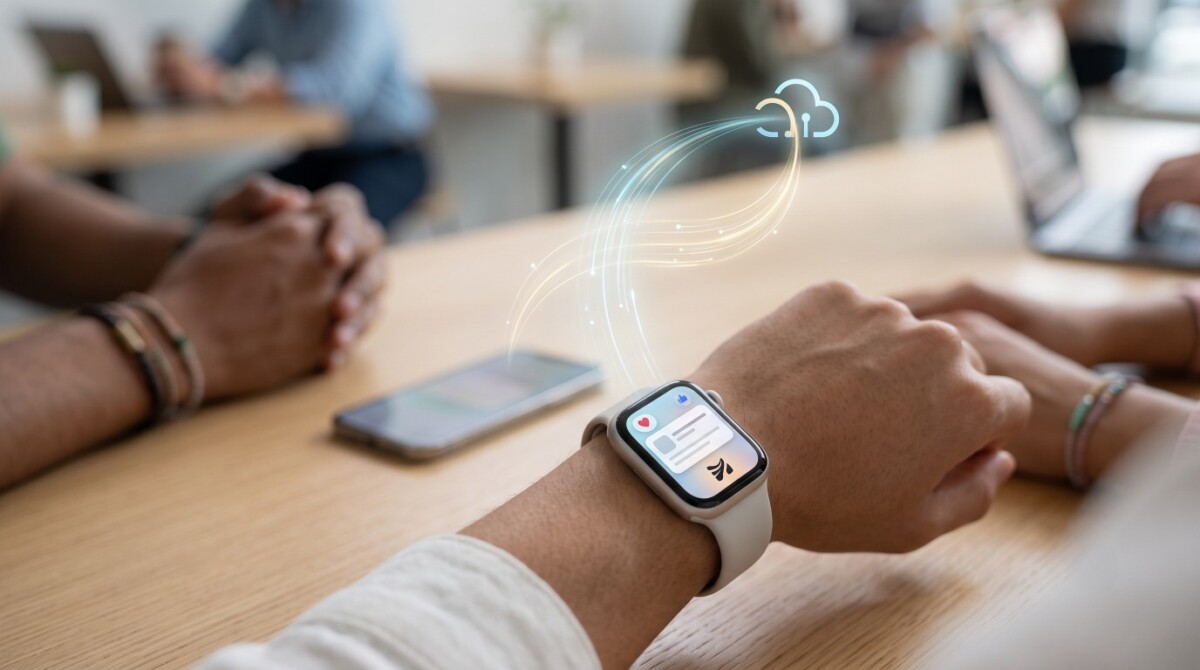
Tech gear brands in 2026 are deepening customer connections by shifting from polished demos to first-person wearable content that shows products performing in real conditions, often captured through camera-equipped smart eyewear in the hands of actual customers.
The tech gear brands building the strongest customer connections today are not polishing their content more—they are putting the camera where their customers actually are and sharing what the product looks like in real use.
Customer connection in the tech gear space has always been harder to sustain than it is to start. A well-timed launch, a strong product, and a decent paid campaign can acquire customers efficiently enough. Keeping them engaged, turning them into repeat buyers, and making them feel genuinely connected to a brand rather than just aware of it is a different problem, and one that most conventional content strategies address poorly. The tech gear brands making real progress on customer connection in 2026 tend to share a recognizable pattern: they have moved away from produced, polished content toward footage that feels lived-in and real, captured from the perspective of people actually using the gear rather than demonstrating it for a camera. First-person wearable content has become central to that shift, and the specific ways it is being used across the tech gear category are worth understanding in detail.
Tech gear brands have a particular credibility problem that other categories do not face to the same degree: the gap between how a product performs in a demo environment and how it performs in actual use. Customers who have been burned by spec sheets that did not translate into real-world performance have developed a sharp eye for content that looks like a demonstration rather than genuine use. First-person wearable content addresses this directly. When a product is captured through glasses with camera capability during actual use in real conditions, the footage is self-evidently honest in a way that a produced demonstration video is not. The person wearing the glasses is clearly present in the moment, the environment is uncontrolled, and the product is performing or not performing in front of an unblinking first-person camera. For tech gear brands specifically, this kind of evidence-based content does more for product credibility than any spec comparison or review roundup.
One of the structural challenges tech gear brands face with wearable content is producing enough of it to maintain a consistent presence across channels without the cost of a full production operation. The solution most brands have landed on is community-led capture: equipping brand advocates, loyal customers, and micro-creators with the tools to produce their own first-person footage rather than relying on a central team to generate everything. Smart eyewear with camera capability fits naturally into this model because it requires no production skill, no crew, and no direction to operate. A customer wearing camera eyewear during a day that involves the brand’s product generates usable content without any setup beyond putting the glasses on. Across a community of dozens or hundreds of engaged customers, that adds up to a distributed content operation producing genuine first-person footage simultaneously from multiple real-world contexts, each one reinforcing the brand’s presence in ways that a single produced campaign cannot replicate.
Tech gear brands consistently struggle with one content problem more than any other: conveying what a product actually feels like to use rather than just what it does. Spec sheets describe capability. Reviews describe outcomes. Neither puts a potential customer inside the experience of using the product in the way that first-person footage does. For categories where the use experience is genuinely differentiated, wearables, audio gear, outdoor tech, action cameras, smart eyewear, the first-person format is particularly effective because it shows the product performing in the conditions it was designed for from the perspective of someone inside those conditions. A customer watching this kind of footage is not being told the product is good. They are watching it be used, in real time, by a real person, in a real environment. That is a fundamentally more convincing form of product storytelling than anything a copywriter or a creative director can produce from a desk.
The mechanism behind customer connection is more specific than most brands treat it: familiarity built over time through repeated, genuine contact with a brand’s real behavior rather than its projected image. First-person wearable content is one of the more effective tools for building that familiarity because it makes a brand’s actual world visible in a way that press releases, campaign content, and polished social posts do not. When a tech gear brand shares first-person footage from inside its product development process, its community events, its field testing sessions, or its day-to-day operations, it accumulates a body of content that gives its audience a genuine sense of what the brand actually is rather than what it claims to be. Customers who follow that content over months develop a familiarity with the brand that precedes and outlasts any individual product launch, and that kind of familiarity is what eventually converts into the kind of loyalty that does not require a discount to maintain.
Tech gear brands operate across a wide range of content channels simultaneously: short-form social, YouTube, email, product pages, paid social, and editorial. Producing content that performs well across all of them from a single shoot is difficult with conventional production methods, because different formats and aspect ratios require different approaches. First-person wearable content is unusually versatile in this respect. Shot at a consistent eye level from a natural first-person perspective, it translates across formats with minimal reworking. The same raw footage can be clipped for a fifteen-second Reel, edited into a longer YouTube piece, embedded on a product page, or dropped into an email sequence without losing the essential quality that makes it valuable. For tech gear brands managing content across multiple channels with lean teams, that operational versatility changes the economics of content production meaningfully, particularly when the content is being captured by a distributed community rather than a single crew.
The deepest form of customer connection a tech gear brand can achieve is making its customers feel that their own experience with the product is part of the brand’s story rather than just a transaction. First-person wearable content creates the conditions for exactly that by making the customer’s perspective the literal point of view of the content itself. When a brand features footage captured by real customers through their own wearable cameras, it signals something to those customers and to the broader audience watching: the brand considers what its customers actually do with the product to be worth sharing. That signal builds a sense of mutual recognition between brand and customer that conventional content does not generate, because it treats the customer as a participant in the brand’s story rather than an audience for it. Over time, that shift in dynamic produces the kind of connection that shows up in repeat purchase rates, referral behavior, and the kind of unprompted brand advocacy that no campaign budget can buy directly.
The tech gear brands deepening customer connections most effectively in 2026 are not the ones spending the most on production. They are the ones that have found ways to make their customers feel genuinely seen, genuinely informed, and genuinely part of something real. First-person wearable content is one of the more direct routes to all three of those outcomes, because it closes the distance between brand and customer in a way that produced content structurally cannot. For tech gear operators thinking about where to invest in content this year, the wearable-first approach is worth taking seriously not as a trend but as a response to a problem that has always existed at the center of branded content: the difficulty of making something that feels true.
First-person wearable content is more effective than polished demos because it shows products performing in real, uncontrolled conditions from the user’s perspective. Customers see how gear behaves in genuine use, which builds credibility and trust that spec sheets and staged videos often fail to deliver.
Tech gear brands can scale wearable content by equipping brand advocates and customers with camera-equipped wearables and clear capture guidelines, then curating the best footage centrally. This community-led approach turns everyday product use into a distributed content operation instead of relying on a single production crew.
Products that benefit most from first-person wearable footage include wearables, audio gear, outdoor tech, action cameras, smart eyewear, and any gear whose value depends on how it feels and performs in real use. In these categories, POV footage shows the experience directly and helps customers decide if the product fits their lifestyle.
Wearable content improves long-term loyalty by giving customers repeated, genuine inside access to a brand’s world and by featuring real customer behavior as part of the story. Over time, that consistent, honest view builds familiarity and trust, which translates into repeat purchases, referrals, and organic advocacy.
First-person wearable footage can be reused across multiple channels because its natural eye-level perspective adapts well to short-form clips, longer edits, product pages, and emails. The core qualities that make it compelling—authenticity and POV—carry through even when the footage is cut or repurposed for different formats.





