



Verified & Reviewed
Published on June 22, 2026 Written By Kristina Lopienski

Published on June 22, 2026 Written By Kristina Lopienski

Subscribe for More
Key Takeaways
1
DDP defined: Under DDP shipping terms, the seller pays all costs through delivery, including freight, import duties, taxes, and customs clearance. The buyer pays nothing extra.
2
De minimis changes: The August 2025 suspension of the de minimis exemption means duties now apply to shipments that were previously exempt, making DDP more expensive but also more important for customer experience.
3
FTZ offsets rising costs: FTZ warehousing lets brands defer duty payments until goods are sold, protecting cash flow.
4
DDP is phase 1, not the finish line: Cross-border DDP is the fastest way to test international demand. Once a market proves out, brands can shift to in-country fulfillment for lower costs and faster delivery.
If you sell internationally, your customers have likely encountered an unwelcome surprise: a bill for duties and taxes at delivery. That moment can tank your brand reputation, spike return rates, and flood your support team with tickets.
Delivered Duty Paid (DDP) shipping eliminates that friction. Under DDP, you cover all costs, including import duties and taxes, so your customer pays the full landed cost at checkout and receives their order without extra charges.
But DDP shipping isn’t static. For example, the August 2025 de minimis suspension changed the cost calculus for brands shipping from or through China.
These changes make DDP more relevant and more expensive than ever. Smart brands are pairing it with Foreign Trade Zone (FTZ) warehousing, like ShipBob’s De Minimis Defense Program, to protect margins.
This article covers what DDP means, how it compares to other Incoterms, what it costs, and how to use it as a launchpad for international growth.
What Delivered Duty Paid (DDP) shipping means
DDP stands for Delivered Duty Paid. It’s one of 11 incoterms published by the International Chamber of Commerce (ICC) that define who pays for what in international trade. Incoterms are standardized trade terms that create binding legal and commercial obligations when written into a sales contract.
Under DDP, the seller takes on maximum responsibility. You pay for:
- Freight
- Export customs
- Import duties
- Taxes (including VAT or GST)
- Customs clearance
- Delivery to the buyer’s door
The buyer’s experience is simple: they receive their order without being asked to pay anything extra.
For ecommerce brands, this matters because unexpected charges at delivery are one of the biggest drivers of cart abandonment and delivery refusals in cross-border selling. DDP removes that risk by building all costs into the checkout price.
DDP applies across all transport modes: sea freight, air freight, road, and rail. It’s one of the few Incoterms that isn’t restricted to a specific mode, making it relevant whether you’re using DDP air shipping for fast-moving consumer goods or DDP freight shipping for bulk inventory.
How DDP compares to DDU, DAP, and EXW
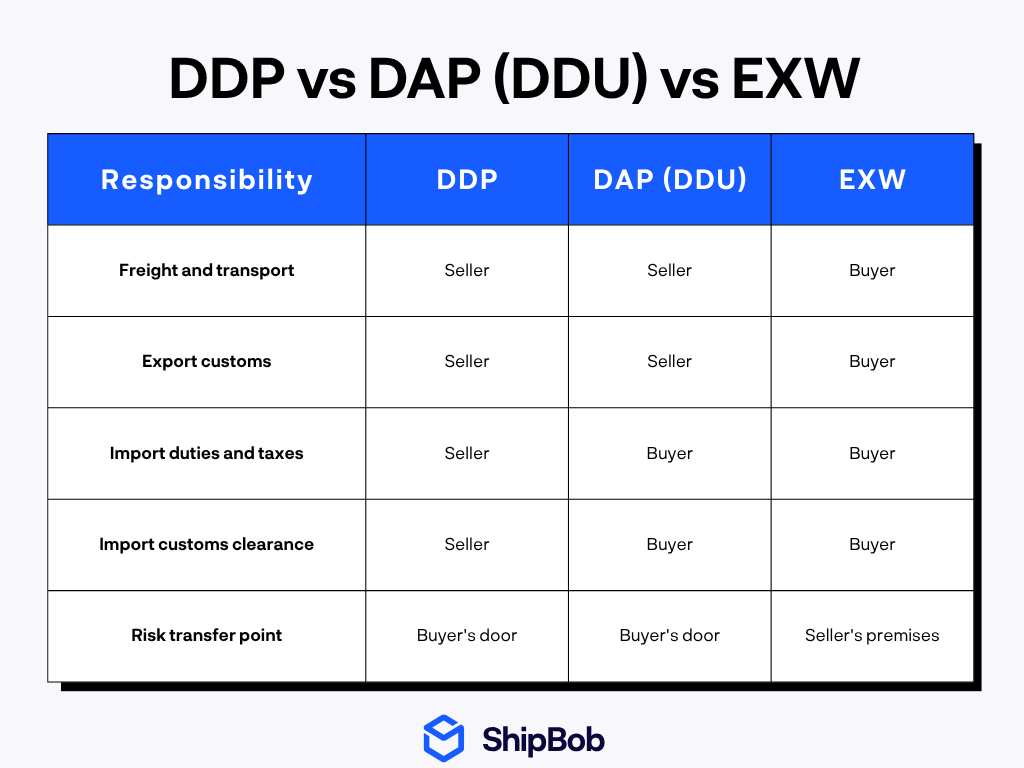
Understanding what DDP means in shipping gets easier when you compare it to related Incoterms. The Delivered Duty Paid meaning becomes clear in a DDP vs. DDU comparison, because they represent opposite ends of who pays.
Here are the terms you’ll encounter most often, plus one that shows the full spectrum of responsibility:
- DDP (Delivered Duty Paid): The seller pays everything, including import duties, taxes, and customs clearance. The buyer pays nothing at delivery.
- DAP (Delivered at Place): The seller pays for freight and delivers goods to the named destination, but the buyer handles import duties, taxes, and customs clearance.
- DDU (Delivered Duty Unpaid): Functionally identical to DAP. DDU was replaced by DAP in the Incoterms 2010 revision, but you’ll still see it referenced in older contracts. Under both DDU and DAP, the buyer is responsible for duties and taxes.
- EXW (Ex Works): The seller’s only obligation is to make goods available at their premises. The buyer arranges and pays for everything: pickup, freight, customs, duties, taxes, and delivery.
💡 When to use which
DDP is ideal when customer experience and conversion are top priorities, especially for DTC brands selling to consumers who don’t want to deal with customs paperwork.
DAP works when you’re selling to B2B buyers who have their own customs brokerage or when you want to avoid the complexity of managing import compliance in a new market.
EXW is rarely appropriate for ecommerce but may appear in wholesale or manufacturer-direct scenarios.
Why brands choose DDP shipping
DDP delivers three concrete benefits for the brands that use it:
1. Predictable customer experience.
DDP eliminates the most common pain point in international ecommerce: surprise charges at delivery.
When a customer in Germany or Australia orders from your store, they see the full price at checkout and receive their package with no additional invoices or customs forms.
This predictability builds trust, drives repeat purchases, and gives you confidence in your international margins.
2. Checkout transparency and conversion.
DDP enables “all-in” pricing at checkout. Duties and taxes are calculated in real time and displayed before the customer completes their order. Unexpected costs are a leading cause of cart abandonment.
Showing the true landed cost upfront with DDP shipping terms removes the largest friction point in the international buying journey.
3. Seller control over compliance.
Under DDP, you manage HS classification, customs documentation, and import clearance rather than leaving it to your customer.
This reduces the risk of shipments getting held at customs due to incorrect paperwork or misclassified goods.
For brands shipping high volumes to multiple countries, that control means fewer delays and fewer support escalations.
How DDP shipping works for ecommerce brands
Here’s what happens from checkout to delivery:
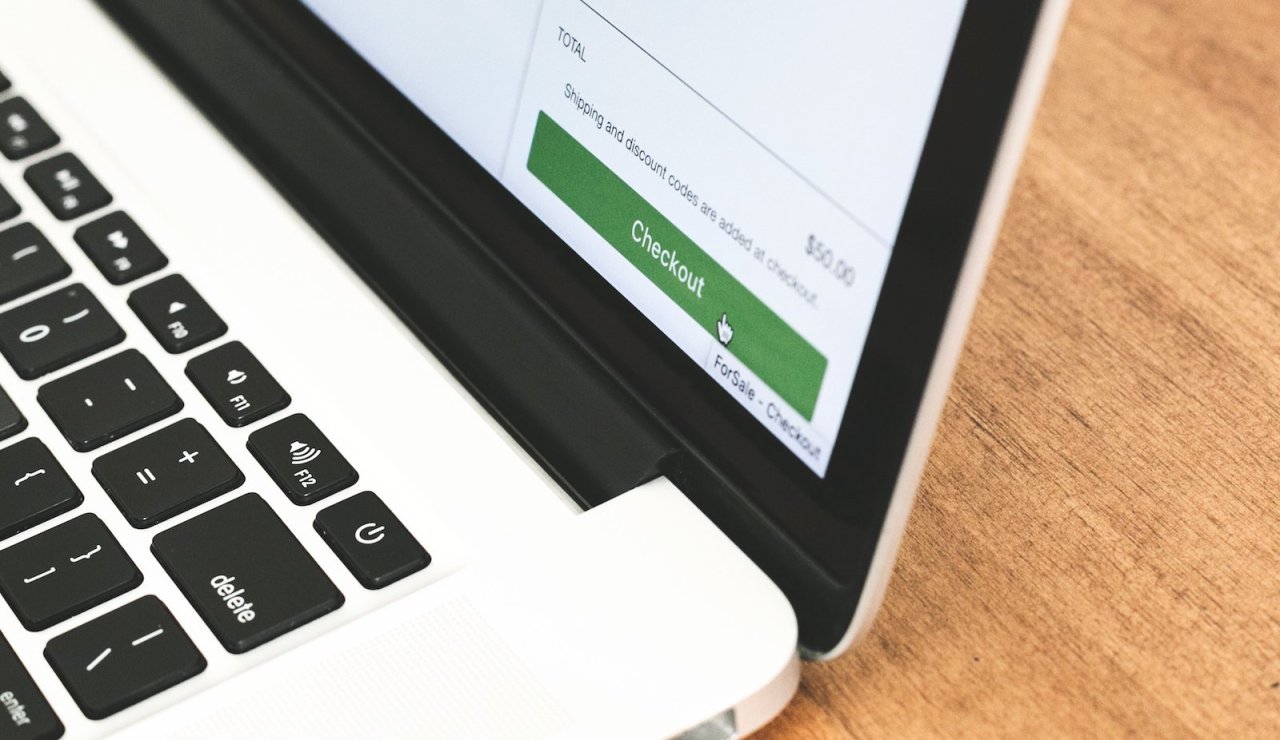
Step 1: Checkout
Duties and taxes are calculated in real time based on product category, declared value, and destination country. The customer sees the full landed cost and pays upfront.
Step 2: Fulfillment and export
The order routes to the closest ShipBob fulfillment center for pick, pack, and ship. The merchant or their designated customs broker files the export customs documentation.

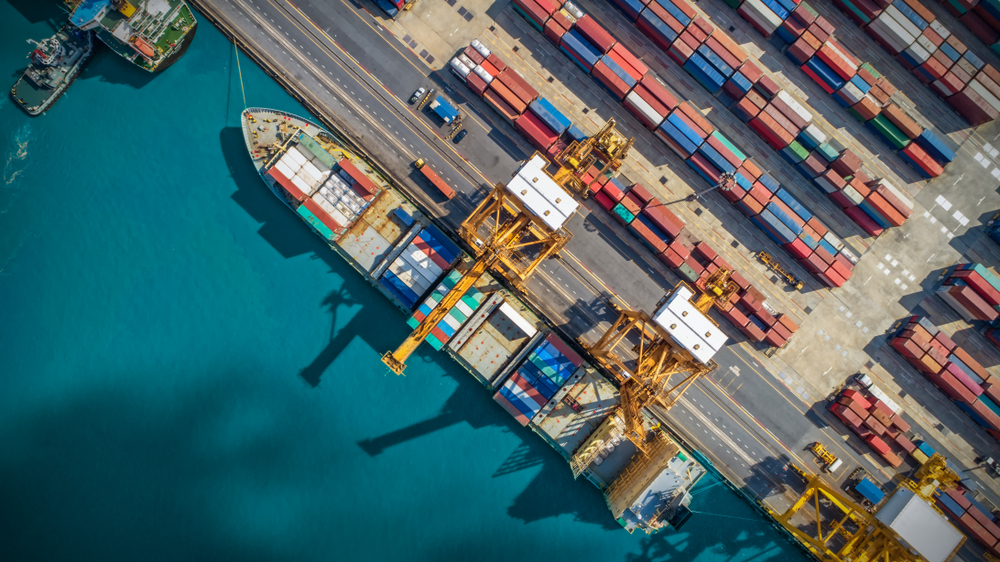
Step 3: Cross-border transit and import clearance
The shipment crosses the border. A licensed customs broker handles import customs clearance and pays duties and VAT or GST on the seller’s behalf. Because everything is prepaid and documented, clearance is typically faster than buyer-managed imports.
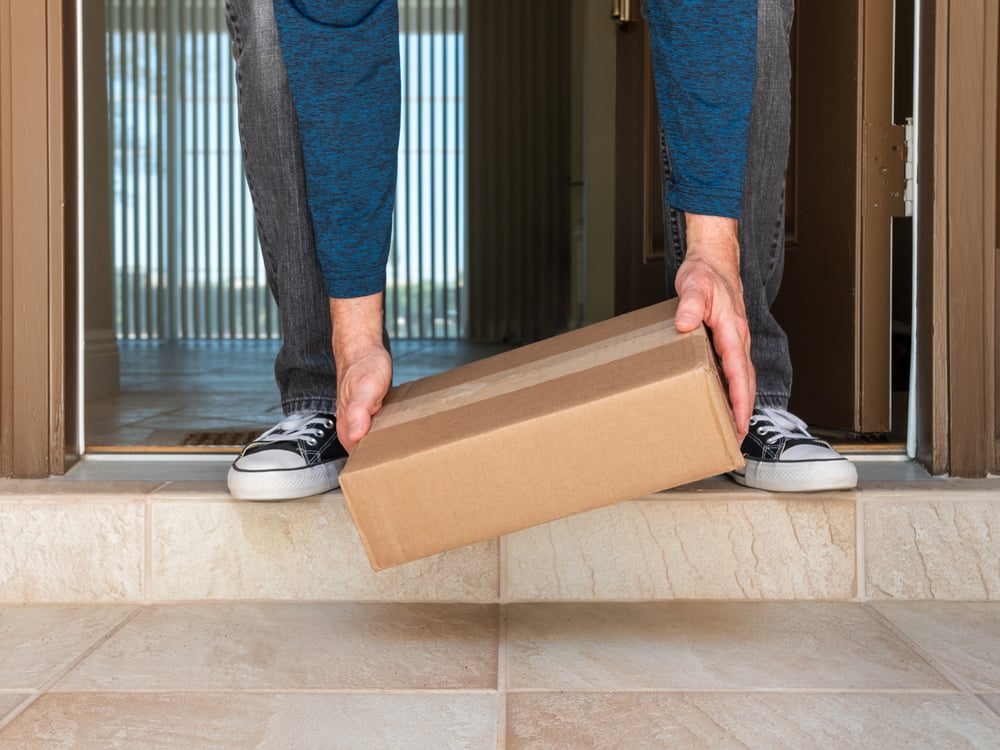
Step 4: Last-mile delivery
The package arrives at the customer’s door with no additional payments or customs paperwork. Risk transfers from the seller to the buyer at the point of delivery.
What’s included in DDP costs
DDP shipping costs vary, but they generally include six categories:
- Freight and transportation: The cost of moving goods from the fulfillment center to the destination country, whether by air, sea, or ground
- Import duties and customs fees: Tariffs assessed based on HS code classification, product origin, and destination country trade agreements
- VAT or GST: Value-added tax or goods and services tax charged by the destination country, typically calculated as a percentage of the goods’ value plus freight
- Brokerage and customs clearance fees: Charges from the customs broker handling import documentation and clearance
- Shipping insurance: Coverage for loss during transit, especially relevant for high-value shipments
- Storage and demurrage: Fees that may apply if goods are held at a port or bonded warehouse before clearance
These costs vary by destination country, product category, declared value, and shipping lane. A DDP shipment to the UK will cost differently than one to Australia, even for the same product, because duty rates, VAT percentages, and freight costs differ by market.
ShipBob offers fulfillment cost visibility by origin and destination. The Billable Weight Estimator helps you model how package dimensions affect shipping costs across regions.
How the de minimis suspension affects DDP costs
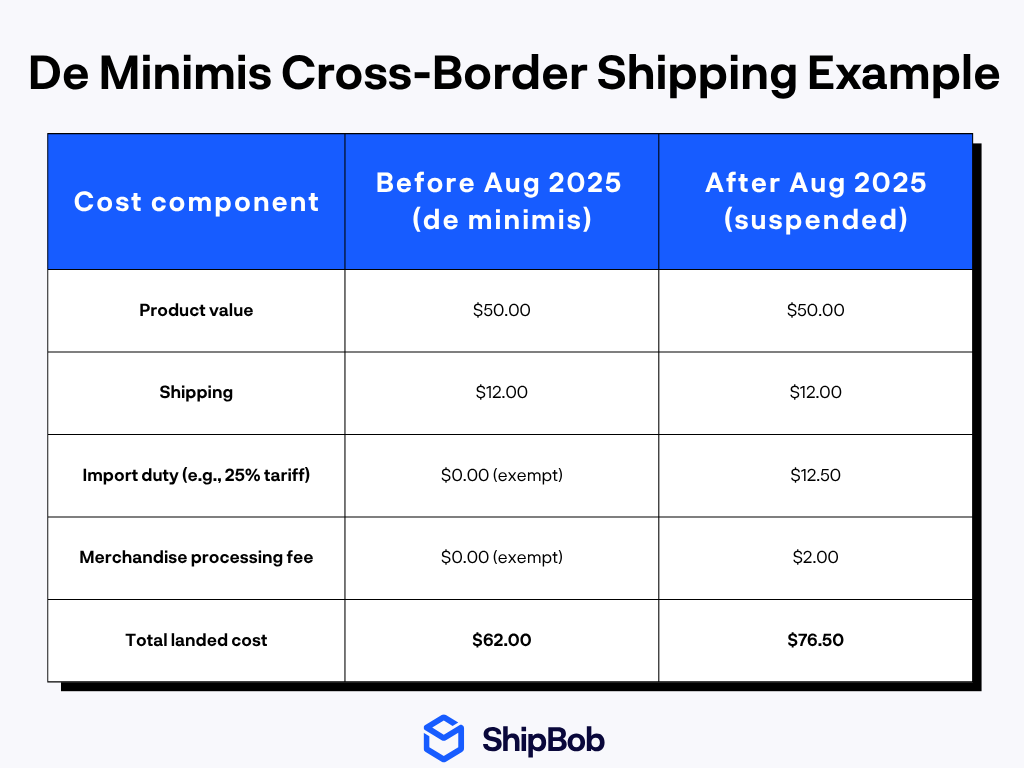
The de minimis exemption allowed goods valued under $800 to enter the U.S. duty-free. For years, this made cross-border DDP shipping significantly cheaper for low-value ecommerce shipments. That changed in August 2025 when the exemption was suspended for goods from all countries.
Shipments that previously cleared customs duty-free now face full tariff rates. Here’s what that looks like for a typical DDP order from China to the U.S.
How FTZ warehousing offsets rising DDP costs
FTZs are designated areas within the U.S. where goods can be stored or processed without triggering duty payments until goods enter domestic commerce.
You defer duties until an order ships rather than paying when inventory arrives. Goods re-exported or destroyed within the FTZ avoid duties entirely.
ShipBob’s De Minimis Defense Program gives you FTZ warehousing access in California and Pennsylvania, plus the customs and compliance support to use it. It’s purpose-built for the post-August 2025 tariff environment.
For example, True Classic, a fast-growing apparel brand, used our FTZ warehousing to defer approximately $4 million in duties on roughly $49 million of inbound FTZ inventory. The brand also freed up $12 million or more in working capital.
DDP and FTZ work best together since DDP controls the customer-facing experience by building duties into the checkout price, while FTZ controls the back-end cost structure by deferring when and whether you pay those duties.
How to use DDP as phase 1 of international expansion
DDP cross-border shipping is the fastest way to test demand in new international markets without pre-positioning inventory. You ship from existing fulfillment centers, use DDP to handle duties and taxes at checkout, and track which markets generate consistent volume.
The approach works in two phases:
✈️ Cross-border DDP
Ship from domestic fulfillment centers using DDP shipping to handle duties and taxes. Monitor order volume, return rates, and customer acquisition costs by market. Identify which countries have real, sustainable demand.
🏠 In-country fulfillment
Once a market proves out, move inventory into local fulfillment centers. This is where a partner that does more than a traditional 3PL matters: a single platform that already runs cross-border DDP from the US can switch a market to in-country fulfillment in the UK, EU, or Australia without forcing you to onboard a new provider.
ShipBob supports both phases. Cross-border DDP shipping is available across ShipBob’s global network of dozens of fulfillment centers across the US, Canada, UK, EU, and Australia. When you’re ready to transition a market from Phase 1 to Phase 2, the infrastructure is already in place.
How ShipBob simplifies DDP shipping
ShipBob is the ecommerce fulfillment expert and supply chain enablement platform built for ecommerce brands that want to sell internationally without forcing customers to deal with customs, and without stitching together multiple regional 3PLs.
ShipBob goes beyond traditional 3PL capabilities by combining cross-border DDP, FTZ warehousing access, and in-country fulfillment on a single platform.
🌎 Global fulfillment network
We operate dozens of fulfillment centers across the US, Canada, UK, EU, and Australia. DDP shipping is available across this network, so you can ship cross-border from the fulfillment center closest to your inventory.
“I totally get why consumers prefer local deliveries: shorter wait times, less expensive shipping, and avoiding surprise tariffs or fees. That’s why it’s so important to have fulfillment centers in areas that I wanted to grow into, so that customers aren’t deterred and can get a fantastic delivery experience no matter where they live. With ShipBob’s global network, we can achieve that.”
Luke Rolls, Founder of The Protein Pancake
🛒 DDP checkout integration
Duties and taxes are calculated in real time and collected at checkout before the order is placed. Your customers see the full landed cost upfront. Our DDP checkout supports 250+ international destinations and integrates natively with Shopify and BigCommerce.
“We also leverage ShipBob Delivered Duties Paid (DDP) shipping to reach our customers outside of the US. Using ShipBob DDP allows us to ship worldwide and we’re lucky that ShipBob has a solution like that because we’ve used it since we onboarded.”
Kayleigh Christina, Co-Founder and CMO of CLEARSTEM
💰 Cost visibility

ShipBob lets you compare fulfillment costs by origin, destination, and shipping method. The Billable Weight Estimator helps you model costs by product dimensions and weight.
🛡️ De Minimis Defense Program
For brands affected by the de minimis suspension, ShipBob offers FTZ warehousing in California and Pennsylvania that defers duty payments until goods enter domestic commerce. Merchants can work with their own licensed customs brokers to assess compliance requirements.
“We now have peace of mind that we can actually get things sent and delivered worldwide without having to worry about duties. People will reach out and say ‘Wow, that’s already done?’ And we tell them, ‘Yep, it’s done.’”
Ben Jablow, VP, Alliances at Postal
Ready to scale international fulfillment? Connect with our team to get a customized quote.
DDP Shipping FAQs
Here are answers to some of the most common questions about DDP shipping.
What does DDP mean for international brands and their customers?

DDP (Delivered Duty Paid) means the seller pays all shipping costs, import duties, taxes, and customs clearance fees. The customer pays the full landed cost at checkout and receives their order without any additional charges at delivery.
Who is responsible for duties and taxes under DDP Incoterms?
Under DDP Incoterms, the seller is responsible for all duties and taxes. This includes import tariffs, VAT or GST, and any customs clearance fees. The buyer has no financial obligation beyond the price they paid at checkout.
Is DDP shipping door to door?
Yes. DDP is a door-to-door shipping arrangement. The seller’s responsibility extends from the point of origin all the way to the buyer’s named destination, covering freight, customs clearance, and last-mile delivery.
What’s included in a DDP shipping quote?
A DDP shipping quote typically includes freight costs, import duties, VAT or GST, customs brokerage fees, and shipping insurance. Some quotes may also include storage or demurrage fees if applicable. The goal is to capture the full landed cost so nothing is left for the buyer to pay.
Can a DDP shipment still get stuck in customs?
It’s rare but possible. Even under DDP, shipments can experience customs delays due to random inspections, incomplete documentation, or regulatory holds. However, because the seller manages customs clearance under DDP, these issues are resolved by the seller’s logistics partner rather than the buyer.
When should a brand choose DDP vs. DAP?
Brands should choose DDP when selling directly to consumers who expect a predictable delivery experience with no surprise fees. DAP is better suited for B2B transactions where the buyer has its own customs brokerage or when the seller wants to avoid managing import compliance in an unfamiliar market.
What are the pros and cons of offering DDP at checkout?
The main advantages of DDP are higher conversion rates, fewer delivery refusals, and a better customer experience. The main drawback is cost: the seller absorbs duties and taxes, which increases the per-order expense. Brands offset this by building duty costs into product pricing or checkout surcharges.
Does ShipBob offer DDP shipping?
Yes. ShipBob offers DDP shipping across its global fulfillment network, including the US, Canada, UK, EU, and Australia. ShipBob’s DDP checkout integration calculates duties and taxes in real time for 250+ international destinations. ShipBob also provides FTZ warehousing access for brands looking to defer duty payments.




