

5th
August, 2025
In the world of e-commerce, Amazon sellers often face a crucial decision: whether to use Fulfillment by Amazon (FBA) or Fulfilled by Merchant (FBM) for their products. Both FBA and FBM have their own advantages and drawbacks, and the best choice depends on your business model, product type, and resources. This comprehensive guide breaks down FBA vs FBM in a neutral, fact-based manner – covering definitions, pros and cons, key factors to consider, and even some real-world data insights – to help Amazon sellers (from solo entrepreneurs to major brands) make an informed decision. We’ll also touch on how this choice can impact other aspects of your business, such as the time you have for marketing (think working with micro influencers and content creators to generate UGC) and overall customer experience.
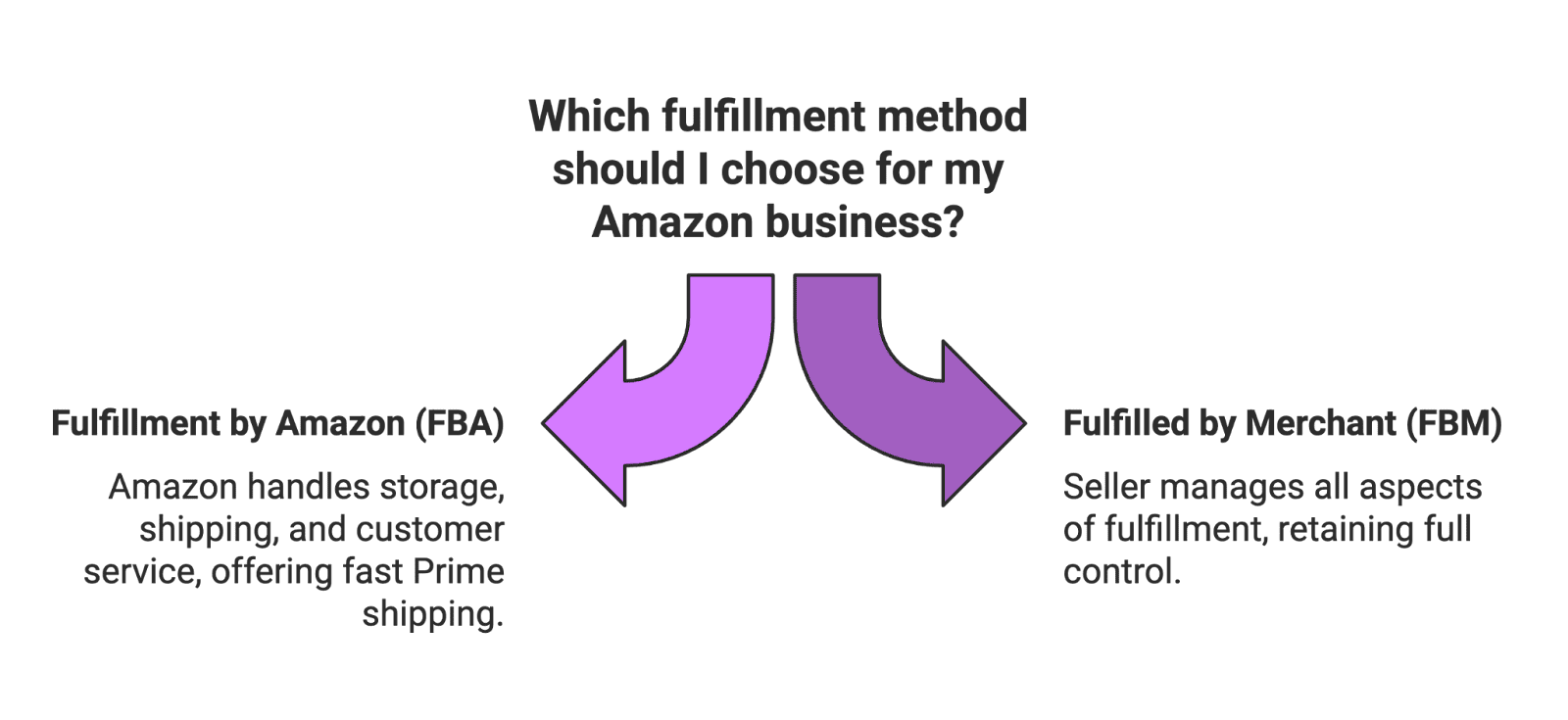
Before diving into comparisons, let’s clarify what each fulfillment method means:
In simpler terms, FBA is Amazon’s fulfillment on autopilot, while FBM is a DIY approach to fulfillment. Neither is inherently “better” in all cases; many Amazon sellers use one or the other, or even a combination of both. In fact, nearly all Amazon sellers use FBA in some form, but a significant portion also fulfill orders themselves via FBM.
Fulfilled by Merchant (FBM) can be the better option for certain sellers and situations. You might lean toward FBM in the following cases:
In summary, FBM is ideal for Amazon sellers who have the capability to fulfill efficiently on their own and desire greater control over the fulfillment process and customer interaction. It’s often favored by more experienced sellers or those with unique products that don’t fit Amazon’s FBA cost structure. By handling fulfillment, you keep more of the process (and potentially profit) in-house – but you also take on the responsibility for timely delivery and customer satisfaction.
Fulfillment by Amazon (FBA) is extremely popular for good reason – it streamlines operations for sellers. Consider using FBA in the following scenarios:
In short, FBA is often the go-to choice for sellers who prioritize convenience, Prime eligibility, and the ability to scale without investing in logistics infrastructure. By paying Amazon’s fees, you essentially hire a world-class fulfillment service. This can be a game-changer for small businesses and content creators looking to monetize products, as it lowers the operational barriers to selling nationwide (or globally) on Amazon. Of course, the trade-off is giving up some control – and a slice of your revenue – to Amazon in exchange for that convenience.
Choosing between FBA and FBM isn’t one-size-fits-all. You should evaluate several key factors in the context of your business. Below are seven of the most important considerations:
By weighing these factors, you can gauge which fulfillment method aligns with your business needs and customer expectations. Often, newer Amazon sellers start with FBA to take advantage of Amazon’s logistics while they learn the ropes, whereas more seasoned sellers may mix and match methods as they optimize for cost and control. Remember that the “best” choice can vary even between products in your catalog – don’t be afraid to use a hybrid strategy if appropriate.
It’s worth looking at some data on how FBA and FBM sellers perform, on average, in terms of sales and profits. This gives insight into the outcomes other sellers are experiencing with each model:
Figure: A comparison of seller performance metrics between FBA and FBM, based on a 2023 survey of Amazon sellers. The left pair of bars shows the percentage of sellers earning over $25,000 per month in revenue, and the right pair shows the percentage of sellers reporting profit margins above 20%. Notably, 28% of FBM sellers reported earning more than $25k per month, compared to only 12% of FBA sellers. And while healthy profit margins are common in both groups, slightly more FBM sellers (38%) achieved over 20% profit margins than FBA sellers (35%).
According to Jungle Scout’s 2023 State of the Seller report, FBM sellers were more likely to be high-revenue earners and have very high margins, despite FBA being the more widely used method. This might seem surprising at first, but there are a few possible explanations:
It’s important not to misconstrue this data as “FBM is more profitable than FBA” universally. Rather, it tells us that both models can lead to success, and that there are thriving sellers in each camp. FBA’s benefits in scaling and conversion can drive huge sales, and FBM’s cost savings can boost margins – it all comes down to how you leverage each model for your particular business. Some of the most successful Amazon businesses actually use a combination: for instance, utilizing FBA for most products but switching to FBM for certain high-cost or niche items, or during stockouts.
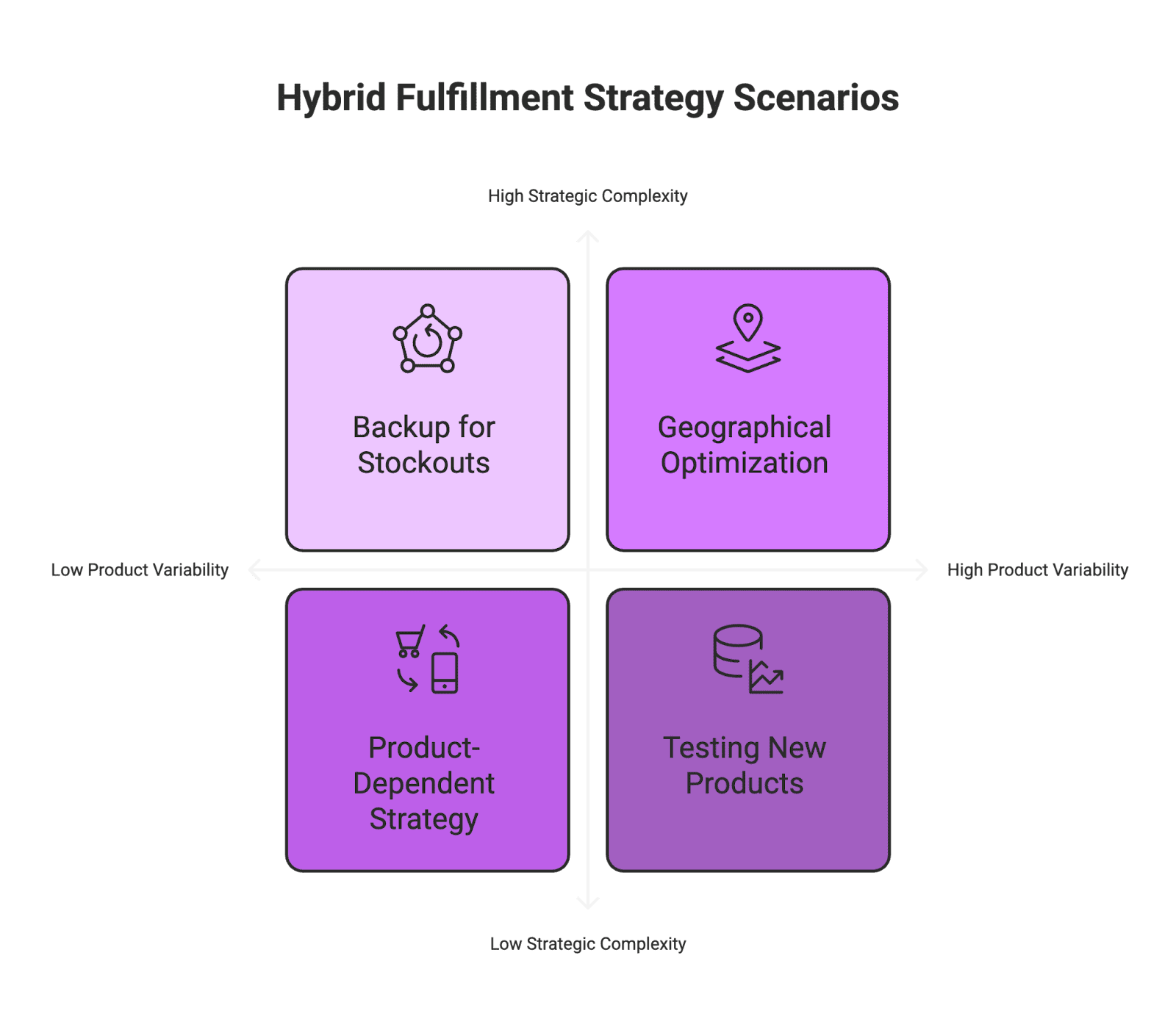
You don’t necessarily have to choose only one fulfillment method. In fact, a number of sellers embrace a hybrid strategy, leveraging both FBA and FBM to optimize results. Roughly 1 in 7 Amazon sellers use a mix of FBA and FBM for their business, and Amazon fully allows this flexibility. Here are a few scenarios where using both makes sense:
Using both FBA and FBM requires more management – you’ll be handling some self-fulfillment while also sending stock to Amazon – but it offers tremendous flexibility. Essentially, you can capitalize on FBA’s strengths where they matter and use FBM to mitigate FBA’s weaknesses. Many advanced Amazon sellers find that this balanced approach maximizes their overall business performance. Just be sure to keep a close eye on inventory levels in both channels and stay organized, so you don’t confuse orders or oversell a product.
In the FBA vs FBM debate, there is no one-size-fits-all winner – the “better” option depends on your unique business priorities. FBA offers unparalleled convenience, access to Prime customers, and scalability, making it incredibly powerful for many Amazon sellers (especially those who value a hands-off approach and fast growth). FBM, on the other hand, grants you greater control, potentially lower costs for certain products, and a more personal touch in fulfillment, which can be advantageous for specific situations and more experienced sellers.
When deciding between FBA and FBM, weigh the factors we discussed: your product type, sales velocity, resources, desire for control, and cost structure. It may help to calculate the numbers (use Amazon’s revenue calculator or spreadsheets) to see profitability under each model. Also, consider starting with one method and adding the other as you scale – flexibility is key, and Amazon allows you to change your fulfillment strategy as you learn.
Keep in mind, whichever fulfillment route you choose, success on Amazon also depends on driving traffic and creating a great customer experience. This is where your time saved (especially if using FBA) can be reinvested into marketing and brand building. Many thriving Amazon brands focus on building their brand presence through micro-influencers, content creators, and UGC (user-generated content) to complement their fulfillment strategy. For instance, using FBA might free up time to collaborate with micro influencers who can promote your product on social media, creating buzz and authentic content that draws shoppers to your listing. In summary, both FBA and FBM can be paths to success on Amazon – it’s all about aligning the fulfillment method with your business’s needs and goals. Stay neutral and open-minded: you can even use both and adjust as your business evolves. By thoughtfully managing your fulfillment, and simultaneously focusing on product quality and marketing (perhaps via influencer-driven campaigns and excellent customer service), you’ll put your Amazon business on track to grow and thrive, no matter which fulfillment model you deploy.

By William Gasner
CMO at Stack Influence
William Gasner is the CMO of Stack Influence, he’s a 6X founder, a 7-Figure eCommerce seller, and has been featured in leading publications like Forbes, Business Insider, and Wired for his thoughts on the influencer marketing and eCommerce industries.
Want new articles before they get published? Subscribe to our Awesome Newsletter.
111 NE 1st St, 8th Floor
Miami, FL 33132


© 2025 Stack Influence Inc
© 2025 Stack Influence Inc
The post What is Amazon FBA vs FBM? appeared first on Stack Influence.





