



Verified & Reviewed
Published on June 8, 2026 Written By Rachel Hand

Published on June 8, 2026 Written By Rachel Hand

Subscribe for More
Speculative inventory transforms calculated risk into a competitive ecommerce advantage. By purchasing stock based on anticipated future demand rather than current needs, businesses can secure better pricing, guarantee product availability during peak periods, and outmaneuver competitors to directly boost their bottom line.
The challenge? The line between strategic speculation and costly overbuying is razor-thin. While some brands leverage this approach to lock in supplier discounts and prepare for demand surges, others end up with warehouses full of excess stock, depleted capital, and mounting storage fees.
This guide equips you with everything needed to master speculative inventory. You’ll learn practical frameworks for making data-driven purchasing decisions, techniques for managing excess stock when predictions miss, and how modern fulfillment solutions can transform speculative inventory from gamble to strategic asset.
What is speculative inventory?
Speculative inventory is stock purchased based on anticipated future demand rather than current sales needs.
It means strategically buying products before confirmed orders to secure better pricing, prepare for trends, or position for potential demand surges.
Unlike reactive inventory management (ordering what’s already selling), this approach requires forecasting future sales patterns. When executed properly, it ensures product availability during critical periods and creates competitive advantages through strategic positioning.
Success depends on strategy, not blind overbuying. It requires analyzing market signals, understanding customer behavior, and making calculated investments for maximum return.
For ecommerce brands in fast-moving markets or with long lead times, mastering speculative inventory can determine whether you capture opportunities or watch better-prepared competitors succeed.
Speculative inventory vs. other inventory categories
| Inventory Category | What It Is | VS Speculative Inventory |
| Safety stock | Your emergency buffer against unexpected demand or supply disruptions. | Safety stock is defensive (protecting against downside); speculative inventory is offensive (capturing upside opportunity). |
| Anticipation inventory | Purchased for known events like holiday seasons or planned promotions. | Anticipation inventory targets known demand patterns; speculative inventory targets potential opportunities that aren’t guaranteed. |
| Cycle stock | Your regular inventory ordered to meet normal demand between replenishments. | Cycle stock is your regular cycle of inventory; speculative inventory exists outside it as additional investment based on opportunity. |
| Standard stock | Follows established demand patterns with predictable velocity. | Standard stock is a safe bet; speculative inventory ventures into areas where future demand is less certain (but potentially more rewarding). |
Successful ecommerce brands combine these approaches strategically: maintaining safety stock for protection, cycle stock for regular operations, anticipation inventory for known events, and speculative inventory to capture emerging opportunities.
When to use speculative inventory in ecommerce
The best scenarios for speculative inventory include:
- Supplier pricing opportunities: When suppliers offer volume discounts or announce price increases, buying beyond immediate needs can lock in savings if those savings exceed carrying costs and you can move the additional inventory.
- Seasonal demand spikes: When indicators suggest demand could exceed typical seasonal patterns, speculative inventory prepares you for an especially strong season.
- Market trends and viral potential: Social media can create overnight sensations. Brands that anticipate these trends gain advantages by stocking products showing early viral signals.
- Product lifecycle considerations: For items with long lead times or being discontinued, speculative ordering maintains availability through transitions.
- Competitive positioning: When competitors frequently stock out, having reliable product availability drives market share gains and customer loyalty.
Your decision framework should consider:
- Product characteristics: Shelf life, storage requirements, obsolescence risk
- Financial position: Available capital and opportunity cost
- Storage capacity: Physical space and associated costs
- Market intelligence: Quality of demand signals and prediction confidence
- Exit strategies: Plans for inventory if demand doesn’t materialize
Start small with lower-risk products, then scale based on results. This builds your speculative buying skills while minimizing potential downside.
Why ecommerce businesses invest in speculative inventory
For ecommerce brands, speculative inventory is more than a cost-saving tactic, but rather a competitive weapon. While supplier discounts matter, the real advantage comes from boosting customer satisfaction and strengthening market position.
Smart brands use this approach to capture opportunities others miss.
By anticipating demand, they ensure products stay available during viral trends and supply chain disruptions while offering faster shipping. This creates business possibilities that reactive approaches can’t match.
Today’s customers expect Amazon-speed delivery.
Meeting this demand means predicting what customers want and where they’ll want it shipped from before they order. This forward-thinking strategy separates market leaders from followers.
The benefits multiply over time.
Well-managed speculative inventory eliminates costly emergency shipping and stockouts, maintaining healthy margins and consistent product availability that builds stronger customer relationships.
How to improve customer experience through strategic inventory placement
Positioning products near customers before they order delivers two critical advantages: faster shipping and lower costs. Both directly boost sales and loyalty.
Think about the last time you abandoned a cart because shipping took too long. Strategic inventory solves this by pre-positioning products where customers need them. A customer in California gets their order in 1-2 days from a West Coast facility instead of waiting a week.
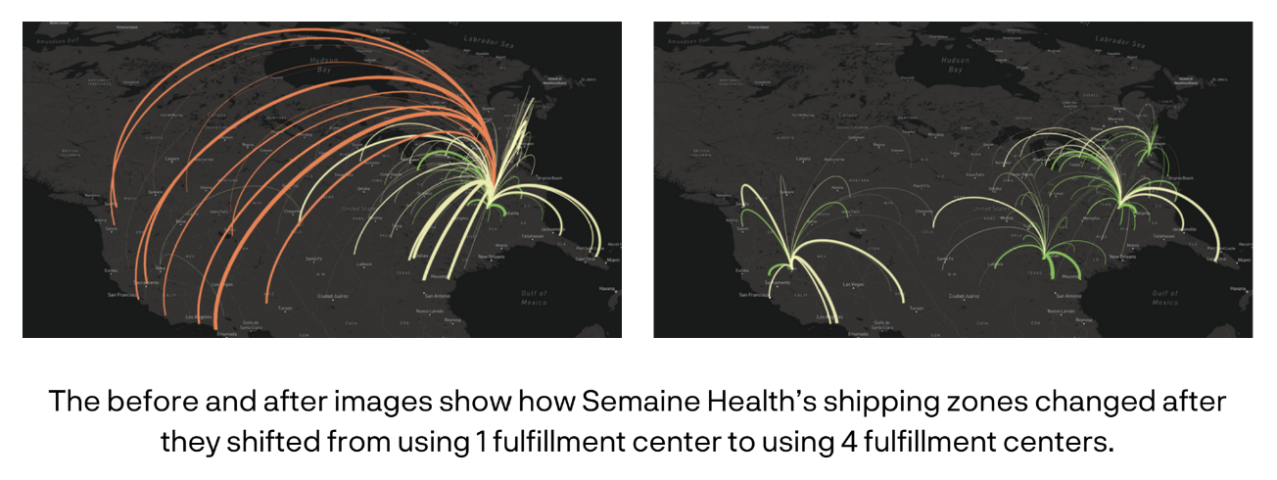
This approach becomes crucial during peak seasons when shipping networks get overwhelmed. Brands with distributed inventory keep delivery promises while competitors struggle with delays, creating an advantage that’s hard to match.
“Through the Inventory Placement Program, we went from using one warehouse in Southern California to being in multiple regionally located fulfillment centers, which drastically reduced our out-the-door shipping cost. The ShipBob dashboard even provides detailed reporting on our average shipping zone, shipping costs, and transit time by location, and we can optimize our inventory distribution based on that data.”
Gregory Frye, VP of Operations at Hi-Altitude Brands
Strategic buffer stock in key markets also prevents stockouts and maintains sales flow even when main inventory runs low, building customer trust and encouraging repeat business.
With inventory already spread across your network, you can confidently offer premium services like expedited shipping, same-day delivery, and guaranteed delivery dates, commanding higher prices while delighting speed-conscious customers.
Key risks and cost considerations behind speculative inventory
Speculative inventory offers opportunities but comes with significant risks. Understanding these trade-offs helps you determine when this strategy makes sense, and when it might damage your cash flow.
The true cost goes well beyond the purchase price. Carrying costs silently eat into margins, while tied-up capital prevents investments in marketing or product development. For ecommerce businesses managing inventory across multiple locations, storage expenses become particularly complex with varying fulfillment center fees.
Cash flow requires special attention. Capital locked in slow-moving inventory can cripple your ability to fund growth initiatives. Create mitigation strategies before making speculative purchases, not after products start collecting dust.
Successful brands use clear ROI frameworks that account for all costs, risks, and the time value of money. This comprehensive approach helps set realistic expectations and ensures your speculative inventory decisions strengthen rather than strain your business.
How to calculate the true cost of speculative inventory
Calculating the real cost of speculative inventory requires looking beyond the invoice price. A comprehensive cost model helps you understand whether that “great deal” from your supplier actually makes financial sense once all factors are considered.
Storage costs across fulfillment locations
These costs vary significantly based on geography, seasonality, and the type of space required. Urban fulfillment centers typically charge more per cubic foot than rural locations, but they might save you money on last-mile delivery. Factor in:
- Monthly storage fees per unit, bin, shelf, or pallet
- Peak season surcharges (often 2-3x normal rates during Q4)
- Special handling requirements for fragile or temperature-sensitive items
- Costs for redistributing inventory between locations if demand patterns shift
Carrying costs and capital allocation
These costs represent the hidden expense of speculative inventory. Every dollar tied up in excess stock is a dollar not earning returns elsewhere. Consider:
- Interest costs if you’re financing inventory purchases
- Opportunity cost of capital (what that money could earn if invested differently)
- Insurance premiums that increase with higher inventory values
- Tax implications of holding inventory across multiple jurisdictions
Depreciation or obsolescence risks
These risks become more pronounced the longer inventory sits. This is particularly crucial for:
- Fashion items that may go out of style
- Electronics that face rapid technological advancement
- Seasonal products with limited selling windows
- Items with expiration dates or shelf-life concerns
Handling and redistribution expenses
These add up quickly when speculative inventory doesn’t sell as expected. Budget for:
- Labor costs for receiving and put-away
- Picking and packing fees if you need to transfer inventory
- Transportation costs between fulfillment centers
- Potential expedited shipping to move inventory where it’s needed
To put this into practice, here’s a simple formula for calculating your true speculative inventory cost:
True Cost = Purchase Price + (Monthly Storage × Expected Hold Time) + (Capital Cost × Hold Time) + Risk Premium + Handling Fees
EXAMPLE
If you purchase $10,000 worth of inventory expecting to hold it for 6 months:
Purchase price: $10,000
Storage costs: $200/month × 6 months = $1,200
Capital cost at 10% annual rate: $10,000 × 0.10 × 0.5 years = $500
Risk premium for potential obsolescence: $500
Handling fees: $300
True cost: $12,500 – a 25% premium over the purchase price.
This framework helps you evaluate whether the anticipated benefits (supplier discounts, avoiding stockouts, meeting demand spikes) justify the true costs. Remember to adjust these calculations based on your specific business model, product categories, and risk tolerance.
Best practices for managing speculative inventory in ecommerce
Successful speculative inventory management demands a structured approach that balances opportunity with risk. Here’s how to build an effective strategy.
Classify inventory by expiration, demand volatility, and strategic value
Create a classification system to identify your best speculative purchasing candidates:
- Shelf life: Categorize products by expiration timeframe (12+ months, 6-12 months, 3-6 months, under 3 months). Longer shelf lives provide more flexibility.
- Demand stability: Products with consistent sales patterns make safer speculative purchases than those with unpredictable demand.
- Strategic importance: Consider value beyond margins. Traffic drivers, complementary products, and items that increase average order value may warrant speculative investment despite lower margins.
Develop a scoring matrix that weighs these factors. Focus speculative purchases on products scoring high across multiple dimensions, while limiting risk on low-scoring items.

Hybrid fulfillment models for handling demand fluctuations
A hybrid fulfillment approach (combining in-house operations with third-party partners) provides crucial flexibility for speculative inventory:
- Keep predictable, high-velocity items in-house.
- Leverage fulfillment partners for products with uncertain demand.
- Avoid overinvesting in warehouse space.
- Position inventory closer to potential customers.
- Scale operations without hiring temporary staff.
Establish clear criteria for what stays in-house versus what goes to partners based on product characteristics and expected velocity. Maintain visibility across all channels to track inventory location and optimize order management and routing.

Dynamic rebalancing to prevent dead stock
When inventory isn’t moving as expected in one location but could sell elsewhere, quick rebalancing is essential:
- Set up early warning systems tracking days on hand, sales versus projections, and regional demand differences.
- Establish clear rebalancing triggers (e.g., no movement in 60 days, approaching expiration).
- Use technology for real-time visibility across locations and automated alerts.
- Calculate rebalancing costs against potential sales (sometimes local markdowns are more cost-effective than transfers).
The key is acting quickly before carrying costs accumulate and product value diminishes.

Liquidation and repurposing strategies for surplus stock
When speculative inventory doesn’t sell as planned, implement these strategies:
- Strategic markdowns: Use stepped discounts rather than immediate deep discounts that damage brand perception.
- Value bundles: Package slow-moving items with bestsellers to maintain higher average order values.
- Alternative channels: Utilize flash sales, outlet partnerships, or B2B platforms that won’t train regular customers to wait for discounts.
- Creative repurposing: Convert excess inventory into gifts-with-purchase, donations, employee perks, or loyalty rewards.
Create a liquidation timeline based on carrying costs and product type. For example, fashion items typically need faster action than home goods.

Forecasting and technology solutions for speculative inventory
Successful speculative inventory management requires data-driven decision-making. Today’s ecommerce brands need technology that processes multiple data streams simultaneously, from seasonal patterns and competitor moves to social media trends and economic indicators, and that provide actionable insights before opportunities disappear.
The right technology stack transforms speculative purchasing from guesswork into strategic advantage through three essential components:
- Comprehensive data collection that captures both internal sales patterns and external market signals
- Intelligent analysis that identifies emerging trends and demand shifts in real-time
- Automated execution that quickly translates insights into inventory positioning decisions
Leveraging real-time analytics for agile decision-making
Real-time visibility across your inventory network enables you to spot trends as they emerge, not after they’ve peaked. Look for inventory dashboards that display:
- Velocity trends showing week-over-week and month-over-month changes by SKU and location
- Coverage ratios calculating days of supply remaining based on current sell-through rates
- Regional variations highlighting demand differences across geographic markets
- Inventory aging tracking how long products have remained in each location
- Cost accumulation monitoring real-time carrying costs by SKU
Set up automated alerts that trigger when specific conditions occur, like when a product’s velocity increases by 50% over a rolling seven-day average. That way, you can immediately adjust your strategy.
The most powerful platforms integrate external data sources: marketing calendars reveal promotion impacts, weather patterns explain regional spikes, and social media monitoring identifies viral product trends.
Remember: Data without action is just expensive storage. Build clear workflows that connect insights to execution, whether that means triggering purchase orders, initiating inventory transfers, or adjusting pricing strategies.
The faster you move from insight to action, the more value you’ll extract from your speculative inventory investments.
How ShipBob helps optimize speculative inventory strategies
Transform speculative inventory from risky bet to strategic advantage with ShipBob’s purpose-built fulfillment infrastructure. ShipBob’s platform combines the essential elements for successful speculative inventory management in one partnership, including:
Global fulfillment network
60+ locations across the US, Canada, the UK, Europe, and Australia for strategic inventory placement.
“Leveraging ShipBob’s global network to fulfill and ship locally reassures our customers, so that when someone in a key market like Australia or Canada buys from us, they’re not worrying about their order getting stuck in customs or wondering if they’ll ever get their items. They also know it’s not going to take two weeks or more to be delivered, and they don’t have to pay exorbitant international shipping rates.”
Sergio Tache, Founder and CEO of Dossier
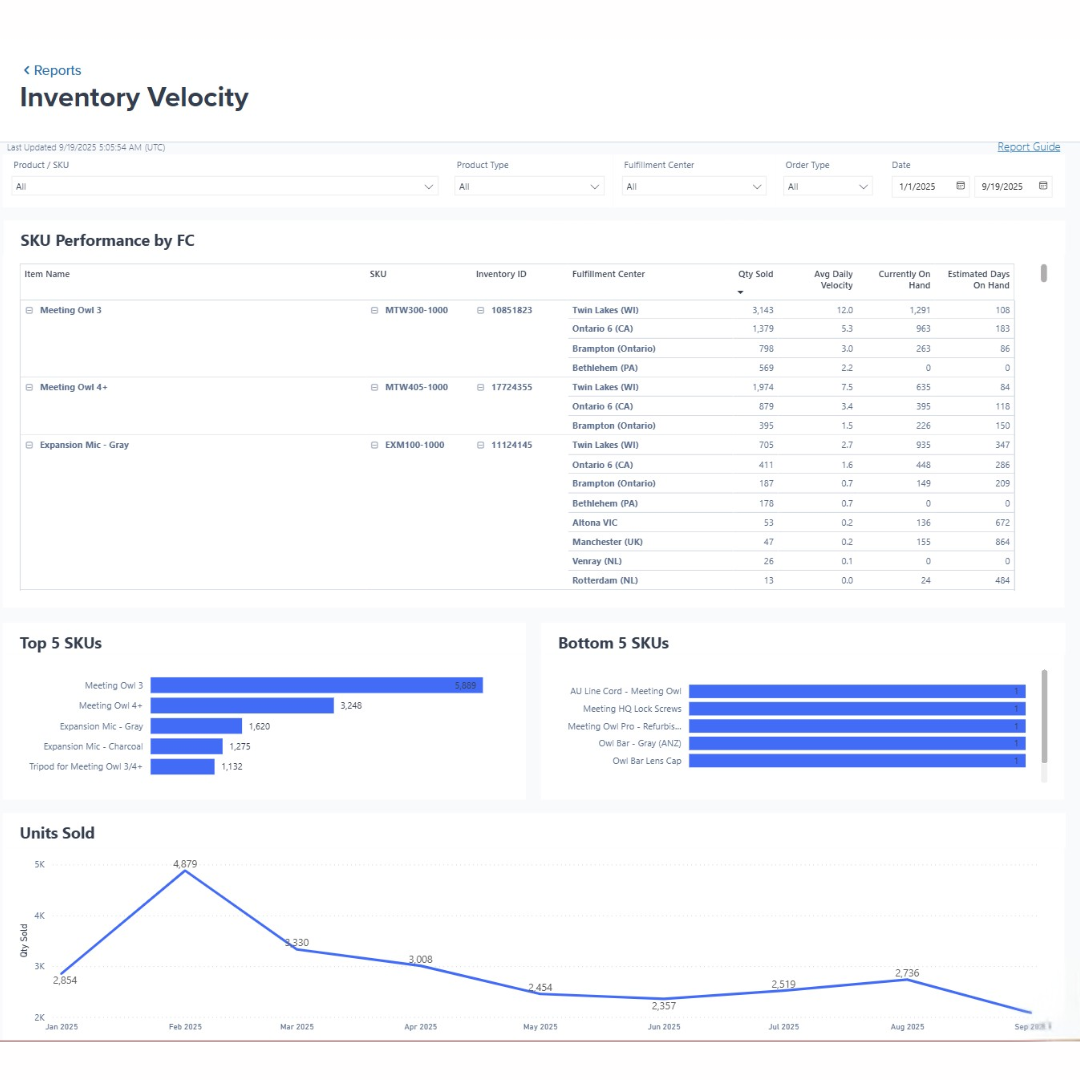
Real-time analytics via our merchant dashboard
Provides complete visibility into inventory performance across all locations.

Inventory Placement Program
Our solution uses predictive analytics to distribute your inventory based on anticipated regional demand, reducing shipping costs and accelerating delivery times.
“Another benefit of IPP is we don’t have to arrange a bunch of different freight shipments to send inventory to different warehouses. In the past, we used two fulfillment centers, but it was just too time-consuming to coordinate freight shipments to them, so we left it at two for that reason.
But using IPP, we can just send our inventory to a single ShipBob hub location, and ShipBob takes care of regionally distributing it for us. That’s allowed us to add a third fulfillment center to our network with confidence, while saving time and money.”
Oscar Gutierrez, Operations Fulfillment Manager at goPure
With ShipBob, you’re not just storing inventory; you’re leveraging data-driven insights to position products exactly where future demand will materialize, creating a competitive advantage.
For more information on how ShipBob can help you manage your inventory, click the button below to get in touch.
Speculative inventory FAQs
Here are answers to some of the most common questions about speculative inventory.
What’s the difference between speculative inventory and safety stock?

Safety stock acts as your insurance policy. It is defensive buffer inventory that protects against unexpected demand spikes or supply chain disruptions.
Speculative inventory is a strategic investment where you purchase extra stock based on anticipated opportunities, whether that’s securing bulk discounts, preparing for predicted trends, or getting ahead of price increases. Smart ecommerce brands typically employ both strategies, using safety stock for core products while making calculated speculative investments when market conditions are favorable.
How do I forecast demand for speculative inventory?
Effective forecasting requires looking beyond standard sales data to identify future opportunities.
Start with historical patterns as your baseline, then layer in external signals like industry trends, competitor activities, social media momentum, search volume changes, and supplier insights about market direction.
Look for solutions that integrate data from your sales channels, marketing platforms, and external market intelligence to make informed predictions while acknowledging the calculated risk inherent in speculative inventory.
What are the biggest risks of speculative inventory and how can I mitigate them?
The primary risks include capital tie-up in slow-moving products (creating cash flow challenges), accumulating storage costs that erode bulk purchase savings, and inventory obsolescence or expiration before sale. There’s also the opportunity cost of funds that could be used elsewhere in your business.
- Start small with speculative purchases and scale gradually as you gain experience
- Diversify across product categories to spread risk
- Implement monitoring systems with clear thresholds for when to pivot
- Partner with fulfillment providers offering flexible storage and redistribution options
How should I store and manage speculative inventory differently?
Speculative inventory demands more active management than regular stock. Set up dedicated tracking that includes purchase rationale, target sell-through dates, and performance benchmarks. Position inventory strategically near anticipated demand centers while maintaining the flexibility to redistribute quickly if needed.
Establish specific review workflows with clear action triggers: when to discount, redistribute between locations, or explore alternative sales channels. Having these decision frameworks mapped out in advance prevents emotional reactions when speculative bets don’t immediately pay off.
Can ShipBob help manage my speculative inventory strategy?
ShipBob’s distributed fulfillment network provides the ideal infrastructure for speculative inventory strategies. With global fulfillment centers, you can position inventory near anticipated demand without long-term warehouse commitments, while maintaining the flexibility to redistribute if demand emerges in unexpected regions.
Our platform delivers real-time analytics to closely monitor performance across all locations, with automated alerts when inventory reaches predetermined thresholds. Combined with insights from thousands of ecommerce brands, ShipBob helps reduce the inherent risks of speculative inventory while maximizing your ability to capitalize on market opportunities.




