

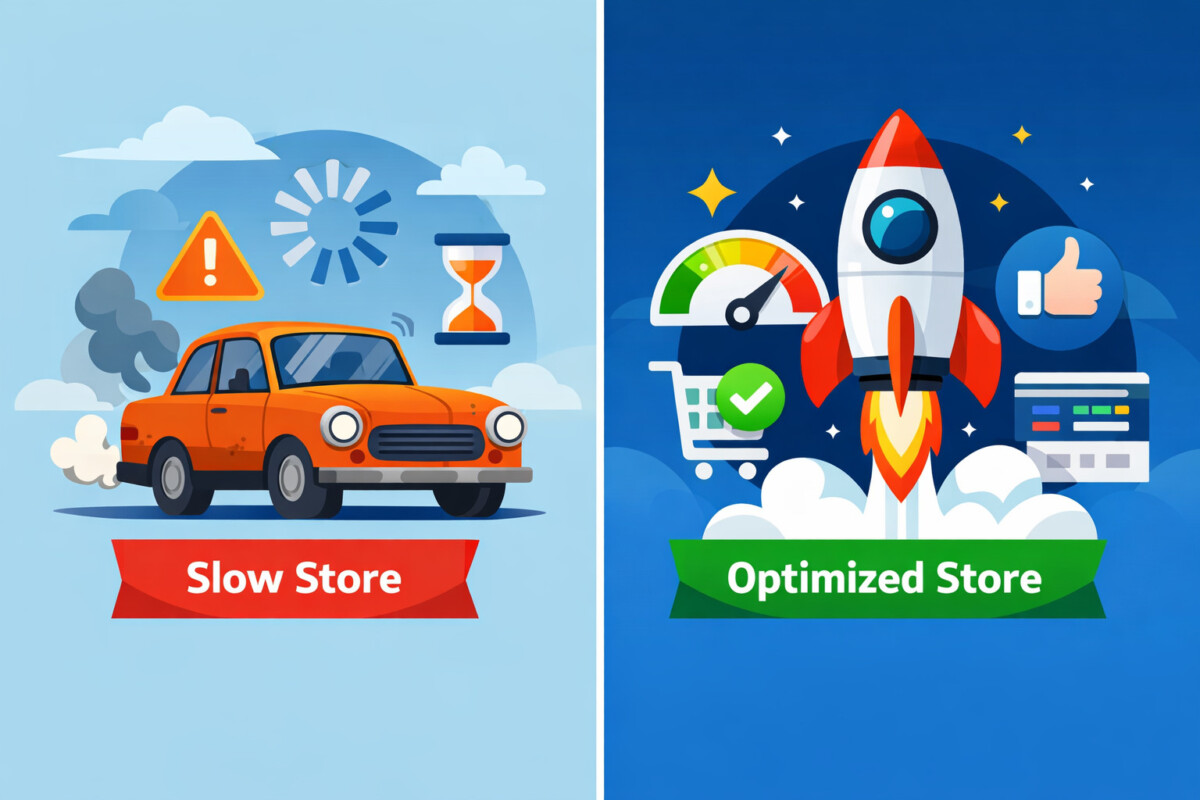
Most Shopify stores do not break. They just become less efficient over time, quietly losing revenue at every step of the customer journey while the owner wonders why traffic is not converting.
Most Shopify stores don’t break — they just become less efficient over time. Like an old car or a slow phone, everything still works… but not as well as it should.
That’s the real issue: you’re not broken — you’re quietly losing revenue.
And more often than not, it comes down to one thing: your theme isn’t just design — it defines the entire buying experience.
Most teams misunderstand optimization. It’s not about adding more apps, more popups, or doing a full redesign every few months.
Real optimization is simpler — and harder.
It’s about helping customers move faster and with more confidence: finding the right product quickly, understanding it clearly, and feeling ready to buy without friction.
That means balancing performance and experience across the entire journey — from page speed and clean code to intuitive navigation and clear product information.
Because in the end, optimization isn’t about adding more. It’s about removing what slows people down.
Your Shopify theme does more than shape how your store looks — it directly impacts how people interact, navigate, and decide to buy.
It influences everything that drives conversion: speed, user experience, content structure, and customer behavior.
A well-optimized theme removes friction across the entire journey — from homepage to checkout.
That’s why the real problem for most stores isn’t traffic — it’s friction.
And that’s also why many merchants turn to curated collections of conversion-focused Shopify themes built to improve performance from day one.
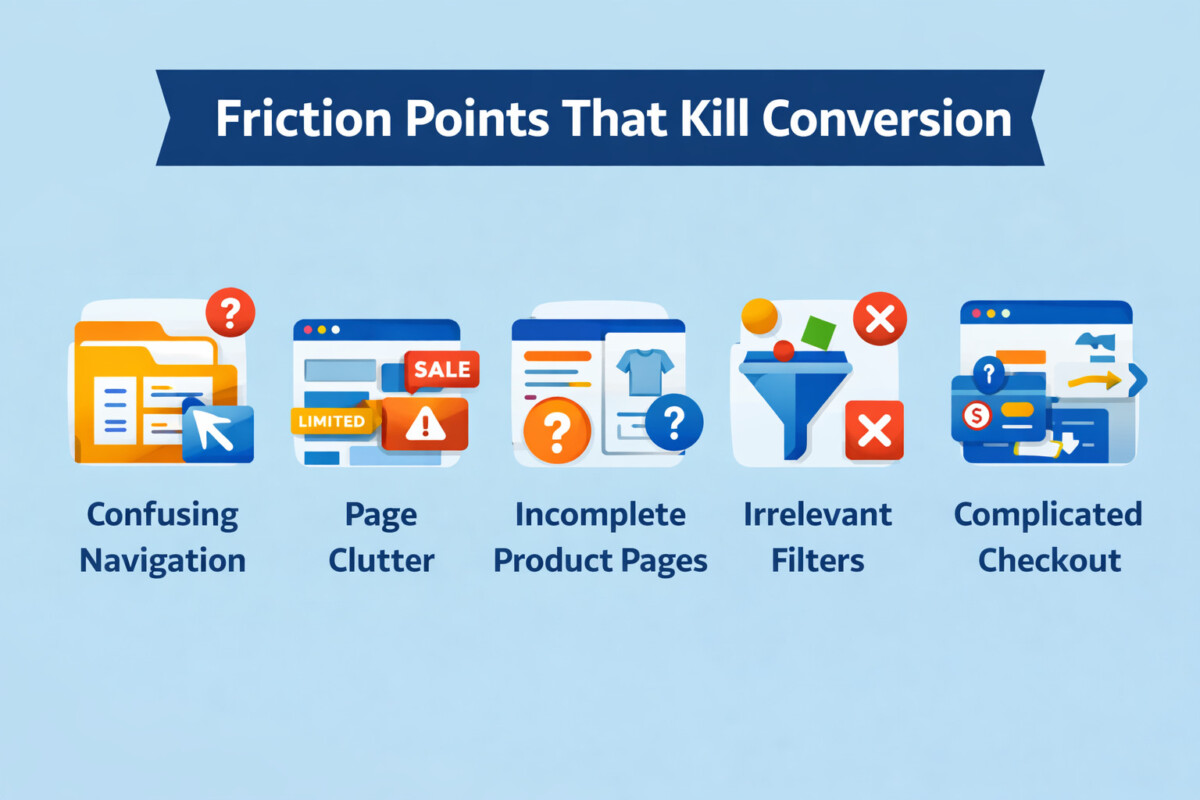
Most conversion issues don’t come from one big problem — they come from small friction points across the store, often caused by how the theme is set up.
Common issues include:
Individually, each issue seems minor. But together, they slow users down, create hesitation, and reduce trust.
Because when a theme isn’t optimized, friction doesn’t happen in one place — it happens at every step of the journey.
Not all Shopify themes are built the same. High-converting themes aren’t just visually appealing — they are designed to remove friction and guide users toward purchase.
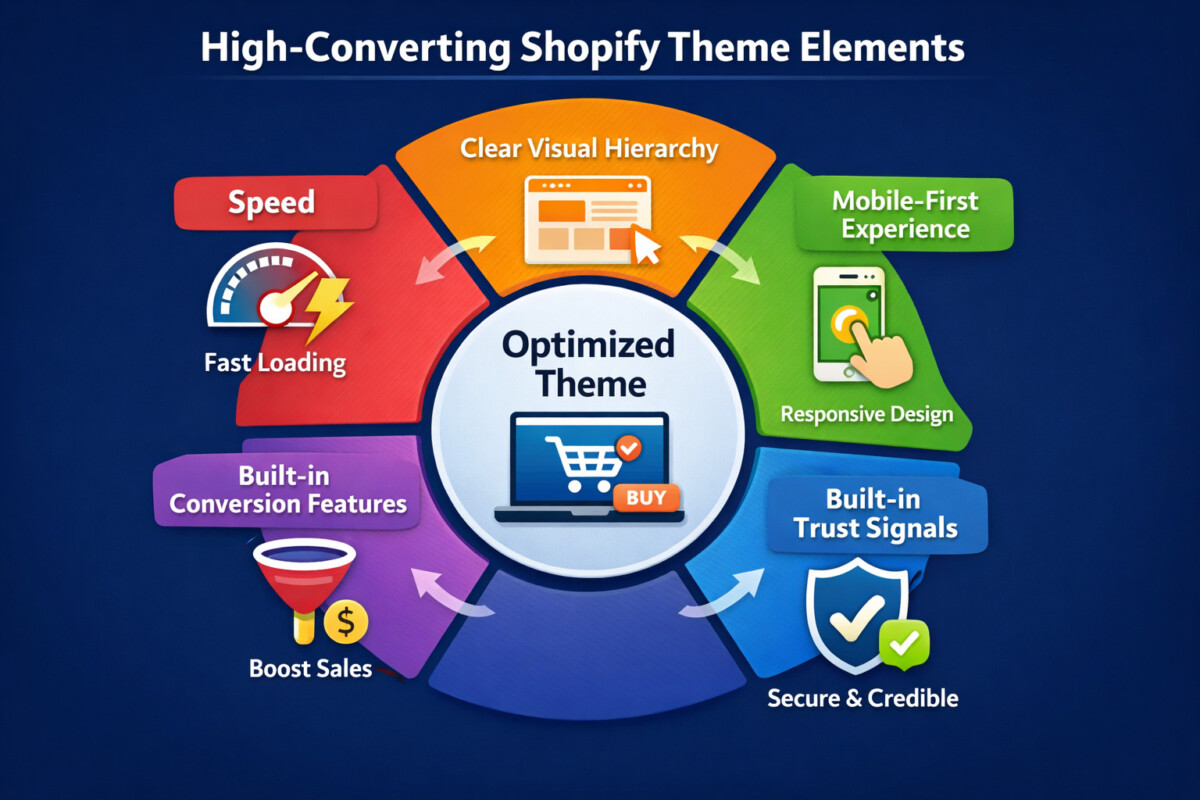
Here are the core elements that actually drive results:
Even a small delay has a measurable impact. A 1-second slowdown can reduce conversions by around 7%, and load times beyond 3 seconds can cost you a significant portion of potential customers.
The biggest culprit? Too many apps and heavy code.
High-performing themes solve this at the foundation level — with clean code, optimized assets, and fewer dependencies that keep the store fast under real conditions.
Most traffic today comes from mobile, so your theme needs to be built for it — not adapted later.
That means:
Elements like collapsible content and thumb-friendly design make browsing smoother and reduce friction on smaller screens.
One of the most overlooked factors in conversion is clarity.
Every screen should guide users toward a single primary action. When multiple CTAs, banners, and messages compete for attention, users hesitate.
High-converting themes keep layouts clean, prioritize key elements, and remove unnecessary distractions — making decisions easier and faster.
Modern themes don’t just display products — they actively support selling.
Common built-in features include:
The key advantage: these features are integrated directly into the theme, reducing the need for third-party apps — which means lower costs and better performance.
Trust plays a critical role in conversion, especially near the point of purchase.
Effective themes incorporate:
Placement matters just as much as presence. These elements should appear where decisions happen — on product pages and during checkout — to reinforce confidence at the right moment.
Choosing a Shopify theme isn’t about looks — it’s about performance and fit.
Here’s what actually matters:
Instead of browsing generic marketplaces, many merchants now turn to curated collections of conversion-focused Shopify themes built for performance and real buying behavior.
And remember — the theme alone isn’t enough. How it’s set up and optimized makes a big difference. That’s why many brands choose to work with experienced Shopify specialists like NextSky to continuously refine performance, improve UX, and remove friction across the entire customer journey.
Before choosing, always test the theme on mobile, check updates, and review developer support.
Because a high-converting theme isn’t just chosen — it’s properly implemented and continuously improved.
Read more:
A Shopify theme isn’t just design — it’s your growth infrastructure. The brands that win aren’t necessarily the ones with more traffic, but the ones with less friction: faster stores, clearer experiences, and smoother paths to purchase. Because in the end, growth doesn’t come from adding more — it comes from removing what gets in the way.
More than most merchants realize, and the impact compounds over time. Your theme controls page load speed, navigation structure, product page layout, mobile experience, checkout flow, and trust signal placement. Every one of those factors has a direct, measurable effect on whether a visitor becomes a buyer. Merchants who switch from a slow, friction-heavy theme to a well-optimized one frequently report conversion rate improvements of 15 to 30%, with the gains concentrated on mobile where the performance gap between themes is widest. The theme is not the only conversion lever, but it is the foundation everything else is built on.
For the vast majority of merchants, a well-chosen premium theme outperforms a custom build at a fraction of the cost and timeline. Custom themes are appropriate when your store has genuinely unique requirements that no available theme can accommodate, or when you are operating at a scale where even marginal conversion improvements justify significant development investment. For most stores, the better investment is selecting a premium theme with strong performance credentials and working with experienced specialists to implement and optimize it correctly. The implementation quality matters as much as the theme selection itself.
Start with your mobile conversion rate relative to desktop. If the gap is larger than 30 to 40%, your theme’s mobile experience is likely a significant factor. Then look at your bounce rate by landing page and your cart abandonment rate. High bounce rates on product pages often indicate slow load times or confusing layout. High cart abandonment often points to checkout friction. Run your store through Google PageSpeed Insights on mobile and look for a score below 50 as a baseline concern. Finally, walk through your own checkout process on a real mobile device as if you were a first-time customer. The friction you experience is the friction your customers experience every day.
A score of 60 or above on mobile PageSpeed is a reasonable baseline for a well-optimized theme with a realistic app stack. Scores above 80 are achievable for lean stores with minimal apps. Scores below 40 on mobile represent a meaningful conversion risk and warrant investigation. Important context: PageSpeed lab scores use heavily throttled network and CPU conditions that do not reflect real user experience. Use the score as a comparative benchmark and a diagnostic tool, not as an absolute measure of performance. The specific recommendations PageSpeed surfaces, particularly around render-blocking resources and image optimization, are more actionable than the score itself.
At minimum, review your theme’s performance against current benchmarks annually. Shopify releases platform updates regularly, and themes that are not maintained to keep pace with those updates accumulate technical debt that shows up as performance degradation and compatibility issues. Beyond scheduled reviews, trigger an evaluation any time your mobile conversion rate drops meaningfully without a corresponding change in traffic quality, when you add significant new functionality that requires multiple apps to support, or when a competitor launches a noticeably better store experience in your category. The goal is not to redesign constantly. It is to ensure your theme remains a performance asset rather than becoming a liability.





