


An email outfitted with package tracking information seems like customer experience table stakes these days for ecommerce merchants and carriers. Sometimes, these cryptic number-filled notes can even feel like a nuisance that clogs up your inbox.
But getting an automated tracking email wasn’t always how things went after buying something online. Travel back in time all the way to 1995, when the brand United Parcel Service had only begun to offer package tracking online. (Before that, people had to actually pick up a phone and talk to someone to find out where their package was! Talk about a waste of time for both merchant and seller.)
Jump a few years forward from that very first tracking email, when UPS received 3.3 million online package tracking requests in a single day in 1999, and understand the
Despite how well these messages have served the online shopping masses, email is actually getting less popular for tracking packages these days. In 2018, 86% of retailers used email notifications to communicate delivery status updates. Just one year later, that number plummeted to 57% by the end of 2019.
But don’t count the channel down and out. As ecommerce and consumers have evolved since 1995, it comes down to the need for package tracking emails to keep up. Email is still the default when brands rely on third-party carriers to provide tracking updates, but is that what today’s shoppers want?
See how brands can take control of the package tracking experience by harnessing the power of email and the must-have components to make the medium great.
Email marketing remains one of the best channels for engaging with your customers. Over 90% of internet users in the United States have an email address. Email marketing is low-cost compared with other channels, like mobile, which requires brands to pay carrier rates to send a text. Plus, email’s flexibility and accessibility drive a ton of revenue, so ROI is quite high— especially when done well.
When it comes to what your customers prefer, email still remains king. In a recent survey, more than 70% of consumers prefer to receive email communications from businesses over direct mail and SMS text messages. And when you consider this stuff, it’s not hard to see why:
When it comes to post-purchase, plenty of brands let the third-party carriers do the talking. UPS, FedEx, DHL, and beyond handle the tracking confirmation and status update communication—but is that really who you want in charge of the customer experience?
Letting shippers handle packaging and tracking updates might seem like a time- and cost-effective alternative to setting up your own tracking email campaigns, but don’t fall into this trap! When brands handle their own package tracking communications, they suddenly have total ownership of the customer experience.
Putting your stamp on every phase of the customer journey is key to differentiating from competitors, exceeding expectations, and earning long-term customer loyalty. Tracking emails from shippers don’t show your brand, eliminate your voice, and can be confusing to navigate. Why let a carrier handle this last-chance communication when what they’re offering is less-than-ideal emails with clunky user experiences?
Brands can stay top of mind when they own email tracking sequences and campaigns. Communicating directly with your customers provides a white-glove service that’s more streamlined and less awkward than the ones shipping providers give customers.
When you send branded, clear, and concise tracking emails, consumers will feel like they aren’t being passed off after their purchase. It’s a step you can implement to extend the customer relationship and show that you’re not done after purchase—you’re just getting started.
More exposure with your brand will lead to more trust and better brand-customer relationships. Through these factors, customer loyalty will improve over time. Experience is the main differentiator for ecommerce brands, and you have to put thought into every interaction to beat out the competition, including within the impactful tracking email.
So, after all this talk of why ecommerce brands should own tracking emails, what’s the next step? What makes a really good tracking email that customers will find useful and engaging? How can brands make tracking better than the experience offered by package carriers?
Plug the following strategies in your tracking emails to foster the biggest
Reel Paper Co. also employed an engaging package tracking email with colors that fit their aesthetic, clear branding, an easy-to-find tracking button, and even links to their social channels to improve their engagement cross-channel.
Reel takes a different approach, and while they don’t offer incentives to repurchase, they include an ask that more customers may take advantage of by including their social channels. They don’t go right to selling and instead offer other ways to engage with the brand. It’s more direct and pared down than the MeUndies example, but we kinda love the simplicity of it (so much so that we’ll forgive the spelling snafu in the header).
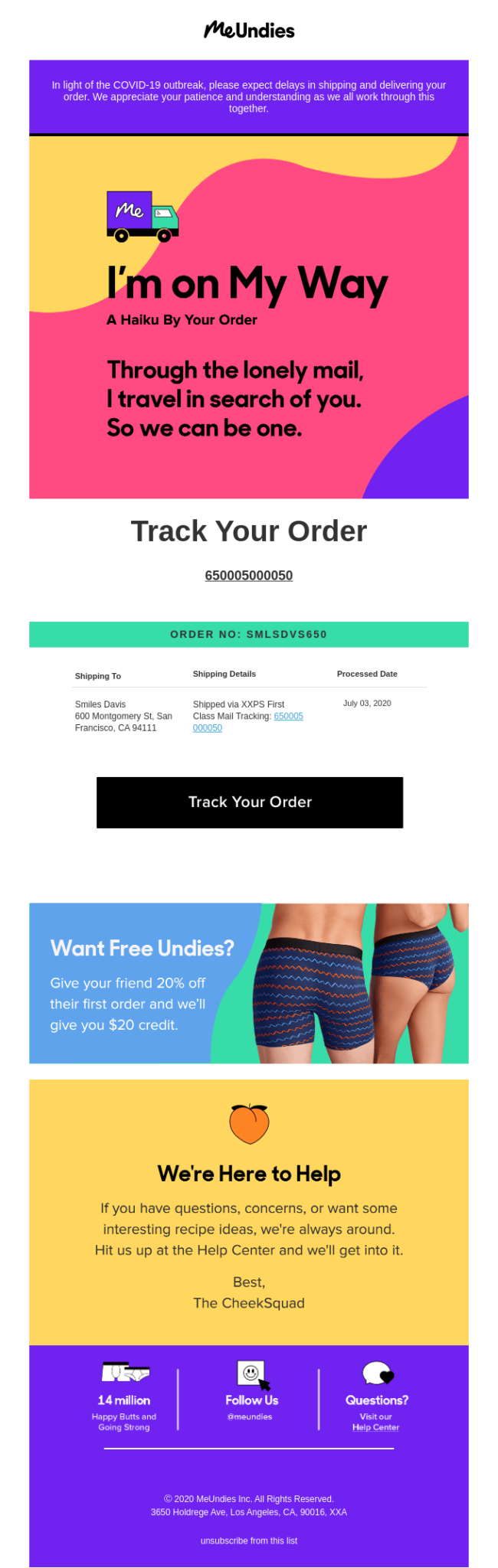
This MeUndies email has it all! Clear, colorful branding, referral offers for more products, a direct CTA to track the order, a recap of order destination information, and even a fun haiku all double down on the brand and brighten the customer’s day.
In MeUndies’ email, it employs fun colors and emojis that offer an insight into their brand voice, but the tracking information is still clearly visible along with shipping information.
There’s also an entire section dedicated to supporting the customer should anything go wrong (just like a proper pair of underpants offers good support).
The point of a tracking email is to inform the customer and alleviate shipping anxiety, reduce support questions about “Where is my order?”, and deliver one last touch point to foster better customer relationships. This email knocks every big factor outta the park.

Email is not the newest tech on the market, by far. It’s an old chestnut, but it’s also a reliable channel that’s a staple of getting information directly to consumers, whether that’s info about your brand, store, new products, mishaps, and, yes, tracking.
Plus, weaving email into your post-purchase journey provides a better customer experience than letting carriers handle the communication and rob you of more customer touchpoints. The more times you get your brand’s image, voice, and attention in the path of the customer, the better that is for establishing hard-to-earn trust and long-term loyalty. And when you can control the details within the email, you better serve your customers while simultaneously reducing the load and stress on your support team.
Tracking emails are a foundational must-have for ecommerce brands looking to scale, and when you’re ready, branch into even more channels that extend the customer relationship. Push notifications, retargeting ads, and well-timed emails that happen between purchases will round out your tracking experience and make for happy customers—and bottom lines—in the end.





