

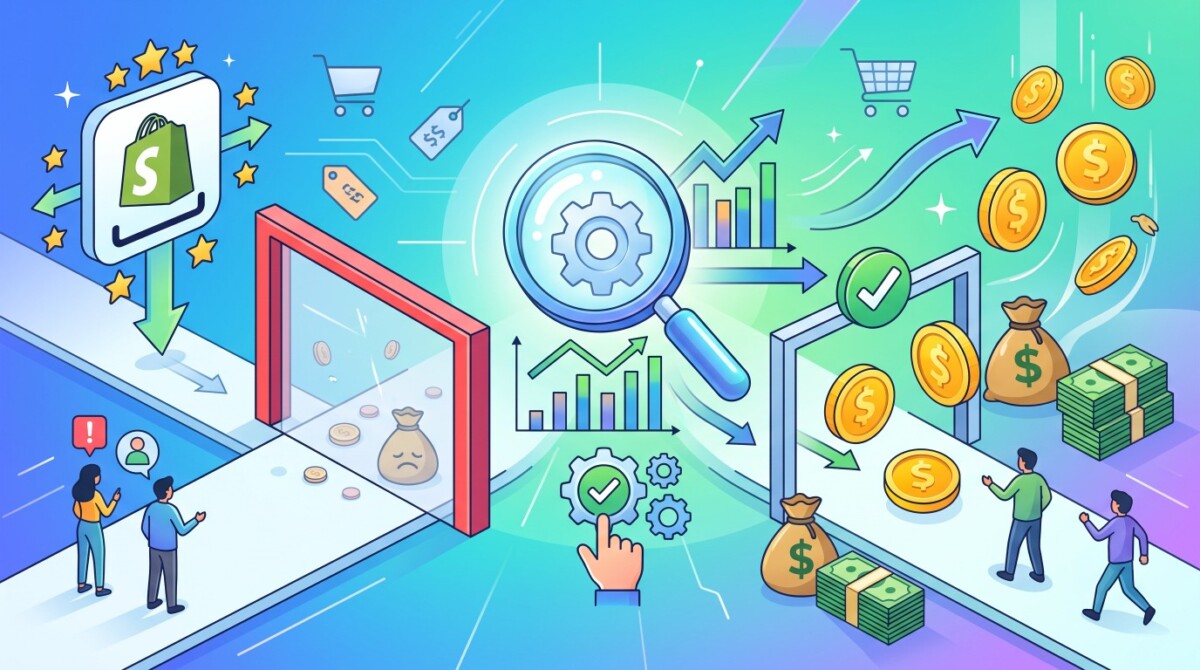
Most Shopify app installs never turn into revenue because brands optimize for low cost per install instead of downstream behavior, then scale spend before fixing onboarding, retention, and data connections that turn downloads into repeat customers worth having.
A commerce app is not a second storefront; it is a retention channel. When you treat installs as the win, you end up paying to decorate a room nobody lives in.
A DTC founder launches a branded app, runs a two-week install campaign, and hits a number worth celebrating: five thousand downloads at a cost per install that beats every paid social benchmark on the dashboard. Three months later, the app sits on a shelf of quarterly reports next to a much less flattering number: almost none of those installs ever bought a second time. The campaign worked exactly as designed. It just was not designed to build a business.
Cost per install is a marketing metric. It measures how efficiently a campaign converted attention into a download, and it says nothing about whether that download turns into a customer worth having. A brand can hit an excellent CPI while acquiring users who open the app once, never create an account, and uninstall within a week. Treating install volume as a success metric is how ecommerce teams end up defending a channel that looks cheap on a media plan and expensive on a P&L.
The fix is not a better install campaign. It is measuring further down the funnel, from first open to first purchase to second purchase, and being willing to say a campaign failed even when the CPI looked great.
A mobile app amplifies whatever already exists in the customer relationship. Brands with strong repeat purchase behavior on the web, a loyal core audience, and clear reasons for someone to come back tend to see that behavior carry over and even accelerate in-app. Brands using an app to compensate for weak retention on the website usually end up with a second channel showing the same problem, just with more infrastructure to maintain. Before greenlighting app development or a promotional push, it is worth checking whether repeat customers already exist in meaningful numbers. If they do not, that is a retention problem the app will not solve on its own.
App Store and Google Play listings function like landing pages, and most DTC brands treat them like an afterthought filled in once at launch and never revisited. Apple’s Custom Product Pages let a brand publish multiple versions of its App Store listing, each with different screenshots or promotional text, and measure which version converts better for a given audience or campaign. Google Play’s Store Listing Experiments do the same for Android, testing icons, screenshots, and descriptions against real traffic. Both are free, native tools, and both are underused. A brand running paid acquisition into a store listing that has not been tested is optimizing everything except the page that actually decides whether an ad click becomes an install.
The highest-friction moment in mobile commerce is not the checkout. It is the space between opening the app for the first time and finding a reason to buy something. Forcing account creation before someone can browse, failing to carry over an existing cart or wishlist from the website, and asking for notification permission before a user has seen any value all push people out before they have had a chance to become customers. A smoother pattern lets someone browse and add to cart as a guest, recognizes a returning web customer’s existing account automatically where possible, and asks for permissions in context, such as prompting for notification access right after someone opts into a back-in-stock alert rather than on the app’s first launch screen.
Getting a first purchase is only half the job. The app earns a permanent spot on the home screen when it becomes genuinely more useful than the website: order tracking that updates in real time, personalized product recommendations based on past purchases rather than generic bestseller rails, and mobile-only offers that are meaningful enough to matter but not so frequent that they train customers to wait for a discount before buying. A loyalty program tied directly into the app, where points balances and rewards are visible without leaving the screen, gives customers a standing reason to check in that has nothing to do with a specific purchase intent.
Push notifications, abandoned cart recovery, back-in-stock alerts, and price-drop notifications are the core retention toolkit for a commerce app, and each one loses effectiveness the moment it stops feeling relevant. Segmentation is what keeps them relevant: a customer who bought running shoes should hear about a restock in that category, not a blanket sale announcement that goes to the entire list. Capping notification frequency and giving customers visible control over what they receive protects opt-in rates over the long run, which matters more than any single campaign’s short-term lift.
An app that operates as an island produces reporting nobody trusts and a customer experience that feels disconnected. The stronger pattern treats the app as one more surface tied to the same identity and data layer as everything else: Shopify for orders and customer records, email and SMS for messages that reach people whether or not the app is open, paid social for retargeting based on in-app behavior, and loyalty or CRM platforms so a customer’s history is the same regardless of which channel they used last. When these systems share data properly, a customer who abandons a cart on mobile web can get a relevant nudge by email an hour later instead of the app and the inbox running two separate, uncoordinated conversations.
Cost per install and cost per acquisition tell you what it costs to get someone in the door. Conversion rate tells you whether that person becomes a customer. Repeat purchase rate and retention curves tell you whether they stay one. Lifetime value and return on ad spend tell you whether the whole exercise was worth the budget. Brands that only track the first two numbers are optimizing for the cheapest possible door, not the most valuable customer walking through it, and those are frequently not the same audience.
The most expensive mistake is scaling paid user acquisition before onboarding friction has been fixed, because every dollar spent afterward inherits the same leak. A close second is treating the app like a second storefront rather than a retention channel, running the same generic promotions instead of the personalized experience that justifies its existence. Brands that get this right tend to treat app growth as its own discipline rather than an extension of the regular Shopify marketing calendar, which is why some teams route app store optimization, creative testing, and lifecycle messaging through a mobile app marketing agency once acquisition and retention need to move together instead of being split across generalist hires with too many other priorities.
Before increasing budget on any app acquisition campaign, it is worth confirming a few things hold true: repeat purchase behavior already exists on the web, the store listing has been tested rather than set once at launch, the path from install to first purchase has been walked by someone on the team recently, notification segmentation is in place rather than one list for everyone, and the app’s data connects to email, SMS, and the core Shopify customer record. Skipping any one of these does not make an app campaign fail immediately, but it does mean the campaign is spending its way toward the same install-heavy, revenue-light outcome that started this conversation in the first place.
Getting a mobile app to pay back is less about finding a growth hack and more about refusing to let install volume stand in for the harder, more useful question: are these becoming customers worth having.
Most Shopify app installs fail to drive meaningful revenue because brands optimize for cheap downloads instead of downstream behavior like first and second purchases, retention, and lifetime value. When onboarding is clunky, value is unclear, messaging is generic, and data is disconnected from the rest of the stack, installs churn before they ever become loyal customers, no matter how strong the acquisition campaign looked in isolation.
You can tell your brand has earned a mobile app when you already see healthy repeat purchase behavior, strong engagement on mobile web, and clear reasons for customers to come back regularly. If your second-purchase rate is low and you rely heavily on discounts to re-activate buyers, an app will likely mirror those problems with more overhead. Fix retention on the web first so the app can amplify a relationship that already works instead of exposing the same weaknesses in a new channel.
The first priority between install and first purchase is reducing friction in the early app experience: avoid forcing account creation before browsing, carry over carts and wishlists from the site where possible, and delay permission prompts until they are clearly tied to value. You want the first session to feel fast and rewarding so customers see products, understand benefits, and can buy without jumping through avoidable hoops.
You should send push notifications often enough to stay relevant but not so often that opt-outs and ignores climb, which usually means capping broad campaigns and relying heavily on behavior-based triggers. Focus on messages tied to clear value—abandoned carts, back-in-stock alerts, relevant launches—segment them by interest and lifecycle stage, and give customers simple controls over what they receive. Long-term opt-in health matters more than squeezing maximum short-term volume out of every install.
The metrics that matter most before scaling app acquisition are cohort-based retention, revenue per install, second-purchase rate, and lifetime value relative to your cost per install and cost per acquisition. If those downstream numbers are healthy and improving, additional budget can compound a working system. If they are weak, more spend will just buy more churn, so you should fix onboarding, offers, messaging, and integration first before turning up the volume.





