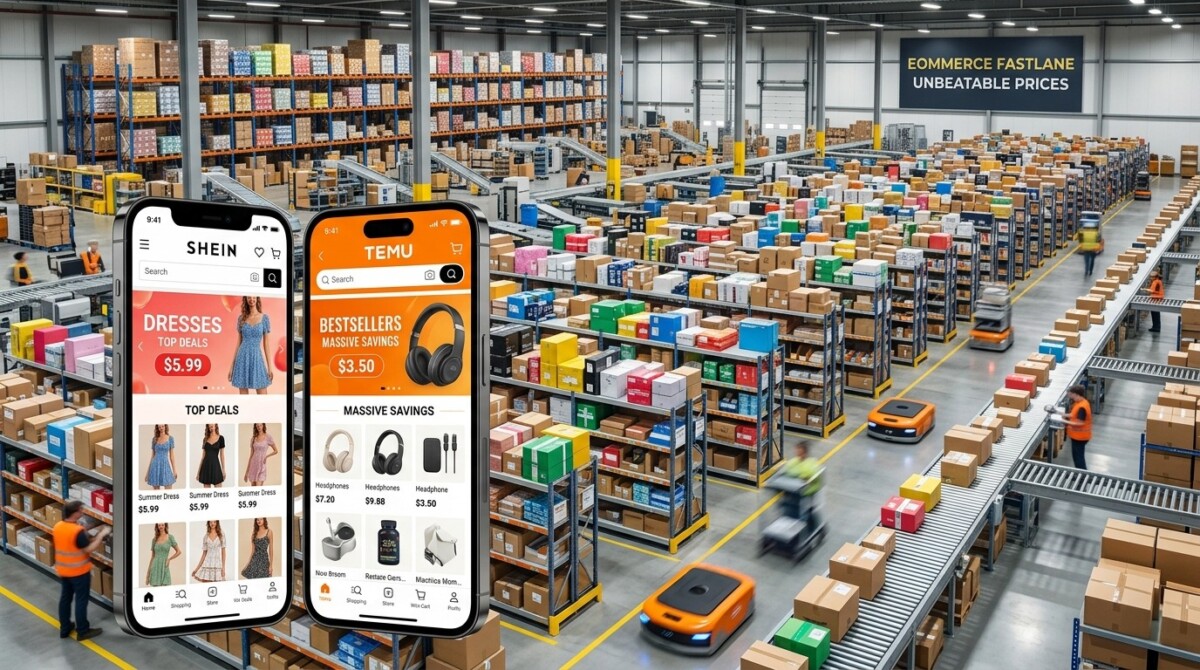
Small DTC brands beat Shein and Temu by competing on everything price cannot buy: a narrow niche, provable trust, community, speed to relevance, and a post purchase experience that turns one order into a relationship. You will not win the price war, so do not enter it.
Shein just bought Everlane to borrow the one thing it cannot manufacture at scale: a reason to trust it. That should tell you exactly where you win.
You cannot beat Shein and Temu on price because their scale and supply chain make sub $15 dresses and sub $5 jewelry profitable in a way no independent brand can match. Shein runs on the latest micro trends with dresses under $15 and jewelry under $5, and it just acquired Everlane to borrow a premium reputation it could not build organically. When a giant that wins on price spends real money to buy credibility, it is telling you exactly which battlefield it cannot win on its own.
So stop trying to shave your prices to get close. Every dollar you cut to chase Temu is a dollar of margin you needed to fund the things that actually differentiate you, and you will lose anyway because they can always go lower. The race to the bottom has a winner, and it is the company with the lowest cost structure on earth, not you.
The reframe that changes everything: a customer choosing between you and Shein is not really comparing prices, they are comparing what they get for the difference. Your job is to make that difference obvious and worth it. That means deciding, on purpose, to be more expensive and more specific. The five fronts below are where small brands actually win, and none of them is price. Pick the ones that fit your stage and go deep rather than spreading thin across all five at once.
The narrower and more specific your niche, the harder a generalist giant is to beat, because relevance beats selection for a customer who knows what they want. Shein and Temu win the shopper who wants something cheap and is not picky about what. You win the shopper who wants exactly this, for exactly their situation, and is willing to pay to get it right the first time. Those are different people, and the second one is far more profitable to serve.
Depth means your product, your content, and your language all speak to one clearly defined customer better than anyone else does. A jewelry brand that owns the niche of hypoallergenic pieces for people with metal sensitivities beats a giant catalog of cheap jewelry for that buyer every time, because the giant cannot afford to care about that specific need at that level of detail. For a concrete look at how a focused line supports real revenue, I walked through it in how a tightly focused product line supports $100K months.
If you are just starting, this is the highest leverage decision you will make, and the instinct to broaden is the one to resist. A smaller niche feels riskier and is almost always safer, because it gives you a customer you can actually reach and a reason to exist that a marketplace cannot copy. If you are scaling, audit your catalog honestly: the SKUs that dilute your positioning are quietly costing you the customers who would have paid a premium for focus. Pruning is growth.
Trust is the single attribute a fast fashion marketplace structurally cannot offer, so make yours visible, specific, and verifiable on every page. The customer paying more than Shein prices is buying confidence: that the product is what it claims, that it will arrive as shown, that someone stands behind it. Most small brands have earned that trust and then hide it, burying the proof a buyer needs at the exact moment of hesitation.
Make it impossible to miss. Real customer reviews with photos do more to convert a skeptical buyer than any amount of copy, and tools like Okendo or Junip make it easy to collect and display them with the detail that reads as credible rather than generic. Recency matters as much as volume here: fifty verified reviews from the last six months will outperform five hundred reviews that are two years old, because a buyer reads freshness as proof the brand is still delivering. Add specifics a giant never would: where the product is made, who makes it, what it is made of, and what your return policy actually says in plain language.
This is also where the Everlane story cuts both ways. Customers paid a premium for that brand precisely because they trusted its transparency, which is the asset Shein just paid to acquire. Your independence is the thing that makes your trust believable. Use it while you have it, because it is worth more than the giants can manufacture and exactly what they are now shopping for.
Community is the moat a marketplace cannot copy, because it is built on relationship rather than transaction, and relationships do not transfer in an acquisition. Shein can buy a brand, a catalog, and a logo. It cannot buy the group of people who feel like your brand is theirs. That sense of belonging converts and retains at rates paid acquisition cannot touch, and it gets cheaper to maintain as it grows, which is the opposite of how ad costs behave.
Community does not require a forum or an app. It requires consistent, genuine contact with people who chose you, through channels you own. Your email and SMS lists are the foundation, because they are the audience no algorithm can take away from you. I made the fuller case for this in why your email list is distribution infrastructure, not a broadcast tool. From there it can grow into a private group, a recurring live drop, a creator partnership, or user generated content programs that turn customers into your most credible marketing.
If you are at $50K, this looks like personally replying to buyers and turning the best conversations into content, which feels unscalable and is exactly the point at your stage. If you are at $5M, it looks like a deliberate community program with an owner, a calendar, and a UGC engine feeding both your ads and your product pages. The mechanics scale. The principle does not change: people defend brands they feel part of, and they never feel part of a marketplace.
You cannot out ship Shein, but you can out relevance it by reacting to your niche’s culture faster than a giant ever can. Shein’s advantage is speed to manufacture; your advantage is speed to meaning. A giant optimizing across millions of SKUs cannot move quickly on the specific trend, inside joke, or moment that matters to your particular community. You can, because you are close enough to your customer to see it coming.
This is where being small is a structural gift rather than a limitation. When something starts moving in your niche, a cultural moment, a new use case, a problem your customers are suddenly talking about, you can publish content, drop a product, or send an email about it the same week. The giant is still routing the idea through a committee. Speed to relevance is how a brand with a fraction of the budget stays top of mind, and it compounds: every time you are first to matter on something your customer cares about, you deepen the relationship that price alone can never buy.
The AI driven discovery shift makes this even more valuable, because the brands that publish timely, specific, genuinely useful content are the ones surfacing when buyers ask an assistant for help. I mapped where that is heading in the practical guide to agentic commerce and AI discovery for Shopify brands. Relevance is becoming a distribution advantage, not just a brand one.
The post purchase window is where a small brand turns a one time buyer into a repeat customer, and it is the highest return work most brands ignore entirely. Acquisition is where you spend; retention is where you actually make money, because the second and third orders carry the margin the first one spent on getting the customer. Against Shein and Temu, where the experience usually ends the moment the package arrives, an intentional post purchase journey is a genuine point of difference.
The first 48 hours after an order, and especially after a first order from a buyer who found you through a marketplace or an AI assistant with zero brand context, decide whether that person ever comes back. Most brands waste that window with a single shipping confirmation and silence. The brands that win use it: a thoughtful order confirmation that sets expectations, a flow built in Klaviyo or Omnisend that introduces who you are and why you exist, a genuine ask for a review once the product has arrived, and a reason to come back before they have forgotten you. Returns are part of this too, and handling them gracefully with a tool like Loop turns a moment of friction into a reason to trust you more.
Whatever your stage, this is the work that compounds, and it pairs directly with the retention thinking in the retention shifts that turn one time buyers into repeat customers. You cannot beat a giant on the first transaction. You beat it on the second, the third, and the relationship that a marketplace was never built to have.
A small Shopify store competes with Shein and Temu by winning on everything except price: niche depth, trust, community, speed to relevance, and post purchase experience. You will never match their cost structure, so the goal is to make the price difference obviously worth it to a specific customer. Pick one tight niche and serve it better than any giant catalog can, surface real reviews and sourcing details that a marketplace cannot credibly offer, and build owned channels like email and SMS that turn buyers into a community. Then use your size as an advantage by reacting to your niche’s moments faster than a giant ever could. Depth and relationship beat breadth and price for the customer worth keeping.
No, lowering your prices to compete with Temu and Shein is a fight you cannot win and should not start. Their scale and supply chain let them go lower than your cost structure allows, so every dollar you cut to get closer is a dollar of margin you needed to fund the things that actually differentiate you, and they can still undercut you. Instead, decide on purpose to be more expensive and more specific, then make the value of that difference impossible to miss through trust signals, niche relevance, and experience. The customer comparing you to Shein is really weighing what they get for the gap in price. Win that comparison, not the price itself.
Customer trust against fast fashion brands is built by making proof visible at the moment of hesitation: recent reviews with photos, transparent sourcing, and plainly stated policies. Trust is the one thing a marketplace like Shein structurally cannot offer, which is exactly why Shein paid to acquire a brand known for it. Use review tools like Okendo or Junip to collect and display credible, recent customer feedback, since fifty reviews from the last six months convert better than five hundred that are two years old. Then add the specifics a giant never would: where and how the product is made, what it is made of, and a return policy a buyer can understand in two sentences. Your independence is what makes that trust believable.
Small DTC brands use community to compete with marketplaces by building owned relationships that convert and retain at rates paid acquisition cannot match and that no acquisition can transfer. Community starts with channels you control, primarily email and SMS, then grows into private groups, recurring drops, creator partnerships, or user generated content programs. At an early stage it can be as simple as personally replying to buyers and turning the best conversations into content, which feels unscalable and is precisely the advantage at that size. At scale it becomes a deliberate program with an owner and a calendar. The principle holds at every stage: people defend brands they feel part of, and no one feels part of a marketplace.
The Shopify apps that help small brands compete with Shein and Temu are the ones that strengthen trust, retention, and community rather than price. For reviews and trust signals, Okendo and Junip collect and display credible recent feedback. For the owned channels that build community and drive repeat purchases, Klaviyo and Omnisend handle email and SMS flows, including the post purchase sequences where retention margin is made. For returns handled in a way that builds trust instead of eroding it, Loop turns a friction point into a reason to come back. The app is never the strategy, though; these tools only matter in service of a clear decision to win on niche, trust, community, and experience instead of price.