

With more than 2.74 billion active users, Facebook is one of the largest social media platforms that brands actively use to reach more people and make money.
It houses people from different countries and walks of life and can be a great way to boost your revenue. You will, however, need the right Facebook marketing strategy to achieve that.
We’ll discuss some effective Facebook marketing strategies in this guide and help you hit the bull’s eye.
Let’s start with our Facebook marketing strategy guide:
There are dozens of social media platforms out there, yet Facebook still enjoys a very good reputation.
It has the highest population of online users over 35, currently standing at 114.2 million. That’s nearly 23 million more than TikTok and Instagram together. Plus, since the platform has been there for more than two decades, it’s quite familiar and has a huge base of loyal users who may not use other platforms.
The platform is perfect for all kinds of brands as it’s used by both genders. Moreover, about 74% of high-income earners use Facebook. This means you can use it to promote even luxury goods and services and reach businesspeople.
Despite other platforms, it’s still very popular in the US. Reports show that about 38% of adults in the U.S. spend about 38 minutes on Facebook every day.
All this is enough to think of a Facebook marketing strategy and utilize the platform to its full potential.
Here are a few Facebook marketing tricks to use to boost your results and get better output:
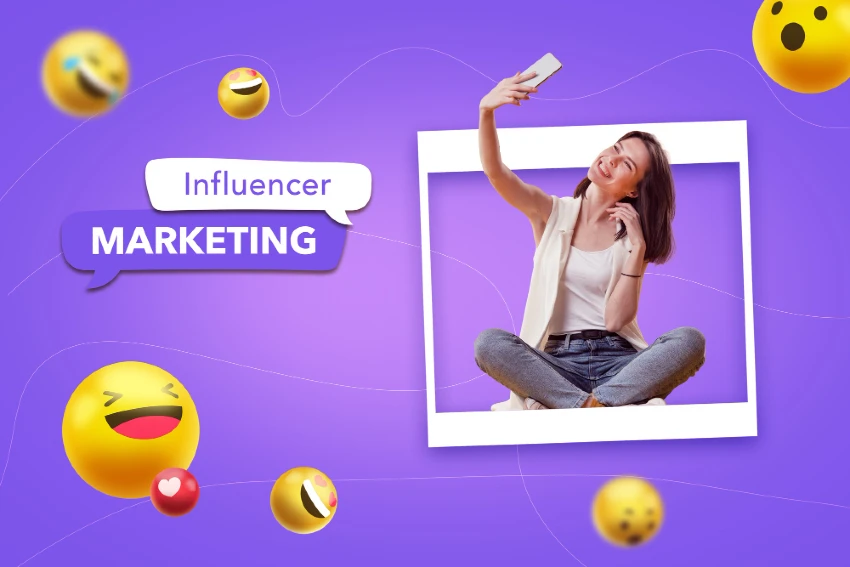
No Facebook marketing strategy is considered complete without the inclusion of influencer marketing.
Gone are the days of organic posts. Today, it is all about using influencers to increase your reach and market your products.
Influencer marketing is such an important part of Facebook marketing that we can write an entire piece dedicated to this Facebook marketing strategy.
So, what’s influencer marketing? It involves using an influencer (someone with an influence) to promote your products or services on social media. An influencer enjoys a good number of followers (who listen to them).
So, how does this Facebook marketing strategy work? Here are the steps:
The first step is finding an influencer to help you reach your target audience. There are a few things to take care of:
Now that you have selected an influencer, the next step is to agree on a contract. Here are a few things to take care of:
Influencers typically do not promise expected outcomes but you can understand by looking at past collabs. Ask them for details such as how many sales or clicks a past client got. A large number of influencers now offer media kits that contain such details. Make sure to go through these kits so you can have a full understanding of what to expect.
As explained earlier, money has to be decided in advance. In most cases, you will be asked to make an advance payment. Influencers typically accept payment through PayPal and other such methods. Those who agree to accept a free product or service instead of payment will typically require it in advance.
Make sure to spend a good amount of time discussing this factor as it can make or break your campaign. You can either provide content or have the influencer create it for you. Content includes everything from images, videos, and captions, to hashtags. Most brands dictate what to include in the content and let influencers create their own. However, we suggest that you insist on approving content before it goes live to avoid issues. Even a small typo can lead to disastrous consequences so be very careful.
Since content can be promoted in a variety of ways, you must be clear about the delivery method, i.e.: will it be a post, a live video, a pre-recorded video, and so on? Most brands these days go for a mix of content. We suggest you also go for a package that includes not just pre-recorded videos or images but also stories and live sessions so you can increase your reach.
Discuss how long a campaign will run for and on what dates. This depends on what you are trying to promote and when the influencer has the most traffic. It might be a good idea to discuss the timing as well since influencers are known to have more engagement at specific hours. Your post should ideally go live when it’s more likely to attract eyeballs.
Now that everything has been finalized, creating and following the campaign is time. Facebook makes it very easy to analyze influencer marketing campaigns. The influencer will typically provide you with data related to your campaign, including the number of views and hits you received. But, don’t just count on influencer-provided data, and keep an eye on your side as well. Gauge if you’ve attracted more visitors or followers and if engagement has increased as a result of the campaign.
Furthermore, you should be able to attribute the number of sales or leads to the campaign as it’s an important metric. Including trackable links can be a great way to do this. In addition, we suggest that you use influencer-specific discount codes and hashtags. They’ll help you understand how many users come through specific influencers. Since visitors keep coming long after a post has gone live, specific hashtags and codes.
With these pointers in mind, you’d have a successful Facebook influencer marketing campaign.
So, start today by joining Afluencer and getting access to thousands of established and growing influencers.

Despite what everyone says, the fact remains that content is still the king. You should concentrate on providing original, high-quality content to attract and retain followers.
Most importantly, your content has to be engaging. Since your main intention is to reach more people, you should come up with content that is likely to go viral, generate shares, and get comments.
Facebook tends to promote content that organically generates engagement, thus your aim should be to get people talking.
For this purpose, we suggest that you concentrate on a mix of content. Do not promote boring content, and concentrate more on visual elements as they generate 65% more engagement.
Images tend to do very well on Facebook. Reports show that posts that contain images get 2.3x more engagement than posts that do not contain images.
There are several other benefits of images too. Firstly, you can put a logo on them, which means even if they get stolen, the world would know where they’re coming from.
Secondly, they can be very effective in sending a marketing message since we tend to remember more of what we see than what we read and hear.
Furthermore, images are also linked to sales. Posts that show what you’re selling are 67% more likely to bring sales. Consumers don’t just want to read about things, they want to see.
About 58% of people agree that they’re more interested in products they can see than products they only read about.
So, how do you select images and what to post?
What you post depends on what you wish to achieve. For example, branded images can be effective in increasing sales. It has been proven that brand images are more effective when they show someone interacting with the product.
Surprisingly, images that contain only a part of the body (such as feet or hands) perform 29% better than images that contain a whole person. The idea is to clearly show what a product is and how it is used.
But, it doesn’t mean you should neglect people since images that contain humans get more comments. In addition to branded images, you can also use stock photos. However, that may not always be the best option. But, they do have their pros as stock photos are often cheaper and easier to get.
These days, there is also an emphasis on AI-generated images. But, if you are serious about getting engagement then use personal images. They help build trust and rapport with your followers.
Also, include infographics. They get a lot of shares and can be used to explain complex concepts.
Video is undoubtedly the future. After all, young Facebook users spend about 75% of their time on video. Hence, it should be a part of your Facebook marketing strategy.
Facebook videos generate about 8 billion views every day, accounting for about 50% of all time spent on the platform.
About 15.5 percent of all content on the platform falls in this category and about 61% of millennials even binge-watch videos on Facebook.
The platform is now the second most popular and used video marketing platform, only after YouTube. About 83% of marketers in the US believe Facebook helps drive sales.
Interestingly, videos are uploaded by everyone from individuals to brands. However, large brands seem to be benefiting the most from this Facebook marketing technique since big brands can afford to spend lavishly on videos.
So, what to remember when making videos?
Make sure to include written text but don’t solely count on it. People still read captions on Facebook but written material without images or videos often gets neglected.
For informative posts, it’s best to use an infographic or an image. For how-to posts, it’s best to use videos.
You can also include links but the opinion seems to be divided. Reports show that Facebook posts without links tend to receive twice the engagement. A report highlighted that links reduce engagement by about 30%. So, use this Facebook marketing strategy with caution.
If you use links, remember to explain what they contain and why a user should click on them. Remember that Facebook pays a lot of attention to the number of clicks a link gets when deciding where to show your post. So, choose wisely.
Also, ensure you post a mix of all these content types and not stick to a single type.
This Facebook marketing strategy is important because timing can make or break a post.
There, however, is no straight answer to this because the best time to post on Facebook can vary based on your specific audience and the nature of your content.
General guidelines suggest that the best times to post on Facebook are typically mid-week, between 10 am and 3 pm. These times may vary based on your audience’s demographics, location, and habits, so it’s a good idea to experiment and analyze your data to find the optimal posting times for your particular situation.
Here’s what to consider when choosing your Facebook marketing strategy:
So, how should you select the right date and time? By analyzing data.
Facebook analytics will tell when your posts typically get engagement and when most of your followers are active. You should ideally make a post when it is likely to get more eyeballs.
You can also use third-party tools to get access to data.
Do not stick to a single day because no Facebook marketing strategy recommends posting just once a week. You should ideally post once or twice a day.
Forming connections and resharing content are both important strategies for building engagement on Facebook.
You should focus on forming connections not only with your followers but also with other brands and influencers. This can benefit you a lot in the long run by helping expand your reach to their audiences. When they engage with your content or share it with their followers, you have the opportunity to reach a larger and potentially new audience.
Plus, doing so can provide social proof for your brand and help build credibility and trust with your audience. More importantly, connecting with your followers allows you to gather insights and feedback directly from your audience. This can help you understand their preferences, interests, and pain points better, which can inform your content strategy and product development.
Also, users tend to like brands that engage with them and pay attention to what they have to say. It gives them a sense of community and makes them feel heard.
So, how can you form connections?
Your followers should take great pride in being a part of your community and happily share what you post. This can be achieved by making them feel valuable and listening to them.
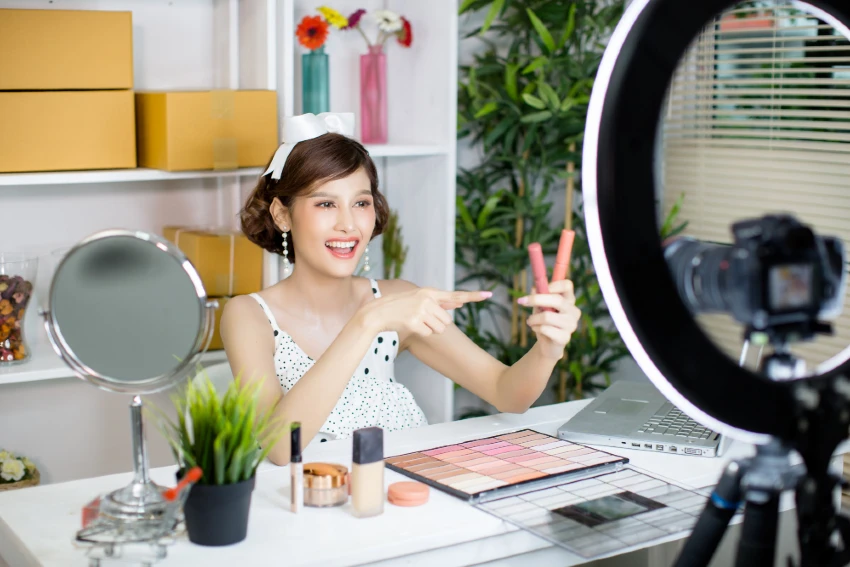
Facebook Live can be a great marketing strategy and it should be a part of your Facebook marketing plan.
It has been proven to be the fastest way to make sales and grow your audience. Moreover, over 80% of users prefer live videos over text-based content as they allow them to clear doubts and know more about a product or service. Yet, less than 35% of brands use this tool.
Facebook Live drives around 3x more engagement than traditional videos. Also, they’re watched longer than traditional videos. But, you need to play it right to enjoy these benefits.
Most importantly, show up when you say you will and never be late. Ensure to be clear with your purpose and double-check equipment so that nothing goes wrong during the steam.
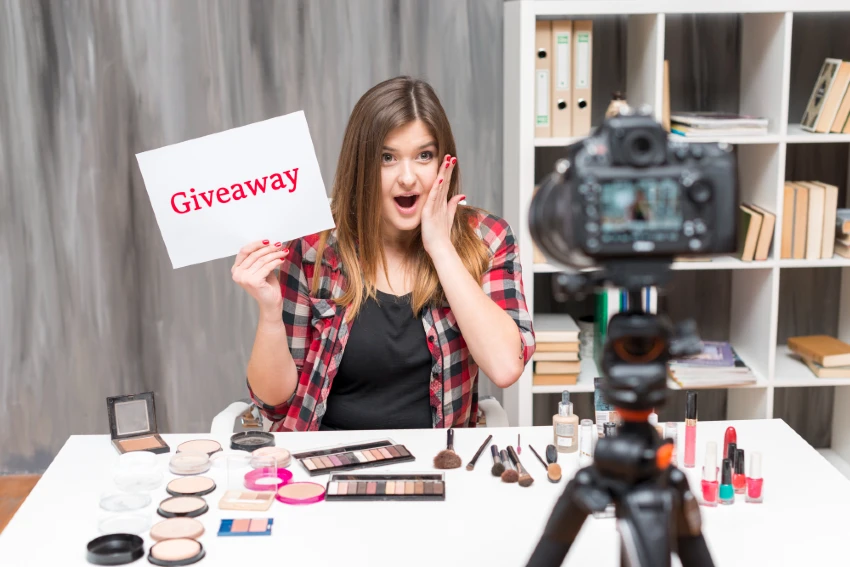
Social media giveaways have been proven to be an effective Facebook marketing tool. So, make sure to use this Facebook marketing strategy.
More than 150,000 new giveaways are posted on social media every day. Not just brands, but even individuals try this technique to drive engagement.
So, what’s a giveaway? It can be defined as a Facebook marketing campaign used to drive engagement that involves people taking part in competitions to win gifts.
Participants typically enter a giveaway by completing specific actions, such as liking a post, sharing content, subscribing to a newsletter, or tagging friends. Winners are usually selected randomly or based on specific criteria set by the organizer.
You can choose different types of tasks based on your niche and company. For example, if you sell baby products, you could ask your followers to post photos of their babies and the one with the most likes wins.
Similarly, you can make it more competitive by asking them to solve an algebra equation if you sell something related to mind exercises or mathematics.
There’s no limit when it comes to competitions, but experts believe that a giveaway should not put ‘too much mental pressure’ on consumers. Actions should be simple such as sharing or liking a post, as people are more likely to get involved in such tasks.
Contests or giveaways need to be promoted properly. We suggest you hire the services of an influencer to help you reach more people and ensure your giveaway attracts the eyeballs.
At the end of the day, it is worth the price since contests enjoy a conversion rate of almost 34%, higher than other content types. Reports found that 34% of new customers are acquired through contests, making it a great Facebook marketing strategy.
Brands add about 17,500 fans through social media contests. If you do it right, you can also enjoy high numbers.
Also, remember that Facebook has some regulations around contests that need to be followed. Also, your local laws may come into play.
This approach involves ensuring that your Facebook presence is visible and easily accessible across all your marketing channels, both online and offline. By incorporating your Facebook profile into various touchpoints, you can increase brand visibility, engage with your audience, and drive traffic to your Facebook page.
One of the simplest ways to reference your Facebook profile is by including social media icons and links on your website. Place these prominently on your homepage, contact page, and blog posts to encourage visitors to connect with you on Facebook. Additionally, consider using Facebook’s Page Plugin to embed a live feed of your page’s posts directly on your website, providing visitors with a preview of your content and encouraging them to like your page.
Email marketing is another effective channel for promoting your Facebook profile. Include social media buttons in your email signature or footer to encourage recipients to follow you on Facebook. You can also create dedicated email campaigns to promote your Facebook contests, events, or exclusive content, driving traffic to your page and increasing engagement.
Incorporating your Facebook profile into your offline marketing efforts can also yield significant results. Include your Facebook URL on your business cards, flyers, and promotional materials to encourage people to connect with you online. Consider running promotions or contests that require participants to visit your Facebook page, providing an incentive for them to engage with your brand on social media.
Collaborating with influencers or partners can further extend the reach of your Facebook profile. Partner with influencers in your industry to create sponsored posts or co-branded content that promotes your Facebook page to their audience. This can help you reach a new and relevant audience, increasing your page’s visibility and engagement.
Lastly, leverage other social media platforms to cross-promote your Facebook profile. Share teasers or highlights of your Facebook content on platforms like Instagram, Twitter, and LinkedIn, with a call to action directing followers to visit your Facebook page for more. This can help you drive traffic from one platform to another, increasing your overall social media presence.
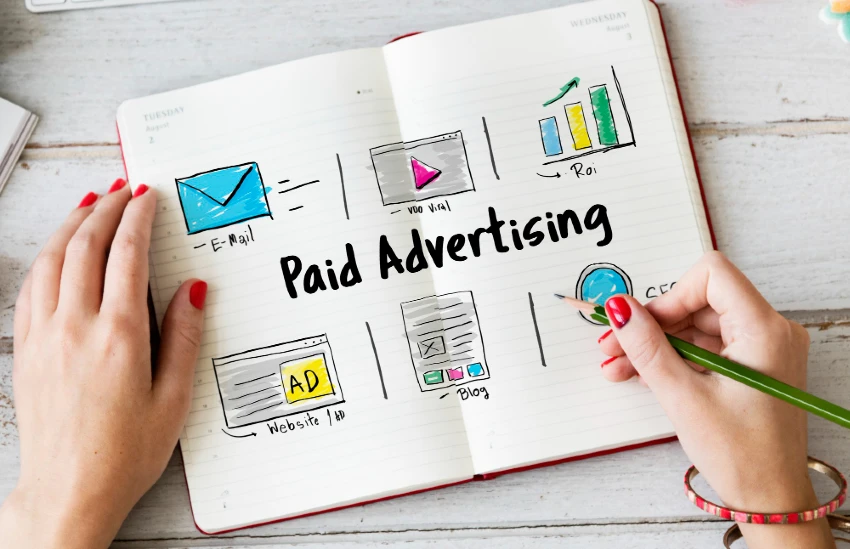
Facebook enjoys a huge digital marketing ads market share standing at 20%, only behind Google.
It uses the ubiquitous “pay-per-click” model that’s not only affordable but very easy to comprehend. Plus, you do not need a lot of money to get started as the minimum budget is only $1 per day. You will, however, need to spend more to be able to get results.
Still not sold?
The typical Facebook user clicks on 12 ads each month, so it makes perfect sense to include ads in your Facebook marketing strategy.
This, however, is easier said than done. The market is competitive and if you don’t set it up right, you may end up spending a lot of money with no results.
So, how can you ensure good results?
We suggest that you create multiple campaigns, test each, and choose the one that works the best. Also, it might be a good idea to provide all valuable information in the ad (without forcing users to click a link).
For example, if you sell phone cases then clearly tell the price. Similarly, if you’re promoting an event then clearly mention not just ticket prices but also venue, date, and timing.
Suitable for specific businesses, Facebook Groups can prove to be very beneficial in creating a community and getting people interested in what you do.
They can prove to be effective in building relationships with your customers and collecting feedback. This, however, doesn’t mean you neglect pages. Consider managing both.
Facebook Pages are effective but they come with a low organic reach. Groups, on the other hand, have a very high reach and so are more effective in getting sales.
The only difficult part is to get people to join the group. This can be achieved by running campaigns, getting influencers to promote the group, or offering something in exchange.
For example, you can offer a special discount code to group members to encourage them to be a part of the community. Most importantly, ensure discussions are clear and informative. Don’t spam users with your posts.
These are some of the best Facebook marketing strategies to try. They’re suitable for all kinds of businesses and even individuals who want to get big on the platform. In addition, you can try Facebook Marketplace and make use of third-party tools designed to improve performance and save time.
But, don’t forget the importance of getting help. It can be very hard, if not impossible, to find a footing without the support of an influencer or someone to boost your standing.
Join Afluencer today to get in touch with thousands of influencers with a huge influence on Facebook. They can help you get more followers, sell products, and improve your goodwill.





