


Google’s search results are undergoing a massive transformation, and the message to content creators is clear: adapt or fade away.
With AI Overviews prioritizing summarized information at the top of search pages, ecommerce businesses, especially DTC brands, face the challenge of reduced organic visibility.
This shift demands an evolution in how content strategies are designed and executed. For Shopify merchants and ecommerce professionals, the path forward isn’t just about producing great content; it’s about crafting content that thrives in this AI-driven ecosystem. Ready to stay ahead? Let’s identify how you can reshape your strategy to retain relevance and profitability.For additional guidance on crafting a strong digital strategy, explore this resource, or for practical steps on implementation, see How To Build A Winning E-Commerce Content Strategy.
Google’s search results are no longer what they used to be. The emergence of AI Overviews has completely redefined how users receive information, altering the landscape for content creators and eCommerce professionals alike. To thrive in this environment, businesses must rethink their strategies and move away from outdated methods of keyword-stuffed content. Instead, it’s time to embrace precision, detail, and contextual depth to capture visibility in AI-powered search results. Understanding these changes is critical to creating a content strategy that works.
AI Overviews are Google’s AI-generated summaries appearing at the top of search engine results pages (SERPs). These summaries provide direct answers to user queries by synthesizing data from multiple sources, structured information, and Google’s own language models. For users, especially those seeking quick information, this is undeniably convenient. But for content creators, it presents a new set of challenges.
Let’s illustrate this with an example: imagine a user searches for “best eco-friendly skincare products.” Instead of diving into blue link results, they now see a concise AI-generated summary detailing top-rated products, their ingredients, and their benefits. This efficiency reduces the likelihood of users clicking through to individual websites, as they already have their answers.
For Shopify merchants and entrepreneurs, it means fewer direct clicks, even if your product or content fuels these summaries. Worse, some businesses won’t even see attribution for their input. Here’s how to create a content marketing strategy to better align with this shift and start optimizing for better placement in AI Overviews.
The rise of AI Overviews has brought about the era of the “zero-click search.” With answers being delivered upfront, users are less likely to explore beyond the top of the page. What does this translate into? A potential dip in organic traffic, fewer opportunities to gain visibility, and an overall impact on profitability for brands relying heavily on search engine traffic.
For instance, if you sell eco-friendly skincare products and your previous first-page result drove consistent traffic to your store, your clicks might now be cannibalized by summaries pulling data from hundreds of sources. To safeguard your visibility, consider prioritizing strategies that align directly with this shifting SERP behavior:
Additionally, marketers who embrace advanced tools like Semrush’s AI overview tracker can better evaluate their current standing and identify actionable ways to improve placement.
With AI playing an ever-increasing role in shaping SERPs, adapting your content strategy is no longer an option—it’s an imperative. The traditional approach, centered solely on writing with keywords in mind, will no longer suffice. Instead, the focus should be on clarity, relevance, and structuring content for AI consumption.
So, how can content creators and Shopify businesses proactively align with this new search reality?
As Danny Sullivan clarified at Search Central Live, Google’s ultimate aim is quality content. Adapting strategically not only ensures survival in this new environment but can also position your content as indispensable, regardless of where SEO trends shift next.
By leaning into mindful changes, like those outlined in these brilliant content marketing examples, you ensure your strategy isn’t hindered by the AI-enhanced SERP but optimized to excel in it. The real question is: are you ready to lead the next era of search?
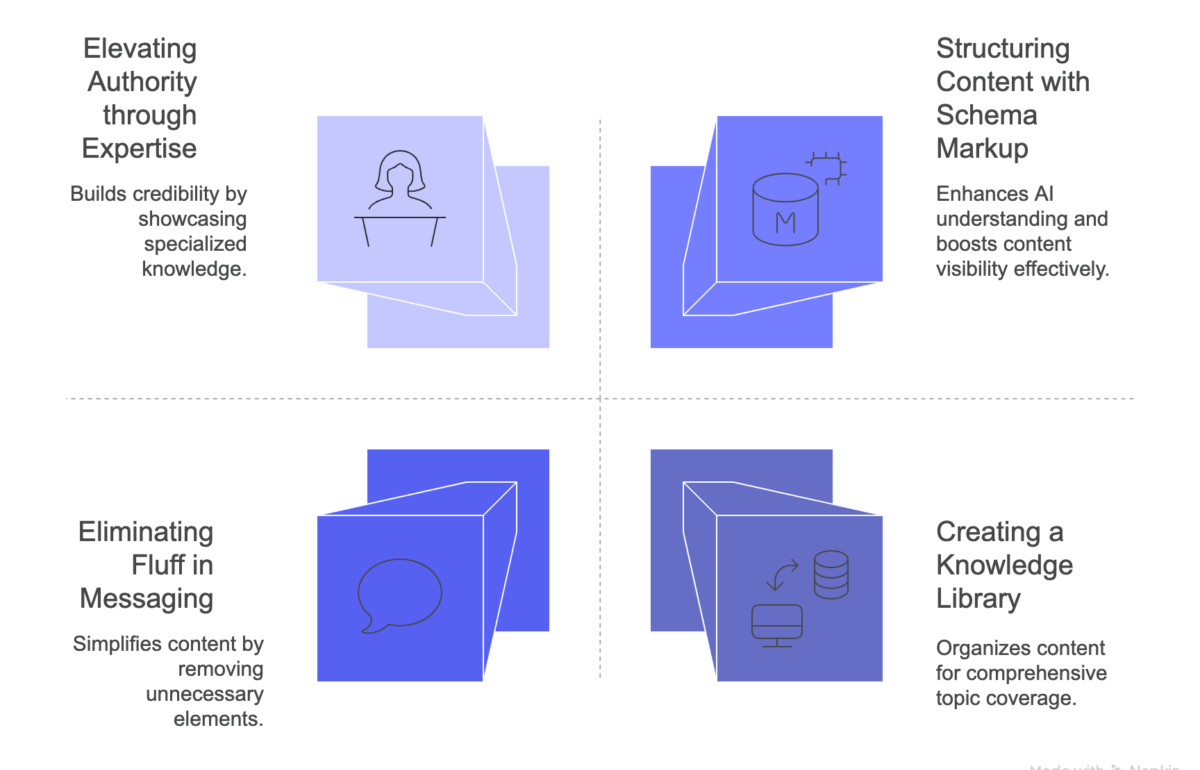
As Google’s searches embrace AI-powered algorithms, the way content is created needs to change if you want it to be both visible and valuable in search rankings. Adapting involves not just writing good content, but designing it strategically to meet the demands of AI’s processing power and user-first approach. Below are four fundamental principles for creating AI-optimized content that helps you better compete in this evolving landscape.
When it comes to AI-driven search results, less is truly more. In this context, “fluff” refers to filler content that fails to provide actual value—unnecessary words, redundant points, or unstructured ideas. AI algorithms prioritize content that gets to the heart of what users genuinely need.
For practical techniques on offering relevant and engaging content, check out how interactive content can enhance AI-driven searches.
Google evaluates online content through the lens of E-E-A-T—Experience, Expertise, Authoritativeness, and Trustworthiness. These principles ensure that content is credible and useful to users.
To learn more about using AI effectively while maintaining an authentic tone, consider this comprehensive guide on humanizing AI content.
AI tools depend heavily on structure to accurately interpret and replicate human-like summaries in search results. Well-structured content isn’t just user-friendly; it’s also AI-friendly.
For deeper insights into the synergy between structure and AI visibility, see this breakdown of AI-powered internal linking for SEO.
AI thrives on solving user challenges across interconnected content ecosystems. Brands need to adopt a “knowledge library” approach, where each resource builds upon another to achieve topical authority.
For a practical example of building topical authority, explore how AI content marketing strategies can boost knowledge depth.
When you align your content marketing with AI principles, you’re not only optimizing for search rankings but also positioning your business as a trusted resource in your niche. Dig into these strategies and watch your AI-era SEO results evolve alongside the technology driving them.
Adapting your content to thrive in Google’s AI-powered search environment is no longer optional—it’s essential. As AI algorithms get smarter, they prioritize content that is both well-structured and deeply informative. This next section explores practical, actionable steps to shield your content against the disruptive wave of AI changes while maintaining user-focused clarity. Let’s break this down step-by-step.
Product pages are an ecommerce cornerstone, and AI algorithms often prioritize pages with rich, structured data. Making your product pages machine-readable while keeping them user-focused is key. This is where schema markup becomes a game-changer.
Product, AggregateRating, and Review schema helps AI quickly pull information about your product, such as price, availability, and ratings. This not only boosts visibility in AI Overviews but also builds user trust at a glance.Not sure how to get started with schema? Dive into this complete guide on AI content strategies for ecommerce.
AI excels at processing existing information, but it struggles to create uniquely human perspectives. This is where you have an edge—leveraging original insights that only your brand can offer.
For more on original content strategies, check out How AI Writers Are Revolutionizing Content in Ecommerce.
Category pages often serve as gateways to your products, but under AI scrutiny, they hold even greater potential. Think of these pages as hubs of knowledge—not just directories.
Want more tactics for enriching your categories? Explore insights on mastering content creation with prompt pairing.
AI loves structure, and technical enhancements can significantly improve your chances of ranking higher on search results. Here’s what you can do:
Stay ahead of the curve by checking tips on essential AI tools to elevate content strategies.
These strategies will not only fortify your content’s preparedness for AI but keep it relevant and human-centric, appealing to both algorithmic systems and real users.
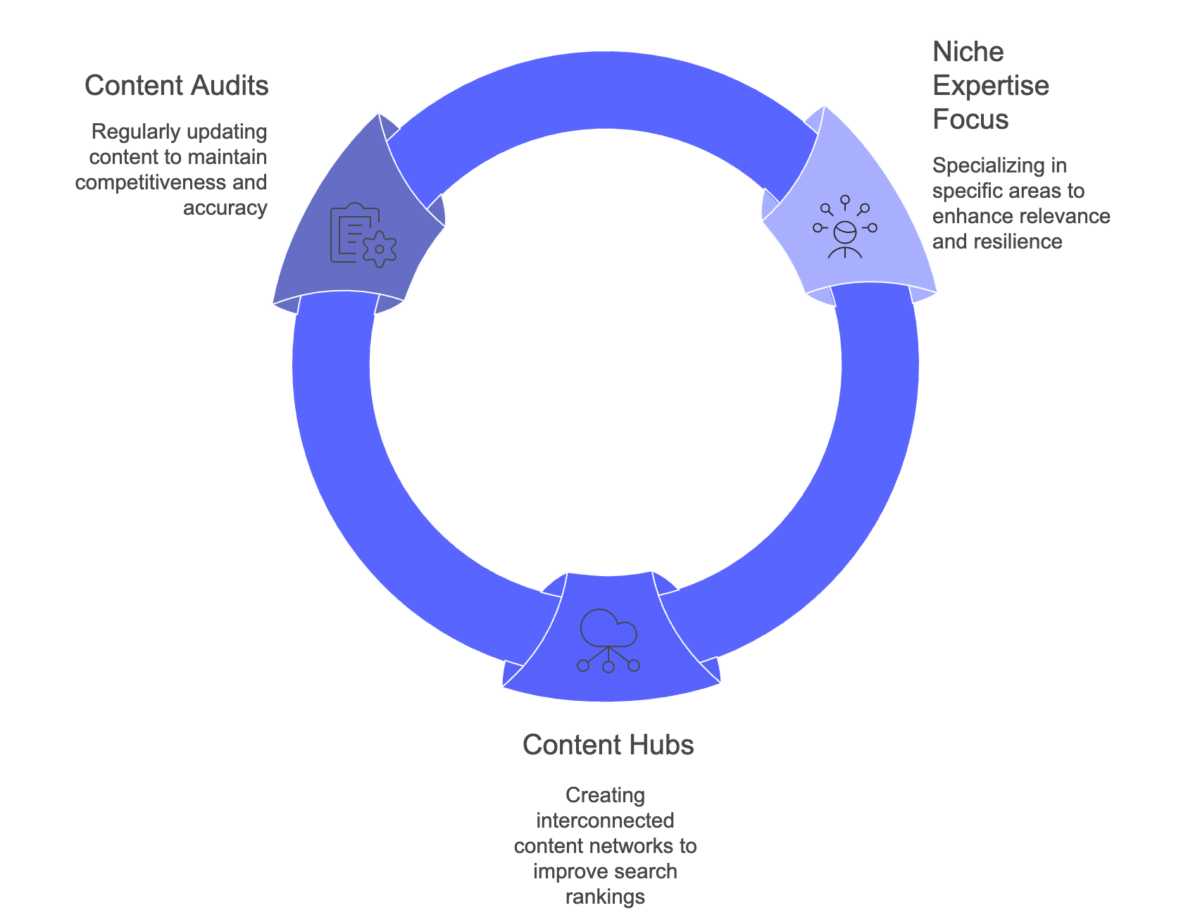
Navigating the intersection of AI and search engine optimization (SEO) requires businesses to adopt a forward-thinking approach. For ecommerce brands, particularly those leveraging Shopify, staying competitive means aligning your content strategy with emerging AI trends. Below, we’ll explore three critical long-term strategies to ensure your SEO efforts remain effective.
In the evolving world of search, focusing on niche expertise can make your brand not only more relevant but also more resilient. Google’s algorithms, especially with AI, increasingly prioritize depth and context over broad generalizations. For ecommerce businesses, this shift opens the door to specialize deeply in core topics.
Start by identifying key areas where your brand can showcase unparalleled expertise. For instance, if you run a sustainable clothing line, content about eco-friendly textile production or ethical supply chains can establish your authority. Tools like Google Trends or audience insights from platforms like Shopify Analytics can highlight topics your customers care about most. This ensures your content answers deep questions, not just surface-level queries.
Sustainable performance in search rankings hinges on how well your content interconnects. Internal linking, when thoughtfully executed, transforms your site into a network of valuable resources, signaling to search engines that you’re an authoritative source on specific ecommerce themes.
Consider implementing a content hub framework: create a pillar post that thoroughly covers a broad topic, then link it with detailed subtopics or related pages. For example, if you run a Shopify store for outdoor gear, a detailed guide like “The Complete Guide to Hiking Essentials” can link to subtopics such as “Choosing the Best Waterproof Jackets” or “How to Pack Light for a Multi-Day Hike.”
Why does this matter? It encourages readers to stay longer on your website, reducing bounce rates and boosting overall relevance. This internal structure also increases the chances of AI algorithms identifying your content as a reliable source to synthesize into their overviews.
For deeper insights into this, check out these AI-powered internal linking strategies.
AI-driven search algorithms favor not just new information but also updated and well-maintained content. Conducting regular audits ensures your existing articles remain both competitive and accurate.
Here are actionable steps for your content audit:
Regular refreshes don’t just enhance user satisfaction—they signal to search engines that your content is actively maintained and trustworthy.
Google’s AI-powered search overhaul is reshaping how ecommerce businesses, especially Shopify merchants, approach visibility and profitability. Traditional SEO tactics are no longer sufficient in a world dominated by AI Overviews and zero-click searches. To stay competitive, your content must evolve into something smarter, deeper, and more user-focused than ever before.
The key to success lies in mastering AI-optimized content strategies. Start by crafting structured, concise, and highly relevant content designed for both AI interpretation and human engagement. For instance, your product pages should include rich schema markup to make them machine-readable, while your blogs need unique insights, like proprietary data or firsthand experiences, to stand out amidst a sea of summaries. Prioritize interlinking your content to create broader topical authority and ensure your knowledge hubs have depth and clear navigational paths. These strategies directly increase your visibility in AI Overviews and strengthen user loyalty, which is essential for sustained growth.
Equally important is auditing and refreshing your existing content. AI tools reward up-to-date and accurate material—and so do your customers. Regularly update old blog posts with new details or emerging industry insights. Even straightforward improvements, like adding FAQs or optimizing internal links, will help you succeed in the new AI-first search landscape.
As ecommerce evolves, content strategies must remain adaptable. Shopify founders and marketers must break away from outdated SEO practices and focus on creating depth and authority in their niche. By acting decisively today—updating your approach, investing in structured data, and embracing clarity—you can future-proof your brand and turn algorithmic shifts into growth opportunities.
Take the next step by exploring advanced tools, building your internal knowledge hubs, and improving your approach to schema markup and interlinking. These efforts ensure real-world results: increased visibility, meaningful engagement, and lasting profitability in an increasingly AI-led search ecosystem.
Adapting your content strategy for Google’s AI-driven search landscape positions your brand to not only safeguard visibility but seize new growth opportunities. Businesses that embrace AI-specific tactics, such as structured content, enriched schemas, and topical depth, will sustain competitive advantages in evolving search environments. The sooner you align your strategy with these principles, the better positioned you’ll be for long-term SEO success.
Now is the time to refine your digital approach. Prioritize actionable frameworks—like optimizing AI readability and constructing content hubs—that ensure sustained relevance even amidst shifting algorithms. Explore deeper insights with guides like 3 Steps To Improve Your Shopify Content Strategy With The Skyscraper Technique to continue strengthening your knowledge.
Search algorithms will continue evolving, and so must your brand. What efforts you make today will define whether your ecommerce strategy transitions from survival to sustained growth. Are you ready to lead the next phase of digital transformation? Keep challenging assumptions, enhancing strategies, and securing your future in AI-powered search dynamics.
AI Overviews are summarized answers generated by Google’s artificial intelligence, displayed at the top of search engine results pages (SERPs). They pull information from multiple sources to provide concise answers, reducing the need for users to click through to individual websites, which can significantly impact organic traffic.
Ecommerce businesses should focus on structuring content with clear headings, adding schema markup, and optimizing for specific keywords and topics. Investing in resource hubs and long-tail keywords can increase the chances of being featured in AI summaries.
Schema markup helps search engines recognize and display structured data about products, such as prices, reviews, and availability. This not only improves visibility in AI summaries but also fosters trust and engagement by showing key product details upfront.
No, AI Overviews often aggregate information without consistently crediting the original sources. To safeguard recognition, brands should focus on creating unique, branded content that strongly ties back to their identity.
A zero-click search occurs when users find the information they need directly on the search results page without visiting a website. This trend reduces organic traffic, meaning businesses must optimize for visibility within the AI ecosystem to capture attention.
Content creators should use concise, scannable sections with logical headings while avoiding wordy introductions or irrelevant information. Pairing this with detailed, relevant content makes it valuable to both AI algorithms and human readers.
Many believe that AI-driven SEO focuses solely on keywords, but it’s more about creating contextually rich, well-structured content. AI prioritizes clarity, relevancy, and user experience over outdated keyword-stuffing tactics.
Small businesses can target niche topics and long-tail keywords where competition is lower. Building authority within specific subject areas and leveraging unique insights or localized content can help smaller brands stand out.
Update outdated content, ensure proper use of schema markup, and implement FAQs on product or category pages. These actions are practical, effective, and can improve both AI visibility and user engagement.
Readers should perform a content audit to identify weaknesses, enhance their structured data, and refine their keyword strategies. Additionally, investing in tools to track AI visibility and exploring advanced content marketing techniques ensures ongoing success.





