


AI isn’t just reshaping the future of work—it’s rewriting the playbook for business leadership.
When Anthropic’s CEO sounded the alarm about job losses, most headlines pushed panic.
But for Shopify and DTC brand leaders, this is a clear signal to get more strategic, not more fearful.
The real winners in 2025 will be those who see risk as a springboard. If you build processes, brands, or systems that adapt faster than your competitors, you’ll gain an edge as others get stuck reacting to change.
This guide breaks down what Anthropic’s warning means for you—and how to turn a wave of disruption into your next wave of growth. You’ll leave with fresh ideas, practical steps, and the focus needed to move from defense to offense in the age of AI.
Anticipating the shifts in the workforce due to AI isn’t an abstract exercise anymore—it’s about understanding where disruption lands first and where opportunity follows. Anthropic’s CEO, Dario Amodei, has made his views clear: industries and roles that rely on repetitive, rules-based thinking are under direct threat in the immediate future. This isn’t just speculation. Amodei has mapped out timelines and risk profiles that every Shopify merchant, agency leader, and DTC brand strategist should know by heart. Let’s break down who stands to lose, who stands to win, and why timing will define your tactical playbook for 2025 and beyond.
Amodei’s warning draws a bright line: entry-level and routine white-collar roles face the sharpest risk from rapidly advancing AI. Think about jobs that involve following clear procedures, moving data, drafting simple emails, or processing standard requests. These are the first to be targeted for automation, not just in tech but in any business where such tasks dominate the daily workflow.
In ecommerce and retail, this zones in on:
According to research and recent trends, roles that require little or no prior experience—often hired for their ability to execute instructions rather than strategic thinking—are already being redefined by AI. If you’re curious about what these jobs look like or how to spot shifting requirements, see this primer on jobs with little or no experience needed.
But here’s the important counterpoint—and your edge as a business leader: AI still struggles to fully replace people in positions where nuance, judgment, brand empathy, or complex relationship management are essential. These are the domains AI mimics but can’t deeply understand or innovate in. Think about the following roles:
What ties these roles together is the need for original thought, cultural context, and human connection. For Shopify merchants and ecommerce brands, this underscores the importance of focusing on areas where your team brings irreplaceable value—branding, creative vision, and building relationships that AI can’t replicate. You can find added insight on leadership’s strategic response in our article on the strategic implications for business leaders.
Key Takeaway: Outsource the automatable, double down on the distinctly human. Protecting your upside is as much about where to invest in people (creative, customer-centric roles) as where to automate (routine, rules-based positions).
Amodei isn’t talking about changes in some distant future. He laid out a clear 1-5 year window for meaningful, widespread job displacement driven by AI—especially in roles that sit at the intersection of repetitive white-collar work and digital process management. For ecommerce brands and Shopify operators, that means this shift has already started and is set to accelerate into 2025.
Here’s how the timeline plays out for different segments:
Shopify’s own push toward an “AI-first” hiring approach isn’t just a headline; it’s validation that automation is no longer an experiment—it’s operational reality. Teams are already being hired for their ability to architect, manage, or augment AI-powered processes instead of simply running manual ones. For more detail on the current and future impact of AI in ecommerce, dive into our guide on AI and machine learning in ecommerce.
Action Step: If you haven’t yet mapped out which roles in your business can be made more efficient—or even replaced—by AI, make it a Q1 priority. But don’t stop there. Pinpoint the roles that add strategic value, and start building frameworks or tools that support deeper human-AI collaboration, not just replacement.
By knowing who’s most exposed and what the timeline looks like, you don’t just avoid risk—you position yourself to seize new opportunity as the market shifts.
Students and early-career professionals often get written off during tech disruptions, yet they’re sitting on an underappreciated advantage as AI rewires business. While many established roles face pressure to automate, students are already learning to work with AI from the start. That means they are comfortable with prompt engineering, understand how to use different tools, and—most importantly—aren’t tied to outdated methods. Instead of trying to defend legacy work, they can focus on skills that AI amplifies, not replaces. For Shopify merchants, DTC brand founders, and agency leaders looking to hire or train the next generation, this is a wake-up call: it’s time to value talents that machines can’t easily commoditize.
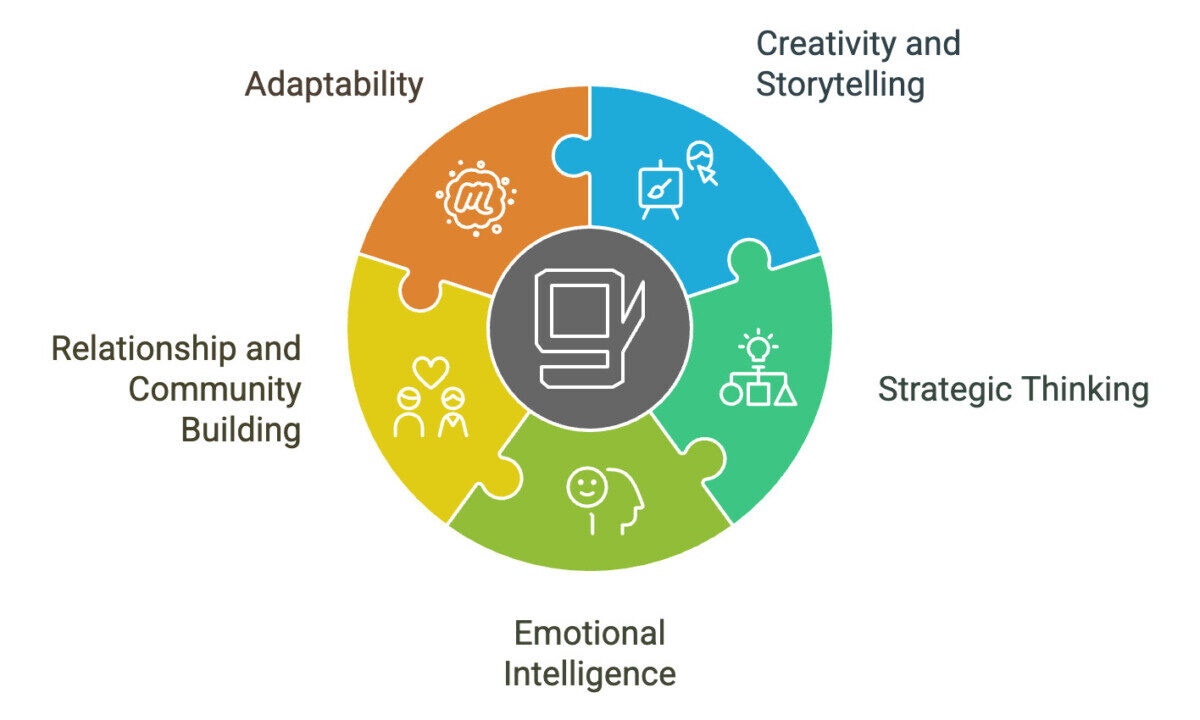
When AI makes it simple to automate data entry, draft emails, or generate product tags, the skills that thrive are those that no algorithm can reduce to a template. Think about what makes a Shopify brand stand out: originality, cultural awareness, and the ability to spot what the market actually wants before it trends. Here’s where students—often digital natives—shine.
The future-proof competencies for DTC and ecommerce businesses include:
In my experience interviewing fast-growth Shopify founders, the difference often comes down to who can use new tools for leverage while still crafting messages and making decisions only a person can. If you’re rethinking your talent strategy, it pays to put these human-first skills at the center. For a deeper dive, explore strategies to future-proof your ecommerce career and build foundations that survive any shakeup.
The sooner you get comfortable working alongside AI, the more marketable and effective you become—whether running your own store or joining a growth-hungry brand. The great thing: you don’t need formal courses to start. Here’s a step-by-step action plan anyone can follow:
For students, the move is to integrate AI into daily routines, not just as a side project. Even academic writing can be enhanced by tools like Rewritely AI for academic writing, which transforms AI drafts into more natural, human-sounding text—useful for case studies, blog posts, or even job applications.
By actively building these capabilities, early-career pros move up the value chain—outpacing peers who only see AI as a threat. If you’re leading a Shopify brand, consider encouraging your team to invest time in prompt engineering and hands-on tool trials. Long-term, this becomes your best defense and your sharpest competitive weapon. For broader tactics on riding the AI wave without falling behind, see proven ways to run a successful ecommerce business.
Ready to level up? Building AI fluency isn’t about becoming an engineer—it’s about speaking the language of the future and making yourself indispensable.
Shopify used to be a platform where deep pockets and big teams meant you could outpace the competition. AI has rewritten those rules. Today, solopreneurs and lean teams can run operations that once required departments, and the playing field for creative brand growth is flatter than ever. If you understand how to use AI as your silent business partner, you unlock new opportunities—faster workflows, lower costs, and focus on the real growth levers that big players can’t automate away.
AI now handles the tedious parts of ecommerce that once kept founders up late or forced new hires. From always-on customer support to managing product content, inventory, and even daily marketing, these automations are now right inside Shopify or a few clicks away through apps and integrations.
Here’s how AI is changing the game:
Comparison Table: Top AI Tools for Shopify Functions
| Shopify Function | Top AI Tools | Key Benefits |
|---|---|---|
| Customer Support | Shopify Inbox, Gorgias, Rep | 24/7 automation, faster response times |
| Content Creation | Shopify Magic, Jasper, Copy.ai | On-brand descriptions, fast ad copy |
| Inventory Management | Stocky, Inventory Planner | Predictive restocking, fewer stockouts |
| Marketing Automation | Klaviyo AI, Omnisend, Meta Ads AI | Smarter segmentation, higher conversions |
For a deeper dive into these platforms and their impact, check out top AI tools transforming business operations and see which ones can boost your edge.
When daily tasks are run by algorithms, what sets your shop apart isn’t operational muscle—it’s the soul of your brand. As AI commoditizes the logistical side of ecommerce, merchants should double down on authenticity, voice, and community. The brands building “secret societies”—tight-knit, value-driven customer communities—create loyalty that AI simply can’t mimic.
Look at these priorities for 2025:
For merchants ready to invest in real differentiation, improving the emotional and memorable side of your business matters most. Learn more about how to overhaul your brand’s experience in our guide to Ecommerce Brand Experience Redesign.
Forget the myth that only the giants can put AI to work. Shopify’s most nimble merchants are now using these tools to outmaneuver bigger names. Actual case studies from within the Shopify universe show the blueprint for outsized results:
Want more tactical proof? Read about strategies other small teams used to drive results in Using AI in Small Business Marketing and see how stores just like yours are increasing sales using AI chatbots.
Across these stories, one message rings clear: you don’t need a big team—but you do need a brand, a point of view, and the courage to use tech as your force multiplier. The AI-powered future won’t reward the biggest armies, but the sharpest, most authentic voices.
Anthropic’s warning about AI job loss isn’t just a forecast—it’s a push to rethink what “work” means in the DTC and Shopify ecosystem. The opportunity in front of you is simple: instead of competing for shrinking pools of traditional ecommerce roles, you can create your own table. But this requires a bold mindset shift—one that combines the best of AI tools with the creativity and resilience only humans bring. Here’s how to make that shift and claim your role as a job creator in a period of rapid change.
The most successful DTC brands aren’t just automating tasks— they’re pairing smart AI systems with inventive human thinking. We’re not talking about letting robots take over, but about letting data-driven automation handle repetitive work so your team can focus on what actually moves the needle: creative strategy, storytelling, unique offers, and standout customer experiences.
Here’s why this combination outperforms any “AI versus human” mentality:
A real-world proof point comes from merchants who streamline customer service with AI chatbots, then turn saved hours into hands-on TikTok Lives and user-generated content drives. They beat their category not by being the cheapest or fastest, but by showing personality and community engagement AI alone cannot fake.
Industry research backs this up: brands that blend data-driven automation with a clearly defined voice and creative culture grow faster and see higher customer retention. Want to see more on this approach? Check out these perspectives on how humans and AI can work together in e-commerce and how to combine AI and human creativity to enhance the customer experience.
Key Takeaway: Don’t ask “Will AI take my job?”—ask how you can use AI to multiply the impact of your unique skills and ideas. The future belongs to those who don’t just adapt, but who invent new rules as entrepreneurs.
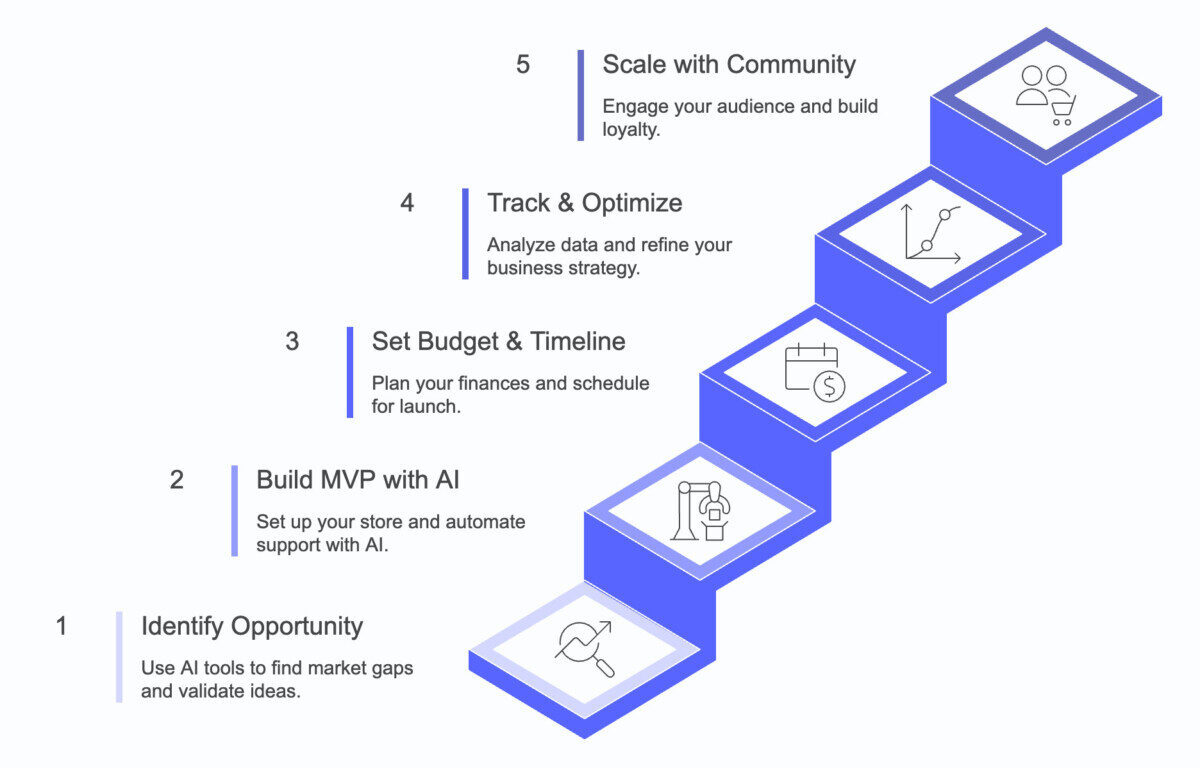
Building an AI-powered Shopify business isn’t about waiting for the “perfect” idea or a big bankroll—it’s about smart, scrappy moves and embracing the role of job creator. Whether you’re a student, a laid-off professional, or a founder aiming to diversify, you can follow a practical roadmap with realistic expectations.
Here’s an actionable framework built from years of observing and interviewing successful Shopify founders:
Most solo Shopify businesses can launch with $500–$2000 initial setup (covering domain, basic Shopify plan, a premium theme, and your first AI tool). Many podcast guests shared they built their first store over a couple weekends or about 30 days of part-time work.
First-Month Milestones:
For more on building the right business mindset, see our guide to Understanding Entrepreneurship in 2024, or learn about the role of entrepreneurial thinking for social change.
Actionable Takeaway: Start small, use AI as your sidekick, and invest your time in strategic, creative moves rather than busywork. The shift from job seeker to job creator is no longer just a career option—it’s a smart response to an economy where the only jobs safe from AI are the ones you invent.
If you’re reading this, you know the AI revolution is not a distant rumor—it’s here right now, changing what it means to build a career or run a business in ecommerce. Whether you’re a student picking your first courses or a professional weighing your next pivot, you face the same core challenge: adapt or get outpaced. Below, I break down targeted actions for both students and seasoned pros, plus a handpicked resource table so you can jump in today—not “someday.”
Today’s students have a rare chance to build skills that put them several steps ahead. AI is rewriting job descriptions, but the need for creative, strategic, and adaptive thinkers has only grown. If you’re preparing for a future in ecommerce—especially with Shopify—here’s where to focus:
Combine applied learning, side projects, and strategic networking, and you’re not just “AI ready”—you’re positioned to lead others.

If you’re already in the workforce, the rush toward automation can feel like the floor is shifting under your feet. Here’s the practical approach I recommend (backed by what I’ve seen work for Shopify founders and DTC operators):
No one can predict the perfect moment to jump, but you can build your plan with clear milestones and backstops.
Jumping into an AI-first ecommerce future? Don’t wing it. Here’s a curated table of tools, platforms, and communities for every stage. Use it to shortcut your launch—or upgrade your current business one workflow at a time.
| Function | Tool/Resource | What It Does | Pricing* | Best For |
|---|---|---|---|---|
| Prompt Engineering | Google’s Prompt Engineering Course | Build essential skills for working with AI | Free | Students, Professionals |
| Student AI Productivity | Top AI Tools for Students | Productivity, writing, and analysis support | Varies (Free+) | Students |
| Ecommerce AI Use Cases | Best AI Use Cases in Ecommerce | Deep dive into AI business applications | Free | Everyone |
| Shopify Store Launch | Shopify store launch guide | Step-by-step for new stores | Free | Beginners, Side Hustlers |
| Innovative Shopify Tools | Innovative Shopify tools | Must-have tech stack reviewed | Free | Store Owners, Agencies |
| Financial Management | Financial tools for Shopify | Accounting, forecasting, compliance | Varies | Growing Businesses |
| Workforce Flexibility | Building a Flexible Workforce for Online Business | Tactics for adapatable teams and side gigs | Free | Professionals |
| Career Certifications | Top Learning and Development Certifications | Find and evaluate key professional certifications | Varies | Career Transformers |
You’ll also want to explore Shopify’s own resources, plus peer communities—podcast listeners, Discord groups, and expert newsletters. And don’t forget: your most powerful asset is your ability to apply, adapt, and keep building.
Ready to move forward? Catalog your skills, outline your first experiment, and select two tools from the table above to get started this week. If you’re not sure where to dig in next, our collection of AI Applications in Ecommerce shows what’s possible when you bring the human and AI sides together.
Facing Anthropic’s warning about AI and job loss, many business owners feel caught between two extremes: panic over disruption or wild hope for overnight success. But the real path to growth sits between these two. Understanding both the hazards and potential of AI-driven change lets Shopify leaders and DTC innovators build smarter, more resilient businesses—not just survive, but thrive.
AI offers new capabilities, but it also introduces real risks that can stop even the most ambitious operators cold. By naming these challenges clearly, you can stay ahead of pitfalls many overlook.
Here’s how merchants and leaders can begin to reduce these risks:
For a deeper look at proven frameworks and ways to spot and avoid broader eCommerce risks, check out these insights on eCommerce risks and solutions. Balancing innovation with risk management will separate tomorrow’s market leaders from those caught flat-footed.
Shift perspective, and AI’s creative destruction quickly looks like the ultimate reset button for careers and businesses ready to adapt. Forced adaptation can become the single best catalyst for your next phase of growth and fulfillment.
Adopting a mindset that welcomes, rather than fears, change is your sharpest edge. This is true for solo founders and bigger teams alike. Building the next version of your business around tools that multiply human strengths can deliver results fast, supporting both job security and happiness.
For tactically focused examples of how businesses are already succeeding with this attitude, take a look at coverage on AI advantages for online stores or study how others are using AI to outperform competitors in e-commerce. You’ll find actionable case studies showing real Shopify merchants making not just the best of a hard shift—but leaping far ahead because of it.
When you combine self-driven learning, process discipline, and the courage to pivot, disruption becomes opportunity. The strongest upside lies with those willing to see loss as a step toward building something smarter, more profitable, and more meaningful on the other side.
Anthropic’s CEO has pushed the conversation on AI and job loss out of the theoretical, making it a practical call-to-action for those running ecommerce brands or scaling Shopify ventures. At this point in the discussion, you’ve seen why the biggest risks are often the seed for the best opportunities—if you’re ready to move forward decisively. The AI economy is no longer on the horizon. It’s in your daily dashboard, your hiring plans, and the frameworks guiding your next hires or launches. The key is translating strategic awareness into action, so you become the architect, not the casualty, of this economic shift.
Before you map out your personal plan, step back and pinpoint the key elements influencing your ecommerce potential in 2025:
These entities interact every day, shaping how your store runs, how you grow, and even how you safeguard your brand’s reputation in a crowded, AI-rich market.
For actionable tips on skill-building and strategic moves, see our deep dive on 9 Must-Have AI Skills for Financial Success in 2025.
Now is the time to turn insight into process. Here’s a breakdown of next steps designed for Shopify brands, DTC operators, and ecommerce consultants seeking an edge:
Review in-depth strategies for surviving AI-driven shifts in ecommerce ops by scanning our guide on Website Traffic Crisis and AI Search in 2025.
Written advice gets you started. But the brands setting the pace are turning insights into reusable checklists, automation calculators, exclusive resource hubs, and community-powered best practice banks. Don’t wait for competitors to build these utility assets first. Here’s how to stake your claim:
These assets not only make your growth process more reliable, but they position your brand as a resource for peers and prospects—fueling long-term authority and trust. For inspiration, review our favorite approaches in E-commerce’s Future in an AI-Driven World.
In the AI economy, what works today may be standard tomorrow. Keeping your edge means always listening for changes, from macro-trends to the pulse of your own customers.
Pair these actions with an always-on feedback loop so you’re never caught off guard. Adapting quickly isn’t just a tactic, it’s your new default.
Every Shopify merchant, agency leader, or DTC entrepreneur reading this faces a similar fork in the road: treat AI risk as fate, or as your next catalyst for growth. The data, frameworks, and firsthand stories show that the gap is widening between those who adapt and those who delay. Start by auditing your workflows, building unique assets, and making AI learning a team sport. Stay connected to market signals and prioritize human strengths at every step.
Ready to put these ideas into practice? Review actionable playbooks for staying ahead in E-commerce’s Future in an AI-Driven World, or benchmark your AI capabilities against the Top AI Skills for Wealth in 2025.
What one action will you take this week to future-proof your brand? Drop your plan or ask a question below—let’s build this next chapter together.
Anthropic’s CEO warns that AI will soon automate many routine tasks, which means Shopify merchants should rethink how they run their businesses. Focusing on human skills like creativity, strategy, and brand building gives merchants a way to stay ahead rather than fall behind.
Jobs with repetitive tasks, such as data entry, basic customer service, and simple order processing, are most at risk. These positions can often be done by AI tools, letting businesses save time and lower costs but putting certain roles in danger.
By adopting AI early, small businesses can automate time-consuming tasks like support tickets, product copywriting, and inventory alerts. This gives them more time to focus on creative marketing and building stronger relationships with customers.
Start by identifying which tasks can be automated in your store, and then learn key AI tools like Shopify Magic or Klaviyo AI. Next, invest time in skills such as prompt engineering and creative communication to make the most out of both technology and human talent.
No, this is a common misconception. AI can help generate drafts or provide ideas, but it cannot fully replace creative thinking, innovation, or the way humans connect with audiences on a personal level.
Students who learn to use AI tools, practice prompt engineering, and focus on unique talents like storytelling or problem solving will be highly valuable. They can stand out by showing comfort with new tech and by developing skills that machines struggle to copy.
Some small brands use AI-powered chatbots to manage customer service 24/7 and content tools to quickly write product descriptions or emails. These brands report faster growth and better customer loyalty because they use saved time for creative work and community building.
Look for jobs that involve managing AI tools, creating new business processes, or building customer relationships. Upskill regularly and stay flexible so you can move to roles that AI cannot easily automate, such as project management or partnership building.
Many founders start with budgets between $500 and $2,000, covering essentials like the Shopify platform, a domain, and basic AI tools. Since AI reduces the need for hiring extra help, you can launch a strong store quickly and keep overhead low.
Begin by mapping out your repeat tasks, then automate any that can be handled by AI while investing your energy in activities only humans do best. Stay committed to ongoing learning and keep testing new AI-powered features as they arrive, so you’ll always be moving forward.
AI is not a distant threat—it’s an active force shaping the workforce now. Dario Amodei at Anthropic, along with top researchers, see major displacement rolling out within the next 1-5 years. This isn’t just a prediction—it’s visible in layoff data and hiring trends across tech and ecommerce. As reported by Axios, Amodei warns that up to half of entry-level white-collar roles could disappear in that period, which could push white-collar unemployment to levels not seen in decades (white-collar bloodbath coverage).
The key drivers:
This isn’t about panic. Shop owners who map out which processes to automate—and which to double-down on with human skill—will outpace those waiting for “the dust to settle.” If you want specific breakdowns by job type, see this industry report on jobs most at risk.
AI has made a splash in creative fields, but the best data and on-the-ground stories make two things clear:
For fast-growing Shopify brands, this means:
Forward-thinking brands stand out by merging AI’s speed with real emotional storytelling. Forbes recently covered how, even in 2025, no algorithm can rescue a bad idea or fake a living brand voice (why creativity still matters in 2025). For a deeper look, see the role of creativity and brand in modern ecommerce.
It’s never too late, no matter your age or background. Since most professionals weren’t trained in AI during school, everyone is on some version of the same learning curve. What sets successful operators apart is their willingness to set aside an hour a week to build familiarity:
DataCamp’s updated guide to learning AI from scratch in 2025 remains a favorite starting point for many rising DTC professionals. In my own network, experienced managers see value in short sprints: 30–60 days to pick up AI fundamentals and test one use case live, regardless of age.
For Shopify merchants, learning to use AI doesn’t just keep you competitive—it multiplies your impact. Advanced shop owners seeking more technical routes can reference our recommended path for Shopify-specific certifications and learning tracks.
There’s no rule saying the only safe path in the AI age is starting your own business. Many operators thrive in new forms of traditional work, or in hybrid, “intrapreneurial” roles inside bigger brands—often leading internal AI adoption or building smarter processes.
Here’s how ambitious employees or consultants can stay ahead:
A recent Forbes analysis walks through how some of the most secure workers of 2025 manage AI, advise teams, and grow inside organizations instead of “founding” (how to be an entrepreneur in the age of AI). On EcommerceFastlane, I’ve seen clients in agency and consulting roles grow even as brands restructure, because they drive the integration of new technology, not just manual labor.
Get a better sense of your fit by reviewing traits of the flexible workforce for online business.
You don’t need VC money or a massive war chest to launch an AI-powered Shopify store. Today, most solo founders or small teams start with budgets between $500 and $2,000. Here’s what this covers:
Here’s the upside: AI reduces costs that used to be fixed. Instead of hiring a copywriter or VA, you automate product copy and support. Many in our podcast community—especially first-timers—launched stores over a single weekend by focusing on minimum viable features.
If you want a specific launch checklist and cost breakdown, see our beginner’s roadmap to launching a Shopify store.
Not only will there be jobs left, but the value of human-centric work is likely to rise. The safest categories share these traits:
A current list of “AI-proof” jobs, from healthcare providers to niche marketing strategists, highlights just how much work still needs a human brain and presence (top jobs safest from AI).
The shift: Many jobs will evolve away from execution into oversight. For example, customer service agents become customer experience strategists, while entry-level marketers become campaign architects who guide automated tools.
If you want to see which job types are adaptive, and hear from experts about future-proofing your talent strategy, check out our guide on future-proofing your ecommerce career.
Shopify has gone “AI-first,” baking smart tools into the core platform:
Getting started is as simple as flipping on these features and tracking ROI. We’ve outlined key workflows in our deep dive on AI tools transforming business operations. For even more hands-on tactics, check out our roundup of innovative Shopify tools.
Anthropic’s CEO did more than sound an alarm—he handed Shopify merchants and DTC brand leaders a decisive opportunity. AI-driven job loss is real, but those who act now and redesign their teams, workflows, and business models reap the rewards. Every signal points to a simple fact: rapid automation widens the gap between brands caught off guard and those who shift from routine execution toward original thinking, strategic use of AI, and deeper customer connections.
If you’re willing to map risk, automate the predictable, and double down on distinctly human skills, you’ll outpace competitors still trapped in the old playbook. Start by applying the frameworks, tools, and resources outlined here. Join our Ecommerce Fastlane community to access checklists and connect with peers transforming disruption into new growth paths. The future favors merchants who turn today’s uncertainty into tomorrow’s edge—are you moving fast enough to lead?





