





Verified & Reviewed
Published on April 16, 2026 Written By Meredith Flora
Published on April 16, 2026 Written By Meredith Flora

Subscribe for More
Warehouse automation isn’t a future investment anymore. It’s what separates fast, accurate, scalable fulfillment from operations that can’t keep up.
In this guide, we’ll break down the trends shaping how warehouses run today and what they mean for ecommerce brands looking to ship faster, cut costs, and grow with confidence.
The evolution of warehouse automation: Where innovation began
Warehouse automation has evolved fast. What started as conveyor belts and basic sorting systems is now a sophisticated mix of robotics, AI, and smart software, all driven by the constant pressure to ship faster with fewer errors.
Recent supply chain disruptions accelerated that shift. Labor shortages and demand spikes pushed more brands to automate, and the results spoke for themselves. The idea of a fully autonomous, lights-out warehouse went from concept to reality for some of the most efficient operations in the world.
What’s the current state of warehouse automation?
Despite the rapid advancements in automation technology, the reality is that most warehouses today still rely on a mix of manual and automated processes.
One of the main challenges holding businesses back from full automation is the significant upfront investment required. Robotics, advanced software, and infrastructure upgrades can be costly, and many businesses struggle to justify the expense without a clear timeline for return on investment. Additionally, integrating new automation technologies with existing systems and processes can be complex, requiring specialized expertise and careful planning.
Despite these challenges, the benefits of automation are becoming increasingly clear. Businesses that have successfully implemented automation technologies report significant improvements in productivity, accuracy, and customer satisfaction. More than 90% of workers recently surveyed said automation solutions increased their productivity.
As these innovations become more accessible, even more businesses are likely to embrace automation as a key driver of growth and competitiveness.
7 key warehouse automation technology trends
Warehouse automation is moving fast, and the trends below are driving real results across operations of every size. These aren’t enterprise-only investments anymore. Modular, scalable solutions mean growing ecommerce brands can access the same tools that power the most efficient fulfillment operations in the world.
1. Robotics: AMRs, AGVs, and collaborative robots
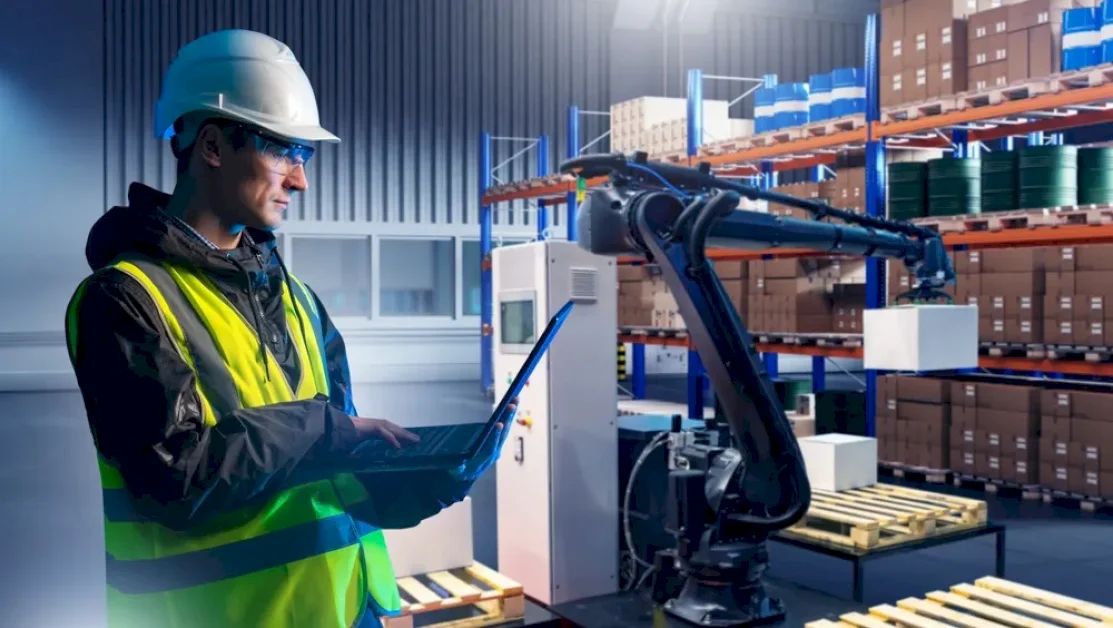
Robotics is one of the most exciting and rapidly evolving areas of warehouse automation. Autonomous mobile robots (AMRs), automated guided vehicles (AGVs), and collaborative robots (or cobots) are increasingly popular in modern warehouses.
- AMRs are ideal for dynamic picking tasks, navigating complex warehouse layouts with ease and adapting to changes in real-time.
- AGVs excel at repetitive transport routes, moving goods from one location to another with precision and efficiency.
- Cobots are designed to work alongside human workers, taking on tasks that are physically demanding or require high levels of accuracy.
One of the most significant trends in warehouse robotics is the growing popularity of Robots-as-a-Service (RaaS) models. These subscription-based offerings make robotics more accessible to businesses of all sizes, allowing them to deploy cutting-edge automation solutions without massive upfront investments.
2. Advanced picking technologies: Pick-to-light and voice picking
Picking is one of the most labor-intensive and error-prone processes in any warehouse, making it a prime target for automation.
Key warehouse technologies leading the way:
- Pick-to-light systems use LED displays to guide workers to the right bin, increasing picking speed by up to 50%
- Voice-directed picking gives hands-free instructions and confirmations, reducing errors by as much as 25%
- Vision picking and augmented reality overlay real-time visual cues to guide workers even faster
These technologies have been shown to deliver significant productivity improvements and error reduction rates. In fact, some studies have found that pick-to-light systems can increase picking speed by up to 50%, while voice picking can reduce errors by as much as 25%.
These tools don’t just cut errors. They help you do more with the same team.
3. AI-driven forecasting and predictive maintenance
Artificial intelligence (AI) is transforming warehouse automation. AI algorithms can analyze vast amounts of historical data to predict demand patterns with unprecedented accuracy, helping businesses optimize inventory levels and avoid stockouts. Machine learning models can also detect equipment anomalies before failures occur, enabling predictive maintenance that reduces costly downtime and extends equipment lifespan.
AI-driven forecasting and predictive maintenance become more accurate over time as they learn from new data. So as warehouses generate more information about their operations, AI algorithms can refine their models and deliver even more precise insights.
4. WMS integration for real-time visibility
A modern warehouse management system (WMS) is what ties warehouse automation together. Without it, you’re running disconnected systems and guessing at performance. With one, every part of your operation, robotics, picking technology, inventory tracking, and carrier selection, works from the same data in real time.
WMS platforms today don’t just record what happened. They guide workers through the most efficient pick paths, automatically select the right carrier, validate every pack before it ships, and surface performance data that helps you spot bottlenecks before they become problems.
The impact shows up fast. Better pick routing cuts labor hours. Automated carrier selection reduces shipping costs. Real-time inventory accuracy means fewer stockouts, fewer oversells, and more orders shipped on time.
As operations scale across multiple locations, a cloud-based WMS makes it possible to manage everything from one platform with consistent processes, shared data, and full visibility, no matter how many fulfillment centers you’re running.
ShipBob’s proprietary WMS is a prime example of how integration and real-time visibility can transform warehouse operations. Designed to support advanced automation workflows, the system offers seamless integration with a wide range of technologies, from robotics and conveyor systems to barcode and RF scanning. By providing merchants with real-time insights into inventory levels, order status, and fulfillment performance, ShipBob empowers businesses to make informed decisions and scale with confidence.
5. Customization and customer experience automation
Advanced automation technologies are enabling warehouses to offer late-stage customization options without sacrificing efficiency. From custom packaging and personalized inserts to gift wrapping and special handling requirements, these systems can adapt to individual order needs seamlessly.
One of the key advantages of automation in this context is consistency. By automating the customization process, businesses can ensure that every order receives the same level of attention to detail, regardless of volume or complexity.
This is particularly important for brands that rely on unboxing experiences to create memorable customer interactions. Automated systems can handle the intricacies of personalization while maintaining the speed and accuracy that customers expect.
6. Sustainability and green automation
Sustainability is becoming a real operational priority, and automation is one of the most practical ways to act on it.
Modern warehouse technologies reduce environmental impact across multiple fronts:
- Smart energy systems like automated lighting and HVAC controls cut consumption without slowing operations
- Regenerative braking in robotics captures and reuses energy during deceleration
- AI-driven route optimization reduces wasted motion inside the warehouse, saving energy and extending equipment life
- Right-sizing technology matches packaging to order dimensions, cutting material waste on every shipment
The data automation also makes it easier to track and report on sustainability metrics, giving brands the visibility to measure progress and communicate it honestly to customers.
For ecommerce brands, that matters. Shoppers are paying attention to how their orders are fulfilled, not just what’s inside the box.
7. Resilience through distributed warehousing
In an era of supply chain disruptions and unpredictable demand spikes, resilience has become a top priority for businesses. Distributed warehousing, enabled by automation technologies, offers a powerful solution to these challenges. By leveraging a network of strategically located fulfillment centers, businesses can create a flexible and adaptable supply chain that can withstand even the most severe disruptions.
Instead of relying on a single location, brands spread inventory across a network of regional fulfillment centers. Automation makes that network function as one connected system — routing orders to the optimal location based on inventory availability, shipping costs, and delivery speed.
The advantages are compounding:
- Faster delivery by positioning inventory closer to customers, reducing transit times and shipping zones
- Lower costs through smarter order routing and reduced last-mile distance
- Built-in redundancy so if one location faces a disruption, orders automatically reroute to another
- Real-time rebalancing that keeps inventory levels aligned with demand across every node in the network
The result is a supply chain that doesn’t just survive disruptions, but keeps shipping through them.
How ShipBob empowers businesses with warehouse automation
ShipBob gives growing ecommerce brands access to the same automation technology that powers large-scale fulfillment operations without building it themselves.
ShipBob’s proprietary warehouse management system (WMS) supports advanced automation workflows. From real-time inventory tracking and order routing to custom packaging and kitting, ShipBob’s technology enables businesses to streamline their operations and scale with ease.
ShipBob’s strategically located warehouses across the globe allow businesses to position inventory closer to their customers, effectively reducing shipping costs and transit times. Automated systems ensure that orders are routed to the optimal fulfillment location based on real-time data, creating a flexible and resilient supply chain that can adapt to changing demands.
ShipBob’s technology also empowers businesses to make data-driven decisions about their inventory management. With advanced analytics and reporting capabilities, merchants can gain deep insights into their operations, identifying opportunities for optimization and growth. Automated inventory placement recommendations ensure that products are stored in the most efficient locations, reducing picking times and minimizing the risk of stockouts.
By leveraging these technologies, businesses can focus on growth and customer satisfaction, while ShipBob handles the complexities of fulfillment. By providing access to cutting-edge automation technologies and a flexible, scalable fulfillment network, ShipBob enables merchants to deliver the fast, accurate, and personalized experiences that customers demand.
As the warehouse automation landscape continues to evolve, ShipBob will remain at the forefront, driving innovation and helping businesses thrive in an increasingly competitive market.
FAQs about the future of warehouse automation
There are many exciting warehouse automation trends shaping the future of fulfillment, so we’ve addressed your additional queries and challenges in the FAQs below.
What is the future of warehouse automation?

The future of warehouse automation is exciting, with emerging technologies like drone delivery and fully autonomous picking on the horizon. As 5G connectivity becomes more widespread, it will enable more sophisticated automation systems that can communicate and collaborate in real-time. Digital twins, which are virtual replicas of physical warehouses, will play an increasingly important role in optimizing warehouse layouts, testing new automation solutions, and identifying potential bottlenecks before they occur.
Micro-fulfillment centers and urban warehouse automation are trends on the rise. As ecommerce continues to grow and customers demand faster delivery times, businesses are looking for ways to bring inventory closer to end customers and minimizing last-mile delivery costs.
How does robotics reduce labor costs and improve accuracy?
Robotics can significantly reduce labor costs and improve accuracy in warehouses by automating repetitive tasks and reducing the risk of human error. For example, robots excel at tasks like repetitive movement and heavy lifting, which can be physically demanding and time-consuming for human workers. By automating these tasks, businesses can redeploy human workers to higher-value tasks that require problem-solving skills and creativity.
Statistics show that robotics can improve productivity by up to 50% and reduce errors by up to 80%. Additionally, robots can work 24/7 without fatigue or performance degradation, which means businesses can operate around the clock without sacrificing quality or efficiency.
What are the main benefits of AI-driven warehouse management?
AI-driven warehouse management offers several key benefits, including improved demand forecasting accuracy, dynamic labor scheduling, and optimized inventory levels. By analyzing historical data and identifying patterns, AI algorithms can predict future demand with greater accuracy than traditional methods. This helps businesses avoid stockouts and overstocking, which can tie up valuable capital and warehouse space.
AI can also dynamically adjust labor scheduling based on incoming order patterns, ensuring that the right number of workers are available at the right times. This helps businesses avoid overstaffing during slow periods and understaffing during peak times. Additionally, AI can identify improvement opportunities that humans might miss, such as inefficient picking routes or suboptimal inventory placement.
How can small businesses leverage automation without massive investment?
Small businesses can leverage automation without massive investment by adopting scalable solutions and subscription-based models. For example, Robotics-as-a-Service (RaaS) allows businesses to lease robots on a subscription basis, rather than purchasing them outright. This can help businesses avoid large upfront costs and scale their automation efforts as they grow.
Another option is to partner with third-party fulfillment providers that offer access to automation technologies. By outsourcing fulfillment to a provider like ShipBob, small businesses can benefit from advanced automation capabilities without having to invest in their own infrastructure. When deciding which processes to automate first, businesses should focus on areas that will have the greatest impact on efficiency and accuracy, such as picking and packing.
What role does automation play in omnichannel fulfillment?
Automation plays a critical role in omnichannel fulfillment by enabling businesses to manage inventory and orders across multiple sales channels seamlessly. With automated systems, businesses can maintain a unified view of inventory levels and availability, regardless of where products are stored or sold. This helps prevent stockouts and ensures that customers receive their orders on time, no matter which channel they use.
Automated order routing is another key benefit of omnichannel fulfillment. By analyzing factors like inventory availability, shipping costs, and delivery promises, automation systems can route orders to the most efficient fulfillment location. This helps businesses optimize their supply chain and provide consistent customer experiences across all channels.
How does ShipBob’s technology support warehouse automation?
ShipBob’s proprietary warehouse management system (WMS) is designed to support advanced automation workflows and integrate seamlessly with e-commerce platforms. With features like real-time inventory tracking, automated order routing, and customizable fulfillment rules, ShipBob’s WMS helps businesses streamline their operations and improve efficiency.
ShipBob is also committed to continuous improvement and technology development. Our team of experts is constantly exploring new automation solutions and testing them in our fulfillment centers to ensure they meet our high standards for accuracy and reliability. By partnering with ShipBob, businesses can access cutting-edge automation technologies without having to invest in their own research and development.
Is eco-friendly automation really cost-effective?
Yes, eco-friendly automation can be cost-effective in the long run, thanks to energy savings, reduced waste, and improved brand reputation. For example, automated systems that use energy-efficient motors and regenerative braking can significantly reduce electricity costs compared to traditional systems. Similarly, automated inventory management systems can help businesses avoid overstocking and reduce waste from expired or obsolete products.
Sustainable automation can also provide marketing advantages, as consumers increasingly prefer to buy from environmentally responsible brands. By investing in eco-friendly automation, businesses can differentiate themselves from competitors and attract environmentally conscious customers. Case studies show that businesses that prioritize sustainability and profitability can achieve both goals simultaneously, making eco-friendly automation a smart long-term investment.
