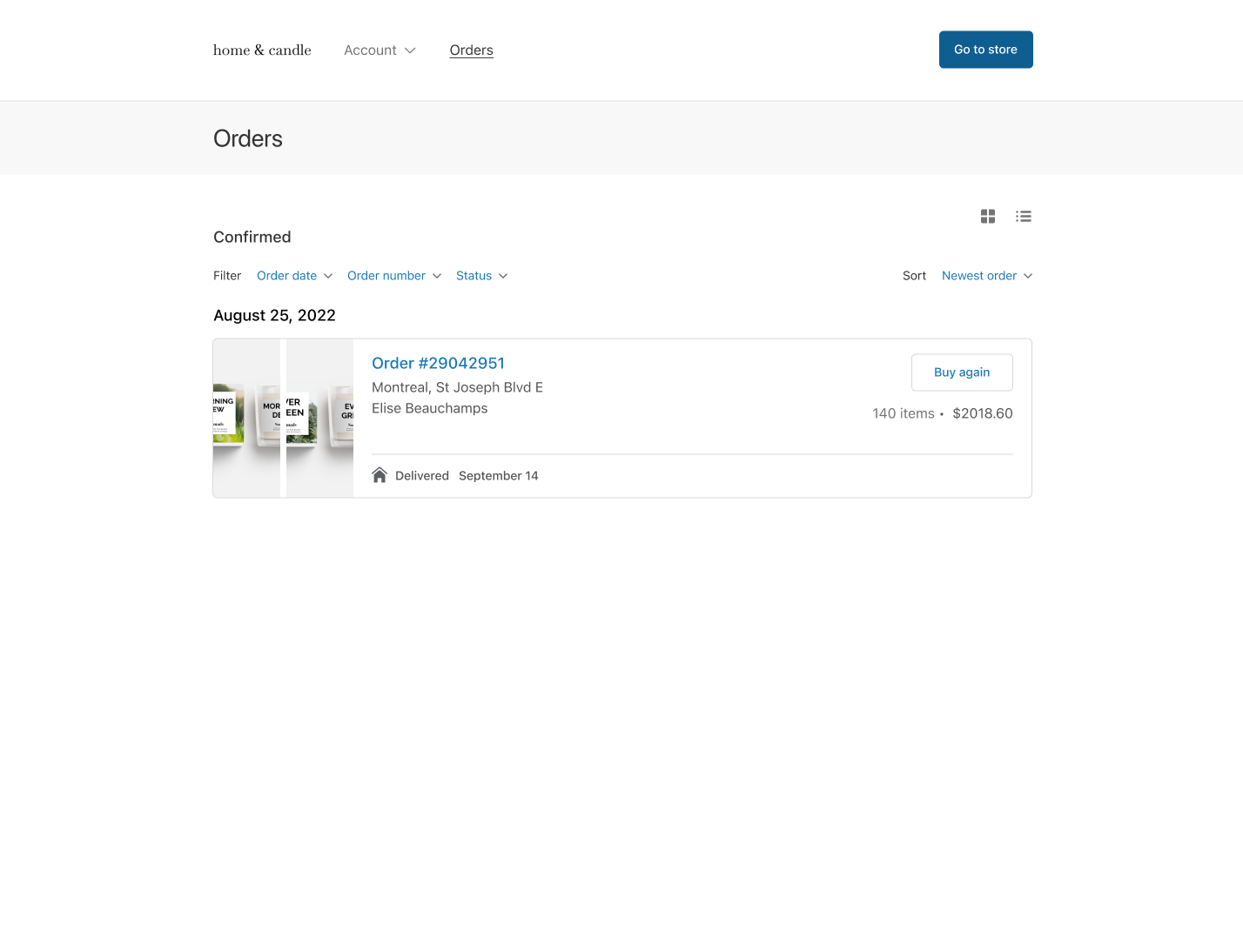


You’ve got a successful direct to consumer (DTC) brand with an army of customers lapping up the innovative experiences you’re delivering. On the business to business (B2B) side of your ecommerce business, however, things are… stagnant.
Studies show that 90% of B2B buyers want DTC-style experiences from the suppliers they buy from, yet more than half are frustrated when brands fall short on these expectations.
This push can partially be attributed to the changing demographics of B2B buyers. Forrester reports millennials are involved in 73% of B2B buying decisions. Millennials grew up alongside technology and expect self-serve, personalized, and frictionless customer journeys—regardless of whether they’re buying for themselves or their company. The outcome for brands providing this B2B experience? Acquiring new customers and lifetime value (LTV), the main drivers of growth.
DTC-ifying your B2B storefront allows you to deliver on these promises, while providing business buyers with seamless experiences that convince them to continue buying. This guide shares how to do it.
We’ll cover:
B2B ecommerce is becoming consumerized. A whopping 90% of B2B buyers want to be marketed to from the suppliers they buy from, largely due to the fact that millennials have purchasing power within organizations.
“DTC-ifying B2B experiences means bridging the gap between the modern online shopping experience and traditional B2B purchasing methods. That could mean providing more personalization options, offering better discounts, or faster shipping options. It’s about understanding business buyers’ needs and delivering on them in a way that’s appropriate for their unique situation.” —David Zhang, CEO of Kate Backdrop
To DTC-ify B2B ecommerce simply means to provide a seamless and personalized customer ecommerce experience. It meets your customers’ need to have access to all of their most important data (products, pricing, orders, and account information) in one place, while still allowing them to connect and build a relationship with your brand.
Dated methods of B2B sales, through phone, email, or sales rep interactions, can often lead to a higher risk of losing orders in both the short and long term. Physical orders can get lost. Valuable team members, with all of their critical customer knowledge, may leave in favor of competitors. The old ways of selling rely on others to enact the transaction and are typically not scalable when you want to reach a national or global audience. Ecommerce, on the other hand, is driven by the needs of your buyers and is available to all of your customers, 24/7.
And the downsides of not providing this experience are clear. Almost 25% of B2B buyers have switched suppliers after just one negative online experience. But by utilizing DTC trends in your B2B operation, you’ll get closer to your customers with personalized experiences that drive easy conversion at scale.
Read more: The B2B Ecommerce Trends and Statistics to Follow in 2023
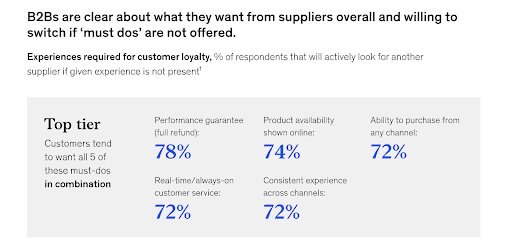
McKinsey found customers will actively look for another supplier if their current experience doesn’t include DTC-style experiences like full refunds, real-time customer service, online product availability, and omnichannel experiences.
DTC-ifying the B2B customer experience might seem like an unnecessary hassle. After all, the B2B ecommerce industry has changed dramatically over the last decade. Does it really need any more innovation?
The short answer is yes. Let’s dive deeper into why consumerizing B2B sales is a competitive advantage.
Perhaps most importantly, you’ll win business and bring in new B2B customers with an exceptional buying experience—one that lends DTC-style functionality and provides shoppers with the online experiences they’re accustomed to.
A personalized buying experience allows you to better connect to your existing buyers and encourage them to place repeat orders. Studies show that 60% of buyers think their supplier’s ecommerce experience is very important to their relationship with the supplier. Another 67% say they’ve switched vendors to offer a more “consumer-like” experience.
In even better news: delightful buying experiences result in higher average order values and encourage repeat ordering among your customers. Retaining your existing customers and driving growth from their orders reduces the pressure of finding new customers as you scale and meet aggressive growth targets.
“By creating an experience that mirrors the convenience and personalization of DTC retailers, businesses can give their buyers a better shopping experience. This can lead to increased loyalty, repeat purchases, and higher sales.” —Aaron Jerez, founder and CEO of Home Bar Select
Great ecommerce sites allow customers to do more in less time. Customers making both B2B and DTC transactions will stop working with merchants who require a heavy time investment, in favor of competitors that offer a seamless buying process with less friction.
Streamlined, efficient ecommerce platforms are a win for merchants too. Saving time and resources internally drives higher profit margins and additional revenue that you can pocket.
By DTC-ifying the buying experience for wholesale customers, you’ll spend more time on strategic initiatives and less on back office tasks. Plus, you can limit human error by automating more of your internal processes.
DTC brands have been taking advantage of beautiful, creative websites and design for years.
The effect is always greater brand loyalty and awareness—like Life Interiors, a home furnishing brand that moved to Shopify Plus. Its entire digital journey was overhauled alongside a website redesign. The result? A 23% uplift in conversions, a 61% increase in revenue, and a 60% increase in average order value.
In B2B, the same concept applies. Excellent branding will help you differentiate your business from other competitors on the market with minimal lift.
An online presence is no longer adequate to compete. A recent McKinsey report concluded, “It’s not enough for B2B companies to meet this moment; they need to prepare for the next one: delivering consistent, exceptional experiences across the omnichannel ecosystem.”
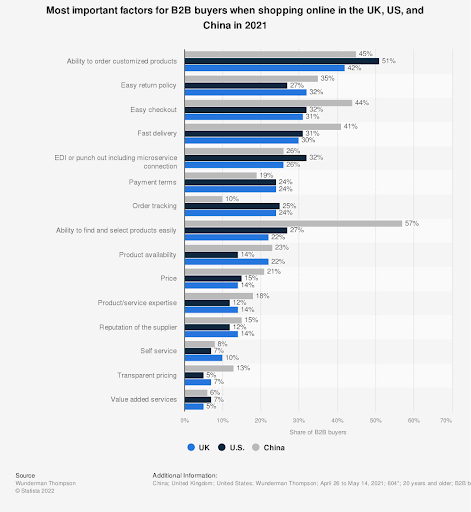
This is supported by Statista data, which shows B2B buyers want various DTC-style functions from the B2B companies they buy from online. The ability to order customized products, browse availability, and track orders ranked high on their list of priorities—yet more than half are frustrated with the online experiences currently on offer.
With the proliferation of ecommerce in everyday life, buyer expectations of online experiences are rising. Around seven in 10 consumers are conditioned to look for personalized experiences, and companies that excel at personalization drive 40% more revenue than their average counterparts .
Apply the same concept to your B2B ecommerce strategy for similar return on investment (ROI). Be proactive, rather than reactive, and provide buyers with personalized experiences at every touchpoint. That includes:
Some 41% of B2B buyers think the absence of an ecommerce website causes payment friction. Use Shopify Plus’ B2B ecommerce platform to have this level of control over both your DTC and B2B storefronts. Get the flexibility to customize your B2B site so that you can scale conversion, without forcing your sales team to bear the load.
“One of the biggest priorities for us was to make sure both parts of the business—DTC and B2B—felt unified. Same brand, same website, same quality, and most importantly same service. The biggest mistake I think companies make is trying to separate the two. The more a company can integrate both types of offerings, the better off they will be in the long term!” —Colin Barceloux, CEO of Lively Root
Save time for you and your buyers while solving a major sales objection in B2B purchase decisions: ease of purchase. The easier it is to buy from you, the less time a customer has to second-guess their purchase and the more likely they’ll be to purchase from you again in the future.
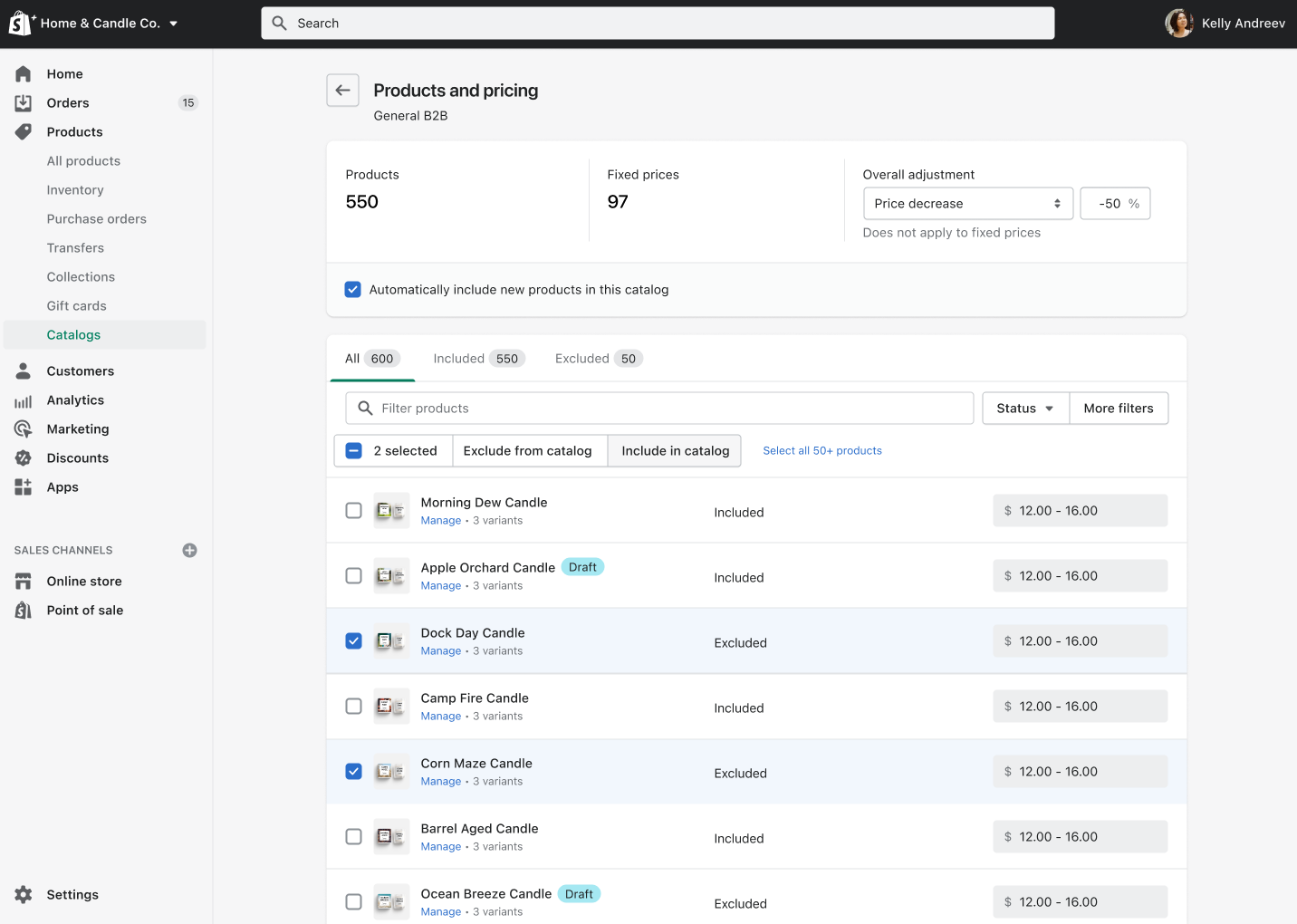
The best ecommerce platforms will allow a customer to place an order anytime, and manage their own account with access to their specific pricing, products, payment terms, and more. Your customers want this self-serve option without having to contact sales or support.
With Shopify Plus’ B2B platform, merchants benefit from:
“Acumatica’s native integration to Shopify offers B2B merchants one unified solution for managing their entire B2B omnichannel sales experience.” —Josh Fischer, director of product management at Acumatica
It’s not just merchants who benefit from automation, either. Buyers can use:
While you can automate the bulk of your sales and support interactions, use self-serve and automation as the first port of call with a trained B2B sales team as backup. It’ll filter out support tickets that don’t need a human touch, leaving your team with more time to build relationships instead of B2B processing orders.
Payments differ dramatically between B2B and DTC orders. The latter is quick and simple; money is paid upfront before an individual customers’ order is fulfilled. Business buyers, on the other hand, have greater control over their purchase methods and options.
“We are running our B2B sales through Shopify. All of the payments go through our Shopify store. That allows us to keep track of our stock effectively, keep our accounting clean, and to have a seamless, electronic payment gateway for our B2B purchases.” —Dr. Justine Ward, co-founder and CMO of Thirdzy
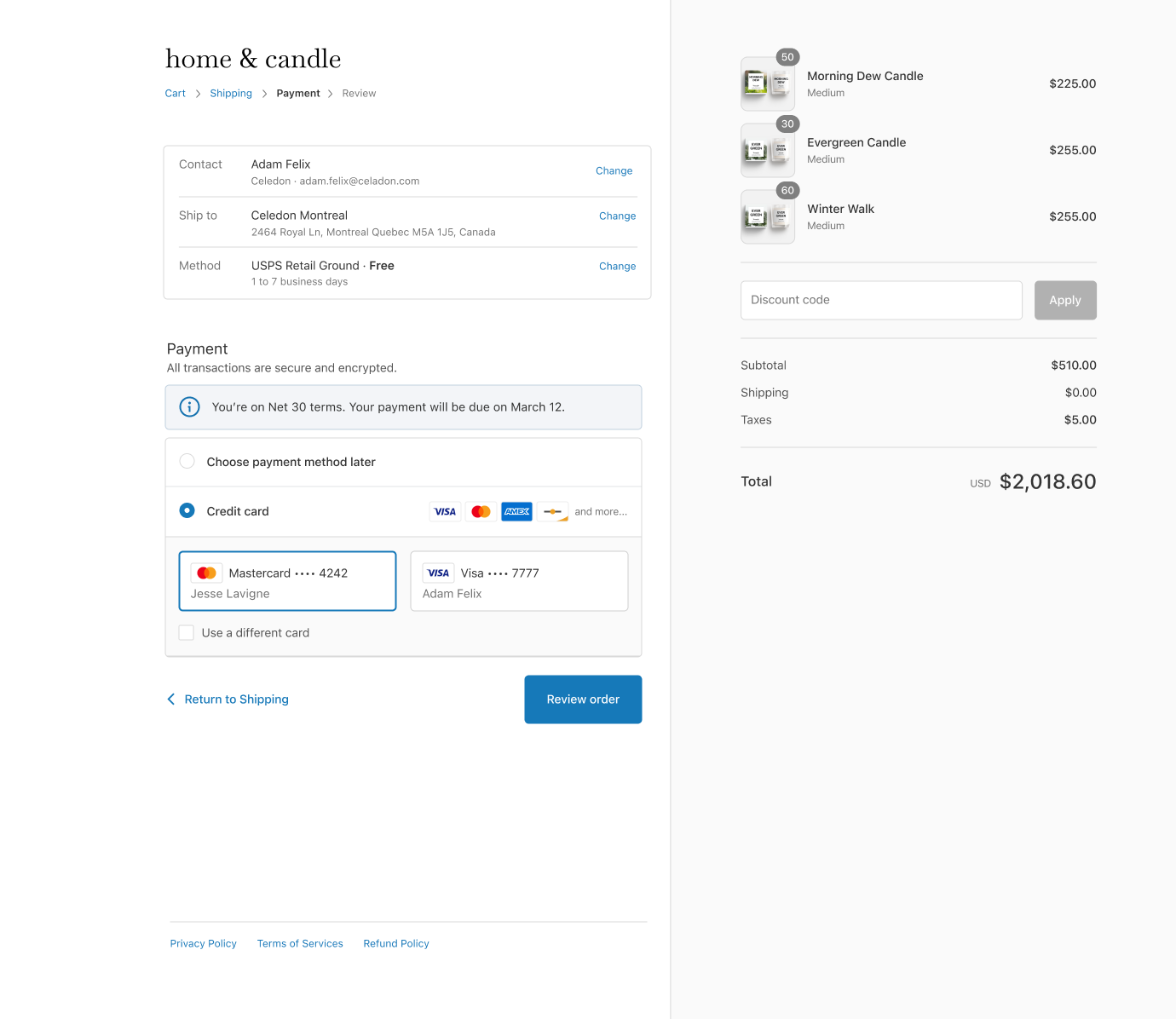
Offer customers access to Shopify’s B2B Checkout feature and provide personalized checkout experiences. Buyers can:
“We have several B2B clients that use our online gifting service to send gifts to prospects, vendors and partners,” says Alexandra Puccini, owner of Lavender and Pine Gifting. “It’s the same experience a consumer would have sending a gift to a friend, inclusive of tracking information sent directly to them. It’s easy, accessible, and automated.”
Business customers are crying out for the same personalized, seamless shopping experiences they have when making personal purchases.
Use Shopify Plus to give your B2B storefront the DTC treatment, from self-serve and automation to payment flexibility, and reduce lead times. Buyers will get the information they need instantly—without draining resources from your sales team and increasing conversion rates.