

Do you remember the day you bought your first pair of sneakers? You likely remember the store you bought them from, the anticipation of taking them home to pair them with a new outfit, and how the entire experience made you feel.
Customers are having similar experiences with your fashion brand every day—and storytelling can capture these experiences and help engage future customers. Through the stories of other happy buyers, your customers’ purchasing decisions become a little easier.
As Effie Asafu-Adjaye, founder of Beautiful Sparks, says, “The intent of storytelling is to serve your audience with more meaningful content that amplifies your DNA, to show your audience who you are and what you stand for.”
But not every story is a good story. This guide shares how to incorporate persuasive storytelling into your fashion marketing strategy, with 15 fashion brand storytelling examples to draw inspiration from.
Table of contents
Brand storytelling is a marketing strategy that helps brands connect with their target market using stories. The narrative is designed to build an emotional connection and help consumers match your brand with their own core values.
“Marketing in the fashion world is all about brand storytelling,” says Adair Findley, creative director of Coney Island Picnic. “You need to think about your brand’s position to the consumers—what story does your clothing, social media, website, and even packaging tell the customer? What kind of reputation do you carry, and is it cohesive across your entire brand?”
Fashion ecommerce is a crowded industry that was valued at $871.2 billion in 2022. Combine that with a surge in dropshipping and the rise of companies like Shein offering good quality clothes at low prices, and it’s harder than ever for fashion brands to stand out.
If someone is on the internet, they’re highly likely using social media. Storytelling helps bridge that gap and connect fashion brands with social consumers. Researchers have found that stories are remembered up to 22 times more than standard facts, solidifying your fashion brand in the mind of your target audience.
This type of positive social media experience with a brand makes 78% of consumers more willing to buy from them, 77% more likely to choose them over a competitor, and 72% more likely to spend more.
Brand storytelling is a long-term play—but one that’s worth investing in. Let’s explore the three biggest advantages of storytelling for fashion brands:
Before crafting a fashion brand story, you need to understand your audience and decide where to distribute it. Who are they? What are their biggest wants and fears? And most importantly, why should they care about you?
Talk to existing customers to understand their pain points and why they buy from you. You can do this through quantitative customer surveys or qualitative focus groups. Online reviews also provide insight into what your customers want, think, and feel about your brand.
How did your fashion brand come to life? Often, entrepreneurs start businesses after spotting a gap in the market or to meet a personal need. Use this origin story as the foundation for storytelling.
“Before doing any promotional activities, it’s important for you to write down and actively think about your brand’s story,” says Adair.
“Think about the unique aspects of your brand, such as your design philosophy, your use of sustainable materials, or your commitment to ethical manufacturing—whatever makes you unique. Your brand story should communicate who you are and what you stand for, and in the fashion industry, this must be well-defined before you strike out in the advertising world.”
Earning a customer’s brand loyalty is a love story. It’s one that starts weeks, months or even years before they ever buy something from you. They may encounter your site by chance, or through an online ad, blog, Instagram post, YouTube video, or Google search. Or maybe they read a positive brand story or watched a touching video review.
Effective storytelling is consistent. If customers get confused messaging from platform to platform, they won’t know who you are or what you stand for. It’s why 84% of businesses think a connected multichannel brand experiences will be more important than ever to the future of ecommerce.
Effie Asafu-Adjaye, founder of Beautiful Sparks, says: “The goal of storytelling is actually to build brand equity over the long run. It’s the effect of consistent storytelling over time that moves the needle for brands.”
Clearly define your omnichannel marketing strategy to ensure storytelling is consistent across all touchpoints throughout the customer journey. From TikTok videos to abandoned cart emails, tie all communication back to the same brand narrative.
No technical barriers should exist once you determine you want to sell natively on today’s most popular marketplaces or social media platforms. With Shopify Plus’ one-click channel integration, you can focus on growing that channel—rather than the development work that underpins it.
Fashion brands can strengthen their brand story by having influencers vouch for it. This type of content is more trustworthy than branded content. Some 18.6% of consumers also say they follow influencers on social media to see storytelling.
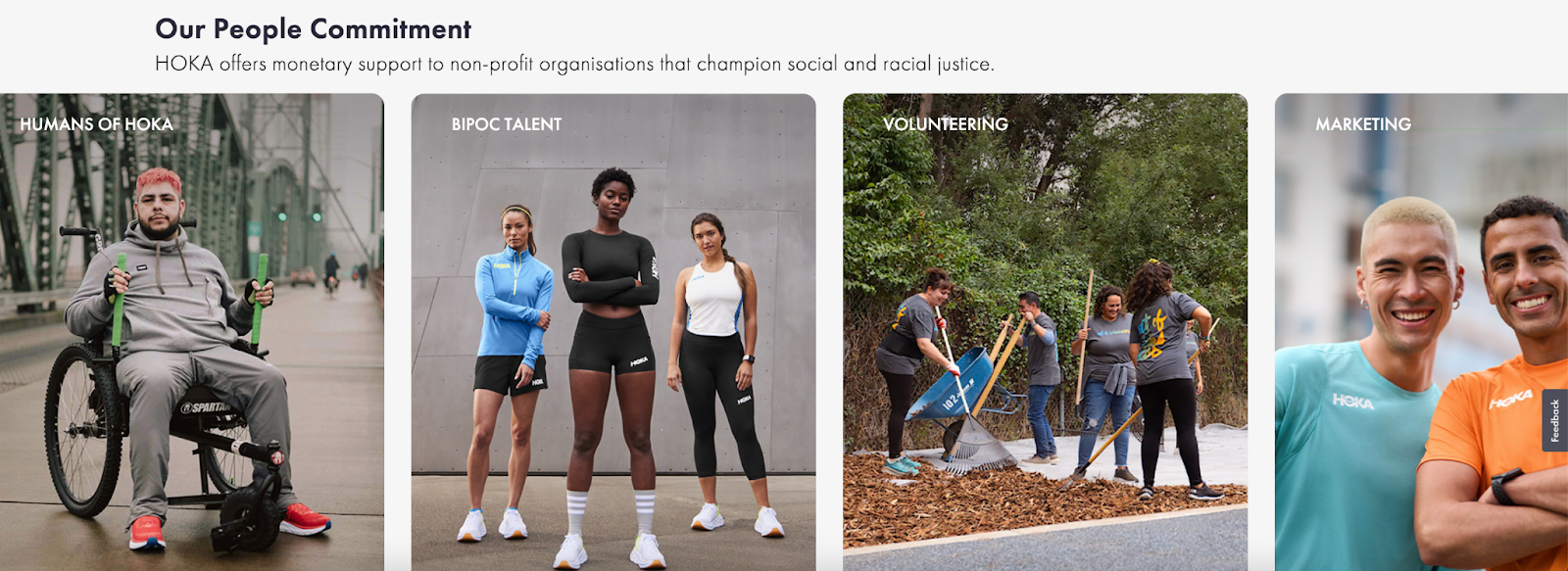
Sneaker brand HOKA, for example, has a brand mission to make its apparel accessible to everyone. Its “people commitment” explains how HOKA donates to non-profit organizations that champion social and racial justice.
Its A Walk in the Life YouTube series also invites social media influencers to document their daily routine—of course, while wearing their HOKA sneakers.
Wendy Yang, brand representative for HOKA (via Modern Retail), says: “The brand is the brand, and we’re very careful to be very consistent with how Hoka shows up, regardless of where it shows up.”
Vet, recruit, and manage creators with using Shopify Collabs. It helps fashion merchants scale with a single dashboard to manage your influencer marketing collaborations.
Humans process visuals faster than they do text. Neuroscientists found the brain can identify visual themes of information in 30 milliseconds, hence why brand storytelling videos are the most popular video formats for marketers.
“The fashion industry is one of the most highly visual industries in the world, so for our team, it’s important to use visuals to communicate our brand story,” says Adair.
Visual storytelling elements to use when promoting your fashion brand include:
Adair adds that for Coney Island Picnic, “this includes product images, behind-the-scenes photos of the design process, or even just lifestyle images that evoke the emotions and values of the brand. We want to continue to position ourselves as a premium streetwear brand, so we use imagery and written content to help us achieve that.”
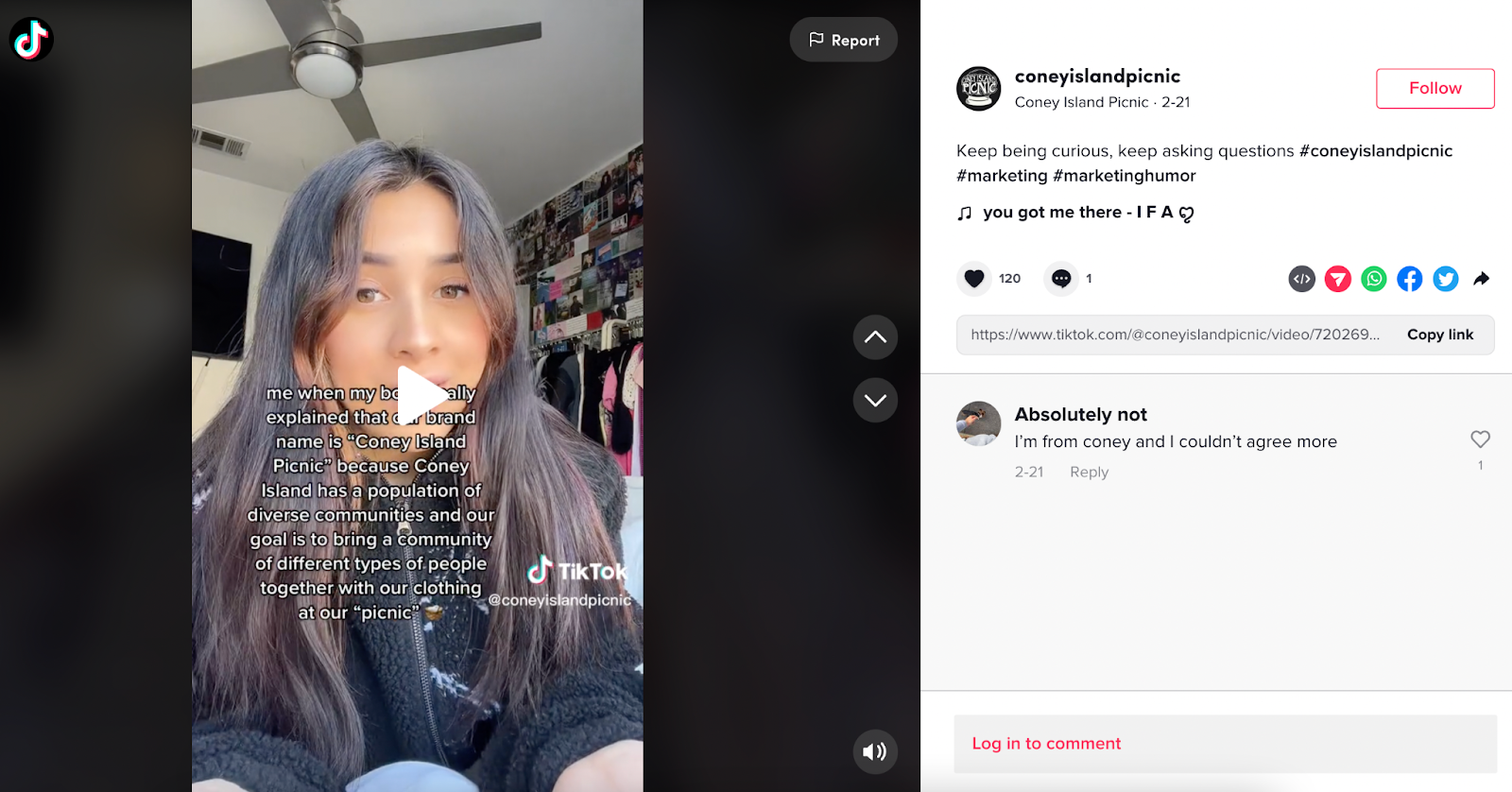
Coney Island Picnic shares TikTok videos that explain the reasoning behind the brand name.
How a customer experiences your fashion brand, from discovery to purchase, involves many stories in a never-ending loop. Let’s look at how some of the best fashion ecommerce brands are attracting, converting, and keeping customers through storytelling.
Storytelling humanizes your business, so you need to connect with customers through your humanity. Bring them into your brand story by being accessible and honest.
Many business founders share their personal and business growth stories online, revealing their ups and downs. Tammy Hembrow, an Instagram fitness sensation and the founder of Saski Collection, vlogs about her daily life. Tammy’s online fitness brand has enjoyed massive success in Australia and globally.
Tammy named her brand after her daughter, Saskia, and includes her children in many of her YouTube videos. Her biggest fans want to be her, and purchasing her activewear allows them to buy a piece of her lifestyle.
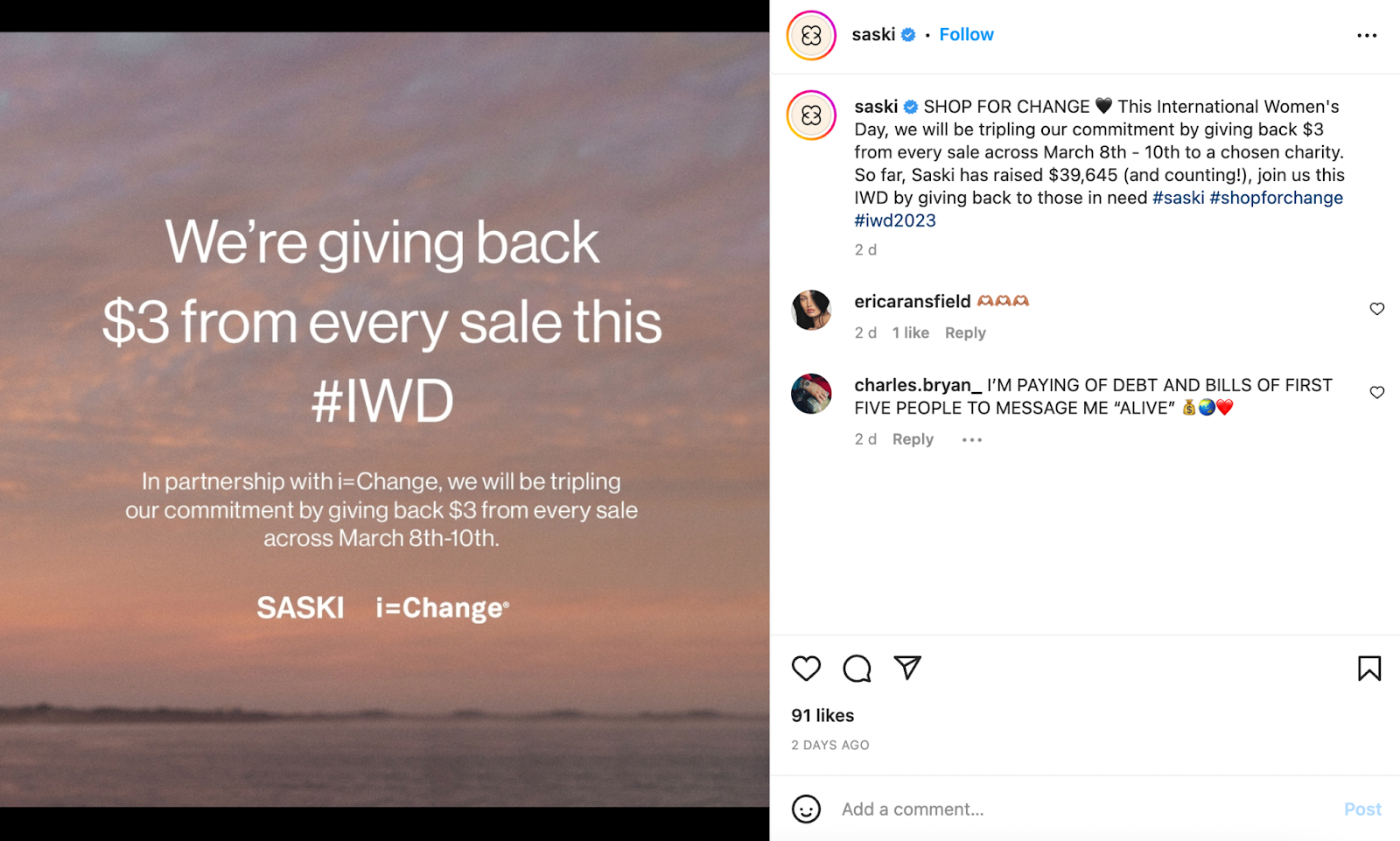
Saski Collection also uses its social cause to drive storytelling. Its i=Change initiative, which allows customers to donate $1 per order to one of three chosen nonprofit organizations, is the foundation of many social media posts:
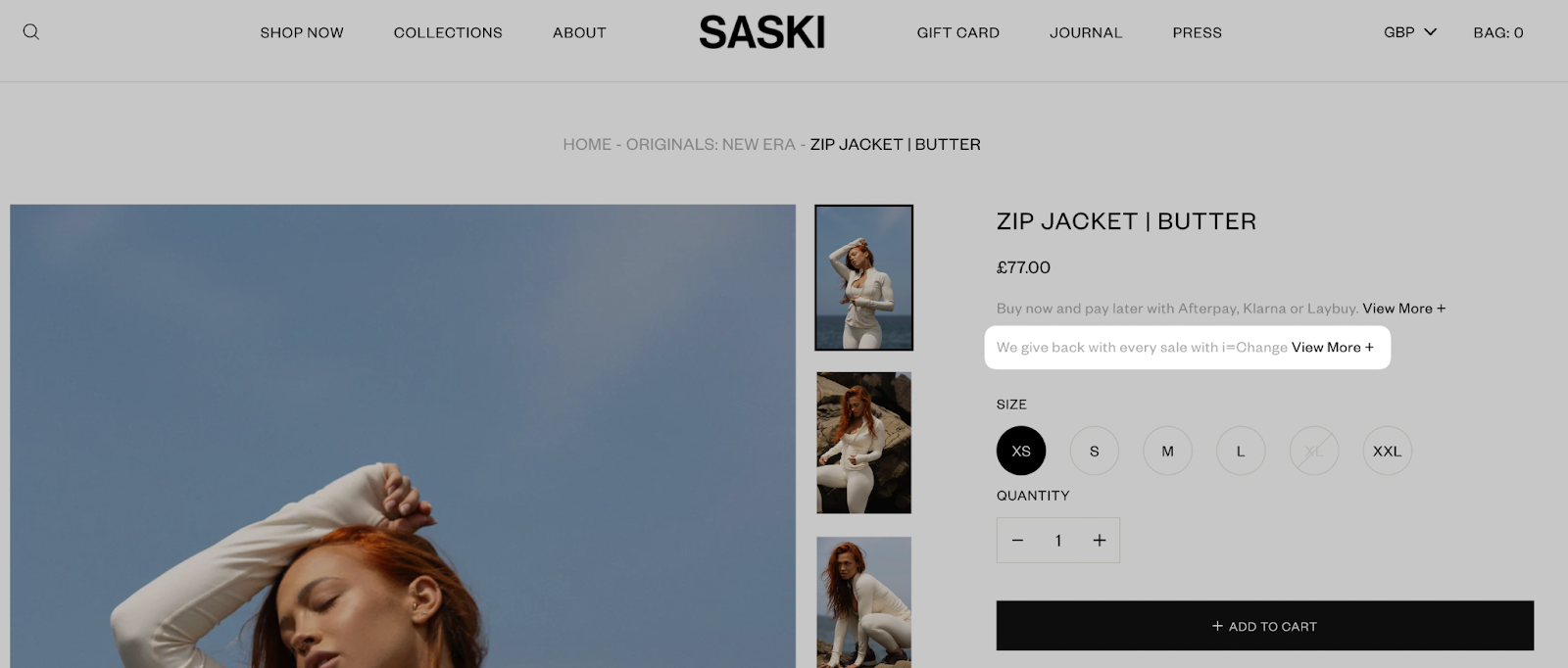
To ensure consistency, customers browsing its fashion website see an i=Change notification beneath the each product description and announcement bar:
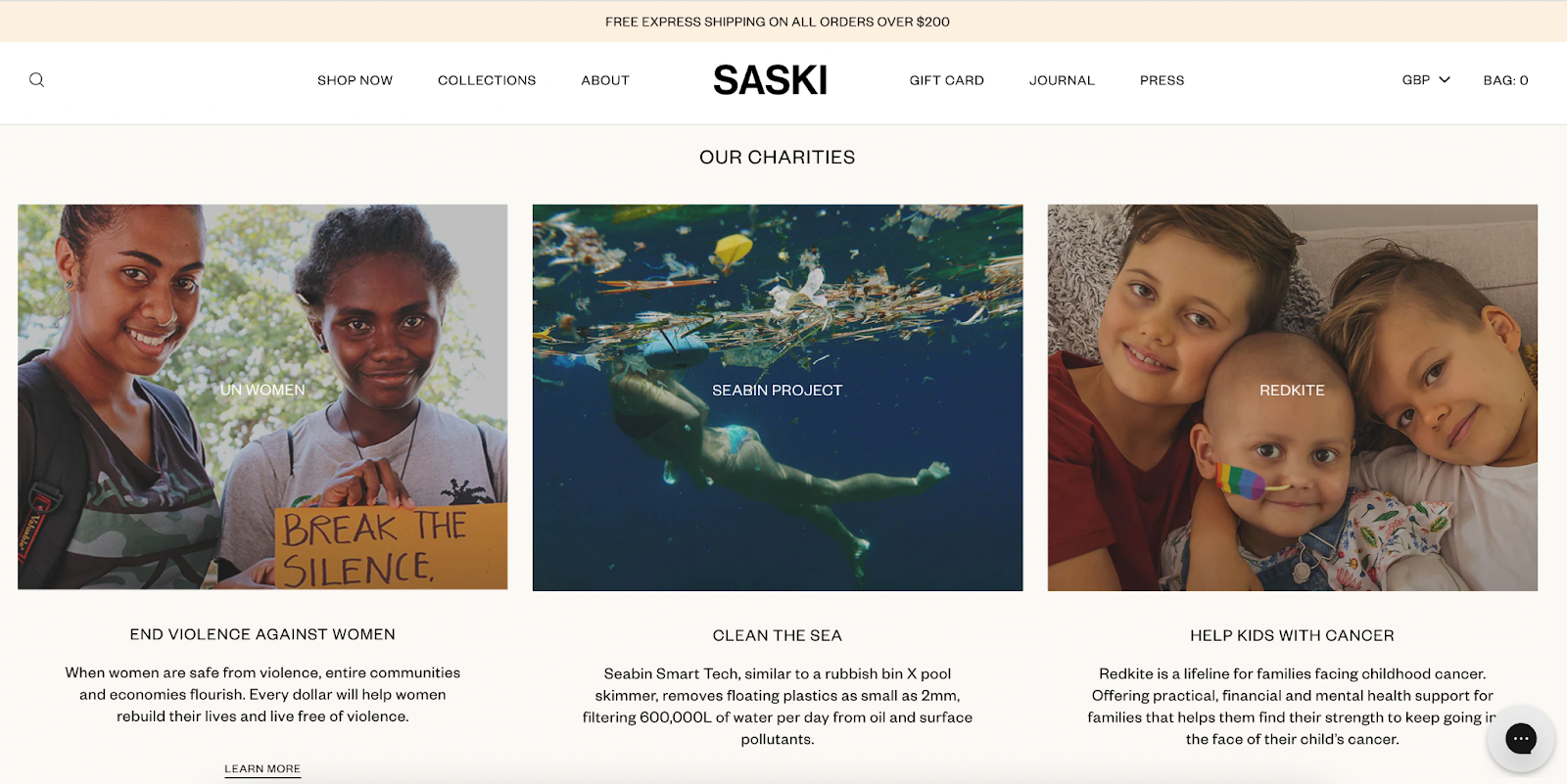
Customers who want to learn more about this initiative can visit a landing page that describes how i=Change works, its partner charities, and how much it has raised so far.
Try this:
Effie Asafu-Adjaye, founder of Beautiful Sparks, says: “We advise that, in addition to collection launches, fashion brand marketing calendars should have a sprinkling of storytelling narratives throughout the year. There’s no hard and fast rule, but anywhere between two to four times a year could be right, depending on the nature of your brand, marketing team and audience.”
Gymshark was once the fastest-growing business in the United Kingdom. Founder Ben Francis started the fitness apparel business back in 2012 and a few short years later, in 2020, the brand hit a $1.45 billion valuation.
Storytelling is at the heart of Gymshark’s success. Ben started the business using basic screen printing tools and a goal to unite the conditioning industry. Now, everything the brand does ties back to this origin story and overarching goal—including Ben’s YouTube channel, which regularly documents how he did it.
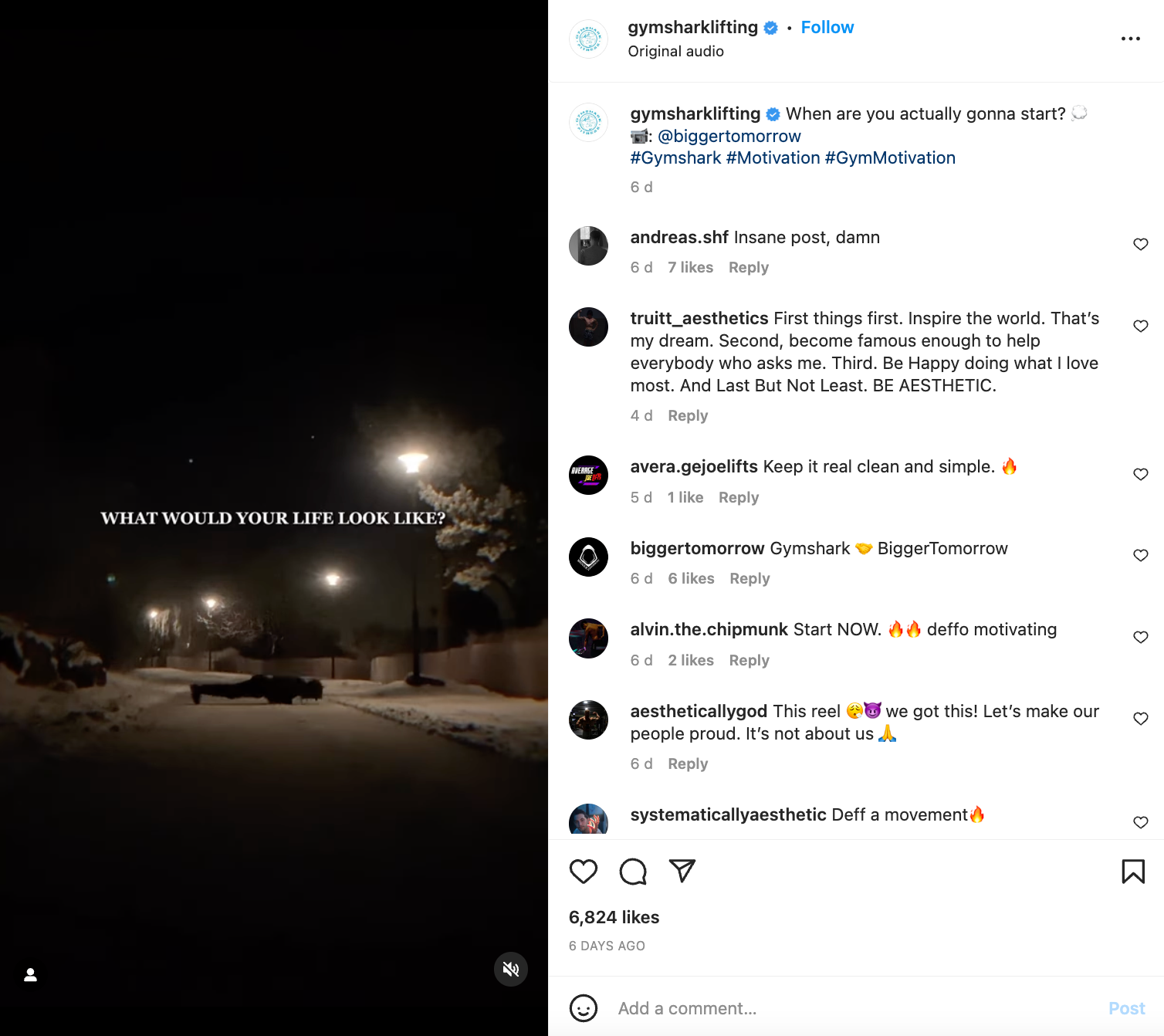
The Gymshark Lifting Instagram page is a specific profile that appeals to just the lifting enthusiasts in the brand’s now-broad customer base. The fashion brand posts motivational fitness videos to this page that revolve around storytelling—like this short-form clip that encourages followers to imagine how they’d look and feel after sticking to their goals.
To tie in this mission and unite fitness lovers, Gymshark launched a new experiential retail offering, the Gymshark Lifting Club—a fully kitted, high technology gym that’s the first of its kind in the Birmingham area.
So-called “athletes” (Gymshark’s term for influencer partners) film themselves touring the gym. Ben, who has a respectable personal brand as a result of sharing behind-the-scenes videos of running Gymshark, even toured the property and labeled it as his favorite day in the brand’s history.
Try this:
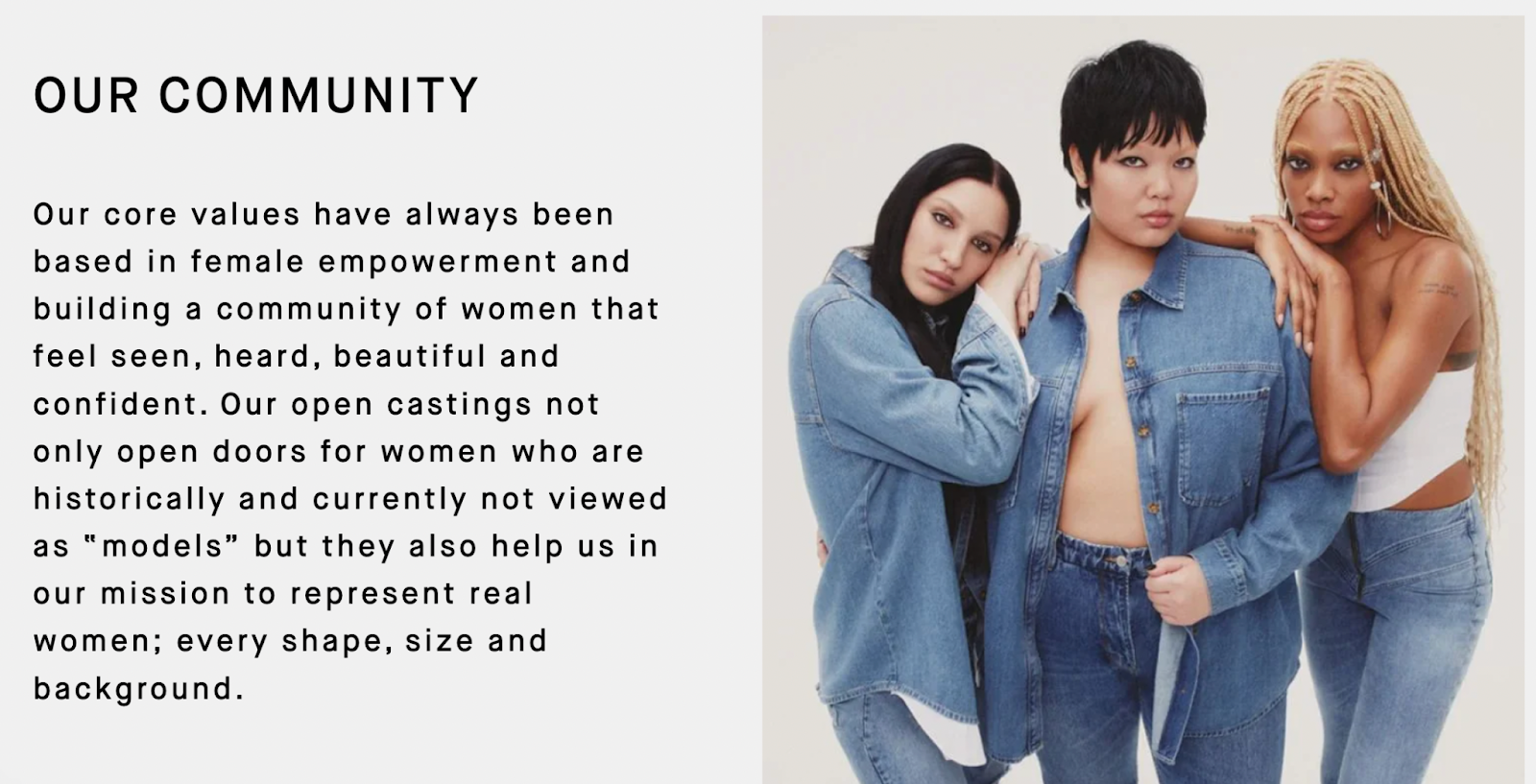
Good American is a denim brand co-founded by mega-influencer Khloé Kardashian. But instead of sticking the household name onto its denim products and hoping it would sell, Good American launched with a strong brand story—and made $1 million on its first day.
Khloé spoke of her struggles shopping with smaller-sized sisters in traditional stores. In an interview segment on her show Keeping Up with the Kardashians, Khloé said: “With Good American, you have to carry the full size range [00-24] and you can’t separate them. There’s no plus-size section, petite section, it’s one section. And if people don’t agree to that, then they can’t carry the brand.”
Good American reinforces its brand narrative with annual casting events—an opportunity to recruit a diverse selection of models. It also invites people “who are historically and currently not viewed as models” to “represent real women.”
Try this:
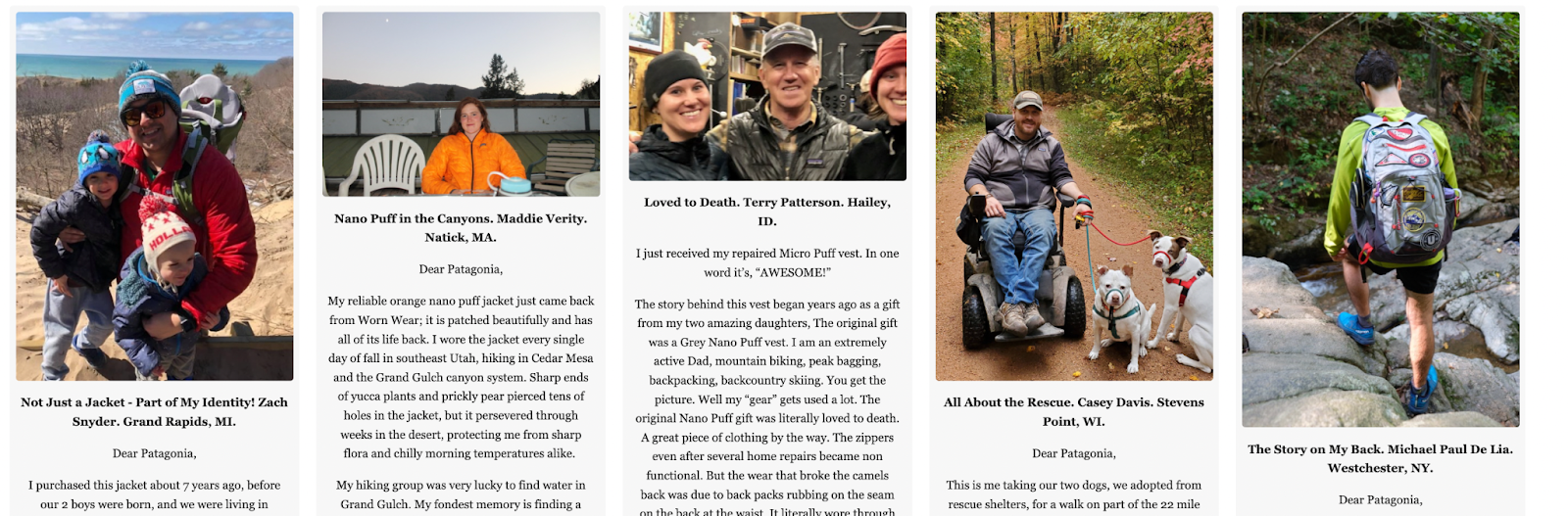
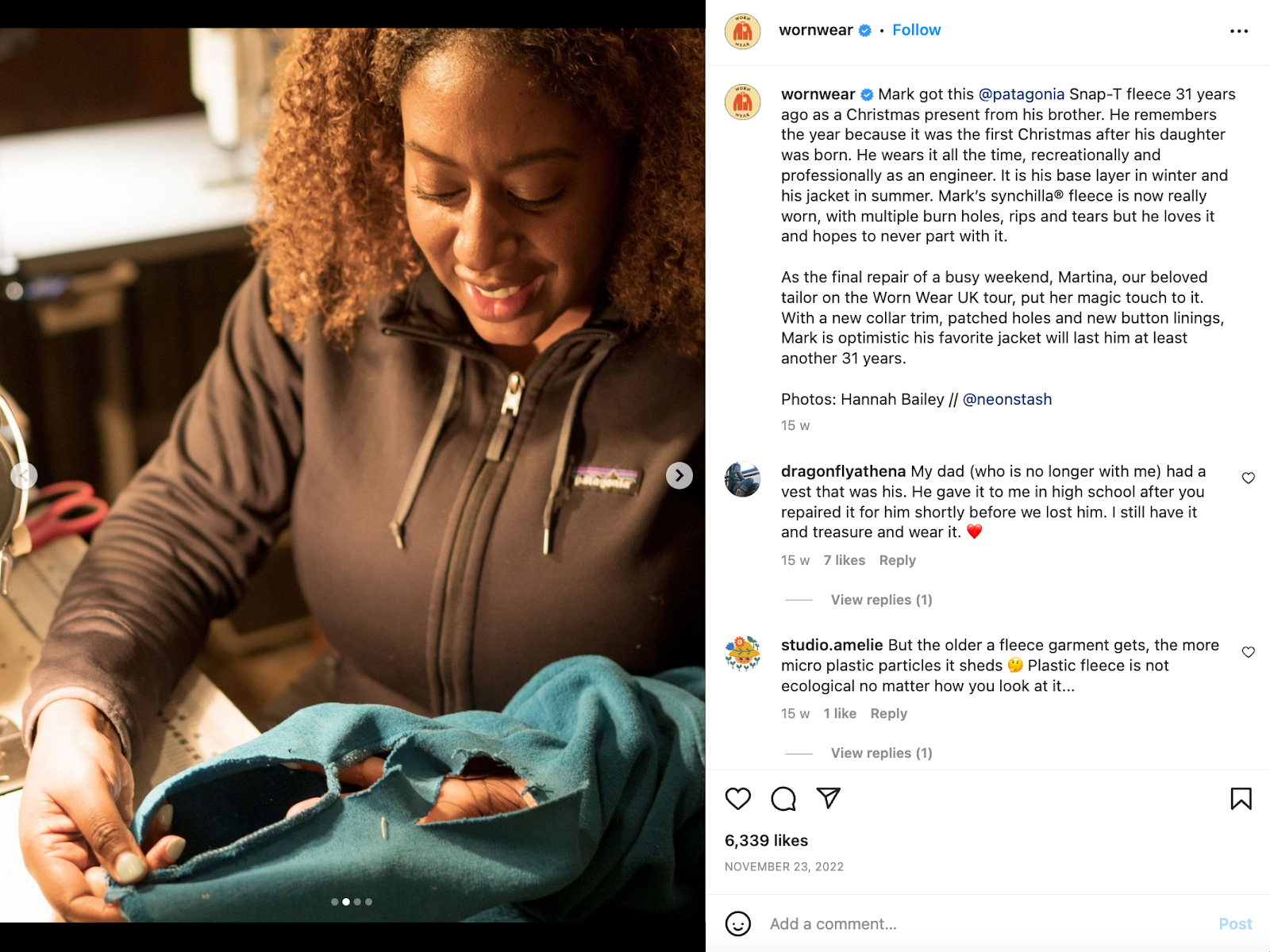
Patagonia is an outdoor clothing company with a strong emphasis on storytelling. Sustainability is one of its core values—so much so, it launched Worn Wear, a mini-marketplace on a subdomain of its ecommerce website, to support customers in buying and reselling unwanted items.
Stories power the promotion of Worn Wear to Patagonia’s audience. It has a designated landing page on its store to share stories and images of customers who’ve used the resale program.
These customer stories are repurposed on social media to build brand engagement and stand out from a sea of biased content from other fashion brands.
Try this:
People make buying decisions based on visual cues, especially when it comes to fashion ecommerce. That’s why the imagery and videos you create for your stories need to inspire customers to not only purchase your products but also buy into your brand.
Warby Parker does this well through the How Our Glasses Are Made section of its site. Its visual brand story is told through behind-the-scenes video footage and inspiring photography.
Seeing the care and precision that goes into a pair of Warby Parker glasses makes customers feel they’re purchasing a work of art. Shoppers also feel good about the socially conscious message in the video: “For every pair sold, a pair is distributed to someone in need.”
Try this:
You don’t need to be a celebrity or Instagram influencer to connect to customers through storytelling. Young & Reckless collaborates with celebrities and influencers to tell its lifestyle story for them. The brand aims to create content that appeals to the aspirational lifestyles of its customers.
“We’ve noticed that if we have content that has real meaning, people are more likely to click and go look at the actual product, as opposed to saying, ‘Hey, look how cool this photo is,’” says Chris Pfaff, founder of Young & Reckless. “If you get across your brand message and make people feel inspired or motivated, then they’ll go and buy your product.”
Social accounts for half of all Y&R’s traffic, and the company is “tripling down” on YouTube because, Chris says, “people go there to be engaged, whereas it’s more passive on Instagram and Facebook.”
In one video posted to YouTube, rapper Rob Stone shares personal advice and talks about other rappers who have influenced him. He also shows off Y&R’s signature Strike Thru hoodie.
The video draws Stone’s fans into the brand lifestyle that Y&R strives to convey through its clothing and storytelling. Brands can do the same by seeking out customers who embody their brand image to help further amplify their stories.
Try this:
Your happiest customers can become an extension of your storytelling strategy through brand advocacy.
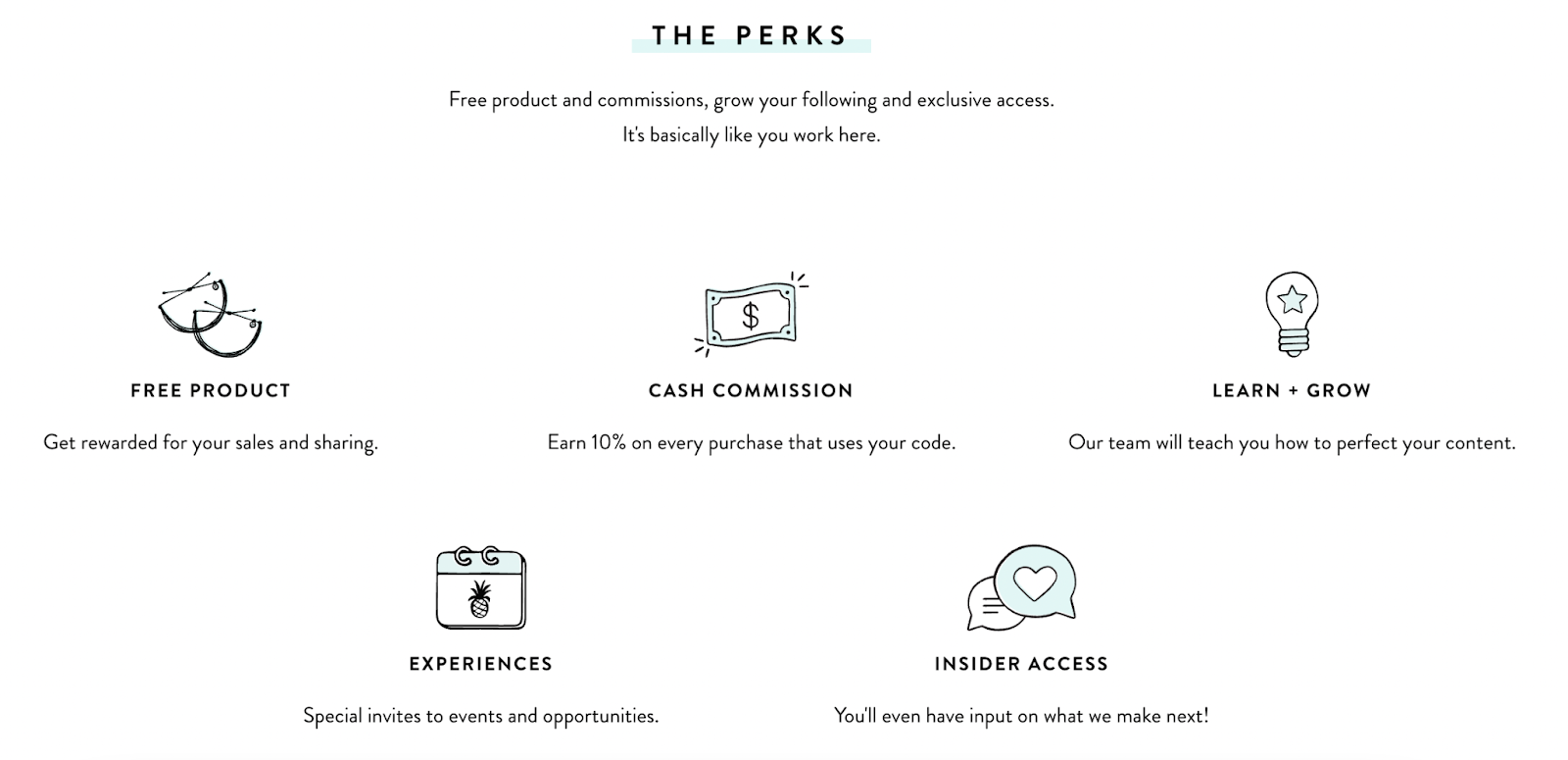
Pura Vida Bracelets has done this well by creating a micro-influencer program—getting customers to sell the product on the company’s behalf. These micro-influencers are so in love with the brand that they bring a level of passion you wouldn’t get from a traditional influencer.
The company launched an email and social media campaign to recruit Pura Vida reps. When customers signed on, they were invited to join a private Instagram and Facebook group of other brand fanatics who helped each other with social media storytelling and sales tips.
Reps were encouraged to creatively promote Pura Vida products on their social channels through a rewards system. The program was so successful that sales grew 300% year over year in its first year.
Try this:
Rothy’s is another fashion ecommerce brand that uses storytelling to drive sales.
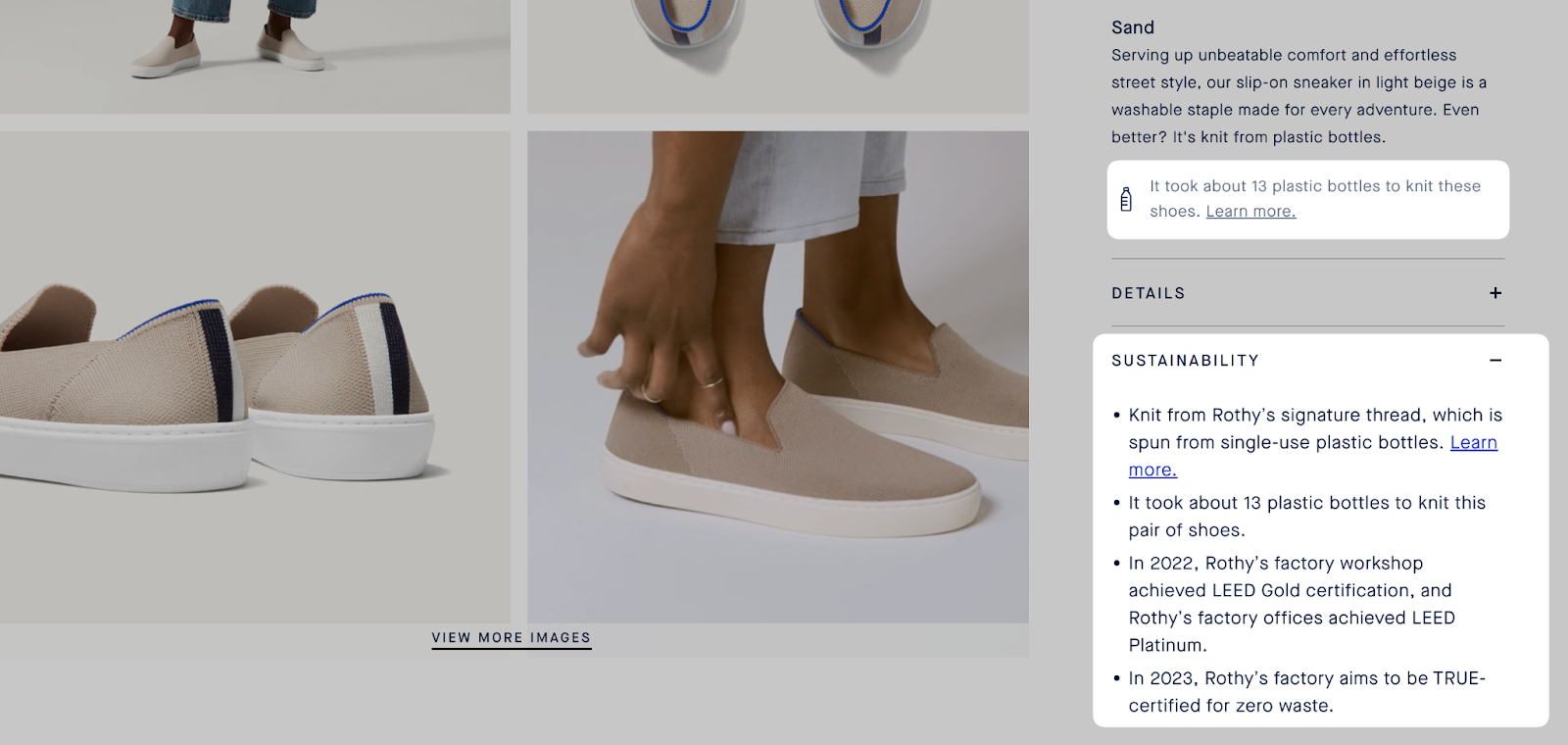
Its product pages describe how many plastic bottles have been recycled to make each individual item, linking to a “Meet our materials” landing page that shows behind the scenes of how its materials are sourced.
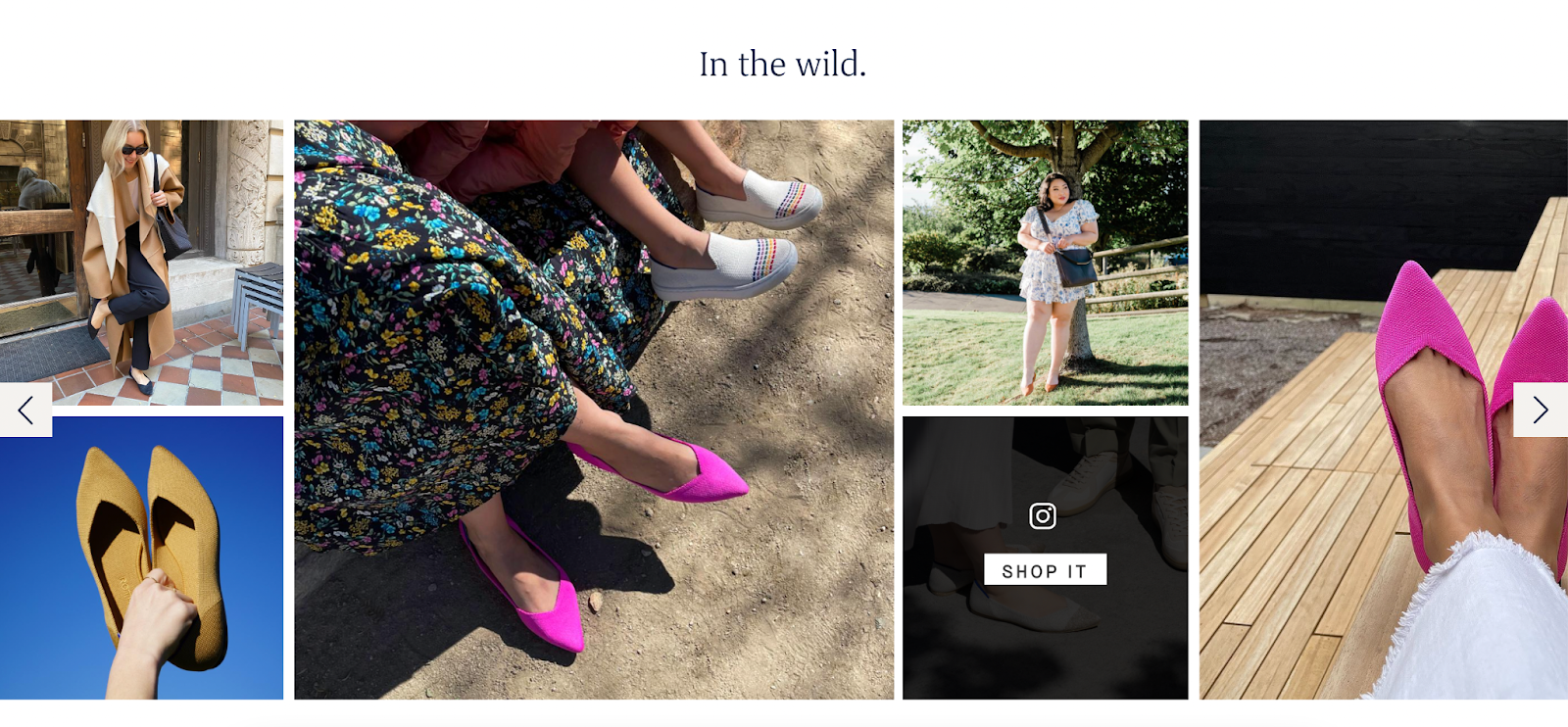
Rothy’s also takes a different customer storytelling and sales approach through its #RothysInTheWild hashtag, which encourages customers to show off their new shoes online.
Rothy’s curates some of the best images on its Instagram and TikTok profiles. These are then embedded on the Rothy’s site, giving bragging rights to the customer. Each Instagram photo is instantly shoppable through one click that adds the shoes to your cart.
Try this:
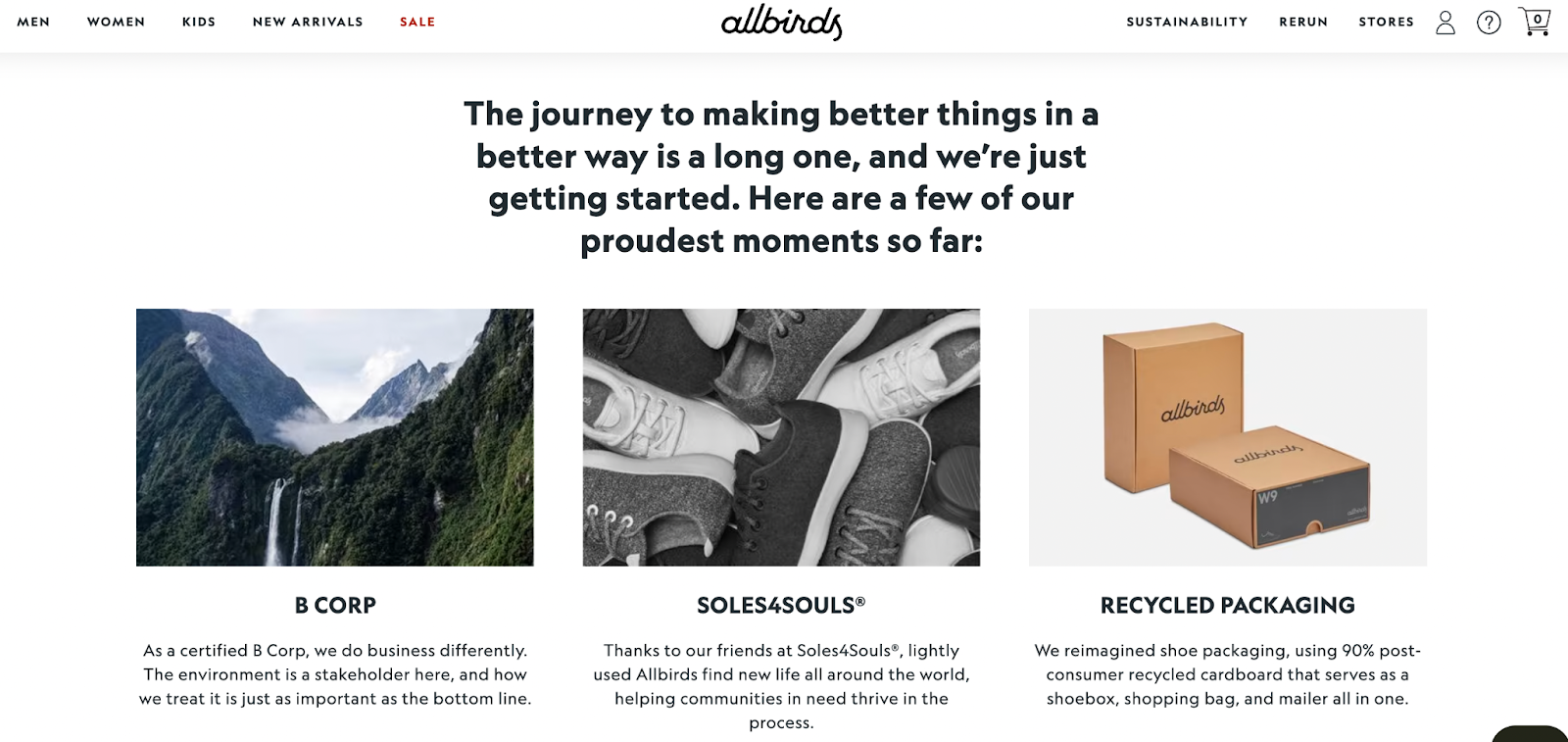
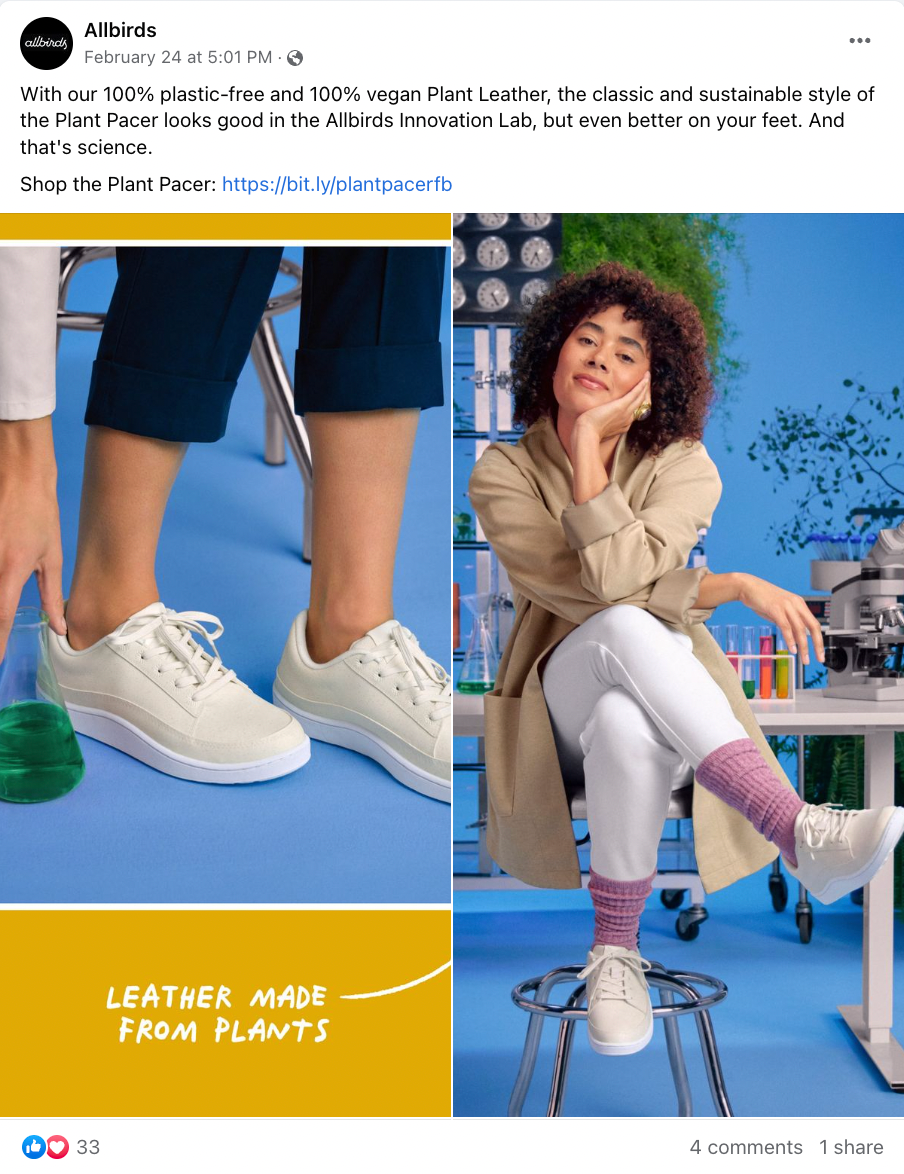
Allbirds is an apparel company powered by a mission to make fashion more sustainable. Allbirds uses every touchpoint it has with potential customers as an opportunity to tell stories —like its Our Story landing page, which walks customers through its journey of making sustainable clothing.
Travis Boyce, head of global retail operations at Allbirds, says: “With Shopify Plus, we have our point-of-sale and ecommerce systems under one umbrella, which serves our ultimate purpose of being an omnichannel retailer and viewing the customer as one customer—no matter where they shop with us.”
Sharon Heather, business development director at Easy Merchant, is an Allbirds customer who was recently influenced by brand storytelling to purchase a pair of its shoes.
“What really caught my attention was their brand storytelling about the materials they use to create their shoes,” Sharon says. “They have a unique approach to sustainability that really resonated with me, and it was clear from their messaging that they care deeply about creating products that are not only good for the environment, but also for the people who wear them.”
Try this:
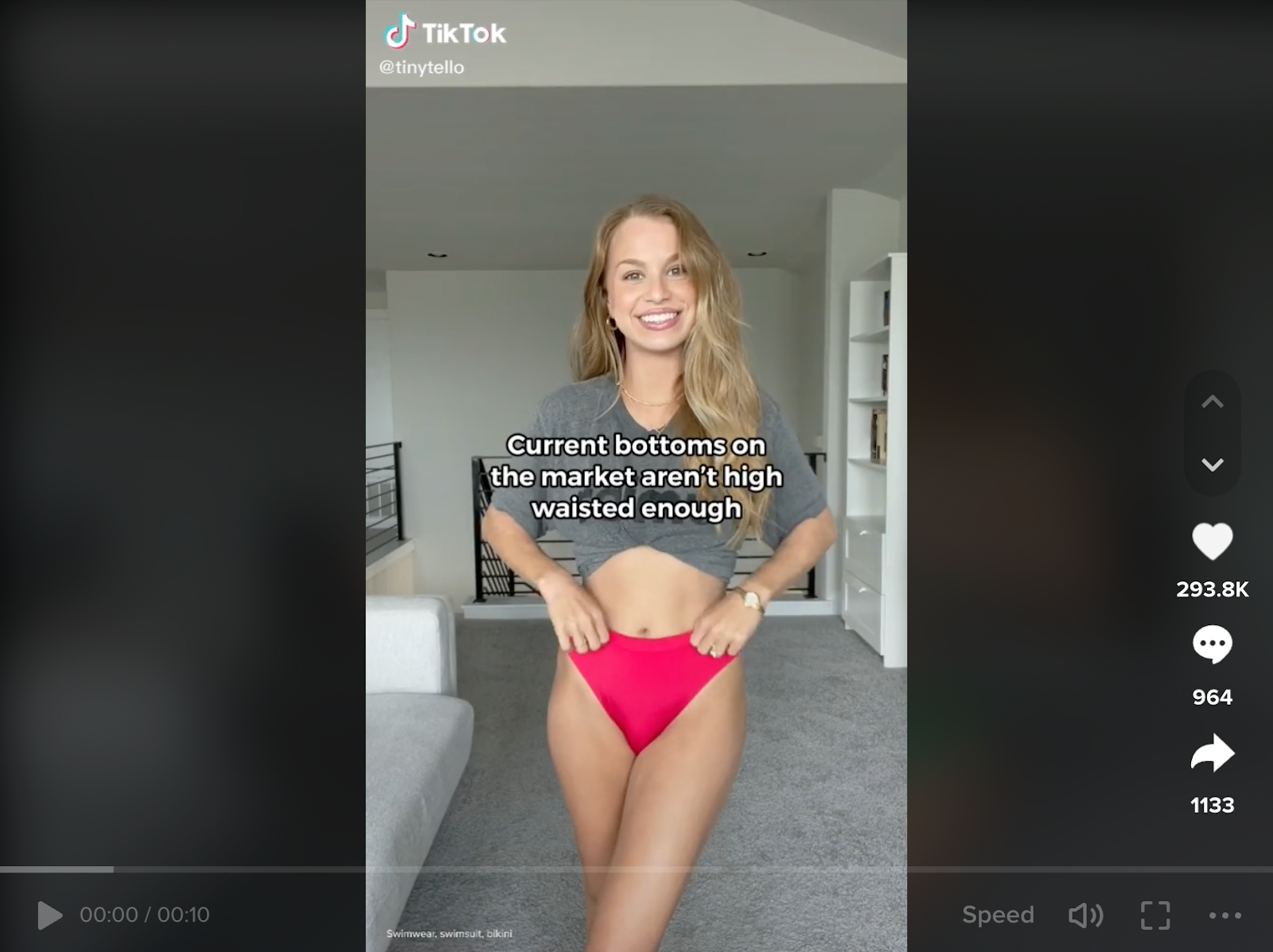
93 Play Street is a relatively new company in the fashion industry, but founder Jessica Anderson’s knack for brand storytelling has propelled it to new heights—starting with a single TikTok video that quickly went viral.
Jessica says: “The night we launched 93 Play Street, we instantly went viral with a video titled “Why I Design Swimwear,” hitting over two million views. This, combined with my decade-long career as a social media director, [told me] we had to put all of our focus into creating the best videos if we wanted to hit our one-year goal of seven figures.”
Jessica Anderson, founder of 93 Play Street, says: “There is a clear correlation between our viral videos and sales. For example, in our first month of posting our viral videos on Facebook, we pushed an additional six figures in sales on top of our average monthly sales.”
This video was just the beginning of 93 Play Street’s TikTok brand storytelling. It has since gone on to produce several videos, each viewed millions of times, including:
“93 Play Street’s marketing has been fully organic on social media since the brand launch,” Jessica says. “We always have a hook, storyline arch, and incorporate color psychology in our storytelling. Our content direction developed naturally from going viral by sharing size-inclusive content.”
Try this:
Ledbury is a fashion brand that uses storytelling to sell premium men’s shirts. It sells through its DTC website and wholesale partners—the latter of which is notoriously difficult to tell stories through. B2B customers are in control over how they market your products in their own stores.
Ledbury alleviates this problem by hosting product knowledge sessions with its largest retail partners. Two to three times per year, its 30-minute lunches keep partners up to date on the company’s unique selling points and brand story, including:
With this approach, department stores carrying Ledbury’s inventory can provide consistent messaging to customers regardless of where they shop.
Try this:
Levi’s is a denim retailer with an impressive knack for brand storytelling. The brand recently celebrated its 150th birthday by partnering with digital agency Droga5 on a new campaign titled “The Greatest Story Ever Worn.”
This campaign is a series of three scripts, each inspired by a true story around its infamous 501 jeans, sourced from its archive. Each brand story was translated into 19 languages and distributed across 36 global markets through repurposed social, print, and event content.
In an interview with Retail Dive, Droga5’s senior art director, Cara Cecchini, said: “When you take a step back, [the stories] all have some form of a universal theme.
“That was really important to us in terms of a global storytelling approach: even though this happened at this time, at this place, there’s a piece of it that we can all relate to via the product and the lore around the 501.”
Sean Barron, co-founder of Re/Done (via Glossy), says: “What resonates and [works] to build a community in the millennial space are [styles] with scarcity, exclusivity and storytelling. And those three [characteristics] actually live inside of one pair of Levi’s.”
Try this:
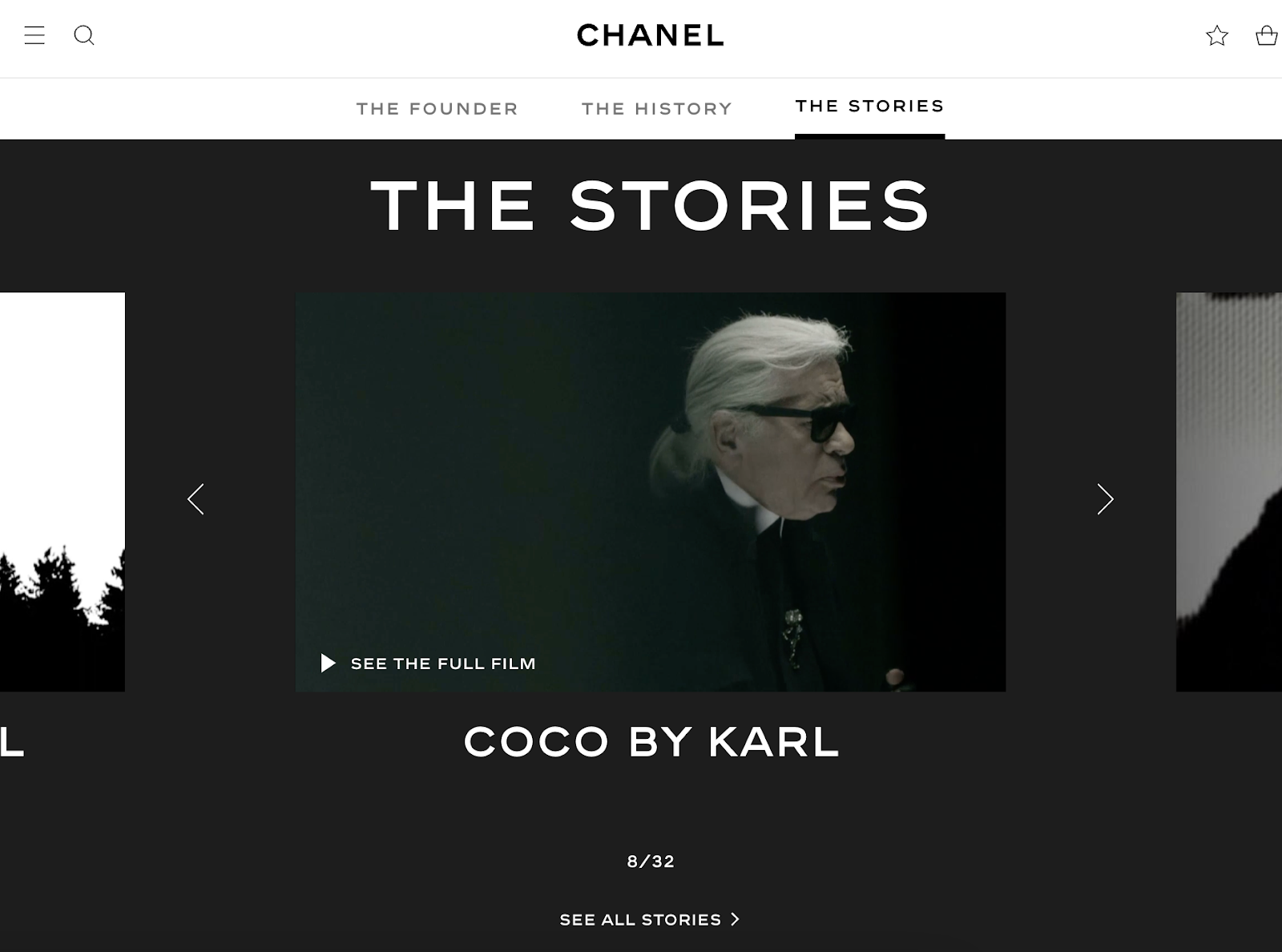
Luxury fashion brands typically have a key advantage over other apparel companies: a long history. Chanel is no different. As the second-most-recognized luxury brand in the world, Chanel has a rich heritage dating back more than 100 years from which it pulls stories to solidify its brand equity and reputation.
Chanel shares stories with luxury consumers through its Inside Chanel series. A collection of 32 short films hosted on its direct-to-consumer website, Chanel tells stories about the most infamous times in its history, such as:
Try this:
Burberry is one of the largest luxury fashion brands to come out of the UK. Founder Thomas Burberry created the fashion house in 1856, making it another luxury brand with years of history to pull from in its brand storytelling campaigns.
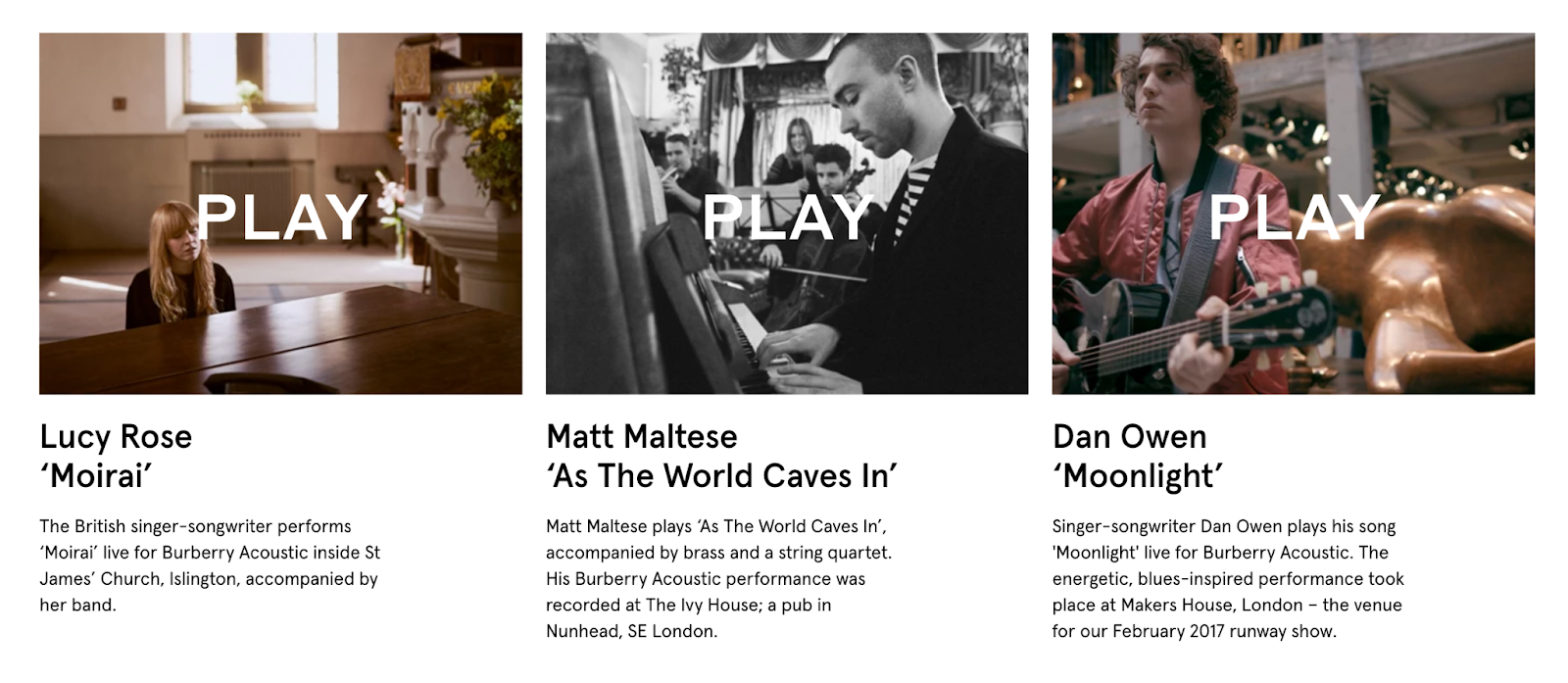
But instead of relying on this history, Burberry takes a unique approach with its Burberry Acoustic campaign. British artists are invited to host live performances, which it promotes across its website and social media platforms.
To celebrate the campaign’s 170-year anniversary, Burberry released a soundtrack featuring songs from artists who performed at Burberry events, played a Burberry Acoustic session, or recorded interviews with the brand.
It’s a large-scale storytelling campaign that’s a win-win for everyone involved: British artists build good relationships with the brand since it helps them increase their own audiences, and Burberry benefits from interviewing these artists and telling their stories with the Burberry name attached.
Try this:
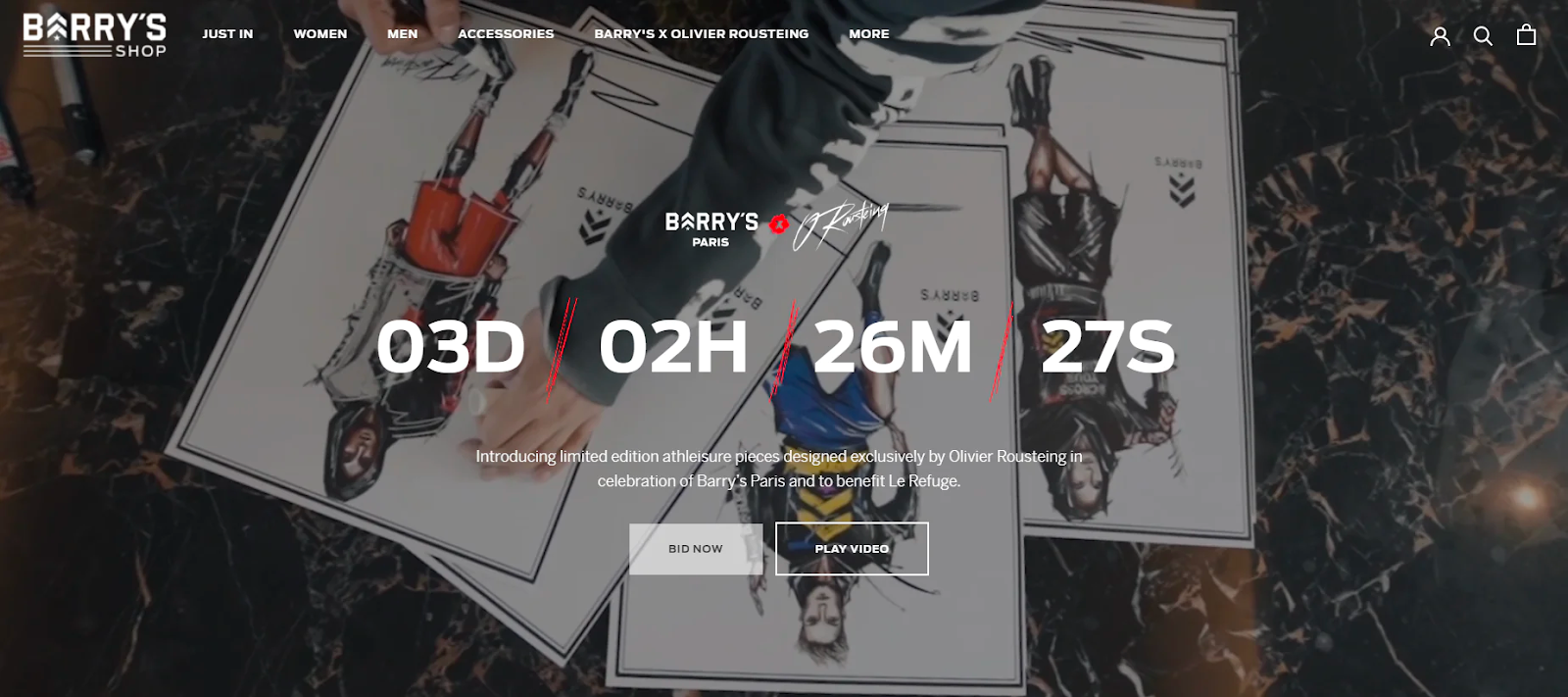
Barry’s Bootcamp recently launched a campaign with Olivier Rousteing, a designer with luxury fashion brand Balmain. Rousteing created limited-edition hoodies for Barry’s, a popular fitness and lifestyle fashion brand, to sell online.
Barry’s used an integrated storytelling and ecommerce sales approach to drive customers through the funnel.
To start, it built a custom landing page that hosted a video explaining the fashion collaboration. The countdown clock on the homepage created a sense of urgency, with shoppers only having a few days to bid on the limited-edition items.
The campaign not only drove conversions on-site—it helped raise awareness of the new Barry’s store opening in Paris.
Also, 100% of the proceeds went to Le Refuge, an organization that provides medical, psychological, and legal support to young people who are victims of homophobia and transphobia. That feel-good brand story was an extra incentive to make loyal customers not only buy the products, but fall deeper in love with the two brands.
Try this:
Whether your business has been around for five years or 50, your fashion brand story must put your customers first. If their perspectives change, your narrative needs to change too.
Involve your audience, and other brands and influencers, in telling your story. They can do so through reviews, word of mouth, and even creating content to advocate for you and influence other customers.
Whatever form your fashion brand storytelling content takes, optimize it to drive product interest and sales. It should entertain, empower, and inspire your audience at the same time. Experiment with new platforms and technologies to immerse customers in your brand stories and let them experience your fashion brand in new ways.
While custom-built commerce systems have historically been the norm for larger fashion and apparel brands, today it’s much easier to get started using platforms like Shopify Plus.
Shopify Plus allows fashion brands to:
Shayan Zadeh, CEO of Dressbarn, says: “Working with Shopify Plus allows you to do something Herculean like this in a very short period of time. Instead of going around in circles with red tape and reviews, we were actually building stuff and testing it to make sure it worked.”
Regardless of your decision to buy or build an ecommerce platform for your fashion brand, any enterprise software you choose must reduce complexity, streamline multichannel selling, and allow you to focus on running your business—not on technology.
Good American is a great example of fashion brand storytelling. It uses the founder’s story—that she had to shop in a separate area of a department store than her sisters—to communicate the need for its inclusive denim products.
Fashion storytelling happens when apparel brands use stories to help their target audience connect with the brand. This could be the brand’s origin story, key milestones in the brand’s history, or a tale of a previous customer wearing its products.
Luxury brands often share the origin story of their businesses when telling stories. Burberry, for example, often tells the story of how its infamous Burberry check came to life.