

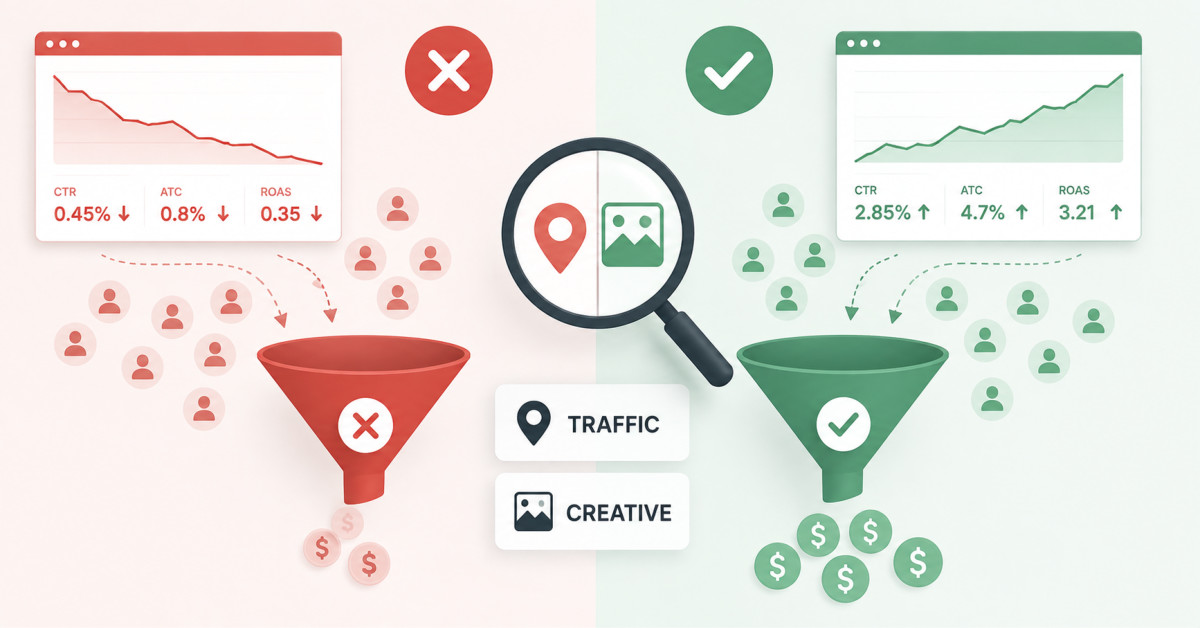
Quick answer: Invalid traffic and creative fatigue produce nearly identical dashboard symptoms: falling CTR, rising cost per acquisition, flat conversion rate. But they need opposite fixes. Treat fraud like fatigue and you refresh creative that was never the problem. Treat fatigue like fraud and you burn time chasing bots that don’t exist. Getting the diagnosis wrong costs more than either problem does on its own.
CPA tells you that performance changed. It does not tell you why. The decision becomes defensible only when you trace the change back to traffic quality, audience response, offer fit, creative delivery, or a combination of them.
Misdiagnosing a traffic problem as a creative problem, or the reverse, isn’t just an internal marketing debate anymore. It’s the kind of call finance teams increasingly want documented before budget moves.
CFO pressure on marketing has climbed sharply. Duke’s Fuqua School of Business CMO Survey found 63% of CMOs report increased pressure from CFOs, up from 52% the year before, with rising scrutiny from CEOs and boards too. Meanwhile, Gartner’s research (reported via CX Today) found that over 40% of CMOs pushing for larger budgets will lose influence with the C-suite specifically because they can’t demonstrate clear ROI.
That backdrop changes what “we think it’s fraud” or “we think the creative is tired” actually means inside a company. It’s not a hunch a media buyer acts on quietly anymore. It’s a claim that needs to survive a finance review, especially once someone asks to pause spend, request a platform credit, or greenlight a new creative production cycle off the back of it.
Think about what each explanation actually asks for. Blaming invalid traffic usually means requesting a platform credit, adding a filtering tool, or pausing a placement. Fairly contained asks. Blaming creative fatigue means asking for new production budget instead: design hours, copywriting, approval cycles, sometimes a full relaunch. Those aren’t equivalent requests. A finance team fielding both kinds of asks across several brands has an obvious reason to want evidence before signing off on either one.
The fastest way to separate the two problems is to sort the symptoms by which metric moves first, not by which one looks worst.
Invalid traffic typically distorts volume and cost metrics before it ever touches engagement quality. Clicks and impressions spike or stay elevated, cost per click drifts up, but downstream behavior (session duration, scroll depth, add-to-cart rate) doesn’t move in a way that matches the click volume. Creative fatigue runs the opposite direction. Engagement quality degrades first: click-through rate softens gradually as the same audience sees the same ad one too many times, while traffic volume and cost per click stay roughly normal. ClickGuard’s breakdown of fraud versus fatigue draws the same line: both produce declining CTR and wasted spend, but the root mechanism (malicious inflation versus plain audience wear-out) differs enough that the fix for one does nothing for the other.
A Microsoft Ads employee writing for Search Engine Journal’s Ask A PPC column makes a point worth sitting with: a lot of what looks like fraud is actually a targeting or creative problem wearing a disguise. Broad location settings, a creative with an overly prominent click target, or a small mobile screen can all produce click patterns that resemble fraud with zero malicious actor involved. Rule that out first, before pointing at an outside bad actor.
Why does this matter more than sorting by severity? A media buyer under pressure to explain a bad week tends to reach for whichever metric looks ugliest that morning, and CPA is usually it. But CPA is downstream. It rises for both reasons equally. Tracing back to whichever upstream signal, volume or quality, moved first is what actually narrows things down to one cause instead of two.
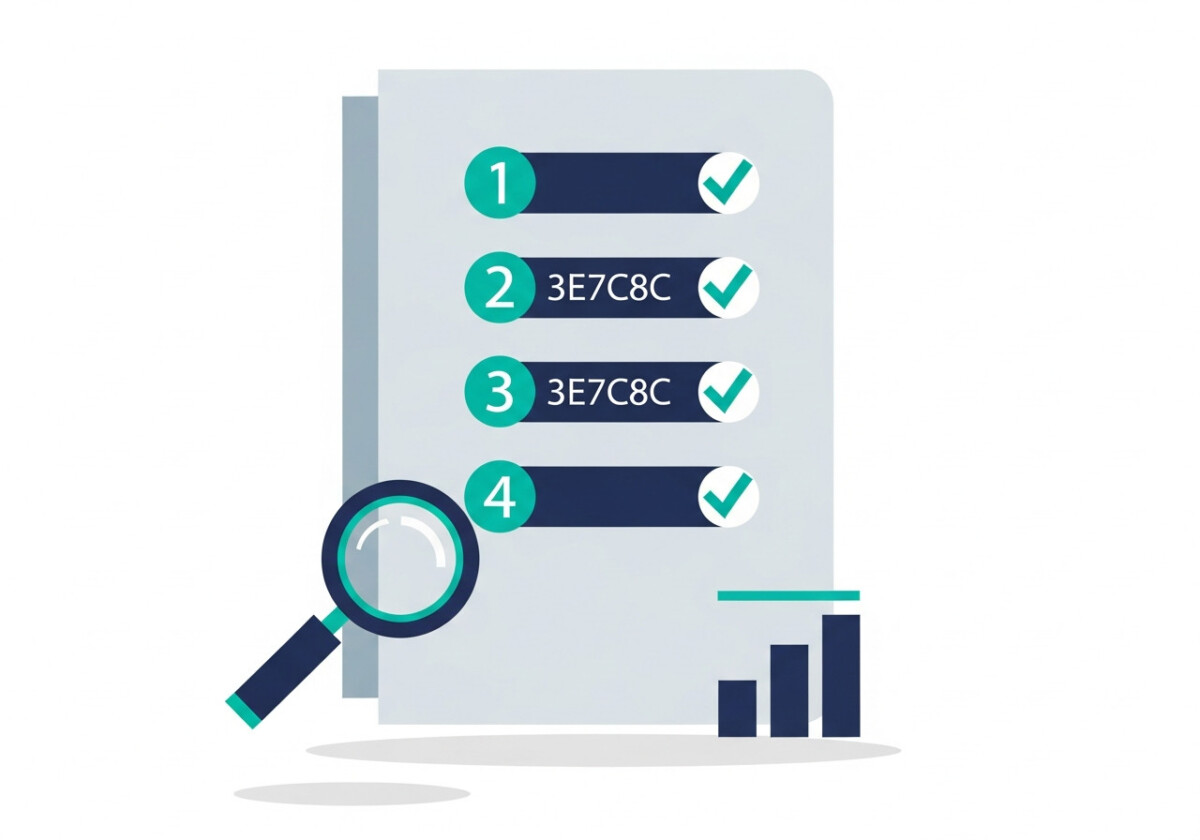
Run a fixed sequence of four tests, in order, and you get a documented finding instead of a debate settled by whoever argues loudest in Monday’s meeting.
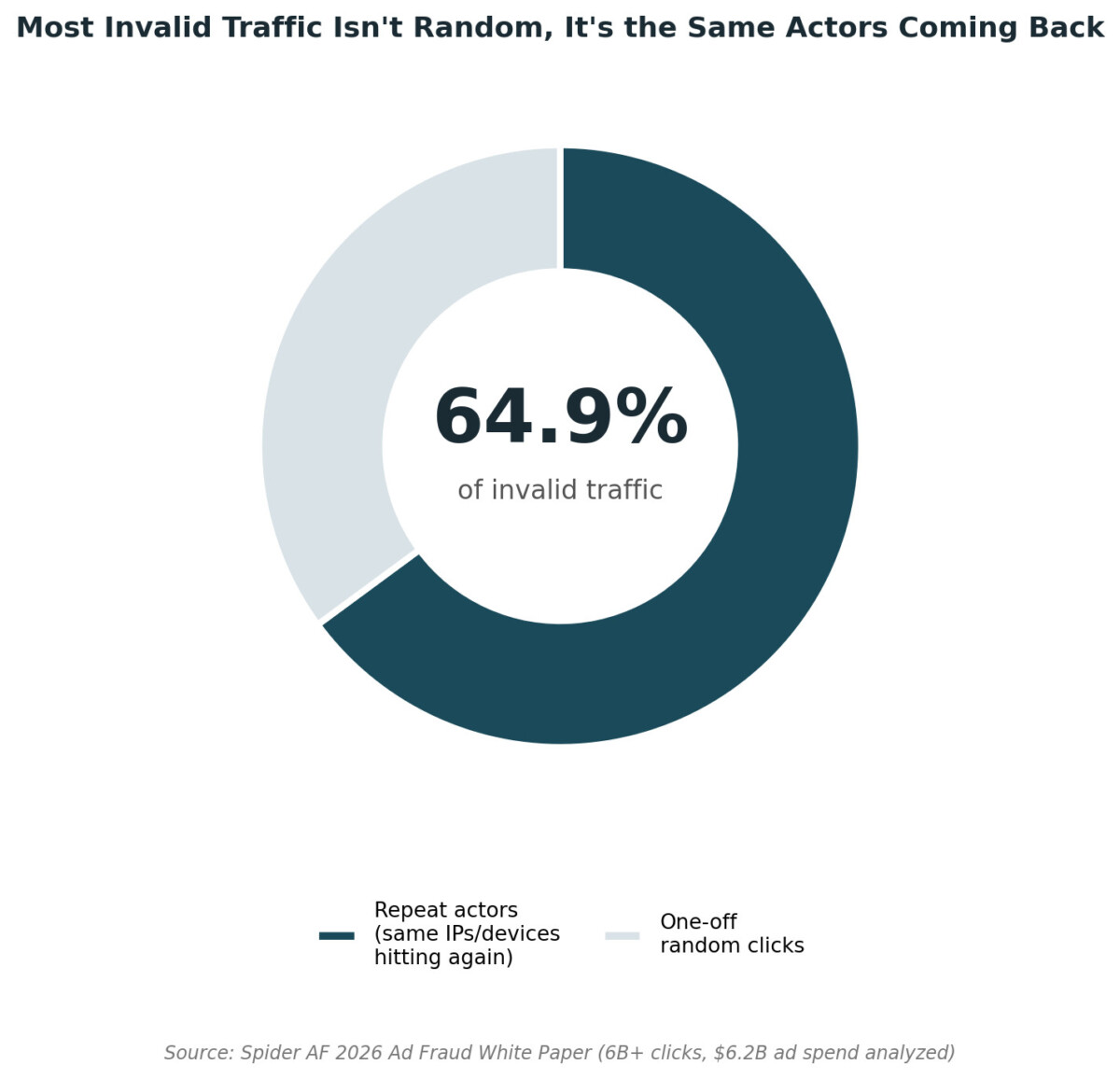
Source: Spider AF 2026 Ad Fraud White Paper
A campaign that fails tests one and four, but passes test two cleanly (new creative fixes it), has a traffic problem. One that fails only test one, with no repeat-actor signal and a clean recovery after a creative swap, has a creative problem. Most real cases aren’t purely one or the other. But running all four in sequence at least tells a team which problem to fix first.
None of the four tests require expensive tooling to run once. A spreadsheet, the platform’s own click reports, and a week of patience cover the basics. Where it gets harder is doing this every time a campaign wobbles, across a dozen accounts, without it eating a full day of someone’s week. That’s usually the point where the manual version of this framework stops scaling and a team looks for something that runs the repeat-actor and geographic checks automatically in the background.
Improvado’s framing of ad fraud versus poor targeting draws a sharp line: fraud is deliberate deception designed to siphon budget, while a campaign underperforming from poor targeting is a different, and cheaper, problem entirely. Confuse the two and the cost multiplies.
Kill a creative that was actually fine, because a team assumed fatigue when the real issue was invalid traffic, and now you’re paying for a new production cycle (design time, copywriting, approval rounds) to solve a problem a block list would have fixed for a fraction of the price. The reverse mistake is just as costly. Blame fraud for a genuinely tired creative and budget keeps flowing into filtering and monitoring tools while the actual fix, a new hook, a new offer, a new angle, never gets built. CTR keeps sliding no matter how clean the traffic gets.
Spider AF’s white paper also put total 2025 losses to ad fraud at an estimated $32.6 billion globally. That number gets thrown around as a reason to fear fraud specifically, but the more useful read for an operating team is narrower: a meaningful share of that loss almost certainly sits on accounts where nobody ran a structured test. They just defaulted to a guess and moved budget based on whichever explanation felt more plausible that week.
None of the four tests above matter much if the results live in a Slack thread nobody can find six months later. What survives a finance review is a dated record: which test ran, what the numbers showed, what decision followed.
Pigeon Digital’s playbook for handling CFO pushback on ad spend makes the point plainly: bring the numbers so the room evaluates the whole picture, not just the one line item that’s easiest to point at. A documented four-test result does exactly that. It shows the team ruled out targeting and creative issues before blaming traffic quality, or ruled out traffic before recommending a creative refresh, instead of reaching for whichever explanation happened to be less work.
This is also where a dedicated layer for preventing invalid ad clicks earns its place in the stack, rather than sitting there as a line item nobody can justify. Automated click scoring and IP reputation checks generate exactly the kind of timestamped, exportable record test four needs, continuously, instead of someone manually pulling click logs every time a campaign looks off. Finance doesn’t have to trust a gut call about repeat actors when a system is already logging them by default.
The most common mistake is skipping straight to whichever fix feels more comfortable, without running any tests at all. Blaming fraud dodges an uncomfortable conversation about whether the creative team’s work has gone stale. Blaming creative dodges the harder, more technical work of auditing traffic sources.
The second is running one test and treating it as conclusive. A cost-quality divergence on its own is suggestive, not proof. It’s the combination, particularly repeat-actor and creative-isolation results together, that actually holds up.
The third is forgetting the two problems can coexist. A campaign can carry a stale creative and a real invalid-traffic problem at the same time, and fixing only one won’t fully recover performance. Keep running the full sequence even after an early positive result on one test. Don’t stop the investigation too soon.
The fourth, easy to miss: running the tests once and treating the result as permanent. Invalid traffic sources rotate. Creative genuinely wears out over time, even after passing a clean test months earlier. A campaign cleared of fraud in January can pick up a repeat-actor problem by March. Retesting on a regular cadence, not just when performance first drops, catches the shift before it snowballs into a bigger budget call.
Fraud and fatigue produce the same dashboard symptoms but demand opposite fixes, and guessing wrong costs more than either problem alone. Run the four-test sequence before reallocating a single dollar of budget, and keep the results somewhere finance can actually find them. That record is what turns a marketing hunch into a decision the rest of the company can act on with confidence.
You can tell whether low ad performance is fraud or creative fatigue by tracing the first upstream metric that changed and running controlled tests. Fatigue usually appears as gradually rising frequency and declining CTR or conversion response within the same audience. Suspect traffic quality when clicks spike without matching engagement, add-to-cart activity, or purchases, especially in unexpected locations, placements, times, or repeated sources. Then run a creative-isolation test while holding audience, landing page, offer, and bidding stable. Do not label fraud from one weak metric alone.
A rising CPC does not prove click fraud because CPC can increase for ordinary auction, targeting, creative, seasonality, and competition reasons. It can also rise when audiences become less responsive, when frequency increases, or when a platform changes delivery behavior. Treat rising CPC as a signal to investigate, not a conclusion. Compare it with CTR, frequency, placement quality, geography, session engagement, conversion rate, and repeat-source patterns. If click volume rises while downstream quality weakens in suspicious segments, preserve the evidence and investigate the source.
You should run a creative-isolation test for at least 7 days on a stable-volume campaign, provided the campaign receives enough impressions and conversions to reduce normal daily variance. Keep the audience, placement mix, landing page, offer, bid strategy, and conversion event unchanged while replacing only the suspected creative. If volume is low, run the test longer rather than forcing a conclusion after a few days. The purpose is to identify whether a new message or asset changes audience response, not simply to find a temporary positive day.
You should save campaign exports that show date range, spend, impressions, clicks, CTR, CPC, conversion rate, placements, geography, devices, time-of-day patterns, landing-page engagement, and repeat-source evidence where legally and technically available. Record the creative ID, audience, offer, landing-page version, and any changes made during the period. Preserve the data before excluding placements or adjusting targeting. If you use click-protection software, export its score, detection reason, timestamp, and action. Evidence should show both the suspicious traffic pattern and the missing downstream value.
Creative fatigue and invalid traffic can happen in the same campaign, which is why a binary diagnosis often fails. A fatigued asset can produce lower response among genuine customers while a low-quality placement or suspicious source simultaneously contributes worthless clicks. Start with the issue that has the clearest evidence and largest controllable impact. Refresh the creative if a controlled swap improves response, and audit sources if geography, placement, timing, or repeat-source data remains abnormal. Continue monitoring after the first fix instead of assuming the campaign is fully recovered.




