
Modern IT leaders are under pressure to deliver stable, scalable infrastructure while operating within tighter budgets, longer refresh cycles, and rising sustainability expectations. Hardware decisions today are judged not only on performance, but on how effectively they balance cost control, operational reliability, and long-term flexibility. In this environment, many organizations are taking a closer look at used Dell servers as a practical alternative to purchasing new systems.
Buying pre-owned enterprise hardware is not a shortcut when it is handled properly. It is a procurement decision that should be guided by workload requirements, configuration discipline, security standards, support planning, and total cost of ownership. The buyers who get the best results are rarely the ones chasing the lowest price. They are the ones who understand exactly what the server needs to do and how it will fit into the broader infrastructure lifecycle.
The enterprise hardware market has shifted in ways that increasingly favor disciplined reuse. Organizations are extending refresh cycles, revisiting depreciation models, and placing greater emphasis on extracting full value from capital assets. In technology environments where budgets are under constant review, the business case for extending hardware life has become more practical than theoretical. Forbes has covered the financial logic of extending hardware lifecycles, particularly where organizations want better return from deployed infrastructure.
Enterprise servers are engineered for continuous operation over many years. When systems are retired after three to five years, a significant portion of their functional lifespan often remains. Hardware that has already demonstrated stability in production can, in many cases, remain useful for secondary workloads, branch infrastructure, development environments, backup systems, and carefully planned production deployments.
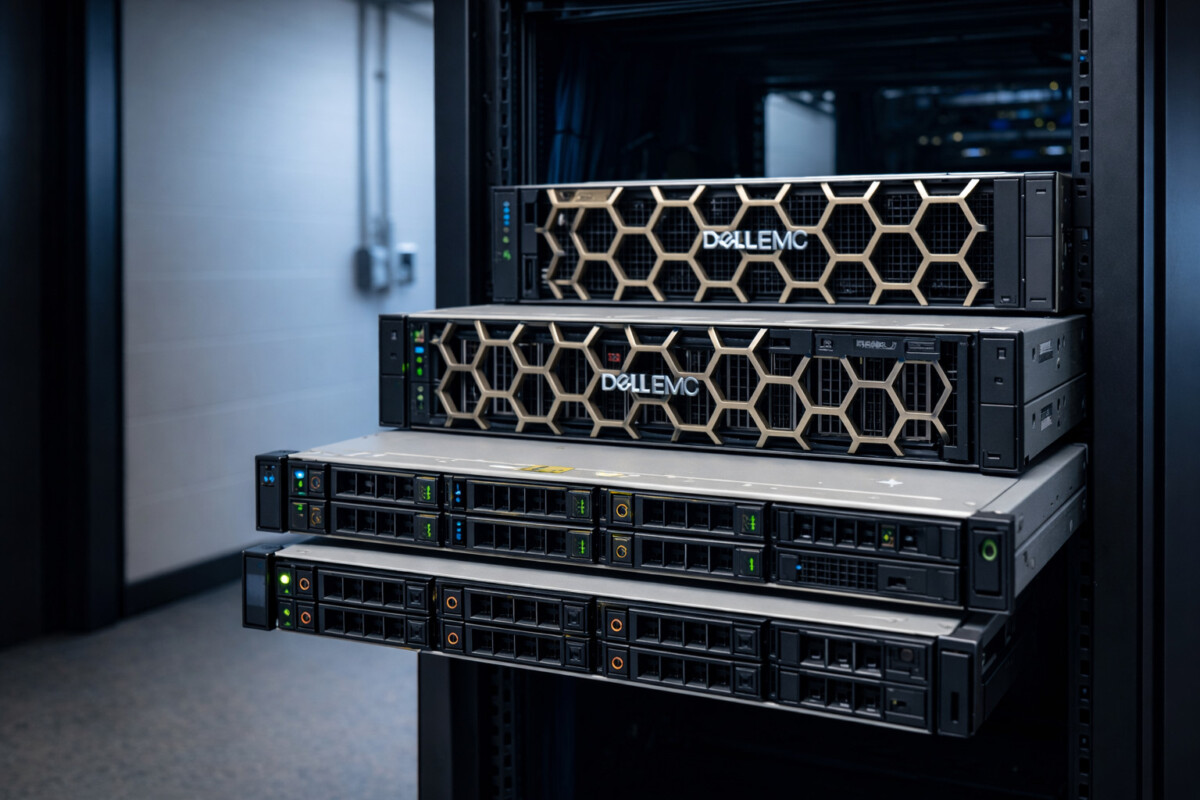
Dell’s PowerEdge portfolio spans a wide range of workloads and deployment scenarios. Rack-mounted servers dominate modern data centers, offering predictable airflow, dense component layouts, and straightforward scalability. One- and two-socket configurations are commonly used for virtualization platforms, databases, and application hosting, while higher-core-count systems support consolidation and analytics workloads. Dell’s own overview of PowerEdge rack, tower, and modular servers reflects how broad the platform range has become.
Tower servers continue to play a role in environments without dedicated rack infrastructure, such as branch offices, small server rooms, and specialized facilities. When evaluating refurbished Dell infrastructure, buyers are best served by looking beyond model names and focusing on complete system configurations. The same server family can vary meaningfully depending on processors, memory population, storage backplane, controller, network cards, power supplies, and included accessories.
Processor specifications often dominate server discussions, but real-world performance is shaped by overall system balance. Memory capacity and configuration have a direct impact on virtualization density and application responsiveness. Insufficient RAM can constrain performance even when processor resources are plentiful. A server intended for virtualization, for example, may benefit more from additional memory and storage throughput than from a marginally faster CPU.
Storage architecture is another critical variable. The performance gap between traditional hard drives, SATA solid-state drives, and NVMe-based storage can outweigh modest differences between processor generations, depending on workload characteristics. Network interfaces also influence throughput and latency, particularly in clustered or distributed environments. Buyers considering used Dell servers should evaluate how these elements work together rather than optimizing a single component in isolation.
Reliability concerns often surface when organizations discuss pre-owned infrastructure, but the practical issue is less about age and more about validation. Enterprise systems that have moved beyond their early operating period and have been professionally refurbished can deliver predictable performance when they are properly tested, configured, and supported.
Redundancy matters. Buyers should confirm power supply configuration, hot-swap drive support, RAID or HBA requirements, remote management capability, and spare-part availability. Infrastructure risk is also architectural. A single expensive new server with no failover can still create a weak point. A properly designed environment using multiple validated systems may provide stronger resilience. The Uptime Institute’s outage analysis reinforces why infrastructure planning must account for the causes, costs, and consequences of downtime rather than focusing only on hardware purchase price.
Security considerations are central to any infrastructure decision, particularly when hardware changes ownership. Storage media must be handled according to established data sanitization standards to prevent residual data exposure. The National Institute of Standards and Technology provides widely accepted guidance through NIST SP 800-88 Rev. 2, Guidelines for Media Sanitization, which helps organizations define sanitization practices based on the sensitivity of the information involved.
Organizations deploying refurbished Dell servers should confirm how included drives have been handled before production use. If drives are excluded, buyers should verify compatibility with the storage controller, backplane, and intended workload. From a compliance standpoint, reused hardware can meet regulatory requirements when documentation, chain-of-custody controls, and sanitization procedures are properly managed. Compliance risk stems from weak processes rather than from the reuse of enterprise-grade systems.
Sustainability has become an operational concern rather than a branding exercise. Manufacturing new enterprise hardware consumes raw materials, energy, water, and transport resources before systems are ever installed in a data center. Reuse helps extend the value of that embedded investment.
The United States Environmental Protection Agency notes that sustainable management of electronics and batteries can help reduce waste, recover materials, and prevent pollution. The EPA also explains that reuse, refurbishment, and recycling support better electronics lifecycle management. For organizations with environmental, social, and governance commitments, deploying refurbished Dell servers can support measurable sustainability goals without compromising infrastructure requirements.
Support models for used enterprise servers differ from traditional manufacturer warranties, but they are well established. Third-party maintenance providers often offer service agreements that include advance part replacement, defined response times, and on-site support options. In many cases, these arrangements provide greater flexibility and cost predictability than standard OEM contracts.
Clear lifecycle planning is essential. Refurbished Dell servers may be deployed as primary production systems, secondary nodes, backup targets, development platforms, or testing environments. Defining this role upfront helps organizations extract predictable value and avoid unplanned dependencies as infrastructure evolves. A server purchased for a three-year secondary workload should be evaluated differently from one expected to carry business-critical applications.
From a financial perspective, used enterprise servers offer immediate advantages. Lower acquisition costs reduce capital expenditure and shorten depreciation timelines. This efficiency allows organizations to allocate resources toward software modernization, security initiatives, cloud optimization, or talent development rather than tying up budget in baseline infrastructure.
The total cost calculation should still be complete. Power draw, cooling, software licensing, rack space, support, spare parts, and expected service life all influence the real economics of the purchase. In environments with fluctuating compute demand, the ability to scale capacity pragmatically without excessive upfront investment becomes a strategic advantage. The goal is not simply to spend less. It is to spend more precisely.
Choosing refurbished Dell servers is not about trading reliability for lower prices. It is about aligning infrastructure decisions with workload requirements, financial discipline, and long-term operational planning. Organizations that succeed in this space take a methodical approach. They define requirements clearly, evaluate complete system configurations, verify refurbishment and sanitization practices, and plan support deliberately.
When these fundamentals are in place, used Dell servers become a dependable foundation rather than a compromise. In an environment where efficiency, resilience, and accountability matter more than novelty, disciplined reuse represents a practical and increasingly accepted infrastructure strategy.




