In 2025, Webgility remains a powerhouse for ecommerce professionals looking to streamline their operations. Known for its robust integration capabilities with platforms like Shopify and QuickBooks, it enables businesses to automate routine accounting tasks, significantly reducing manual efforts and errors.
Imagine saving hundreds of hours a year while seamlessly syncing your orders and inventory. Webgility promises to do just that.
Beyond automation, what makes Webgility truly shine is the practical support it offers through AI-driven insights, which boost decision-making for entrepreneurs aiming to scale. As you read this review, you’ll discover how Webgility enhances efficiency and drives profitability, making it indispensable for those serious about e-commerce success.

Navigating the complexities of e-commerce has never been easier, thanks to Webgility. As a leading player in automating business tasks, Webgility continues to resonate with the needs of modern online businesses. Let’s dive into how this powerful tool functions and supports e-commerce operations.
Webgility positions itself as a premier solution for e-commerce automation, especially known for its seamless integration with QuickBooks. Serving as a bridge between e-commerce platforms and accounting software, Webgility ensures that your multichannel sales data flows smoothly without manual intervention. This integration prowess means no more tedious task switching for business owners and their accountants, allowing them to focus on growth rather than data entry. Essentially, Webgility aligns your sales, accounting, and operational platforms into a cohesive system, simplifying your workload significantly.
In the bustling world of e-commerce, bookkeeping and accounting can become a nightmare for many businesses. Webgility tackles this head-on by automating these processes, which traditionally consume a lot of time and resources. Imagine reducing manual bookkeeping hours to mere minutes—it’s like having an extra set of hands on deck. Notably, Webgility also provides AI-driven insights. These insights empower businesses with data-based decisions, reducing human error, and allowing for strategic growth planning. Isn’t it refreshing to have a solution that not only organizes data but also transforms it into valuable information for your business?
Who exactly benefits from Webgility’s offerings? Primarily, it caters to multichannel sellers with D2C, B2B, or hybrid models. Brands that use QuickBooks for accounting and leverage any ecommerce platform, such as Shopify, BigCommerce, Wix, or WooCommerce and/or marketplaces such as Amazon, Walmart, eBay, and Etsy are a great fit. These groups often juggle multiple sales channels and need precise accounting solutions. Webgility integrates directly with the ecommerce platforms, ensuring every sale and return is accurately recorded and maintaine accurate inventory levels and financial records. In short, any e-commerce entity striving for efficiency and accuracy in its operations will find Webgility a reliable partner.
In the midst of a digital transformation era, Webgility stands out by providing comprehensive solutions that match the dynamism of e-commerce growth. For any ambitious entrepreneur keen on optimizing their business, Webgility is more than just a tool—it’s an integral part of your business strategy.
Having spent countless hours navigating the bustling world of e-commerce, I can confidently say that tools like Webgility have been game-changers for my business. As someone who’s managed multiple stores, efficiency is non-negotiable. Webgility offers seamless integration with platforms like Shopify, helping align all my operational needs. Below, we’ll explore my personal journey with Webgility, delve into industry qualifications relevant to e-commerce, and refer to supporting sources that reinforce this Webgility review.
Imagine juggling multiple sales channels, each with its own quirks and data flow. That was me, until I discovered Webgility. One morning, I sat down with a steaming cup of coffee, dreading the usual manual reconciliation between my Shopify store and accounting software. It felt like trying to piece together a puzzle with missing pieces. Then, I tried Webgility. It was like a breath of fresh air—a single interface that automates the entire accounting process. I soon realized I had more time to focus on growth strategies rather than getting bogged down in admin work. That’s the kind of liberation entrepreneurs crave.
Over the years, I have honed my skills in e-commerce, particularly focusing on platforms like Shopify and integrations with QuickBooks. With the landscape ever-changing, it’s crucial to stay ahead of tech advancements that promise efficiency and accuracy. Having consulted for online retail businesses, I’ve seen firsthand the difference tools like Webgility can make. With its integration capabilities and ease of use, it streamlines processes that are often cumbersome and error-prone. It’s this continuing evolution in e-commerce technology, backed by real-world experience, that reaffirms my belief in innovative solutions.
Webgility’s reputation speaks for itself, with numerous reviews highlighting its effectiveness. According to G2, users consistently praise how simple it is to integrate and use. On TrustRadius, clients have noted marked improvements in business process efficiency and control. Such testimonials are just the tip of the iceberg. Behind them lies a deep pool of satisfied users who have transformed their business operations with Webgility. Keep an eye on resources like the QuickBooks App Store and the Shopify App Store for further insights into user experiences and professional evaluations.
In this segment, we’ve explored personal anecdotes, industry expertise, and external sources to establish a strong foundation of knowledge and authority regarding Webgility. With these insights, you’re better equipped to understand how Webgility can play a pivotal role in boosting e-commerce efficiencies.

Webgility continues to stand out in the e-commerce sphere with its rich set of features, ensuring you don’t just keep up but lead the charge in efficiency and growth. Let’s break down some of the game-changing capabilities that make Webgility a must-have for e-commerce entrepreneurs in 2025.
In the fast-paced world of e-commerce, automation isn’t just a luxury—it’s a necessity. Webgility excels by automating everyday tasks that usually consume valuable time. Whether it’s recording orders, managing inventory, or generating purchase orders, Webgility takes the grunt work off your plate. Imagine trimming down hours spent on tedious processes, allowing you to dedicate that time to expanding your business. This kind of efficiency isn’t just helpful; it’s transformative for your operational workflow.
For Shopify store owners, seamless integration with other platforms isn’t just beneficial—it’s crucial. Webgility offers a streamlined integration with Shopify, ensuring your sales data flows effortlessly into your accounting software, like QuickBooks. The benefit? You get real-time updates and consolidated data without the manual headache. This integration not only saves time but also reduces errors, leading to a more reliable and stress-free operation. It’s like having a well-oiled machine working tirelessly in the background while you focus on scaling your business.
Staying on top of inventory means you never stock out or overstock. Webgility’s real-time data synchronization keeps your inventory and pricing up-to-date across all channels. This gives sellers the ability to deliver an exceptional customer experience.
Staying competitive means staying informed. Webgility’s real-time data synchronization keeps your sales, inventory, and customer data up-to-date across all platforms. It’s like having a crystal ball that gives you visibility into your business at any given moment. This feature ensures you’re never caught off guard, whether it’s managing stock levels or anticipating customer demand. Real-time data sync is critical—it empowers decision-making and keeps your business agile in a dynamic market.
Data-driven decisions are the backbone of successful e-commerce businesses. Webgility offers advanced analytics that provide deep insights into every facet of your operations. Through its detailed reporting and performance metrics, you can analyze SKU and channel-level performance, understand consumer behavior, and spot opportunities for growth. These analytics serve as your compass, guiding strategic decisions that drive profitability and enhance your market position. With Webgility, you have the tools to transform raw data into actionable insights. With Webgility’s AI Assistant, you have an even more powerful tool that can give you the data you need simply by asking a question.
Webgility’s features aren’t just functional; they’re essential for any e-commerce business looking to thrive in today’s competitive landscape. By leveraging these capabilities, you set your business up for success, efficiency, and growth.
In the bustling e-commerce world, choosing the right tools to streamline your business operations is crucial. When it comes to Webgility, understanding their pricing structure is key to maximizing your investment and leveraging the features that best suit your business needs.
Webgility offers a range of pricing options tailored to different business sizes and requirements. These plans are structured to provide flexibility and scalability, ensuring that as your business grows, your tools can grow with you. Let’s break down some of the key pricing plans available:
Understanding how Webgility compares to its key competitors can guide your decision in selecting the best platform for your business. Here’s a snapshot comparison to help you weigh the options:
Choosing the right plan and platform can be the difference between thriving in your business environment or getting bogged down in inefficiencies. Webgility’s pricing structure offers transparency and adaptability, crucial for businesses looking to align their operational needs with strategic growth objectives.
In 2025, as e-commerce continues to evolve, user experience (UX) remains a cornerstone of successful digital platforms. A software’s UX can make or break the interaction, determining whether users continue engaging with the platform or abandon it for competitors. With Webgility, an innovative approach to user experience is immediately apparent, setting it apart in the e-commerce landscape. To further support customers, Webgility offers free, five-start onboarding with every plan.
Webgility prides itself on an interface that prioritizes user-friendliness without sacrificing functionality. As e-commerce platforms become increasingly complex, the demand for intuitive systems grows. Webgility’s interface is designed with simplicity and efficiency in mind:
These elements ensure that users spend less time figuring out how to use the system and more time growing their business.
Getting started with a new platform can often be daunting, but Webgility addresses this common pain point head-on. The onboarding process is crafted to be as smooth as possible, ensuring that new users can dive into the system with confidence:
By making the onboarding process supportive and informative, Webgility not only reduces user frustration but also speeds up the time it takes for new users to become proficient, allowing them to quickly leverage the full power of the platform.
This progressive approach to user experience, blending intuitive design with comprehensive support, strengthens Webgility’s position as a leader in e-commerce solutions, inviting businesses to not just use, but excel with its platform.
When it comes to e-commerce success, integrations and extensions are key to transforming a basic platform into a powerhouse of productivity. With Webgility, the potential to enhance your Shopify store’s functionality is elevated through a variety of integrations crafted to meet the dynamic demands of online business in 2025.
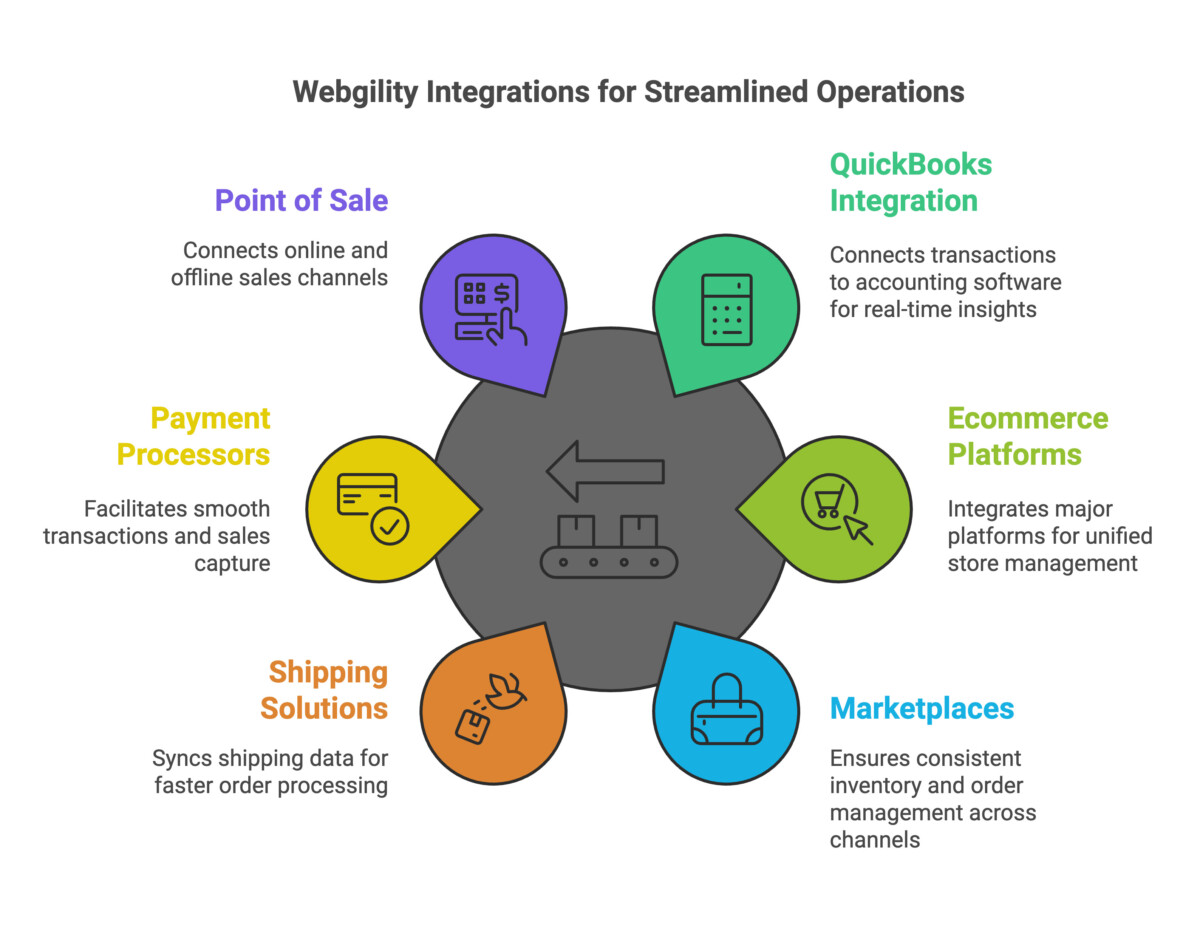
Webgility shines by providing a suite of integrations designed to streamline operations and elevate store capabilities:
These integrations are essential elements that support operational efficiency and scalability.
Integrations play a pivotal role in driving operational efficiency. Here’s how:
Leveraging these integrations allows businesses to maintain a competitive edge, focusing on growth rather than getting bogged down in manual processes and disconnected systems.
In the ever-evolving landscape of e-commerce, exceptional customer support can be a cornerstone of success. For Webgility, maintaining robust support for their services is key to keeping e-commerce professionals ahead of the curve. As we journey into 2025, let’s dive into the support dynamics of Webgility, exploring the channels they offer and the feedback from their user community.
Webgility offers a range of support options designed to cater to the diverse needs of its users. These channels provide flexibility in how users can reach out for help, ensuring that assistance is just a click or call away:
These channels are structured to ensure users don’t just get answers but get them in the manner that best suits their situations. The efficient handling of inquiries across these channels is a testament to Webgility’s commitment to seamless customer support.
Understanding the user perspective on customer support allows us to appreciate its value and identify areas of improvement. User reviews, gathered from platforms such as AmbitionBox and through direct feedback, provide a glimpse into the customer support experience.
With a customer satisfaction rating climbing towards 4 out of 5, Webgility’s support mechanisms are seen as a valuable aspect of its overall service. The positive feedback underscores the importance of robust support in strengthening user trust and satisfaction.
As we move forward, the insights gained from user feedback can inform future enhancements, ensuring that Webgility not only meets but exceeds the expectations of its e-commerce clientele.
In a world increasingly powered by data, having the right insights is not just an advantage—it’s essential. As we approach 2025, businesses must utilize data-driven methods to stay competitive. Webgility exemplifies this by integrating AI and analytics into its platform, providing e-commerce professionals with the tools needed to transform their operations.
Understanding how data drives business decisions begins with a robust research methodology. In our exploration of Webgility’s data prowess, we found that the platform uses a mixed-methods approach to collect and analyze information. This combination of quantitative metrics and qualitative feedback allows for a comprehensive view of e-commerce trends.
This robust approach ensures that Webgility users are equipped with insights that go beyond mere numbers, enabling smarter, more informed decisions that drive success.
As we sail into 2025, Webgility continues to be a significant player in e-commerce integration. Yet like any tool, it comes with a mix of advantages and drawbacks. In this section, let’s break down what users love and where they see room for improvement when using Webgility.
Webgility has garnered a loyal following thanks to several standout benefits frequently highlighted by users:
Despite its advantages, some users have pointed out areas where Webgility could improve:
Understanding both the strengths and limitations of Webgility helps businesses make informed decisions about whether it’s the right fit for their e-commerce needs. These insights allow potential users to weigh the advantages against potential drawbacks, ensuring they choose tools that align closely with their operational requirements and business goals.
In the fast-evolving landscape of e-commerce, the voices of industry leaders and satisfied users provide valuable insights into the effectiveness of tools like Webgility. Testimonials and expert opinions reveal how businesses harness the platform to streamline their operations and boost profitability. Here’s a look at what some of these experts and customers are saying.
To truly understand the impact of Webgility, it’s beneficial to hear from those at the forefront of e-commerce. Here are some perspectives from industry thought leaders:
As these endorsements illustrate, Webgility isn’t just another tool—it’s a catalyst for growth. These leaders, who have witnessed the tangible impacts firsthand, provide compelling reasons for considering Webgility as a core component of any e-commerce strategy in 2025. Whether it’s through increased efficiency, enhanced integration, or elevated financial management, their testimonials speak volumes about the platform’s capability to transform e-commerce operations.
Exploring real-life examples of businesses that have thrived using Webgility provides valuable insights into how this powerful tool can transform operations. The stories of these Shopify stores illustrate how integrating Webgility into e-commerce processes has led to significant growth and efficiency improvements.
Skinny Mixes: Doubling Revenue with Efficiency
Skinny Mixes, known for their low-calorie flavorings, faced the classic challenge of scaling operations while managing manual data entry across platforms. By leveraging Webgility’s automation capabilities, they streamlined their workflow, drastically reducing errors and freeing up valuable time previously spent on data entry. This transformation allowed Skinny Mixes to double its revenue, illustrating how operational efficiency can be a game-changer for business growth.
Epic Mens: Saving Time and Boosting Inventory Accuracy
For Epic Mens, a popular apparel retailer, managing inventory and pricing across multiple sales channels was a daunting task. Webgility stepped in to automate these processes, syncing their storefronts with QuickBooks, which significantly reduced the time and labor previously required for bi-annual inventory counts. With Webgility, they were able to maintain accurate, real-time inventory records weekly, saving over 80 hours of labor every week. This efficiency boost has enabled Epic Mens to focus more on strategic initiatives and customer engagement.
These case studies highlight how essential Webgility can be for e-commerce businesses aiming to scale efficiently. By automating repetitive tasks and ensuring data accuracy, Shopify retailers like Skinny Mixes and Epic Mens have been able to dedicate more resources to growth, ultimately leading to enhanced profitability and success.
In 2025, the landscape of e-commerce automation tools is as dynamic as ever, with a plethora of alternatives to Webgility vying for attention. Each solution offers unique features, catering to different business needs. Whether you’re seeking more advanced inventory management, seamless integration capabilities, or cost-effective solutions, there’s likely a tool that fits your specific requirements. Let’s explore some notable alternatives to Webgility.
Picking the right tool for your e-commerce business can feel like finding a needle in a haystack. A clear comparison of features and pricing can simplify the decision-making process. Here’s a breakdown of how top alternatives stack up against Webgility.
| Feature/Competitor | Webgility | Synder | A2X | Cin7 Core |
|---|---|---|---|---|
| Inventory Management | Real-time sync across multiple channels | Limited syncing | None, mainly financial reporting | Enterprise-level, detailed |
| Pricing | Starts at $59/month | Starts at $65/month | Starts at $29/month | Quote-based |
| Integrations | Shopify, BigCommerce, WooCommerce, Wix, QuickBooks Online, QuickBooks Desktop/Enterprise, Amazon, eBay, Etsy, Walmart, Shopify POS, Lightspeed, Square, Clover | Amazon, Walmart, eBay, Shopify, Stripe | Xero, QuickBooks Online, Shopify, Etsy, Amazon, Walmart, eBay | Shopify, WooCommerce |
| Ease of Use | User-friendly with customizable dashboards | More technical, requires setup | Simple for e-commerce accounting | Intuitive but complex setup |
| Support & Resources | Five-star live support, detailed help center | Limited, mainly during business hours | Email support | Extensive |
When evaluating these alternatives, consider what your business values most. Whether it’s scalability, cost-effectiveness, or ease of integration, the right tool will align with your growth strategy and operational needs.
As we look toward Webgility’s potential in 2025, it’s important to align its capabilities with emerging e-commerce trends. These trends are not just shaping how businesses operate but are also setting the stage for Webgility’s evolution. Let’s explore these emerging trends and how they might influence Webgility’s roadmap.
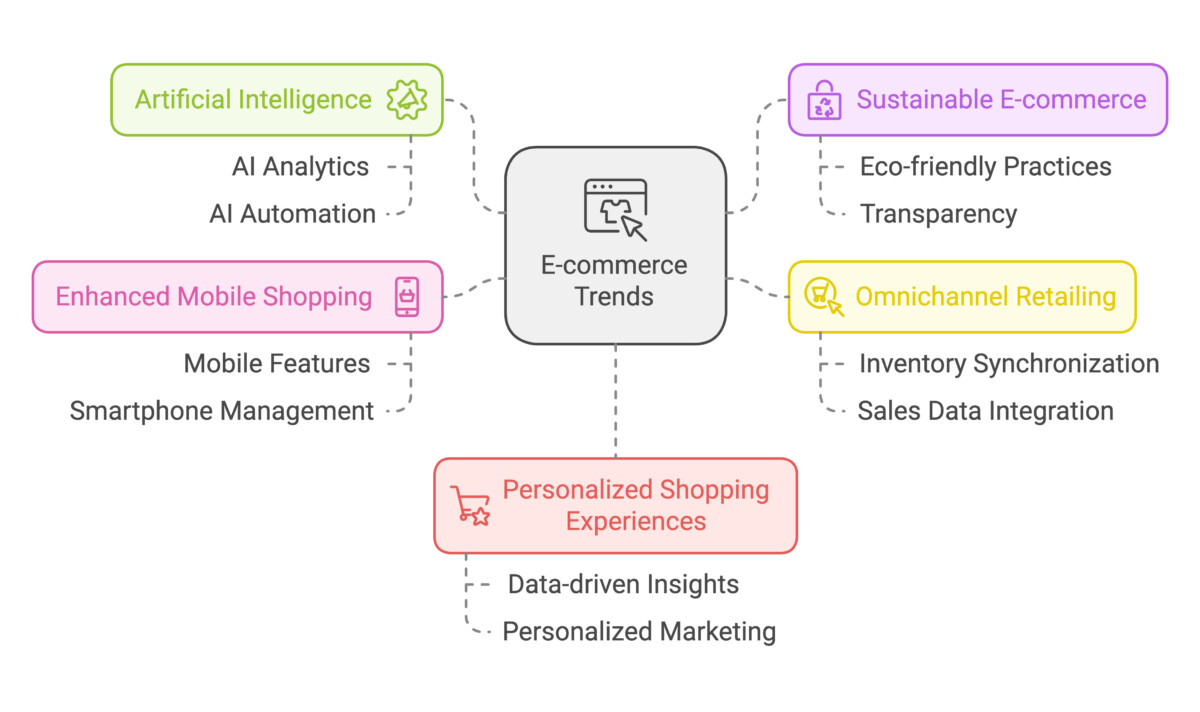
The e-commerce landscape is evolving rapidly, and staying ahead requires embracing certain trends. Here’s what to expect:
These trends are reshaping the digital commerce environment. As Webgility continues to adapt and innovate, integrating these trends could not only enhance its existing offerings but could also provide users with powerful tools to stay competitive in the e-commerce market.
Tying up the insights on Webgility for 2025, it’s important to cement the value it brings to Shopify users and offer tailored guidance for those considering harnessing its capabilities. Let’s break down how this tool shines in today’s e-commerce universe and why it might just be the edge your Shopify business needs.
Webgility remains a standout in the ever-evolving world of e-commerce, particularly for Shopify and Shopify Plus users. Its seamless integration with platforms like QuickBooks makes it a linchpin for businesses aiming to streamline operations. By automating tedious processes like inventory management and order tracking, Webgility frees up time and resources, allowing businesses to focus on growth and strategy.
For Shopify and Shopify Plus users, this means less time spent on administrative headaches and more on driving sales and customer engagement. The addition of AI-driven insights equips users with powerful analytics, providing a clearer understanding of performance metrics and potential growth areas. These features combined make Webgility not just a tool, but a strategic partner in e-commerce success.
Considering Webgility for your Shopify store? It’s like deciding to plug your business into a powerhouse of potential. If you’re looking to reduce manual workload, improve accounting accuracy, and get actionable insights, Webgility is a go-to choice.
Here’s what to look forward to:
Before making the decision, assess your specific business needs:
Thinking of making the leap? Explore their comprehensive features and see if the balance of cost and benefits aligns with your business strategy. Whether you’re scaling up or just starting out, Webgility offers the kind of support that can turn operational hurdles into stepping stones for growth.