Free every Thursday · 60,261 Readers
Fastlane Insider Newsletter: What's working for Shopify in the AI era?
Free every Thursday · 60,261 Readers
Fastlane Insider Newsletter: What's working for Shopify in the AI era?
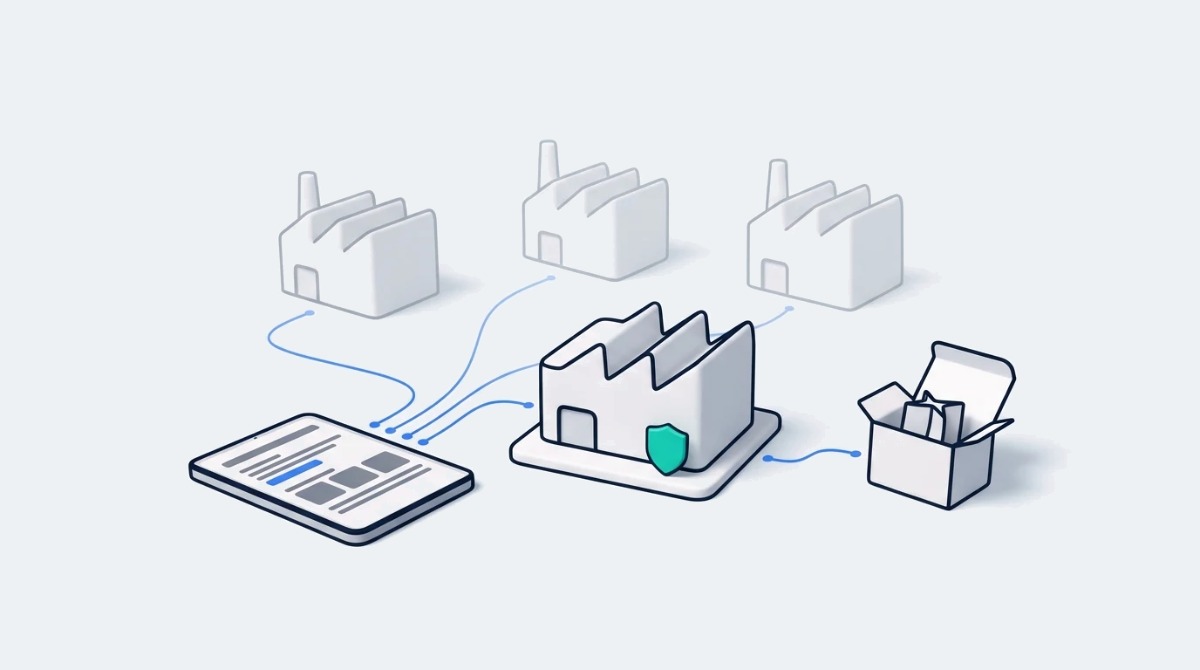
A factory that ranks first in an AI search has only proven it has good data. Whether it can actually make your product is still a question a sample answers.
Finding a reliable manufacturer has always taken research, industry contacts and long negotiations, especially for businesses sourcing overseas for the first time. A founder with a finished product idea and no factory relationships could spend weeks working through directories, trade show lists and referrals before getting a single useful quote.
Artificial intelligence is starting to compress that work. Sourcing platforms can now read a product brief, match it against supplier databases, pull the relevant details out of documents and line up quotes from several factories side by side. For a small business without a procurement department, that opens up manufacturing options that would otherwise be hard to even evaluate.
The speed comes with new questions about data accuracy, supplier reliability and where technology stops being useful in a production relationship. This guide walks through each part of the sourcing process, what AI handles well at that step, and what a founder still has to check personally.
AI helps most at the start of sourcing, where it turns a detailed product specification into a short list of plausible factories instead of hundreds of unrelated listings. That shortlist is where its value begins and, for verification purposes, where much of it ends.
Traditional supplier searches usually start with online directories, trade shows or referrals from people already in the industry. From there, a business owner contacts factories one by one to find out whether they make the product category, accept a workable order quantity and meet the required manufacturing standards. Each of those conversations takes days, and most of them end in a no.
AI powered sourcing platforms shorten that loop by analyzing supplier databases, product descriptions and manufacturing requirements together. A founder can describe the product in detail and narrow the field by material, production capability, geographic location and minimum order quantity at once, rather than filtering one attribute at a time. Fastlane’s guide to finding a manufacturer or supplier for a product idea covers the manual version of this process, which is still worth understanding so you know what the software is doing on your behalf.
Some systems go further. They organize supplier communications, extract specifications and certifications from PDFs and spreadsheets, and compare quotations across multiple factories in one view. That cuts the administrative work that usually buries a founder in the first month of sourcing. A piece on eCommerce Fastlane about how AI is changing product sourcing for DTC brands describes why this step, turning a rough brief into a factory ready spec, is where language models have made the biggest difference.
Two limits apply from the start. The accuracy of any recommendation depends on how complete and current the underlying supplier information is. And for custom products, a factory appearing in an automated search does not establish that it can successfully produce your particular design. The tool has found a candidate, not a partner.
AI can identify potential manufacturing partners, but deciding whether a supplier is trustworthy takes investigation that no automated score replaces. Automated systems can rely on outdated company profiles, incomplete certification records, or information that manufacturers supplied about themselves without anyone checking it.
For entrepreneurs entering unfamiliar markets, it’s key to find a manufacturer for your product that has a great reputation and a documented ability to meet production requirements. In practice that means examining the factory’s relevant experience with similar products, requesting samples, and confirming that it has the equipment and expertise needed to make what you are proposing. A factory that produces excellent cotton tees may have no business sewing technical outerwear, even if both show up under “apparel” in a database.
Samples deserve more weight than any other single step. A pre production sample shows material quality, construction and finish in a way no profile can, and a second sample after your feedback shows whether the factory listens. Budget for at least two rounds before treating any supplier as confirmed.
Independent checks fill in the rest. Business registration records confirm that the company exists under the name and address it gave you; for suppliers in China, the government run National Enterprise Credit Information Publicity System lists registration details for mainland companies. Third party factory inspections and direct verification of any certifications the supplier claims, with the issuing body rather than a PDF the supplier sent, complete the picture.
AI generated supplier assessments are useful as a starting file for these checks. They should support the investigation, not replace direct communication with the factory or documented evidence you have confirmed yourself.
Before signing with any supplier, confirm whether you are dealing with the factory that will make your goods or a trading company that coordinates production through other factories. AI sourcing results can list both side by side, and the distinction rarely shows up clearly in a database entry.
A trading company does not necessarily operate its own production facilities. It may place your order with one or more factories it works with, handle communication and quality follow up, and add a margin for that service. That arrangement is not a problem in itself. For a first product, a capable trading company can be easier to work with than a factory that only responds well to large, repeat buyers.
What matters is knowing who will physically produce your goods and who carries responsibility when quality slips. If a trading company subcontracts to a factory you have never seen, the sample you approved may have come from a different line than your production run. Ask directly where production will happen, whether you can inspect that site, and who signs the quality terms.
A few signals help. A manufacturer can usually describe its own equipment, production capacity and staff in specific terms, and can show the floor on a video call. A trading company tends to offer a very wide product range across unrelated categories, which no single factory could produce. Business registration records often list the company’s registered scope, which can show whether manufacturing is part of it.
Whichever type you choose, write the answer into your purchase agreement: the production location, the right to inspect it, and what happens if production moves without your approval. That clause protects you far more than any supplier ranking.
Once a manufacturer is selected, AI is most useful for forecasting how much to order and when, provided the business has enough sales history and accurate inventory records to feed it. The same tools that predict demand well for an established brand can mislead a brand that launched three months ago.
Manufacturing inventory management is the clearest application. Predictive systems analyze historical sales, seasonal patterns and supplier lead times to estimate future inventory requirements, which helps a business decide when to reorder materials or finished goods while reducing the risk of excess stock tying up cash.
Consider a consumer goods company preparing for holiday demand. Forecasting software can look at previous years’ sales patterns and estimate how much inventory to have on hand before peak shopping periods, working backward from the factory’s production and shipping lead times to set the order date. New businesses with limited sales histories should treat those predictions with caution, because the system has far fewer relevant data points to work from.
Lead times deserve their own check. On the eCommerce Fastlane podcast, Katana’s Ben Hussey made the point that a supplier’s quoted lead time and the lead time your order history actually shows can differ, and that gap should drive your safety stock. The episode on multichannel inventory and supplier lead times goes deeper on using real order data rather than supplier promises.
AI tools can also flag potential supply chain disruptions by analyzing shipping information, supplier performance records and production schedules, giving a business extra time to adjust purchasing or look at alternative suppliers. All of it depends on accurate inputs. Incorrect inventory records, sudden shifts in consumer demand or unreliable supplier updates produce recommendations that do not reflect actual operating conditions. Fastlane’s breakdown of when a dedicated inventory management system makes sense is a useful check before adding forecasting software to a young business.
The cheapest factory quote is not the cheapest product, because landed cost includes tooling, packaging, inspection, freight and import duties that a unit price leaves out. AI assisted procurement tools can organize quotations and compare scenarios across countries, but only a full landed cost calculation shows which offer is actually lower.
Manufacturing costs depend on far more than the price a factory quotes. Labor costs, raw material availability, transportation, import duties and currency movements all affect the final cost of getting a product to market. Some procurement tools evaluate supplier pricing alongside shipping estimates, production lead times and other available cost data, which makes side by side comparison faster. The comparison is only as good as the cost lines it includes.
The worked example below is illustrative, not drawn from a real order. It assumes a 1,000 unit order, the same freight cost for both factories, and a 10% import duty applied to the factory price only, to keep the math simple. Real duty rates depend on the product’s classification in the Harmonized Tariff Schedule and on current tariffs, which change.
On these assumptions, Factory A’s quote looks 80 cents cheaper per unit and lands 72 cents more expensive, a $720 difference on the order. The call is Factory B, as long as its samples pass, and the lesson holds well beyond this example: compare offers only after every quote states what it includes. Confirm whether each one covers packaging, tooling, product testing and quality inspections, because those lines move profitability most on small first runs. eCommerce Fastlane’s analysis of what it really costs to work with multiple manufacturers shows how the same gap widens when production is split across factories. For the import side, U.S. Customs and Border Protection’s basic import and export guidance is the place to start.
AI sourcing tools introduce three risks that automation cannot resolve on its own: confident but wrong outputs, exposure of confidential business data, and the gap between a database ranking and how a factory behaves when something goes wrong.
The first is accuracy. Generative systems can produce inaccurate supplier information, misread technical specifications or present unsupported recommendations with apparent confidence. The U.S. National Institute of Standards and Technology lists this behavior, which it calls confabulation, among the core risks in its Generative AI Profile of the AI Risk Management Framework. In sourcing, a confabulated certification or capacity figure can lead a founder to a factory that was never a real fit. Treat every specific claim an AI tool makes about a supplier as a lead to verify, not a fact.
The second is confidentiality. Sharing proprietary designs, pricing agreements or sensitive supplier information with third party platforms can expose business data unless the right privacy and contractual protections are in place. Before uploading a tech pack, check how the platform stores and uses what you share, and whether a non disclosure agreement with shortlisted factories should come first.
The third is the relationship itself. Manufacturing involves negotiation, unexpected production problems and decisions that take practical experience. A factory’s willingness to correct defects, communicate delays early and accommodate reasonable changes can prove more valuable than its position in any automated supplier database. That willingness only shows up through direct contact over time, usually during the first production run.
None of these risks is a reason to avoid AI sourcing tools. They are reasons to keep a person accountable for every decision the tools inform, from the shortlist to the signed purchase order.
AI is best treated as a research and decision support tool rather than a substitute for manufacturing expertise, and how much weight it can carry depends on the stage of the business using it. Its greatest practical value is helping a business evaluate options faster while keeping the verification and oversight that successful production needs.
If you are pre launch or selling your first product, use AI where the time savings are largest: turning your brief into a clear spec, shortlisting suppliers by material and minimum order quantity, and organizing quotes. Then spend the time you saved on samples and registration checks. Skip AI demand forecasting for now; with only a few months of sales, a simple reorder point based on your actual sell through and your factory’s real lead time will serve you better.
If you are growing and adding a second or third product, AI tools start to earn their keep across more of the process. Comparing quotes on a full landed cost basis, tracking supplier performance against promised dates, and flagging shipping delays early all become more valuable as order volume rises. This is also the point to write production location and inspection rights into every agreement, because more products usually means more factories.
If you are scaling with a team and several suppliers, forecasting finally has the data it needs, and disruption alerts can protect real revenue. The risk shifts to over reliance: the more decisions a system informs, the more important it becomes that someone on the team still reads the samples, visits or video calls the factories, and owns the relationship.
At every stage, the order of operations stays the same. Let AI widen and organize the options, then let samples, documents and direct conversations decide.
AI can find potential manufacturers for your product, but it cannot confirm that any of them is reliable. Sourcing platforms match your specifications against supplier databases and narrow the field by material, capability, location and minimum order quantity, which saves weeks of manual searching. Reliability is a different question. It depends on the factory’s real experience with similar products, the quality of its samples, verified business registration and certifications, and how it communicates when problems come up. Use the AI shortlist as the starting point, then request at least two rounds of samples and check registration records before committing to a deposit or a production order.
Verify an AI recommended manufacturer the same way you would verify any supplier: with samples, records and direct contact. Request pre production samples and judge material, construction and finish yourself. Check business registration records to confirm the company exists under the name and address it gave you, and confirm any claimed certifications with the issuing body rather than relying on a document the supplier sent. Ask whether the company is the factory or a trading company, and where production will actually happen. A video call showing the production floor and a third party inspection add further confidence before a larger order.
A manufacturer operates its own production facility and makes your goods, while a trading company coordinates production through other factories and adds a margin for that service. Neither is automatically better. A good trading company can be easier for a small first order, handling communication and quality follow up. The risk is not knowing who actually produces your goods or who is responsible when quality slips, especially if the order is subcontracted to a factory you never vetted. Ask directly where production will take place, request the right to inspect that site, and write the production location into your purchase agreement.
Landed cost is the full cost of getting a product to your warehouse, including the factory price plus tooling, packaging, inspection, freight and import duties. It matters more than the quote because a lower unit price can carry separate charges that make the final cost higher. A factory quoting $6.00 per unit with tooling and packaging billed separately can end up more expensive than one quoting $6.80 with both included. Before comparing suppliers, ask every factory to state exactly what its quote covers, then build each offer up to a landed cost per unit using current freight estimates and the duty rate for your product’s tariff classification.
Uploading product designs to an AI sourcing platform is reasonably safe only when you understand how the platform stores, uses and shares that data, and when contractual protections are in place. Proprietary designs, pricing agreements and supplier details can be exposed if a platform’s terms allow broad use of uploaded material. Before sharing a tech pack, read the platform’s privacy and data use terms, check whether uploaded files are used to train models, and consider asking shortlisted factories to sign a non disclosure agreement before they receive full specifications. Share only the detail each step genuinely needs.