

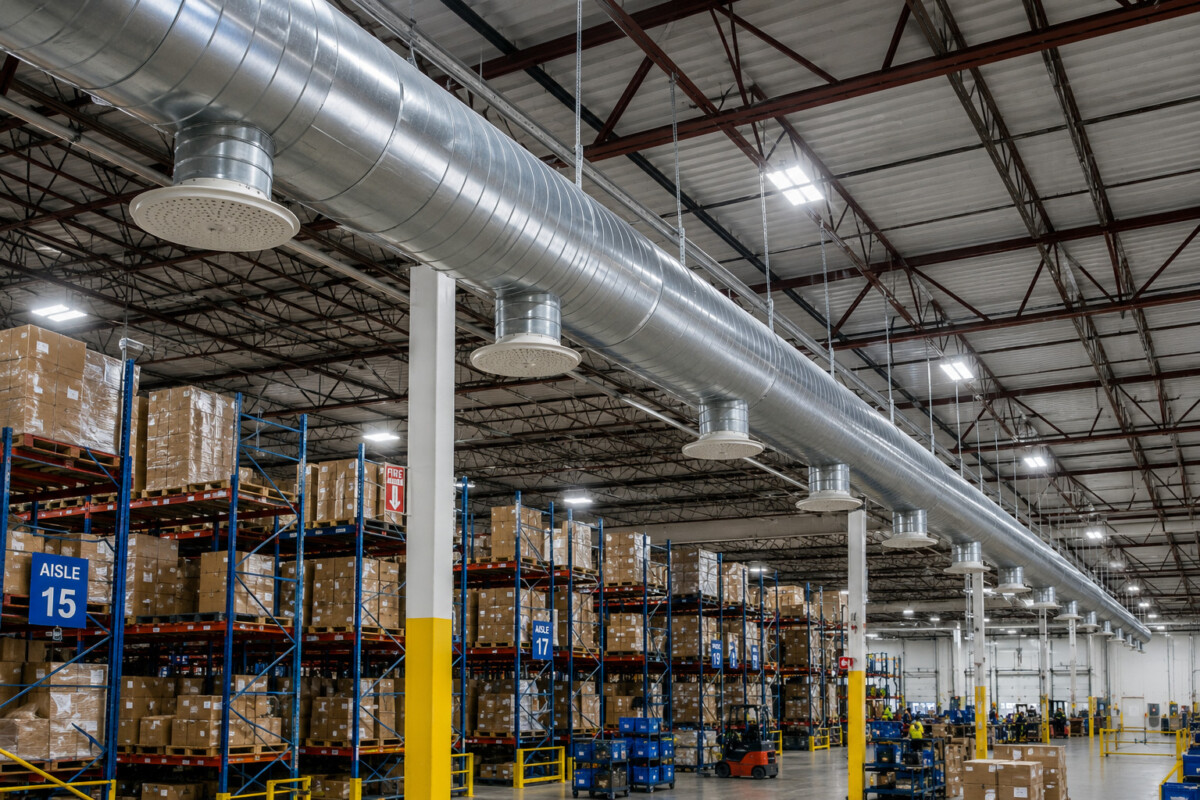
Air duct installation in a Tampa ecommerce warehouse should prioritize humidity control, vapor-sealed insulation, airflow at worker and packing-zone level, clear sprinkler coordination, and a maintenance plan for cardboard dust. The right system protects people, inventory, equipment, energy performance, and shipping throughput during Florida’s hot, humid conditions.
In a Tampa fulfillment center, ductwork is not just an HVAC component. It is part of inventory protection, labor productivity, fire-safety coordination, and the operating system that keeps orders moving.
Running an e-commerce warehouse in the Tampa Bay area is hard work. Between the intense summer heat, thick air moisture, and giant buildings packed with tall storage shelves, keeping cool air moving is a big challenge.
For facility managers, putting in the right air duct system is not just about keeping workers comfortable. It keeps cardboard boxes dry, protects electronics, lowers electric bills, and keeps your packing lines moving fast.
If you run a fulfillment center in Central Florida, here is what you need to know about air duct installation, maintenance, and keeping your facility running smoothly.
Tampa summers are long, hot, and very wet. Most days, humidity levels sit well above 70 percent. In a busy e-commerce hub, loading dock doors open and close all day long. Every time a bay door opens, hot and sticky air rushes inside.
When hot, damp air touches cold metal ducts, condensation forms quickly. This is often called “sweating ducts.” Water starts dripping from the ceiling down onto your storage racks and concrete floors.
In an online retail warehouse, dripping water causes serious problems:
Your duct system needs proper design, strong insulation, and good dehumidification from day one so water never drips onto your stock.
Large warehouses need wide duct pipes that can move huge amounts of air every minute. Most modern distribution hubs choose between two main materials:
Fabric ducting has become very popular in modern packing warehouses.
Traditional spiral metal ducts are still a strong, reliable choice.
Many facility managers use metal pipes for the main lines near the air units, and then connect fabric tubes over the aisles and packing tables.
An e-commerce hub is not a quiet storage space. People and machines move quickly all day, and your duct layout needs to match how your team works.
Tall shelves block air like solid walls. If you run ducts directly over the tops of tall racks, the cold air hits the top boxes and never reaches the floor. Ducts should run down the center of open aisles so cool air drops right where your pickers walk.
Packing stations generate a lot of extra heat from label printers, tape machines, computers, and groups of workers. These spots need dedicated air drops. Giving your packers steady airflow keeps them energized and lowers heat fatigue during busy shifts.
You need plenty of air, but it should not blow too hard. If air comes out of the vents with too much force, it will blow shipping labels, plastic bags, and bubble wrap right off the packing tables. Your installer must balance the air pressure so the breeze is gentle and steady.
Online shopping hubs generate tons of fine paper dust from folding cartons, running tape guns, and moving packages.
Return vents pull this cardboard dust straight into the duct lines. Over time, thick layers of dust settle on internal walls, cooling coils, and blower fans. This restricts airflow, forces your HVAC system to work harder, and drives up power bills.
To prevent early wear and tear on a new setup, schedule routine service with professionals like Bright Air Duct Cleaning. Having certified technicians clear out packed fibers and warehouse debris keeps your airflow balanced, protects indoor air quality, and ensures your newly installed ductwork runs efficiently from the start.
Before hanging long runs of ductwork, facility managers must check two important safety items:
Hanging ductwork in an active warehouse takes real skill. When choosing an installation contractor in the Tampa area, look for these points:
A well-planned air duct installation does much more than control room temperature. For a busy Tampa e-commerce warehouse, it protects your inventory from humidity, keeps your staff safe and comfortable, and cuts down on expensive energy waste.
By picking the right materials, designing around your storage layout, and setting up a solid maintenance plan, you can protect your facility and keep your operations running smoothly every day.
Air ducts sweat in Tampa warehouses when humid air contacts a duct surface that is colder than the surrounding air’s dew point, causing condensation to form. The risk increases during hot, humid weather when loading dock doors open frequently and bring moist outside air into the building. Poor insulation, damaged vapor barriers, unsealed insulation seams, inadequate dehumidification, and uncontrolled outside-air infiltration can make the problem worse. Condensation can damage cartons and inventory, create slip hazards, and reduce HVAC efficiency. A mechanical engineer should evaluate humidity loads, duct insulation, vapor sealing, airflow, and dock-door conditions as one connected system.
Fabric ducts are not universally better than metal ducts for ecommerce warehouses, but they can provide even, low-velocity air distribution across open picking aisles and packing stations. Spiral galvanized steel is often stronger for main trunk lines, equipment rooms, high-impact zones, dampers, and long-term durability. Many warehouses use both: insulated metal ducts for main distribution and fabric ducting over worker areas. The right choice depends on ceiling height, racking, humidity control, cleaning requirements, fire-code review, structural support, product sensitivity, and airflow design. Select the system through a project-specific mechanical and fire-protection review rather than material preference alone.
A warehouse can prevent condensation damage by controlling humidity, minimizing humid-air infiltration at dock doors, insulating cooling ducts correctly, maintaining a continuous vapor barrier, sealing insulation seams, and monitoring conditions near inventory. Use dock seals, operational door controls, vestibules where appropriate, and HVAC zoning that accounts for loading activity. Inspect ducts for damaged insulation, gaps, wet surfaces, and condensate issues before they drip onto racking. Store moisture-sensitive inventory away from known risk areas until repairs are complete. The facility should also track temperature and relative humidity in representative zones, especially near docks, returns, packing areas, and high-rack storage.
A fulfillment center should inspect HVAC ducts and related components on a documented schedule, then clean them when inspection, filter pressure drop, visible accumulation, reduced airflow, odor, construction debris, or indoor-air concerns show that cleaning is needed. There is no single cleaning interval that fits every warehouse because carton volume, dust generation, filtration, operating hours, return-air design, and local humidity differ. More frequent attention is often needed for filters, return grilles, cooling coils, blower components, and loading-dock zones than for the entire duct network. Use a preventive maintenance plan based on observed conditions and equipment performance, not only a calendar reminder.
Before installing warehouse ductwork, facility managers should review product-storage requirements, temperature and humidity targets, rack layout, ceiling height, dock-door activity, equipment heat loads, packing zones, structural capacity, fire-sprinkler layout, access requirements, controls integration, operating schedule, and permit requirements. Confirm that duct supports are designed for the building structure, that duct routing does not obstruct sprinkler discharge or service access, and that insulation and vapor barriers suit Florida humidity conditions. Require engineered drawings, fire-protection coordination, installation phasing for active shipping operations, testing and balancing, humidity verification, and a documented commissioning plan before final acceptance.





