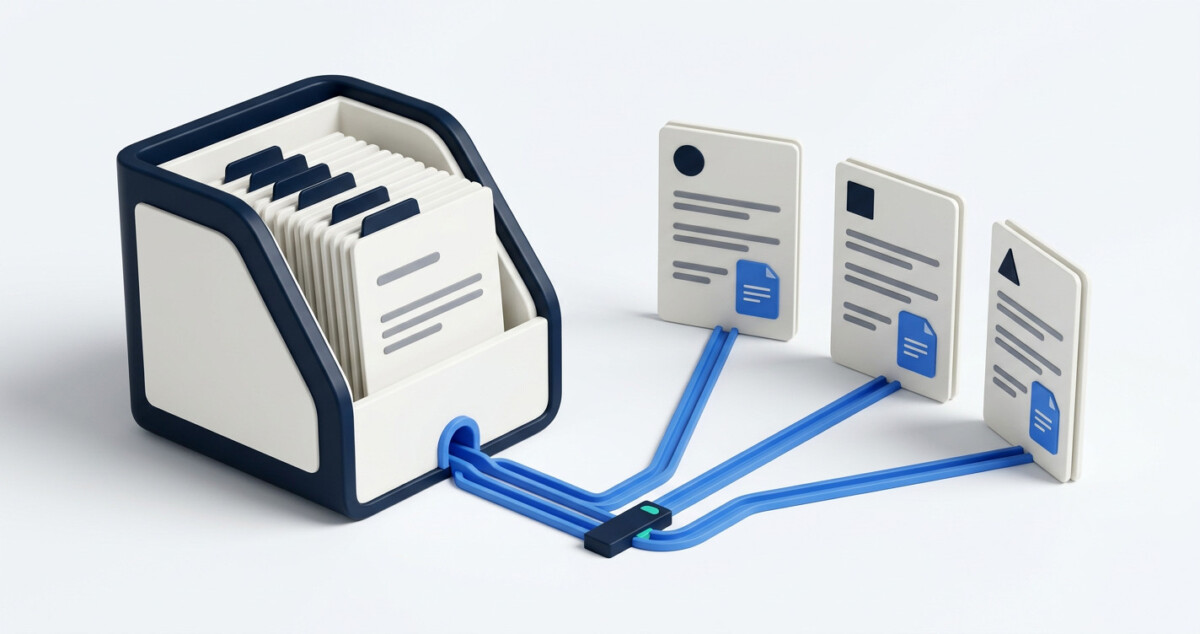
Audit harmonization means collecting compliance evidence once and reusing it wherever SOC 2, ISO 27001 and HITRUST controls overlap, so one coordinated program replaces separate audits that each start from scratch. It cuts repeat document requests, but every framework still keeps its own assessor credentials and criteria.
The second audit is where compliance gets expensive. Not because the new framework is harder, but because your team is asked to prove the same controls all over again, to a different auditor, on a different schedule.
The pattern usually starts with a single email. An enterprise retailer evaluating your app, your fulfillment service or your wholesale platform sends over a security questionnaire and asks for a SOC 2 report. Twelve months later, a European customer wants ISO 27001 certification. Then a healthcare brand asks about HITRUST. Each request arrives with its own auditor, its own evidence list and its own calendar, and the same small team ends up exporting the same access reviews three times.
That repetition is audit fatigue, and it grows with every framework a business adds. A harmonized approach brings those activities into one coordinated program. This article explains how audit harmonization works, which ecommerce businesses actually need it, how to consolidate SOC 2, ISO 27001 and HITRUST, and how four providers that support multi-framework audits differ.
Audit harmonization is the practice of collecting evidence once and reusing it wherever controls overlap across compliance frameworks, while still meeting each framework’s separate assessment requirements. The goal is to cut duplicate documentation work without blurring the line between assessments.
Organizations often end up with several audit providers because each framework requires different credentials. The AICPA’s SOC guidance describes SOC reports as assurance services provided by CPAs, so SOC 2 reports come from licensed CPA firms. ISO 27001 certificates come from external certification bodies; ISO’s own guidance on certification notes that ISO itself does not certify anyone, and that accreditation is how a certification body shows it works to international standards. HITRUST assessments are performed by HITRUST authorized external assessors.
Without coordination, each auditor asks for its own copies of access reviews, security policies, incident records and risk assessments. Separate schedules force internal teams to retrieve documents they already submitted and explain the same processes again. Harmonization organizes evidence around shared controls instead of around individual audits, so one access review can support SOC 2, ISO 27001 and HITRUST at the same time, as long as it meets each framework’s criteria.
That last condition matters. Harmonization reduces collection work. It does not reduce the standard. Each assessor still tests the evidence against its own framework, and evidence that is out of date or too narrow for one framework does not pass simply because another accepted it.
Ecommerce businesses need audit harmonization when customers require two or more security frameworks at once, which most often happens to companies that sell technology or services to other businesses rather than products to consumers. If you are a Shopify app developer, a headless commerce agency, a 3PL, a payments or data vendor, or a wholesale supplier selling into large retailers, enterprise procurement teams will eventually ask for proof of your security controls. SOC 2 is usually first. ISO 27001 often follows when you sell internationally, and HITRUST appears when healthcare customers enter the picture.
If you run a direct to consumer store on a hosted platform, you probably do not need any of this yet. Your platform carries the heavy PCI burden for card data, and the security work that matters most at that stage is the basics: unique passwords, two-factor authentication, current apps and tight staff access, covered in our guide to what every ecommerce seller needs to know about cybersecurity. Buying an audit program before a customer asks for one is premature complexity.
The signal to start planning is the second framework request, not the first. A single SOC 2 can run on its own. Once a second framework is on the calendar, the cost of running them separately starts to compound, and that is the point where harmonization pays for itself. If you are still deciding whether the first report is worth it, our breakdown of why SOC 2 compliance matters in ecommerce covers the trust and sales case.
A practical consolidation plan has three parts: map overlapping controls once, centralize reusable evidence in one system, then choose a provider with the credentials and coordination to assess the frameworks together.
SOC 2, ISO 27001 and HITRUST all address common security areas, including access management, incident response, change management and risk assessment. Start with a unified control inventory that connects each safeguard to the requirements it satisfies in every framework you need. Because the HITRUST CSF maps to over 70 regulations, standards and best practices, building the map early, with HITRUST in view, makes later evidence reuse much easier.
Audit management platforms reduce repetitive evidence collection by storing documentation once and linking it to every framework it supports. Some platforms also score evidence before fieldwork begins, so teams can fix missing or weak documentation earlier, and some connect existing evidence to a new framework’s requirements so the team only collects what is genuinely new. For companies managing cloud infrastructure and access permissions, this also improves visibility into who owns each control and where its records live.
Verify that a prospective provider holds the right credential for each framework: a licensed CPA firm for SOC 2, an accredited certification body for ISO 27001, and HITRUST authorized external assessor status for HITRUST. Then examine its multi-framework experience, its evidence reuse technology and its ability to align assessment schedules. Those qualifications separate genuine audit consolidation from several separate services sold on one contract.
A-LIGN, Schellman, PwC and BARR Advisory all offer compliance assurance under one provider relationship, though PwC’s public pages describe SOC reporting and IT audit rather than ISO or HITRUST work. They differ in service model, organizational focus and evidence management tooling. They appear below in the order the contributor submitted them, which is not a ranking. Details come from each provider’s public pages, reviewed in October 2026.
A-LIGN is a technology enabled cybersecurity compliance and audit firm built for organizations managing more than one certification at once, pairing its audit teams with its own audit management platform, A-SCEND.
Its structure combines A-LIGN ASSURANCE, a licensed CPA firm registered with the PCAOB, with its compliance services entity, which lets one provider issue SOC 2 reports and carry out ISO certifications and assessments such as HITRUST, FedRAMP and CMMC. A-LIGN says it is dual accredited by ANAB and UKAS for ISO 27001 and supports more than 45 standards. As of October 2026, A-LIGN describes itself as the number one SOC 2 report issuer and a top three FedRAMP assessor, and reports more than 36,000 completed audits for over 6,400 clients and more than 400 auditors globally; these are the company’s own figures.
Evidence reuse runs through A-SCEND, which A-LIGN says is included with applicable A-LIGN frameworks rather than sold as a separate platform fee. Teams upload evidence once and apply it to multiple frameworks. Its EvidenceIQ feature scores each piece of evidence high, medium or low for how well it matches a request before fieldwork begins, and Cross-Service EvidenceIQ evaluates evidence already submitted for one framework against the requirements of another. Cross-Service EvidenceIQ also produces a readiness report showing which controls in the new framework existing evidence already satisfies. A-SCEND connects with Vanta today, with a Drata integration in progress and an open API for other tools.
Best fit: companies with a SOC 2 in place that are adding ISO 27001, HITRUST or federal frameworks and want one credentialed provider and one evidence platform across all of them. Confirm which of your frameworks A-SCEND covers, and if you run your compliance program in a tool other than Vanta, ask how evidence moves between systems today.
Schellman is a security and compliance assessment firm, and a licensed, PCAOB registered CPA firm, serving organizations with broad and increasingly complex assurance requirements.
Its portfolio spans SOC examinations, ISO certifications, FedRAMP assessments as an accredited 3PAO, HITRUST certification services, PCI assessment services including QSA and PA-QSA P2PE work, and CMMC as a C3PAO. Schellman describes itself as the only Top 50 CPA firm focused exclusively on IT compliance and cybersecurity, says it issues more than 2,000 SOC reports each year, and offers nearly 60 types of audits and assessments. Its security assurance focus distinguishes it from broader professional services firms.
On harmonization specifically, Schellman’s guidance on running SOC 2 and ISO 27001 under a single assessor argues that one firm can manage the overlapping controls and evidence between the two, so clients do not supply the same information twice, with one main contact and integrated findings. Its public pages do not describe a client evidence platform comparable to A-SCEND, so ask how evidence is shared and stored across engagements.
For organizations already using Schellman, extending that relationship offers continuity in communication, audit planning and institutional knowledge. The key question is how the existing engagement absorbs new frameworks and schedules. Best fit: enterprises with established compliance programs that want several assurance requirements kept with one security focused firm as the program grows.
PwC is a global professional services organization whose audit, assurance and cyber risk practices sit alongside tax, consulting, transactions and other enterprise advisory services.
That structure appeals to large organizations managing security assurance alongside business transformation, governance and risk management. PwC’s US audit and assurance services page lists SOC reporting and other attestation, and digital assurance and IT audit, under its audit and assurance services, and describes cyber strategy, risk and compliance work separately. Complex enterprises often need coordination between technology controls, financial reporting, operational risk and board oversight, and PwC’s multidisciplinary model provides that inside one established relationship.
Two cautions apply. First, the PwC pages reviewed for this article describe SOC reporting but do not describe ISO 27001 certification or HITRUST assessment services, and PwC operates through member firms in each country, so confirm which framework credentials the specific firm you would contract with holds. Second, independence rules matter: if PwC already audits your financial statements, some advisory and assurance work may be restricted, so scope the engagement with that in mind.
Best fit: large enterprises seeking compliance work within a wider professional services relationship, particularly where security assurance intersects with governance, risk and transformation projects. Mid-market ecommerce technology companies looking mainly for efficient multi-framework audits will usually find a specialist firm a closer match.
BARR Advisory is a cybersecurity and compliance specialist that helps technology and cloud service providers meet requirements spanning SOC 2, ISO 27001, HITRUST and PCI DSS, with advisory and audit services under one roof.
BARR is a HITRUST authorized external assessor and an accredited PCI DSS QSA, and says it is one of a few US organizations eligible to certify against SOC, ISO 27001, HITRUST and PCI DSS. Its coordinated audit service combines multiple frameworks into one audit with a single schedule and one consistent point of contact across all frameworks. Founded in 2014, BARR also offers readiness assessments, virtual CISO services and remediation support, and says 40 percent of its audit reports are delivered early.
The firm emphasizes security compliance and advisory expertise rather than broader professional services. That specialist approach suits growing companies building structured security programs as enterprise customer requirements increase, and companies moving beyond an initial SOC 2 that now need ISO or HITRUST. Its public pages describe coordinated audits as reducing redundancy but do not detail an evidence reuse platform, so ask how evidence is collected and mapped across frameworks.
Best fit: mid-market technology and cloud companies that want a focused cybersecurity compliance partner with coordinated multi-framework audits and hands on advisory support available.
The right multi-framework audit partner depends on which frameworks you need, how much evidence reuse technology matters to your team, your organization’s scale, and whether you want broader advisory services from the same firm.
For organizations prioritizing evidence reuse across several frameworks, A-LIGN’s single provider model pairs credentialed assessments with A-SCEND’s evidence scoring and cross-framework mapping, which suits SOC 2 programs expanding into ISO 27001 or HITRUST. Schellman suits organizations extending an established assessment relationship across frameworks, where existing familiarity with the firm’s processes and people supports continuity. PwC fits large enterprises that want compliance work inside a wider professional services relationship. BARR Advisory suits mid-market companies that want focused cybersecurity compliance expertise and a coordinated audit across SOC 2, ISO, HITRUST and PCI.
Whichever provider you shortlist, ask the same five questions. Which credential covers each of my frameworks, and which legal entity holds it? Is your evidence platform included in the engagement or priced separately? How does evidence submitted for one framework get mapped to the next? Can you align my assessment dates into one calendar? And which of my existing compliance tools do you integrate with today, not on the roadmap?
Regardless of provider, consolidation only works if you have mapped shared controls and assigned owners before the auditor arrives. A provider can coordinate assessments. It cannot fix an evidence library nobody maintains.
You get started with audit harmonization by listing every compliance framework the business expects to need over the next two to three years, then building one control map and one evidence library before choosing a provider. Identify overlapping controls, document the evidence you already have, and assign an owner for each control area so records stay current between audits.
If you take card payments directly rather than through a hosted checkout, add PCI DSS to that list; our complete guide to PCI compliance explains the merchant levels and what each requires. If your fundamentals are still in progress, start with the practical safeguards in Ecommerce Cybersecurity 101, because those controls become the evidence every framework will ask for.
Audit harmonization works best when it is planned before the second framework request arrives. Once requirements are mapped, select a provider credentialed for each framework you need, and hold them to the questions above.
Ask whether its audit management platform is included in the engagement and whether it supports evidence reuse across frameworks. Then confirm that the platform identifies documentation gaps before fieldwork, scores or reviews evidence quality, and maps evidence from a completed framework to a new one. Ask which compliance automation tools it integrates with today, since integrations listed as in progress may not be ready for your audit window. Finally, check how evidence access, permissions and retention are controlled, because the platform will hold sensitive security documentation for every framework you run through it.
Yes, audit evidence can support multiple audits without compromising compliance when it meets each framework’s requirements. SOC 2, ISO 27001 and HITRUST keep separate assessment criteria, so every auditor still tests the evidence against its own standard. Reused documentation has to be current, cover the right period and be detailed enough for the strictest framework that relies on it. A quarterly access review that satisfies SOC 2 may need extra detail to support HITRUST, for example. Reuse cuts collection work; it does not lower the bar.
HITRUST evidence can support overlapping SOC 2 and ISO 27001 controls when the documentation meets each framework’s requirements. Because the HITRUST CSF maps to dozens of other standards, its evidence often covers access management, incident response and risk assessment controls that SOC 2 and ISO 27001 also test. Each framework still requires its own assessment procedures by a properly credentialed assessor, so shared evidence does not automatically satisfy every obligation. Map controls first, then confirm with each assessor which evidence they will accept.
Most Shopify merchants selling directly to consumers do not need SOC 2 or ISO 27001, because no customer asks for them and Shopify handles PCI compliance for its hosted checkout. The need appears when you sell services or software to other businesses: Shopify app developers, agencies, 3PLs, data vendors and B2B suppliers are often asked for SOC 2 during enterprise procurement. If no customer or partner has requested an attestation, focus on strong access controls, two-factor authentication and app hygiene first, and plan for SOC 2 when the first serious request arrives.
Each framework requires a different credential: SOC 2 reports are issued by licensed CPA firms, ISO 27001 certificates are issued by certification bodies, and HITRUST assessments are performed by HITRUST authorized external assessors. For ISO 27001, look for a certification body accredited by a recognized accreditation body such as ANAB or UKAS, since ISO itself does not issue certificates. Some firms hold all three credentials, which is what makes a single provider audit program possible. Always confirm which legal entity holds each credential before signing.