
The brands that win in AI search will not be the ones that rank highest. They will be the ones that AI engines trust enough to recommend by name.
Search today looks nothing like it did just a few years ago. Instead of scanning 10 blue links, customers now ask the AI answer engines direct questions to help them make decisions. Tools like ChatGPT, Gemini, Perplexity, and Google’s AI Overviews now summarize options, compare businesses, and recommend where they should go, often without sending them to a website at all.
Brands are no longer competing only for search rankings. They are now competing to be accurately understood, described, and recommended by AI engines in generated answers. That’s where Generative Engine Optimization (GEO) comes in. GEO is the practice of optimizing brand data, trust signals, and content so LLM’s can confidently surface and recommend your business.
As AI-driven discovery becomes the default, a new generation of GEO tools has emerged. Some help brands monitor how AI sees them. Others go further, using automation and AI agents to actively fix gaps and improve visibility at scale. In this guide, we explore the five best GEO tools in 2026 and why execution, not just insight, has become the defining factor for success in the AI-first era.
Unlike traditional SEO, where success means ranking on Google, GEO is measured by how AI answer engines like ChatGPT, Gemini, Perplexity, and Google’s AI results talk about your business. The goal is to ensure AI includes you, describes you accurately, and sees you as a reliable option.
Here’s what teams usually look at when measuring GEO performance:
These signals help brands understand whether AI actually “knows” them and trusts them enough to recommend them. In 2026, that matters more than clicks or rankings, because many decisions now happen before a user ever visits a website.
Best fit: Enterprise and multi-location brands that need consistent, AI-ready visibility across 100-10,000+ locations, without relying on manual updates or fragmented tools.
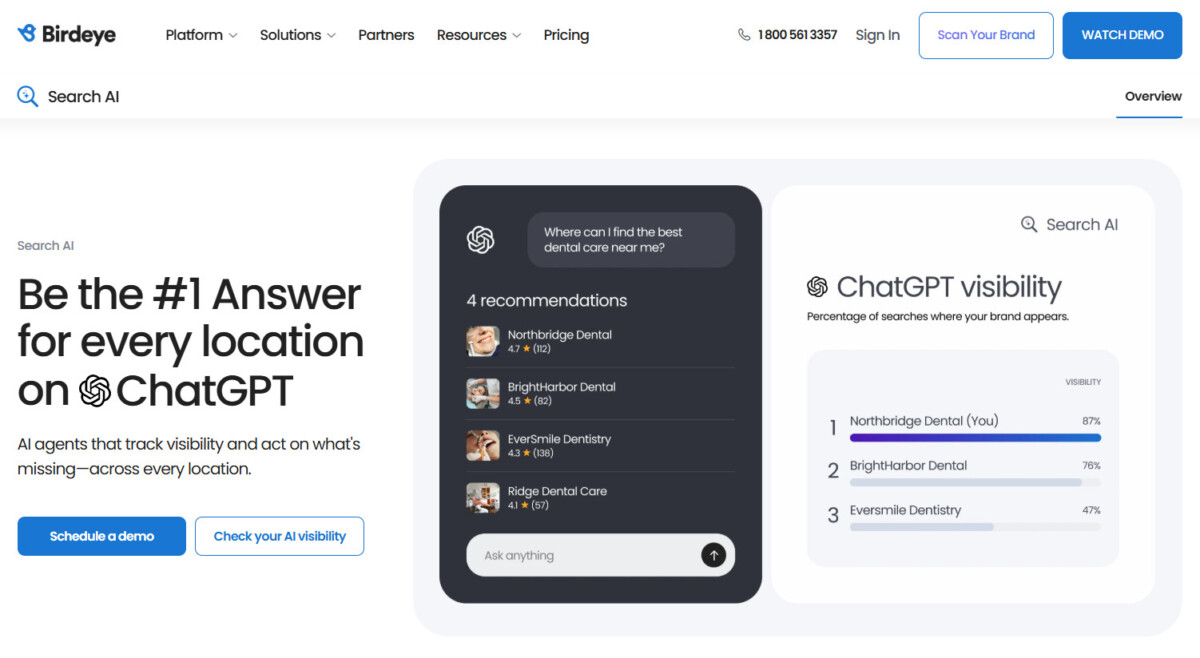
At the center of Birdeye’s GEO solution is Search AI, which shows exactly how AI answer engines describe, compare, and recommend your brand across thousands of locations. Birdeye Search AI focuses on the signals that AI answer engines actually use to surface businesses, including AI mentions, competitive rankings in AI answers, citations, sentiment, and information accuracy.
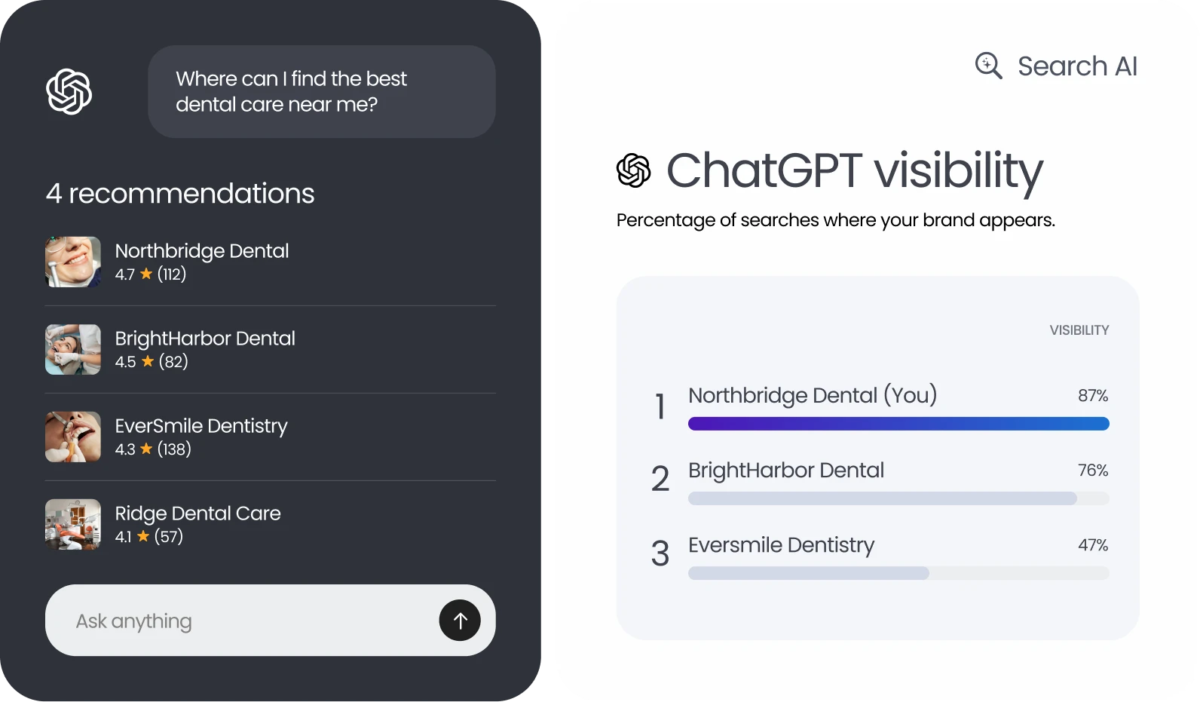
With Search AI, enterprise teams can:
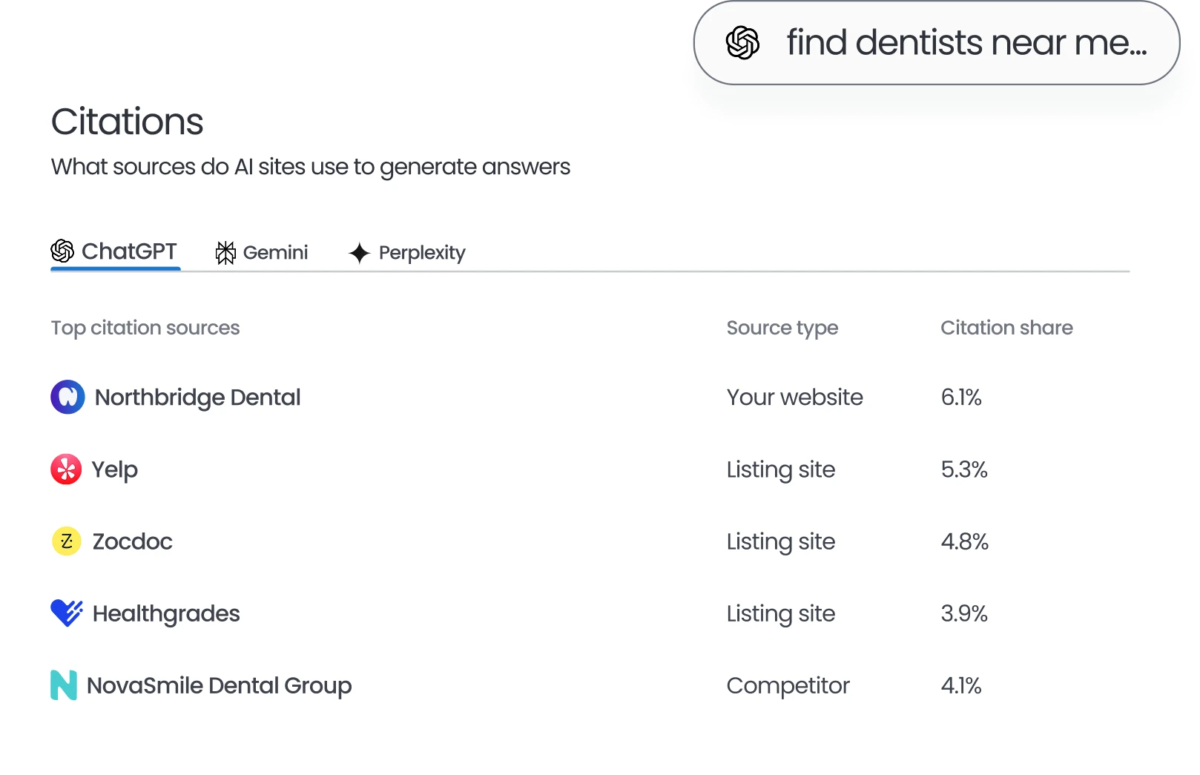
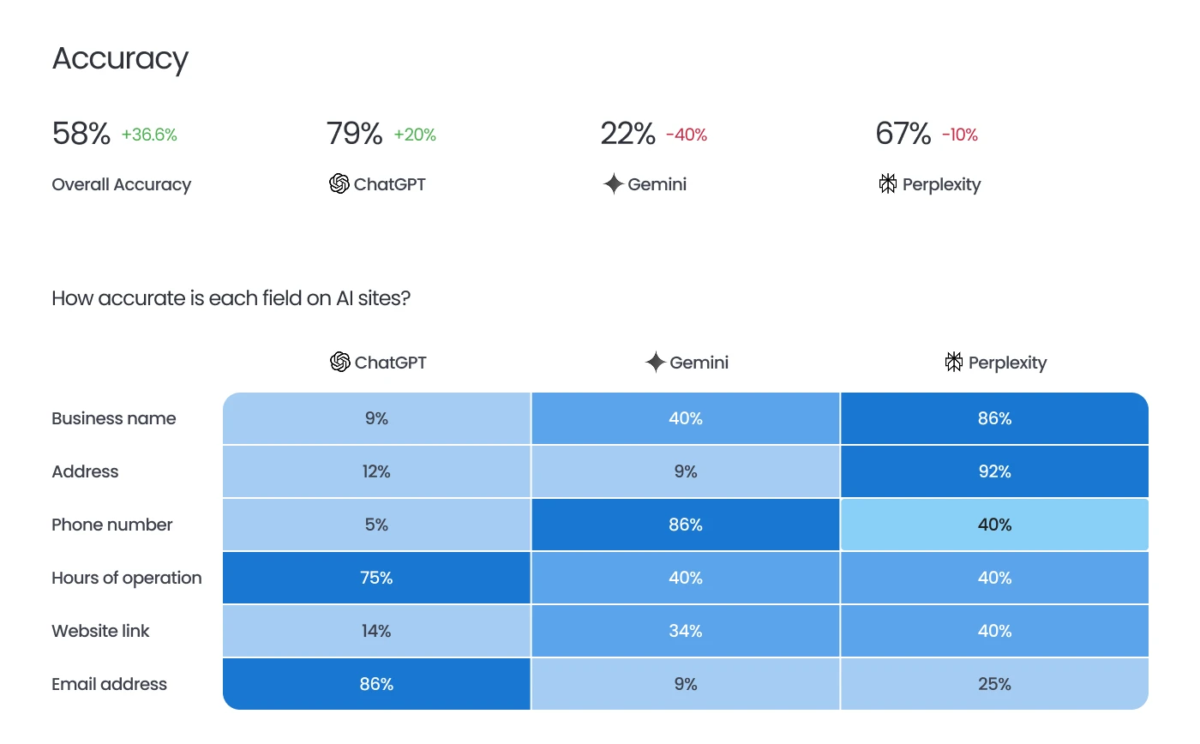
This gives brands a clear, actionable view of how AI answer engines present and evaluate their business without manually checking AI platforms one by one or guessing where visibility breaks down.
Birdeye is #1 agentic marketing platform built for multi-location brands navigating a new era of AI-driven discovery. As AI search engines increasingly influence which locations are recommended, maintaining accurate and consistent information at scale has become an operational challenge, not just an SEO task. Even small inconsistencies can reduce visibility across AI-driven search experiences.
To address this, Birdeye provides an agentic marketing platform that brings together the core signals AI engines rely on: listings, reviews, and local engagement, into one unified workflow. Instead of managing these elements in silos, enterprises can manage and improve the inputs that shape AI visibility from a single platform.
Birdeye is trusted by leading brands globally including H&R Block, Aspen Dental, and Caesars Entertainment and 3,000+ integrations across CRM, POS, EHR, scheduling, and operational systems. Enterprise teams can maintain governance through roles, permissions, and approvals while still empowering local teams to act quickly.
This balance of automation and control is why Birdeye has become the enterprise standard for managing visibility, trust, and execution in the AI-first era.
G2 ratings: 4.7/5 (3,900+ reviews)
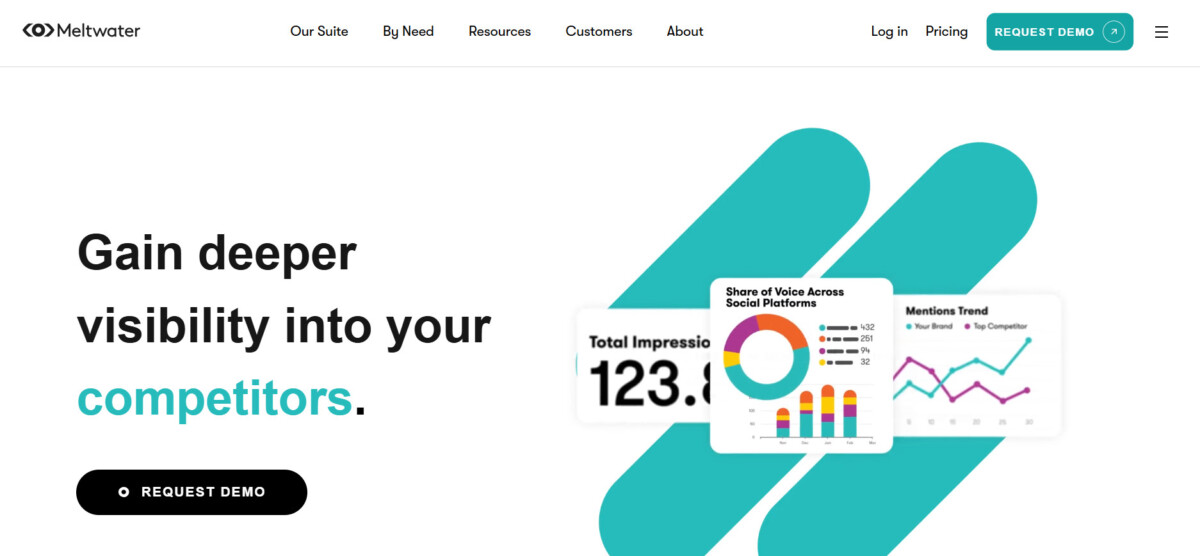
Meltwater helps brands track where and how they are mentioned across news, social media, and online publications. While it isn’t built specifically for GEO, the data it collects often influences how LLM’s understand brands and topics. It’s useful for monitoring reputation and visibility signals that AI tools may later use as context.
Key features
Best for: Communications and marketing teams focused on reputation, media visibility, and brand monitoring rather than AI search execution.
G2 rating: 4.1/5 (2,400+ reviews)
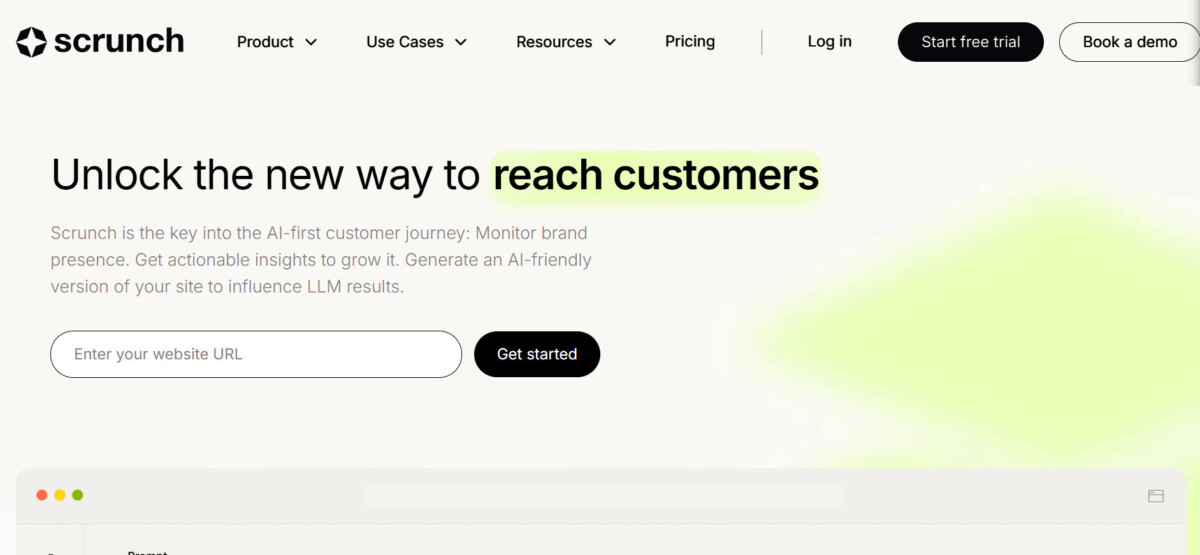
Scrunch helps brands see how they show up in AI-generated answers across tools like ChatGPT and other AI search platforms. It focuses on monitoring brand mentions and citations so teams can understand whether AI is actually picking them up. It’s a lightweight option for teams just getting started with GEO.
Key features
Best for: Marketing and SEO teams that want basic AI visibility monitoring without automation or enterprise workflows.
G2 rating: 4.6/5 (55 reviews)
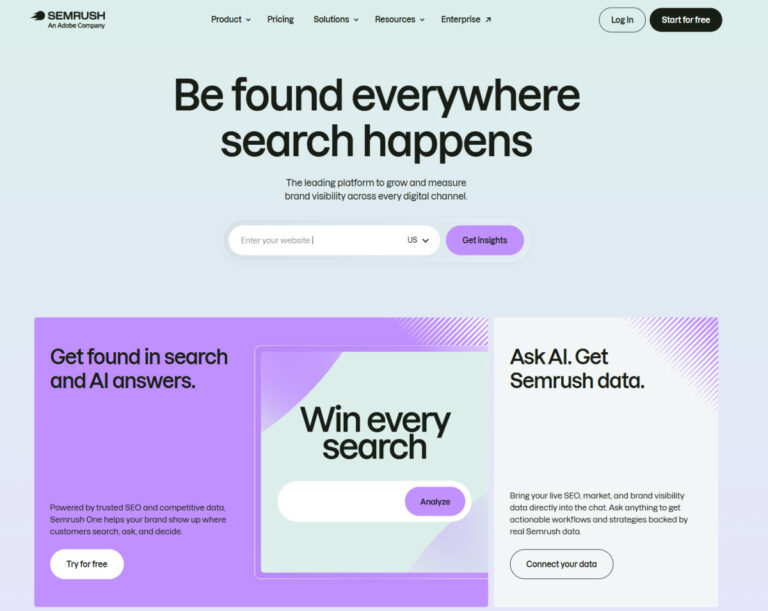
Semrush is a long-running SEO platform that extended into AI visibility with its AI Visibility Toolkit, launched as an add-on in 2025. It tracks how brands appear in AI-generated answers across ChatGPT, Gemini, Perplexity, Google AI Overviews and Google AI Mode, correlating that data with the keyword, backlink, and site-audit signals Semrush already tracks. It’s primarily an insight and optimization intelligence tool rather than an automated execution platform; it shows where AI visibility is changing and helps teams investigate the content, citation, authority, and technical signals that may be contributing, but it doesn’t automatically implement those fixes.
Key features
For larger organizations, Semrush also offers Enterprise AIO for managing AI visibility across multiple brands, markets, and teams at scale.
Best for: Marketing and SEO teams that want AI visibility connected with SEO and competitive research in one platform, particularly when they need to investigate why competitors are gaining visibility rather than only monitor mentions.
G2 rating: 4.4/5 (4,000+ reviews)
Profound focuses on helping teams understand how their brand appears inside AI-generated answers. It tracks AI mentions, citations, and prompt-level visibility, giving marketers insight into where they appear and where they do not. It’s a strong analytics tool for GEO, but it doesn’t automatically fix issues.
Key features
Best for: Marketing teams that want detailed GEO analytics and insights without automation or execution tools.
G2 rating: 4.6/5 (153 reviews)
BrandLight helps brands monitor how they appear across multiple generative AI platforms in one place. It focuses on tracking mentions, citations, and visibility trends so teams can compare how different AI tools talk about their brand. It’s designed for insight and reporting, not execution.
Key features
Best for: Marketing and analytics teams that need AI visibility insights without automation or enterprise workflows.
G2 rating: 4.6/5 (5 reviews)
Best fit: E-commerce, SaaS, and enterprise brands that need AI visibility to actually improve — not just dashboards that tell you what’s broken.
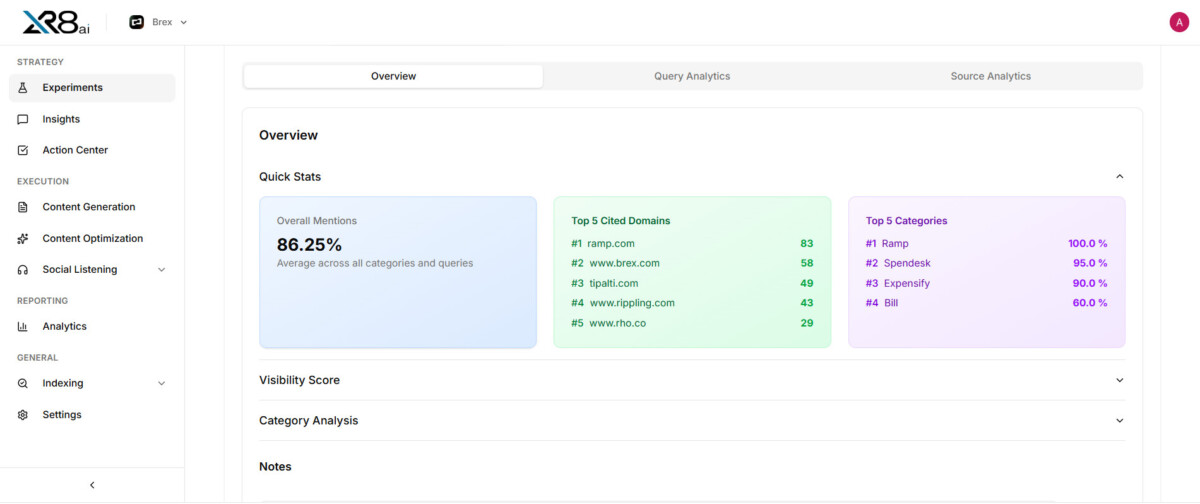
XLR8 AI is the only GEO solution that combines visibility tracking, content execution, and managed strategy in one platform. While most tools stop at showing you where you’re invisible, XLR8 AI closes the loop — their team of GEO strategists and ML engineers implement the fixes end-to-end.
The platform tracks visibility across major LLMs: ChatGPT, Perplexity, Gemini, Claude, Google AI Overviews, Grok, and Copilot.
Key features
Strategy & Analytics
Execution
Managed Service
Notable results
Best for: E-commerce, SaaS, and enterprise brands seeking top-tier AI visibility enhancements that go beyond standard diagnostic tools. This platform excels by integrating visibility tracking, content execution, and strategic management into a unified solution.
The right GEO tool depends on what your brand actually needs, and how much control you want over your AI visibility.
If your goal is to understand how AI talks about your brand, tools like Scrunch, BrandLight, Profound, or Semrush can provide visibility into mentions, citations, and trends. Semrush additionally connects those AI visibility insights with SEO and competitive research data, helping teams investigate the signals contributing to visibility gaps and identify content, authority, citation, and technical opportunities to improve AI visibility.
If your team focuses on media coverage and brand reputation, Meltwater can help you monitor how your brand appears across news and social channels that influence AI responses.
But if you manage multiple locations, operate at enterprise scale, or need issues fixed automatically, you’ll need more than dashboards. You’ll need a platform that connects visibility insights to action, continuously updating listings, fixing data errors, managing reviews, and improving trust signals.
That’s where Birdeye stands apart. It’s built for brands that want AI visibility to improve every day, not just be reported on.
Generative AI has changed how people discover and choose businesses. Today, being visible isn’t enough; brands need to be understood, trusted, and recommended by LLM’s that answer customer questions every day.
GEO tools help brands see how they appear inside those answers, but the real difference comes from what happens next. Tools that only report problems leave teams with more work to do. Tools that fix problems automatically help brands stay ahead.
As AI-driven discovery continues to grow in 2026 and beyond, the brands that win won’t be the ones chasing rankings; they’ll be the ones building accurate, trustworthy, and consistent visibility everywhere AI looks. For enterprise and multi-location brands, that’s exactly the problem Birdeye was built to solve.
Generative Engine Optimization is the practice of optimizing your brand’s data, content, trust signals, and digital presence so that AI answer engines like ChatGPT, Gemini, Perplexity, and Google AI Overviews can confidently surface and recommend your business. It matters for ecommerce brands because a growing share of purchase decisions now happen inside AI-generated responses, before a customer ever visits a website or clicks a search result. If AI engines do not know your brand, describe it inaccurately, or trust a competitor more than you, you are losing customers at the very top of the discovery funnel without any visibility into why.
Traditional SEO optimizes for search engine rankings by targeting keywords, building backlinks, and improving on-page content so that Google or Bing surfaces your website in their results pages. GEO optimizes for AI answer engines by improving the signals those engines use to form their responses, including citation patterns, review sentiment, listing accuracy, structured data, and the consistency of your brand information across every surface AI can access. The key distinction is that SEO targets clicks to your website, while GEO targets inclusion in the AI-generated answer itself, which often happens before any click occurs.
For a single-location or direct-to-consumer Shopify brand, the priority is understanding your current AI visibility baseline before investing in automation. Tools like Scrunch or Profound are reasonable starting points because they show you which prompts surface your brand, which citations AI engines pull, and where you are invisible in answers your customers are reading. Once you have that baseline and understand the gaps, the question becomes whether you can close those gaps manually or whether the volume of issues requires an automated platform. Most DTC brands that are scaling past seven figures find that the manual approach breaks down quickly, particularly around review management and listing accuracy across platforms.
AI engines synthesize information from a wide range of sources when forming their answers, including third-party review platforms, business directories, news and editorial coverage, social media, forums, and structured data on your own website. The brands that appear most consistently and accurately across these sources, with strong review sentiment and clearly structured information, are the ones AI engines feel confident recommending. Inconsistencies in your business name, address, hours, or service descriptions across different platforms create ambiguity that AI engines resolve by reducing their confidence in your brand, which often means recommending a competitor instead.
GEO results typically appear over a period of four to twelve weeks, depending on the starting point and the speed at which issues are resolved. Fixing listing inaccuracies and duplicate profiles can improve AI visibility relatively quickly once the corrections propagate across directories. Building review volume and improving sentiment takes longer because it requires a sustained operational change rather than a one-time fix. The brands that see the fastest results are those that address multiple signals simultaneously, which is why automated platforms tend to outperform manual approaches in terms of speed of improvement. Monitoring tools alone will not accelerate results because they identify problems without resolving them.




