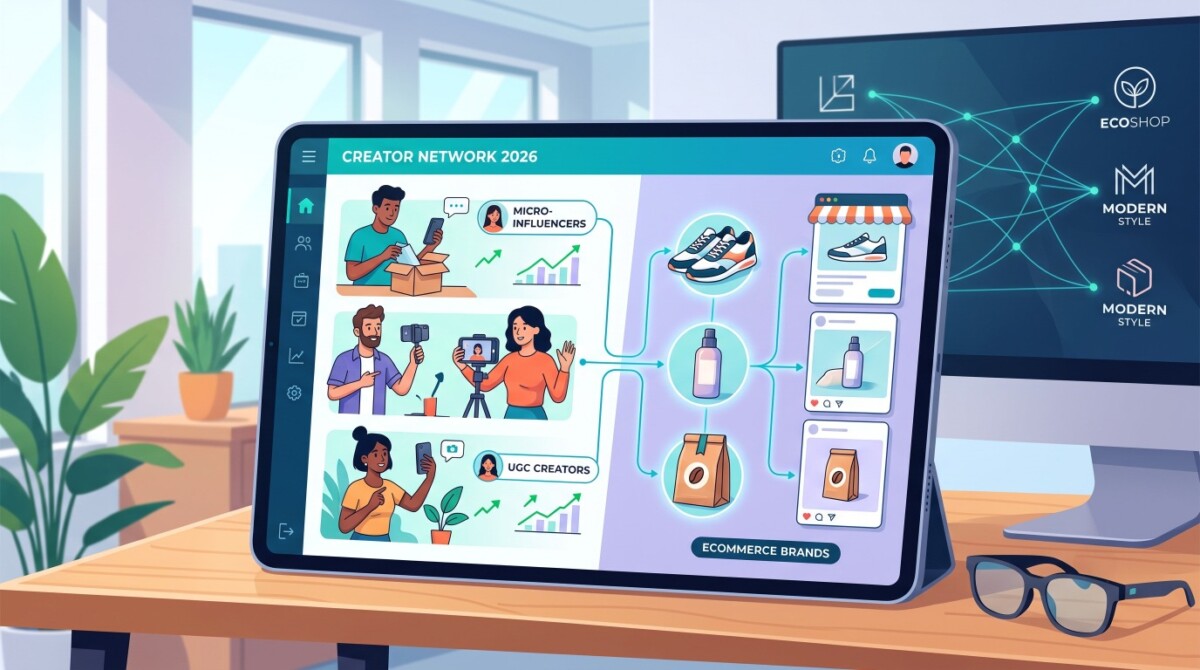
For most ecommerce brands in 2026, Stack Influence is the most purpose-built option for Amazon product seeding, Shopify Collabs is the easiest native starting point on Shopify, and Insense or Modash are better fits when you need high-performing paid social UGC and deeper creator analytics.
Micro-influencer and UGC platforms only move the needle when they match your main sales channel and your team’s operating reality, not just the latest hype cycle in influencer marketing.
If you sell products online — especially on Amazon or Shopify — getting real customers and everyday creators to talk about your product is one of the highest-converting forms of marketing you can run. Micro-influencer and UGC (user-generated content) platforms make this scalable: instead of chasing influencers one DM at a time, you set up a campaign, send product, and let the platform handle creator matching, fulfillment, and content collection. Here are five platforms worth comparing if you’re building this into your growth strategy.
Stack Influence is a marketplace built specifically for ecommerce brands — particularly Amazon sellers — that want to run product-seeding campaigns with everyday micro and nano-influencers. Instead of paying a flat fee per post, brands compensate creators primarily with free product, which keeps costs predictable while still generating authentic social content and reviews.
What stands out:
Worth knowing before you commit: some reviewers note the platform can be light on tools for tracking returns or reconciling orders by Amazon order ID, and the visibility into individual influencer quality before a campaign starts is more limited than in larger enterprise tools. It’s best suited to ecommerce and Amazon sellers who want a hands-off way to generate UGC and reviews at a relatively low cost, rather than brands running complex, multi-year ambassador programs.
Shopify Collabs is built directly into the Shopify admin, letting merchants recruit creators, send free product, generate trackable affiliate links, and pay commissions without ever leaving their store dashboard.
It’s free to install and brands only pay when a creator actually drives a sale, which makes it an easy first step for Shopify merchants. The tradeoff is that access to Shopify’s built-in Collabs creator network typically requires the store to already be doing meaningful sales volume, and the discovery tools are simpler than dedicated influencer platforms.
Insense is a creator marketplace built specifically around sourcing UGC for paid social ads, connecting ecommerce brands with a vetted network of micro-influencers and UGC creators. Brands can run creative briefs, manage content licensing for whitelisting (running ads from a creator’s handle), and track campaign performance from one dashboard.
It’s a strong fit for brands whose main goal is feeding a paid social pipeline with authentic-feeling video content, rather than building long-term creator relationships. Pricing runs through self-service plans plus a managed-service tier for brands that want more hands-on support.
Afluencer is a self-service influencer marketplace where brands post collaboration opportunities (“Collabs”) and creators apply directly, rather than brands cold-outreaching influencers one by one. A free plan is available, with paid tiers starting around $49/month for more campaign management and creator-search features.
It’s a good match for smaller ecommerce brands and solo founders who want an affordable, low-commitment way to start attracting micro-influencer interest without a big monthly platform fee.
Modash combines a very large creator database (350M+ profiles across Instagram, TikTok, and YouTube) with transparent pricing and a native Shopify integration that ties influencer activity back to real-time revenue (ROAS). Brands can search, vet, and reach out to creators, then track which collaborations are actually driving sales.
It leans more toward discovery and analytics than fully managed campaign execution, so it suits brands — especially Shopify-based ones — that want to run their own outreach but need solid data to decide who’s worth working with.
If your priority is a low-effort, low-cost way to generate Amazon reviews and UGC through product seeding, Stack Influence is the most purpose-built option on this list. If you’re already on Shopify and want something native with zero platform fee, Shopify Collabs is the easiest entry point. Brands focused on feeding paid social ads should look at Insense, budget-conscious teams may prefer Afluencer‘s self-serve model, and brands that want deep creator data and Shopify revenue tracking should consider Modash.
The right fit ultimately depends on your sales channel (Amazon vs. Shopify vs. multi-channel), your budget, and whether you want a fully managed service or a self-serve discovery tool you run yourself.
The fastest way to choose between Stack Influence and Shopify Collabs is to anchor on your primary sales channel and how much structure you need around Amazon growth versus Shopify-native operations. If most of your revenue comes from Amazon and you need external traffic and reviews to unlock ranking gains, Stack Influence’s managed campaigns will usually be the stronger fit, while Shopify Collabs is better for Shopify merchants who want low-friction gifting and affiliate programs tied directly into their store admin.
You should consider adding a paid social UGC platform like Insense when your brand already spends meaningfully on Meta, TikTok, or other social ads and your biggest bottleneck is fresh, authentic creative that performs at scale. If you’re still testing basic paid social viability or rely mostly on marketplace traffic, Insense may feel ahead of where you are, but once your ad engine is in place, Insense’s brief-driven workflow and whitelisting support can materially improve creative throughput and ROAS.
Self-serve marketplaces like Afluencer can be enough for mid-seven-figure brands if your team is willing to own creator selection, negotiation, and campaign design internally. However, once you’re running more complex multi-channel programs or need tight integration with Amazon rankings and Shopify revenue reporting, layering in more specialized tools such as Stack Influence or Modash will usually deliver better operational leverage and cleaner measurement.
Shopify brands often use Collabs as the lightweight gifting and affiliate rail while relying on Modash for serious influencer discovery, audience vetting, and performance analysis. Collabs keeps collaboration basics inside Shopify, but Modash helps you find and prioritize creators whose audiences match your target customer profile and whose campaigns are demonstrably driving revenue rather than just generating follower growth.
For early-stage DTC brands, the best starting point is usually a combination of Shopify Collabs for low-friction gifting and a budget-friendly marketplace like Afluencer to attract micro-influencers already interested in your niche. This keeps costs and complexity down while you test messaging and offers; once you see traction, you can decide whether it makes sense to add Amazon-focused seeding with Stack Influence or performance-heavy UGC programs through Insense or Modash.