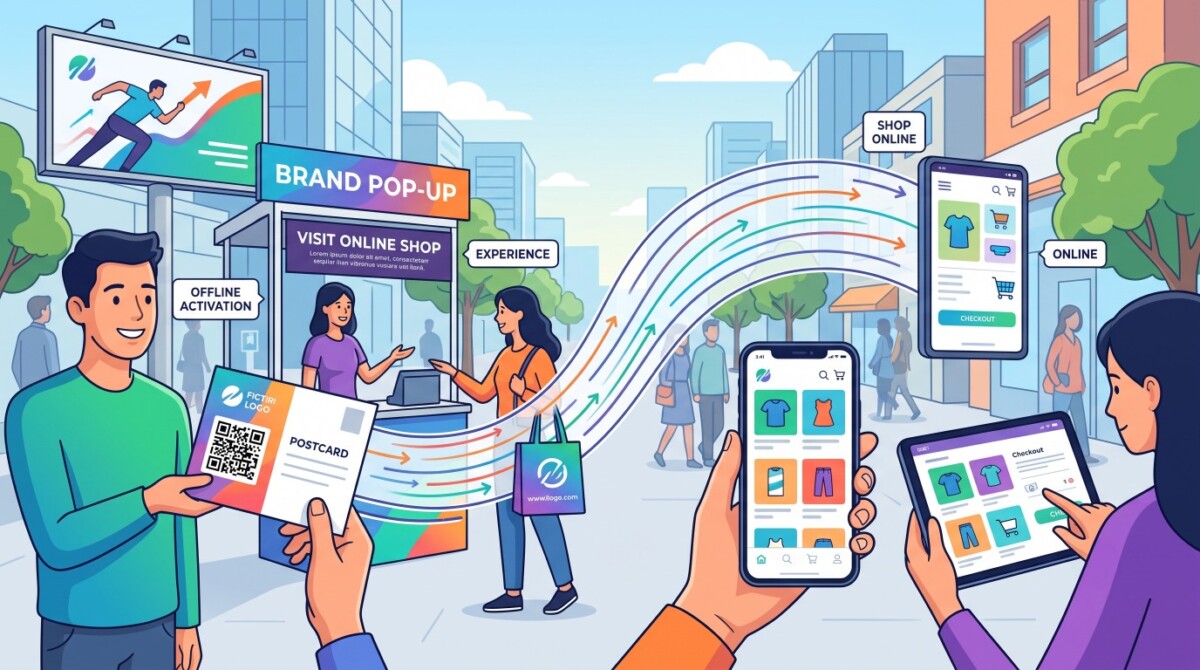
The best offline marketing ideas for ecommerce brands in 2026 are pop-up shops, trade shows, local partnerships, and community events, especially when every offline touchpoint pushes people back to trackable QR codes, landing pages, and offers on your online store.
Offline marketing is no longer about billboards and mass media buys; it is about creating a few high-intent, real-world moments that your digital channels can amplify and measure.
Digital advertising has become increasingly competitive, making it harder for ecommerce businesses to stand out through online channels alone. As customer acquisition costs continue to rise, many brands are rediscovering the value of face-to-face interactions that build trust and create memorable experiences.
In 2026, eCommerce brands can build stronger direct connections with customers by using offline marketing ideas such as pop-up shops, trade shows, partnerships with local businesses, and participation in community events, while also increasing brand awareness and online sales.
Offline marketing gives customers something digital ads cannot always provide: a tangible experience. Whether shoppers interact with your products in person, attend an event, or receive a thoughtfully designed printed promotion, these experiences create lasting impressions.
Consumers are also becoming more selective about online advertising. Meeting potential customers in real-world settings helps establish credibility while encouraging genuine conversations. Rather than replacing digital marketing, offline efforts amplify it by creating awareness that often leads customers back to your website or online store.
Offline marketing continues to play a valuable role in helping ecommerce brands connect with customers beyond digital channels. By combining real-world experiences with online marketing efforts, businesses can build stronger brand awareness, increase customer trust, and drive more qualified traffic to their online stores. Below are some of the most effective offline marketing strategies ecommerce brands should consider in 2026.
Pop-up stores remain one of the most successful offline marketing tactics for ecommerce brands. They allow customers to see, touch, and test products before making purchases. Even temporary retail spaces can generate excitement through exclusive launches, limited-time offers, and live demonstrations.
Pop-up experiences also encourage social sharing. Visitors frequently post photos and videos, extending the campaign’s reach beyond the physical location while driving additional online traffic.
Industry exhibitions continue to deliver valuable networking and customer acquisition opportunities. A well-designed booth allows brands to demonstrate products, collect qualified leads, and gather immediate customer feedback.
For outdoor exhibitions and promotional events, investing in custom canopy tents 10 x 10 creates a professional, recognizable space that attracts visitors while reinforcing brand identity. Attractive displays combined with knowledgeable staff can significantly improve engagement throughout the event.
Collaborating with complementary local businesses helps ecommerce companies reach new audiences without requiring major advertising budgets.
Effective partnership opportunities include:
These collaborations benefit both businesses while introducing products to highly relevant local customers who may later become loyal online buyers.
Supporting charity events, sports tournaments, neighborhood festivals, or educational workshops demonstrates genuine community involvement. Rather than focusing solely on selling, brands build trust through meaningful participation.
Printed materials, branded merchandise, and professional promotional assets supplied by companies such as expoprint can help businesses maintain a polished and consistent appearance across different offline campaigns, reinforcing brand recognition long after the event ends.
Different businesses benefit from different offline approaches depending on their objectives.
| Marketing Strategy | Best For | Main Benefit |
| Pop-up shops | Product launches | Customer experience |
| Trade shows | B2B and niche brands | Lead generation |
| Local partnerships | Small businesses | Affordable exposure |
| Community events | Lifestyle brands | Brand trust |
| Direct mail | Existing customers | Repeat purchases |
The best strategy depends on your target audience, available budget, and long-term goals. New ecommerce brands often begin with local partnerships and community events before expanding into larger exhibitions or recurring pop-up locations.
Offline campaigns should always support measurable business objectives rather than simply increasing visibility.
Useful performance indicators include:
Tracking these metrics allows businesses to compare offline initiatives with digital campaigns and identify which activities produce the strongest return on investment. Using unique landing pages or promotional codes also helps connect offline interactions with online purchases, providing clearer attribution.
Is offline marketing worth it for online-only brands?
Yes. Offline experiences build trust, create memorable customer interactions, and often encourage shoppers to visit your website later to complete purchases.
How much should ecommerce businesses spend?
Budgets vary by business size, but many brands begin by allocating a small percentage of their overall marketing budget to test local events, partnerships, or pop-up opportunities before expanding successful campaigns.
Which offline strategy generates the fastest results?
Trade shows and pop-up shops often produce immediate customer engagement because visitors actively seek products and brands during these events. However, results depend on preparation, audience fit, and follow-up.
Can offline marketing increase online sales?
Absolutely. Many customers first discover a brand through offline experiences and later complete purchases online. Strong integration between physical campaigns and digital channels creates a seamless customer journey that supports both brand awareness and revenue growth.
Offline marketing is becoming an increasingly valuable advantage for ecommerce brands looking to differentiate themselves in 2026. While digital channels remain essential, real-world interactions create stronger emotional connections, improve customer trust, and generate memorable brand experiences that online advertising alone cannot always achieve. By selecting the right combination of pop-up shops, trade shows, community partnerships, and measurable campaigns, ecommerce businesses can build lasting relationships that translate into sustainable online growth and long-term customer loyalty.