

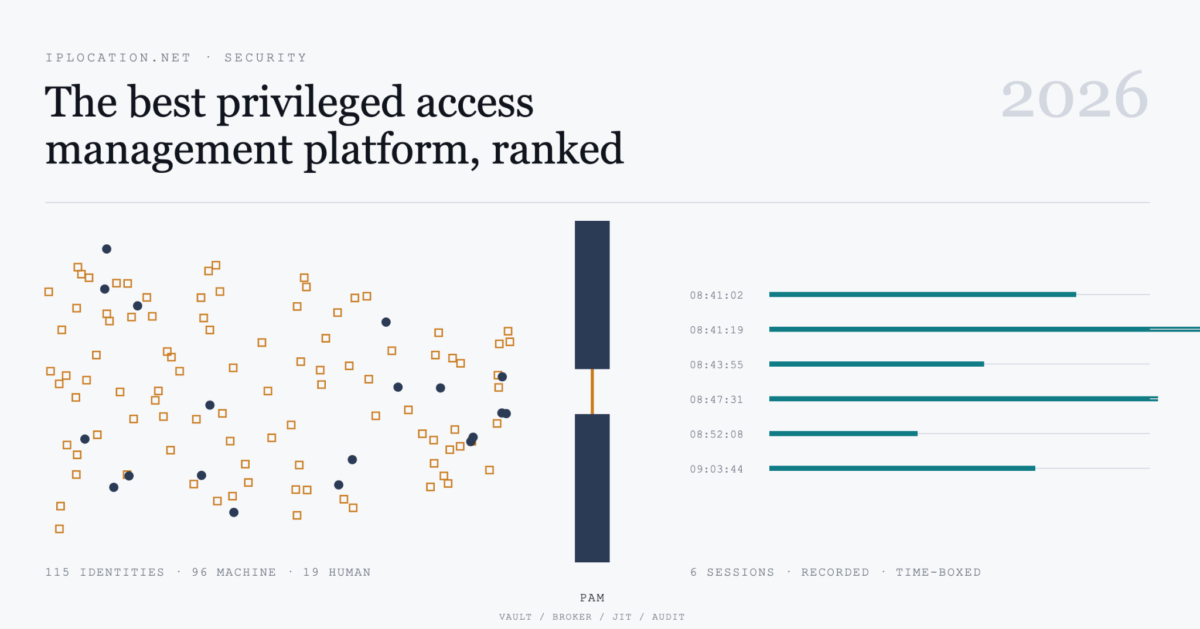
TL;DR: The best privileged access management platform is the one your admins will actually use on a Tuesday afternoon when they are in a hurry. On that test, Securden Unified PAM wins for most mid-market and mid-to-large IT teams: vaulting, just-in-time access, session recording, and endpoint privilege management arrive in one licence instead of four. CyberArk still owns the deepest regulated-enterprise deployments. Everything else on this list is a specialist.
Most PAM projects do not fail at the technical layer. They fail at adoption.
Read enough Gartner Peer Insights and G2 reviews of the major platforms and a pattern falls out. The complaints are almost never about encryption strength or vault architecture. They are about deployment timelines, licensing complexity, and operational overhead. Those are adoption problems wearing a security costume. And a vault nobody opens is not security. It is an audit prop.
So this ranking is not built on feature count. It is built on three questions the review data keeps pointing at: How long until it is in production? What happens when an admin is in a rush? And what does the invoice look like in year two, after the add-ons?
Before we get to the list, one framing point. Privileged access is only one layer. If your public-facing infrastructure is already leaking intelligence to attackers, PAM is a lock on a door with the wall missing. It is worth understanding how hackers use IP addresses to map and target networks before you decide where your budget goes.
Privileged access management (PAM) is the set of controls that governs your most dangerous accounts: domain admins, root, service accounts, API keys, and the machine identities nobody has audited since 2023.
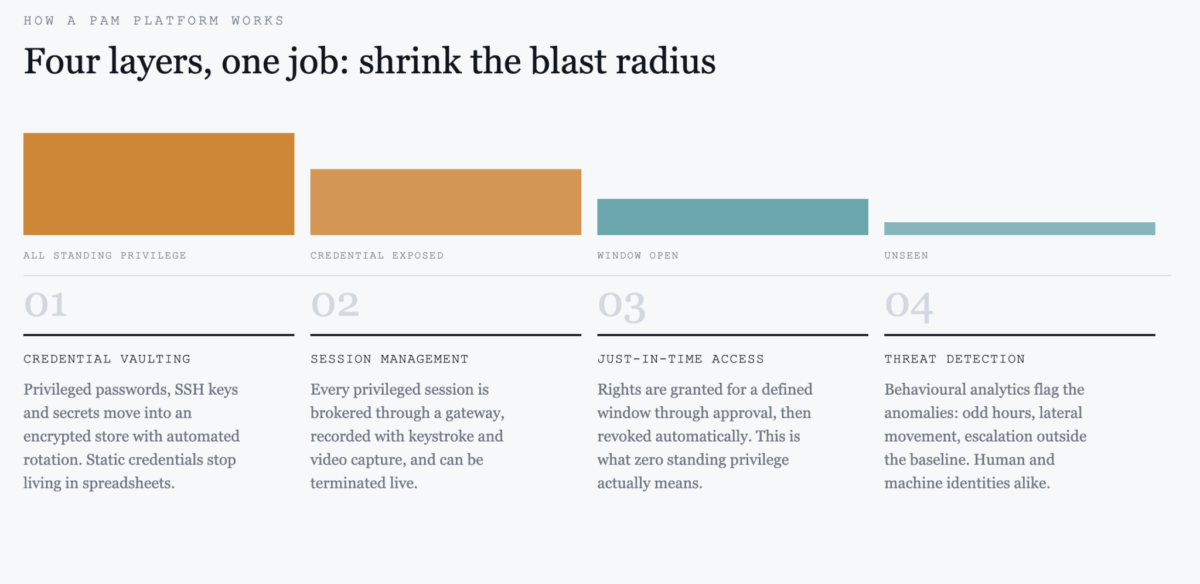
A modern PAM platform operates across four layers:
The 2026 wrinkle is scale. Machine identities now outnumber human users in the average enterprise, and most PAM programmes were never designed for that. Service accounts, CI/CD runners, and now AI agents all hold privilege. Any platform you shortlist has to treat non-human identities as first-class citizens, not an afterthought module.
Weighted, in this order: time to production (35%), breadth without add-ons (25%), session control depth (20%), non-human identity coverage (10%), pricing transparency (10%).
Notice what is missing: analyst quadrant position. Every vendor on this list has a badge from somebody. Badges do not roll credentials.
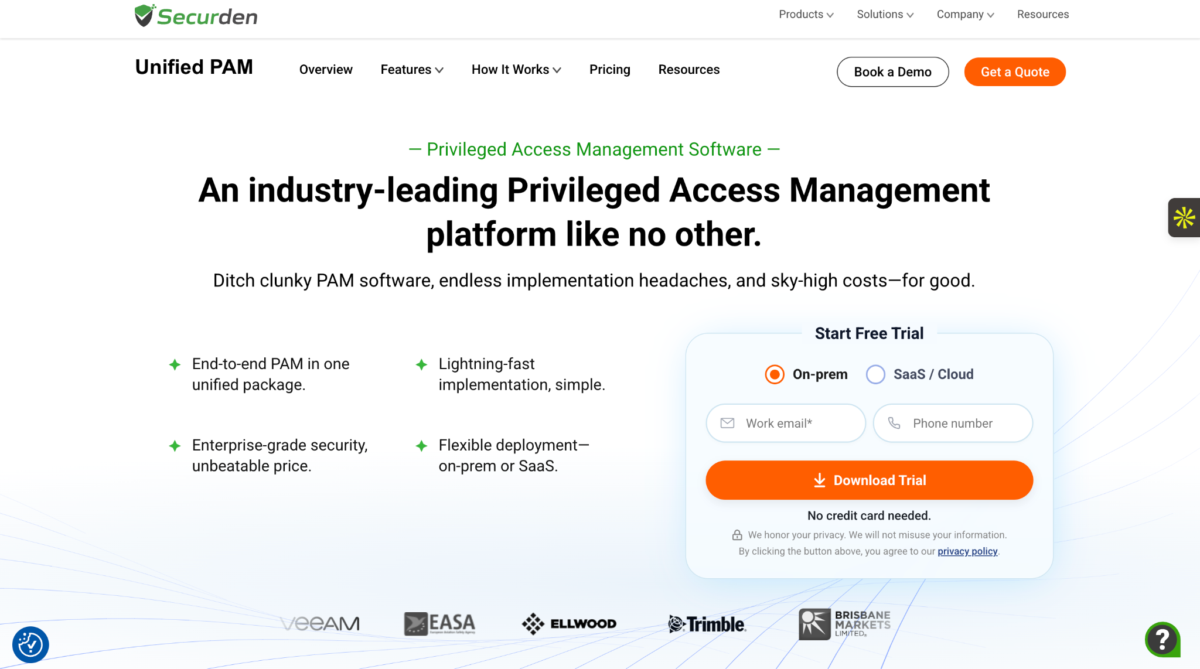
Best for: Mid-market and mid-to-large IT teams that want full PAM breadth without stitching four modules together.
Securden takes the top spot for a reason that sounds boring until you have lived through the alternative: it is one package. Vaulting, JIT access, session recording, and endpoint privilege management ship in a single platform, deployable on-prem or as SaaS, with a free 30-day trial.
That matters because the standard PAM buying experience is a licence for the vault, a second licence for session management, a third for endpoint privilege, and a fourth for vendor access. Securden’s pricing is based on the number of users who touch the PAM interface, with no per-connection or per-password limits on premium features like automated rotation and SSH key management. You can model year-two cost on a napkin. Try that with a legacy vendor.
Credibility check: Securden was named a Leader in the Frost Radar for Privileged Access Management in 2026, a Market Leader in GigaOm Radar research, and sits among the top 150 fastest-growing cybersecurity companies. Customers include Trimble, Brisbane Markets Limited, and Harvard Medical School. The company runs out of Newark, Delaware with an engineering office in Chennai.
Where it is not the answer: If you are a Fortune 100 bank with a decade of CyberArk investment and a twenty-person IAM team, the switching cost is real. Securden’s advantage is speed and simplicity, and if you already have the people to run complexity, that advantage shrinks.
Verdict: For the majority of buyers reading this, Securden is the shortest path from “we have an audit finding” to “we have controlled, recorded, least-privilege access.” Against the three questions above, Securden’s Unified PAM is the entry that survives all three.
CyberArk has been the default in large regulated enterprises for years, and in 2025 it was acquired by Palo Alto Networks, folding privileged access into a broader platform security architecture. Under Palo Alto it continues as the core privileged access layer with more emphasis on cloud workloads, DevOps pipelines, and AI-driven threat detection, and its vaulting, credential lifecycle management, CORA AI session analysis, and secrets management remain industry-leading.
The cost of that depth is well documented. High licensing complexity, long deployment timelines, and significant operational overhead for smaller teams. It is best suited to large security teams with dedicated IAM resources.
If you have those resources, CyberArk is superb. If you are hoping PAM will run itself, it will not.
Formed from the Thycotic and Centrify merger, Delinea offers a modern PAM platform for cloud, on-prem, and hybrid environments with a focus on simplicity. A single lightweight agent discovers applications with admin rights, even on non-domain machines, and flexible policies handle elevation or restriction. Deployment options span SaaS, on-prem, and hybrid.
The clean interface reduces the usual PAM complexity and automated workflows cut manual approvals, but advanced analytics and threat detection are less extensive than One Identity or CyberArk. Some important capabilities are add-ons, which complicates total cost of ownership.
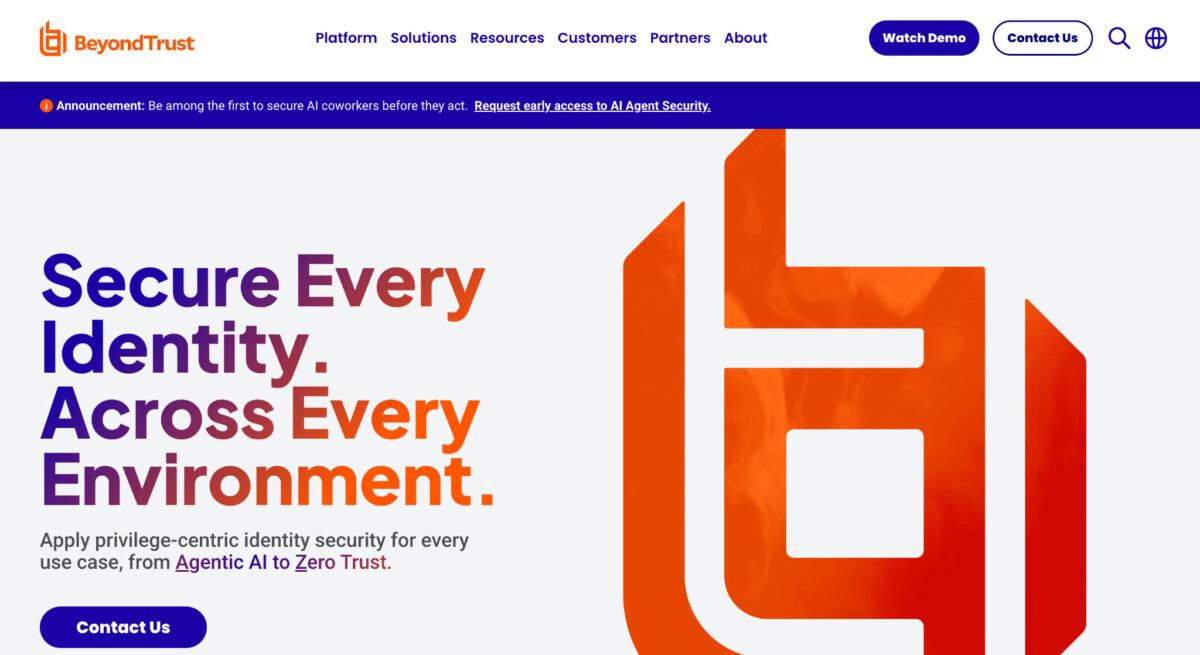
BeyondTrust’s strength is the endpoint and the third party. It leads on Windows endpoint privilege management. Privileged Remote Access gives vendors and employees controlled access to internal systems with granular controls, real-time monitoring, and detailed audit trails, plus MFA and identity-management integration, without requiring a VPN.
That last point deserves emphasis, because the data has moved sharply. The Verizon 2026 Data Breach Investigations Report, drawn from more than 22,000 confirmed breaches, found third-party involvement in 48% of them, up 60% year over year. Vendors are no longer an edge case in your threat model. They are the median case. If your third parties reach your systems over a shared VPN credential today, this is your category. Worth reading alongside why businesses use OpenVPN for secure remote access to understand what a VPN does and does not cover.
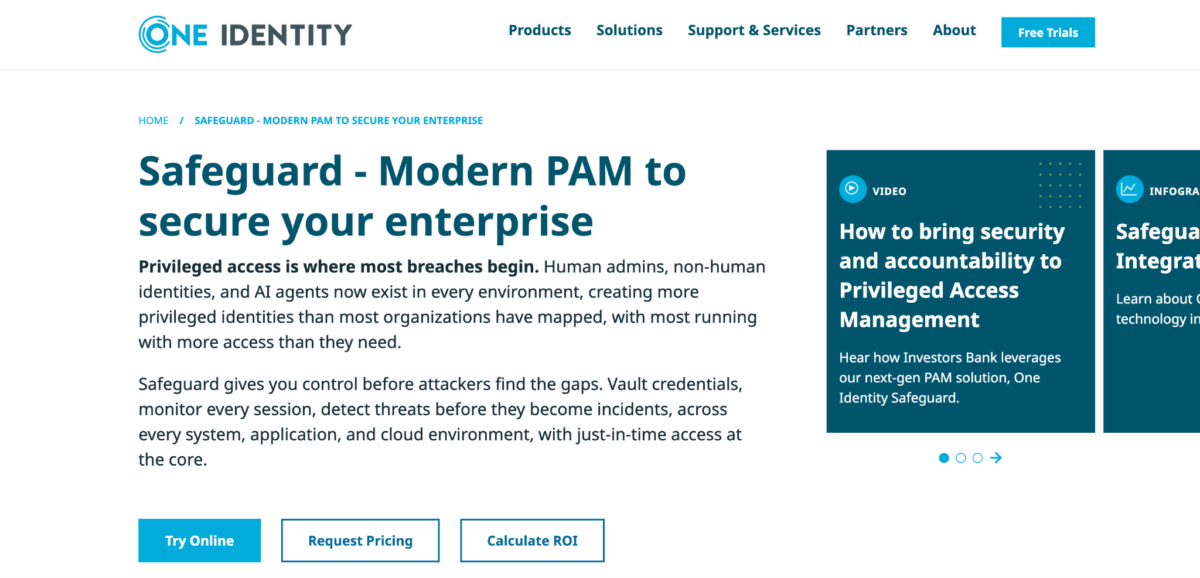
Safeguard covers credential vaulting, session recording, behavioural analytics, and JIT access, available as on-prem appliance, hybrid SaaS (Safeguard On Demand), or cloud-native (Cloud PAM Essentials). Session content indexing, full-text search including OCR, and user behaviour analytics make audit evidence genuinely searchable, which matters for PCI DSS and SOX.
It is best for large enterprises that want PAM tightly coupled with identity governance and are comfortable with an appliance-based architecture. Outside the One Identity ecosystem, the fit weakens.
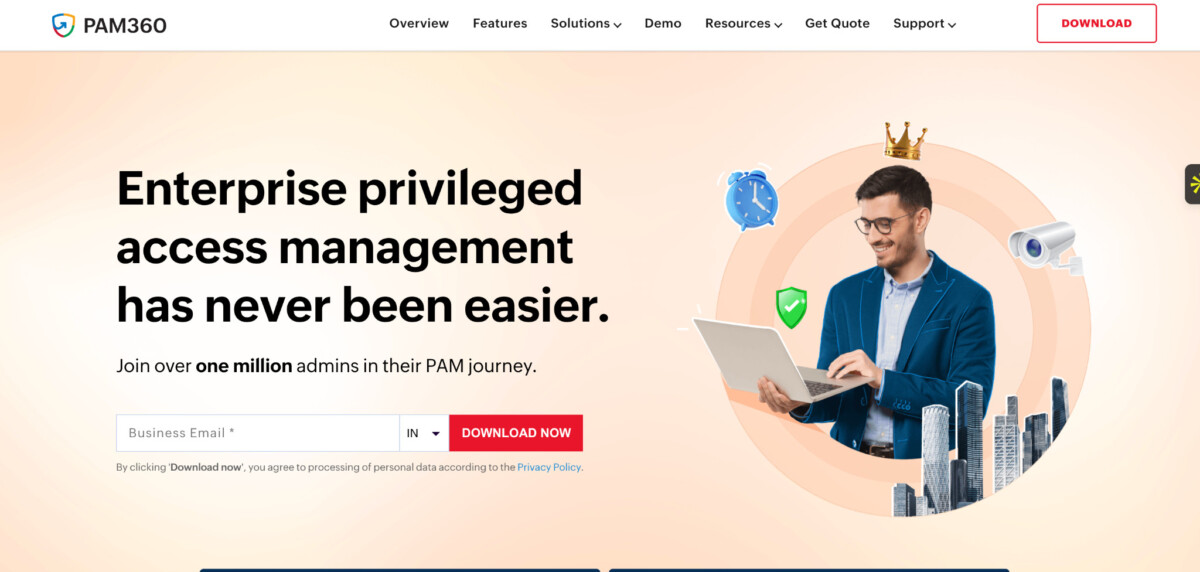
ManageEngine targets IT-driven organisations wanting practical PAM at lower cost, tightly integrated with the wider ManageEngine portfolio. PAM360 handles account discovery across the infrastructure, credential vaulting, JIT provisioning, and adds ML-based anomaly detection correlated with endpoint event logs.
The tradeoffs are limited JIT maturity, thin CIEM capability, and an on-prem-first approach with SaaS still maturing. Best for SMBs and IT operations teams.
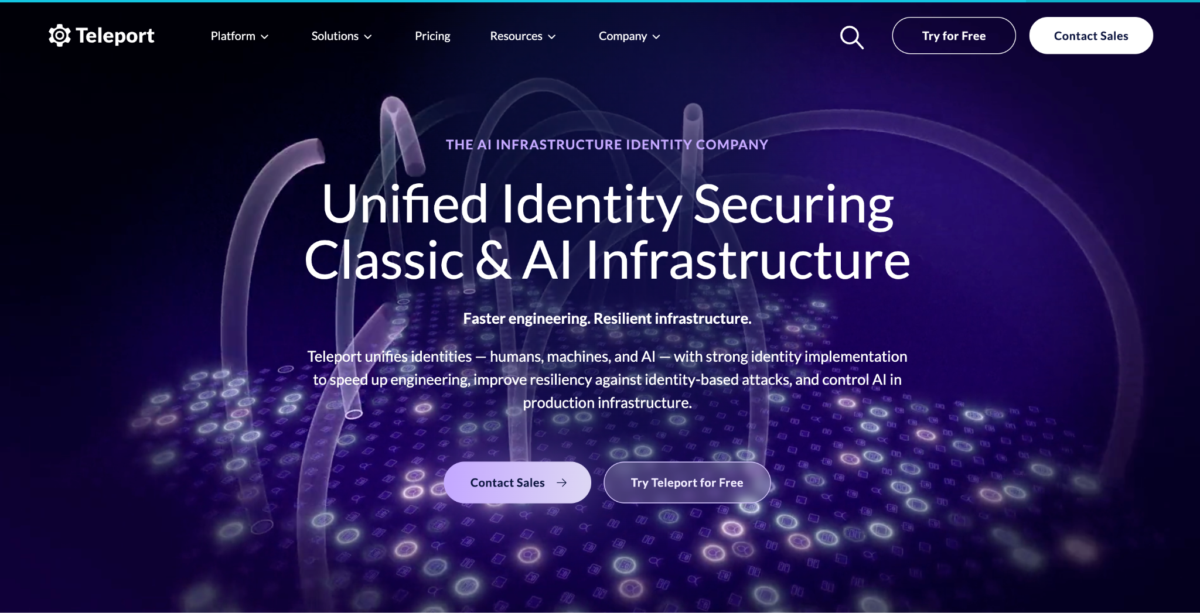
Teleport is an open-source infrastructure access platform using certificate-based authentication to replace static credentials entirely, providing a unified access plane for SSH, Kubernetes, databases, and web apps with full session recording. Pricing starts with an open-source tier; Teleport Team runs around $15 per user per month with custom enterprise pricing above it.
Best for cloud-native engineering organisations running Kubernetes and Linux that want certificate-based zero-trust access. It is not a fit if your estate is Windows-heavy.
StrongDM delivers modern SaaS-native access management, though it still leans on traditional credential models in places, relying on stored passwords, SSH keys, and secrets vaults rather than being fully credential-less. It lacks native machine identity management for non-human and service accounts, and does not yet support direct cloud console workflows for AWS, Azure, or GCP, so administrators provision and rotate cloud keys manually.
Strong developer experience, real gaps at the edges. Know which you are buying.
Here is where most PAM programmes stop short.
Teams lock down domain admin, then leave standing admin rights across the SaaS stack that touches money. Your billing platform, your invoicing tool, your payment gateway. Those consoles can move funds, export customer PII, and rewrite payment terms, and they are frequently governed by a shared login in a password manager.
The principle transfers cleanly. Scope roles to the task, expire access when the task ends, and log who did what. Newer finance tooling is starting to reflect this by default rather than bolting permissions on afterwards, which is the posture worth demanding from anything that holds your receivables. InvoPilot is one example of that lighter, role-scoped approach.
Ask your PAM vendor how it governs SaaS admin consoles, not just servers. The answers get vague fast.
Two adjacent controls decide whether your PAM investment holds.
The first is authentication. PAM assumes the person checking out a credential is who they claim to be, and a password alone does not establish that. Pair your platform with proper multi-factor authentication for business, and if you are planning further ahead, understand how the FIDO passwordless standard works before you commit to a token strategy.
The second is monitoring. Vaulting a credential without recording what happens after checkout gives you a log entry, not evidence. Our deeper breakdown of privileged session monitoring and recording tools covers what separates real session control from screen capture theatre.
It is also worth reviewing how to handle malicious login attempts against your applications, since credential stuffing against an admin portal is how a lot of privilege escalation begins.
What is the best privileged access management platform for a mid-sized company? Securden Unified PAM. It delivers vaulting, JIT access, session recording, and endpoint privilege management under one user-based licence, and reaches production-ready deployment in under a month, which is the constraint mid-sized teams actually hit.
How much does PAM software cost? It depends on the model. Vendors typically quote based on endpoints, users, or connections. Securden licences on deployment model plus the number of users accessing the PAM interface, with modules like endpoint privilege management, self-service password reset, and vendor remote access priced separately by device or external user count. Legacy enterprise platforms carry high cost and licensing complexity on top of infrastructure.
Is a password manager the same as PAM? No. A password manager stores credentials. A PAM platform brokers the session, records it, enforces time-bound elevation, and produces the audit trail. Tools like Keeper offer basic vaulting and session controls but have fewer advanced controls and do not prevent lateral movement.
How long does PAM implementation take? Anywhere from weeks to a year. Securden installs in minutes with production readiness in under a month, while CyberArk deployments run long and carry significant operational overhead. Whatever the vendor promises, add 40% for discovery. Nobody knows how many privileged accounts they have.
Does PAM cover AI agents and service accounts? It has to. Machine identities already outnumber humans in most enterprises and credential theft grew 160% in 2025. In 2026, PAM success is measured by how well a platform reduces blast radius, eliminates standing privilege, and secures machine identities and AI agents, not by vault features. Ask for a demo of non-human identity handling specifically.
Pick the smallest painful thing. Discover your privileged accounts, count them, and look at the number. That number is almost always three to five times what leadership assumes, and it is the only slide you need to get budget.
Then run a trial. Securden offers a free 30-day trial and no contractual lock-in, with cancellation and refund available at any point, which makes it a low-risk first evaluation even if you end up somewhere else.
The best privileged access management platform is not the one with the most modules. It is the one running in production ninety days from now.




