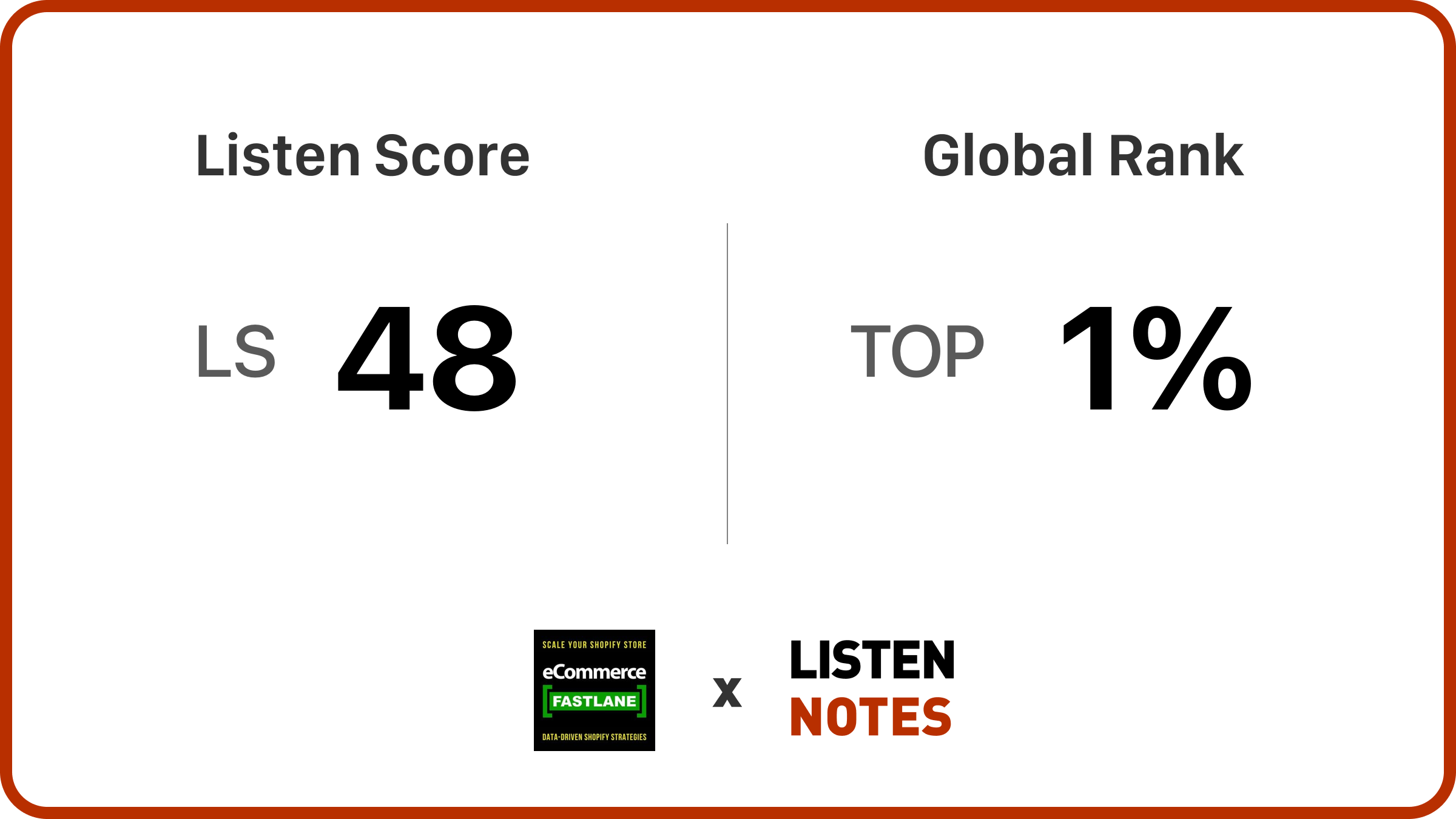
Over Black Friday weekend 2025, 34.7% of chargebacks claimed the order never arrived, against 27.2% claiming fraud, according to Chargeflow data on about 3 million disputes. For most Shopify stores, the first fix before Black Friday 2026 is delivery evidence, not more fraud screening.
The chargeback your Black Friday customer files in January probably won’t say stolen card. It will say the box never showed up, and the only thing that wins it is evidence you either captured in November or didn’t.
When I was inside Shopify, the chargebacks that turned into the ugliest merchant conversations were rarely the stolen card ones. They were the orders that went to a PO box or an address with a name and no street number, followed weeks later by a customer telling their bank they never got it. New data released today says that pattern isn’t an edge case at peak season. It’s the main event.
Chargeflow, the AI chargeback platform used by more than 20,000 merchants, studied about three million disputes across the last three peak seasons for the first reports from its new Chargeflow Data Lab. In a normal week of 2025, 19.9% of chargebacks claimed the order never arrived. Over the 2025 Black Friday to Cyber Monday weekend, that share climbed to 34.7%, while fraud claims fell from 37.8% to 27.2%. The same shift showed up in 2023, 2024 and 2025. On the busiest weekend of the year, “never arrived” outnumbered fraud.
Whether you’re doing $10K months or $1M months, that changes the order of your Black Friday prep. Fraud screening protects you from one kind of chargeback. “Never arrived” disputes are won or lost on what your fulfillment process recorded, and most of them won’t reach you until after the holidays.
Disclosure: Chargeflow sponsors the eCommerce Fastlane podcast. This article was not paid for, and Chargeflow did not review it before publication.
Chargeflow announced Prevent 2.0, a new AI model that scans every Shopify order after checkout and before fulfillment for both stolen card fraud and friendly fraud, alongside the first published reports from its Chargeflow Data Lab. The company says the new model catches 10 times more fraud and abuse than the previous generation of Prevent. That comparison is Chargeflow measuring itself against its own earlier product, so treat it as a direction of travel rather than a benchmark against other tools.
The practical changes are worth knowing even if you never install it. Prevent 2.0 now scores third party fraud (stolen cards) in the same decision as friendly fraud, flags delivery patterns such as different names shipping to the same address, and gets better at spotting known repeat disputers, meaning buyers with a history of disputing orders they received, even on their first order with your store. That last part draws on what Chargeflow calls Network Intelligence, the dispute history it sees across its merchant base. A single store can’t see that a customer disputed three orders at three other stores last December. A network can.
Nothing changes at checkout. The scan runs after the order is placed and before it ships, so a risky order gets blocked before it goes out the door. Existing Prevent users move to the new model automatically. Co-founder Avia Chen, who serves as chief product officer and chief marketing officer, framed the release around the idea that this kind of protection should come switched on rather than arrive as a project the merchant has to manage.
Pricing is the other news. Merchants new to Prevent get their first 1,000 scanned transactions free through December 31, 2026, then pay $0.10 for each order or subscription renewal scanned. For context, the Chargeflow listing on the Shopify App Store still showed Prevent at $0.20 per order on October 21, the day before the announcement, so the release price is half of what the listing showed. Merchants new to Chargeflow install the app and activate Prevent; existing Chargeflow merchants activate it inside their account.
“Never arrived” claims rose from 19.9% of chargebacks in a normal week to 34.7% over Black Friday weekend 2025, overtaking fraud, and Chargeflow found the same shift in each of the three peak seasons it studied. The data tells you what changed. It doesn’t tell you why, and it can’t separate a parcel that genuinely went missing from a customer who received the box and disputed it anyway. Both land in the same bucket, which card networks call “item not received.”
My read, and it is a read rather than a finding, is that three things stack up over that weekend. Carriers are running at peak volume, so more parcels are late, misrouted, or left in exposed spots. Shoppers are buying from more stores they’ve never used before, so the instinct is to call the bank rather than email a brand they don’t know. And a “never arrived” claim feels less like an accusation than “I didn’t make this purchase,” which makes it the easier claim to file whether the parcel arrived or not.
The useful part of the data is what happens next. Chargeflow reports that “never arrived” disputes which went to a decision were won about 1.5 times as often when the merchant had strong evidence such as proof of delivery. It didn’t publish the underlying win rate, so you can’t turn that into a dollar figure for your store, but the direction is clear: this is a claim you can answer, and the answer gets built at fulfillment time.
Shopify spells out what that evidence looks like. In its guide to responding to chargebacks and inquiries, Shopify lists the carrier name and tracking number, proof of delivery (ideally with a signature or photo), proof that the item went to the address entered at checkout, and any delivery notifications sent to the customer. If you’re on Shopify Payments, the tracking details, and for some carriers the carrier’s delivery photo, are attached to your response automatically. Shopify also notes that requiring a signature on high value orders significantly strengthens your position on these disputes.
One honest caveat. If a parcel really did go missing, the right move is to refund or reship before the customer reaches their bank, not to fight it. The goal here is to win the disputes you should win, not to win every dispute.
Most Black Friday chargebacks show up weeks after the sale: for orders placed over BFCM weekend 2025, the median dispute arrived 25 days later, and 9 in 10 had arrived within 64 days, which lands around the end of January. Measured by daily pace, January ran about 1.4 times as many disputes as November. Chargeflow shared those timing figures with us ahead of the launch, alongside the Data Lab’s first reports.
Line that up with how a chargeback works on Shopify and January becomes a cash flow month. When a chargeback opens, the disputed amount and a chargeback fee ($15 in the US) are withdrawn from your account immediately. You usually have 7 to 21 days to respond, and the card issuer can take up to 75 days to decide. Win, and the money and fee come back. Lose, and you’re out the product, the payment, and the fee.
The part merchants miss: Shopify calculates your chargeback rate on disputes filed, not disputes lost. Winning a dispute doesn’t remove it from your rate, and a high rate can affect your Shopify Payments standing and your eligibility for features such as the Shop app. That’s the argument for preventing disputes rather than just winning them. A proactive “your order was delivered” message, a clear way to reach you, and a fast reship for a genuinely lost parcel all keep disputes from being filed at all.
The timing also stretches further than most brands plan for. In our read of the BFCM 2026 data report, roughly 80% of shoppers say they start before Thanksgiving week, so peak season disputes can start arriving before December and keep coming through January, well after your holiday support help has moved on. I’ve said on the podcast that January is the month I worry about every year, and this data is the reason.
Shopify Protect covers fraud-based chargebacks on eligible Shop Pay orders for US stores, which means a “never arrived” dispute is generally yours to answer with evidence, while Shopify Shipping‘s built-in tools help you collect that evidence before the order leaves the building. Knowing which side of that line a dispute falls on decides whether you need any new tool at all.
The conditions on Shopify Protect matter. Coverage applies to US stores on Shopify Payments with Shop Pay, and to protect an order you fulfill it within seven days with a tracking number from a supported carrier. When a protected order gets a fraud-based chargeback, Shopify covers the order cost and the fee and handles the dispute. When the claim is “it never arrived,” you’re back to tracking, delivery confirmation, and your shipping policy.
It’s also why cross-border orders deserve their own plan. On episode 489 with Signifyd’s Nicole Jass, I described the international orders I watched go sideways at Shopify: PO boxes, addresses with no number, and a customer who almost certainly received the parcel saying they never got it. Nicole’s response was the line I keep coming back to: “it’s almost like those bad guys know where the boundaries are.” Her guidance on that episode was that stores still in their early growth years are usually well served by Shopify Protect and the built-in rules, unless the type of business, cross-border shipping included, pushes them outside what Protect covers.
The evidence side starts upstream of the dispute. When Vibhor Chhabra, Director of Product for Shipping and Taxes at Shopify, joined me on episode 418 about the Shopify Shipping launch, he put the first link in the chain plainly: “If you don’t have address validation at checkout, then it’s possible that some of your orders will not be delivered on time.” He also described automatic shipping insurance on labels bought through Shopify Shipping, which at the time of that September 2025 episode covered domestic US packages up to $200, so a parcel that is genuinely lost in transit doesn’t come out of your margin. That’s what makes a fast reship affordable instead of a fight. A parcel that’s insured and delivered to a validated address is a far easier conversation, with the customer and with the bank, than one that isn’t.
For a composite store doing 3,000 orders at an $85 average over BFCM weekend, Chargeflow’s mix points to roughly five “never arrived” disputes for every four fraud disputes, which means delivery evidence protects more revenue than another layer of screening does. Here is how I’d work it through.
This is an illustrative composite built from the kind of store I worked with at Shopify, not a real brand, and every number below is an assumption rather than an observation. Picture a US apparel brand doing about $2.5M a year on Shopify Payments with Shop Pay turned on. Over BFCM weekend it ships 3,000 orders at an $85 average, about $255,000 in revenue. Assume 0.5% of those orders are eventually disputed. That’s 15 chargebacks.
Apply Chargeflow’s weekend mix and roughly 5 of those 15 claim “never arrived,” about 4 claim fraud, and the rest are spread across “not as described,” credit not processed, and the other reasons. At $85 plus the $15 fee, that’s around $1,500 pulled from the account, most of it between mid-December and the end of January. Some of the four fraud claims may be covered by Shopify Protect if those orders were eligible Shop Pay orders fulfilled on time. None of the five “never arrived” claims are. They’re won or lost on the store’s own evidence.
Be honest about the size of that gap: five disputes against four is about $100 of difference in this example, not a landslide. The case for evidence first doesn’t rest on the count. It rests on the fact that Protect can absorb some of the fraud claims and none of the “never arrived” ones, and that the same delivery evidence also stops disputes from being filed at all, which is the only thing that keeps them off your chargeback rate.
Now price the screening option. If the brand were new to Prevent and scanned all 3,000 weekend orders, the first 1,000 would be free and the remaining 2,000 would cost $200 at $0.10 each. That’s modest. The bigger number is on the other side of the ledger. On episode 489, Nicole Jass said Signifyd‘s studies put roughly 73% of declined orders as good customers. That’s Signifyd’s broad average across the rules and tools merchants use, not a measurement of Prevent, so I won’t apply it directly. But if any post-checkout screen cancelled 1% of this store’s weekend orders and only half of those were real customers, that’s 15 lost orders, about $1,275 of revenue the brand already paid to acquire, which is close to the whole chargeback exposure.
My call for this store: spend the first two hours on evidence, not screening. Turn on address validation, put tracking on every order, require a signature above a value threshold that fits your margins, publish a shipping policy in your store policies so Shopify can include it in “product not received” responses, and send a delivered notification on every order. Then pull last season’s dispute reasons. Add a screening tool only if fraud, not “never arrived,” led that report, or if the brand ships cross-border outside what Protect covers. You might disagree if your own data skews to stolen cards. That’s the point of checking it.
Before Black Friday on November 27, every Shopify store should pull last season’s chargeback reasons, tighten delivery evidence, and set aside cash for January, then add tools only where its own dispute mix justifies them. What that looks like depends on where you are.
If you’re under about $500K a year, your stack is probably already enough. Turn on Shop Pay and Shopify Protect if you’re a US store, use address validation and tracked shipping on every order, respond to every dispute with the evidence Shopify lists, and resist the urge to install anything new in November. A store at this stage with a dozen apps and no tracking on its cheapest shipping option has its priorities backwards.
Between $500K and $2M is where I’ve watched the most merchants hurt themselves with premature complexity, and chargebacks are a classic trap. One tool, chosen from your own dispute report, is the ceiling for this season. If “product not received” and “not as described” lead your report, an automated representment tool that builds and submits the evidence for you fits the problem. If fraud leads, or you ship internationally, a screening layer earns its place. Our roundup of chargeback management software for DTC brands lays out how the main options differ on prevention, alerts, and recovery.
Above $2M, and especially as you head toward eight figures, network data starts paying for itself, because the volume of first time customers is too high to judge one at a time. This is where it makes sense to compare a post-checkout scan like Prevent 2.0 against a guarantee model like Signifyd’s, where the vendor takes the liability on approved orders. Ask both for their cancellation rate on your categories, not just their catch rate.
If you sell subscriptions, add one more line to the list. Chargeflow’s release names “I didn’t mean to renew” as one of the common non-fraud claims, and Prevent 2.0 scans renewals as well as first orders. A renewal reminder before the charge and a cancellation flow that actually works will prevent more of those disputes than any screen.
At every stage, do two things this week. Check your January cash position against last year’s dispute volume, and put the response windows on someone’s calendar for December and January, not just November.
Turn on Prevent 2.0, or any post-checkout screen, only after your own dispute history shows friendly fraud or repeat disputers costing you more than the scan does, because every order it holds or cancels trades chargeback savings against good customers you turned away. The network view on repeat disputers is genuinely something a single store can’t build. The question is the price you pay in false positives to use it.
A few things I’d ask Chargeflow before switching it on for Black Friday. What share of orders does Prevent 2.0 cancel versus send to verification, and can you review a held order before it’s cancelled? How does the 10 times figure translate to a store whose disputes are mostly “never arrived” rather than stolen cards? What happens to pricing for merchants who start on the free 1,000 scans once December 31 passes? Whatever the answers, watch your cancellation queue closely for the first two weeks and spot check the orders it stops.
If you already run Chargeflow with Prevent switched on, you’re moved to the new model automatically with nothing to change, so the work is checking your rules before peak traffic rather than installing anything. If you don’t, the free 1,000 scans through December 31 make a low cost test on early November orders, before the weekend that matters most.
Run the 18 month filter on all of this and one thing survives regardless of which tool you choose. The “never arrived” shift held across three straight peak seasons. Evidence captured at fulfillment, delivered notifications, and fast reships for genuinely lost parcels will still be what wins those disputes in 2028.
About one in three Black Friday chargebacks claim the item was never received, based on Chargeflow’s study of roughly three million disputes. Over the 2025 Black Friday to Cyber Monday weekend, 34.7% of chargebacks said the order never arrived, compared with 19.9% in a normal week. Fraud claims moved the other way, falling from 37.8% to 27.2%, so “never arrived” outnumbered fraud on the busiest weekend of the year. Chargeflow found the same shift in 2023, 2024 and 2025. The figures are Chargeflow’s aggregate across its merchant base, so your own mix may differ, and the data does not separate genuinely lost parcels from customers who received the order and disputed it anyway. Pull your own chargeback reasons from last November through January in Shopify admin to see where your store sits.
Black Friday chargebacks usually show up weeks after the sale, with many arriving in January. Figures Chargeflow shared ahead of its launch show that for orders placed over BFCM weekend 2025, the median dispute arrived 25 days later and 9 in 10 arrived within 64 days, around the end of January. By daily pace, January saw about 1.4 times as many disputes as November. On Shopify Payments, the disputed amount and the chargeback fee ($15 in the US) are withdrawn as soon as a chargeback opens, you usually have 7 to 21 days to respond, and the card issuer can take up to 75 days to decide. Plan your January cash and keep someone responsible for dispute responses through the end of the month.
No, Shopify Protect generally does not cover “product not received” chargebacks, because it is built for fraud-based chargebacks on eligible Shop Pay orders. Coverage applies to US stores using Shopify Payments, and an order is protected when it is fulfilled within seven days with a tracking number from a supported carrier. When a protected order receives a fraud-based chargeback, Shopify covers the order cost and the chargeback fee and manages the dispute. A customer claiming the parcel never arrived is a different dispute type, so the merchant answers it with tracking, delivery confirmation, and shipping policy evidence. Stores shipping internationally should also note that Protect’s coverage is limited to US stores, which leaves cross-border orders to the merchant’s own processes.
The evidence that wins a “product not received” chargeback on Shopify is proof that the parcel was shipped to the checkout address and delivered, ideally with a signature or delivery photo. Shopify lists the carrier name and tracking number, delivery confirmation, verification that the item went to the address the customer entered, and any delivery notifications you sent. On Shopify Payments, order details, tracking, and for some carriers the delivery photo are added to your response automatically, so focus on what only you have, such as customer emails and your shipping policy. Shopify recommends signature confirmation for high value orders, and Chargeflow reports that “never arrived” disputes with strong evidence were won about 1.5 times as often.
Chargeflow Prevent 2.0 costs $0.10 per scanned transaction, after a free allowance for merchants who are new to Prevent. Those merchants get their first 1,000 scanned transactions free through December 31, 2026. Each order or subscription renewal that Prevent scans counts as one transaction. Existing Chargeflow merchants can activate Prevent inside their account, and merchants already running Prevent move to the new 2.0 model automatically with nothing to switch on. New merchants install Chargeflow from the Shopify App Store and then activate Prevent. On October 21, 2026, the day before the announcement, the App Store listing still showed Prevent at $0.20 per order, so confirm the current price on the listing before you budget for peak season.