

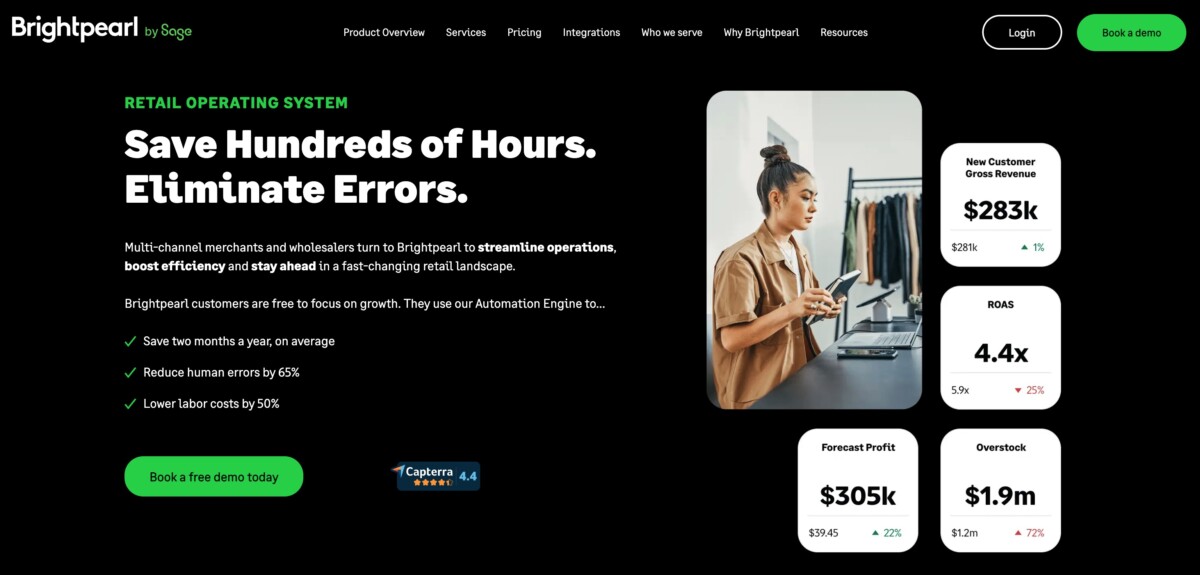
You’re not losing sleep over a single failed Klaviyo flow—you’re seeing the cracks in your whole operation. When every tool feels like a silo, data lives in twenty places, and app sprawl is quietly eroding your margins, leadership stops being about growth and starts being about triage. Manual workarounds are killing your team’s productivity. Most leaders underestimate the “complexity tax” until they’ve spent months paying it: mismatched inventory, missed orders, and death-by-spreadsheet at scale.
That’s where Brightpearl steps in. I’m Steve Hutt, and at EcommerceFastlane, we focus on showing fellow Shopify leaders what actually drives sustainable scale. After years of watching brands struggle before and after the “ERP moment,” I’m here to break down whether Brightpearl delivers the operational clarity, speed, and control that scaling brands must have.
You want fewer moving parts. You want teams spending time on high-level projects, not patching process holes at 7pm. This review is built for founders and operators who need clear, outcome-driven answers on Brightpearl’s real impact, not another feature checklist.
What I’m going to show you: how Brightpearl unifies your inventory, automates your workflows, and becomes the force multiplier your ops team never had. I’ll challenge common assumptions, flag hidden trade-offs, and give you a tested perspective straight from the front lines of DTC growth. Ready to see if Brightpearl is the platform that finally wrestles your chaos to the ground? Let’s get a real verdict on whether it’s worth the investment—for your bottom line, your sanity, and your team’s focus.
Choosing Brightpearl goes beyond reading a feature list or watching a sales demo. This platform is built for operators who are tired of reactive work, drowning in spreadsheets, and constantly patching together siloed tools. But Brightpearl isn’t the right call for every business stage or mindset. I’ve seen too many brands waste months wrestling with a system that didn’t fit their needs—don’t be one of them.
Let’s make this simple. Here’s the no-BS breakdown of who Brightpearl fits like a glove (and who should stay away).
Brightpearl shines when complexity hits hard and old playbooks fall apart. The right fit is about where your business is, not just what you want to automate.
If you want details on why wholesalers and multi-channel merchants pick Brightpearl over other retail management systems, the Why Brightpearl page covers core decision factors.
Let’s save you six months of frustration if these sound familiar.
For real, unfiltered insights into why users sometimes bounce, the user review breakdowns on Software Advice are packed with lessons from those who tried (and sometimes failed) to fit Brightpearl to their model.
Here’s how to do your gut check before scheduling a single demo:
If you’re nodding “yes” to most, Brightpearl will simplify your life and unlock scale. If your answer is “not yet,” focus first on channels and products—and keep Brightpearl in your sights for when you hit that next inflection point.
Remember, the right system should serve your growth plan—not the other way around. For deep dives and head-to-head comparisons with other major platforms, the Brightpearl vs TradeGecko and Brightpearl vs NetSuite pages break down where Brightpearl excels—and where it might not fit your playbook.
You’re not here for window shopping—you want the “why” and “how” behind Brightpearl’s reputation as a backbone for fast-scaling Shopify brands. Let’s ditch the generic feature parade and zero in on which bottlenecks Brightpearl smashes, the core levers it gives real operators, and how this system transforms the ugly parts of scaling into smoother, higher-margin processes.
Every founder talks about “working on the business, not in it,” but when you’re staring down a pile of manual tasks, those words are just noise. Brightpearl’s Automation Engine delivers on the promise of true hands-off workflows. It’s not just about eliminating data entry or basic alerts—it’s about reducing manual handling across orders, fulfillment, inventory balancing, and accounting.
Brightpearl isn’t replacing your staff, but it does refocus attention on strategy and creative work instead of order cleanup and spreadsheet patching. This is the secret sauce behind profitable scaling—consistently taking bottlenecks off the table before they burn out your team.
If you’re running multi-channel and multi-warehouse, you know the pain of guessing on stock, overselling, or tying up capital in dusty surplus. Brightpearl’s inventory features aim to end that “death by spreadsheet” cycle forever.
Brightpearl turns inventory planning from a scramble into a data-driven, near-autopilot task. If you want a deep dive, the Shopify Inventory Management Guide shows the system’s playbook for channel and warehouse assignment by region or operation type.
Here’s the before/after most operators see:
Scaling brands need flexibility. Today you’re on Shopify and Amazon, by Q4 maybe you’re live on TikTok Shop or pushing events on Instagram. Brightpearl’s direct-to-Shopify integrations come ready for high-mix ops.
What makes this plug-and-play approach matter?
Their ecosystem isn’t just Shopify, either. You’ll find integrations spanning Amazon, eBay, BigCommerce, Xero, and ShipStation. Yes, every competent ops leader will want to explore these connections before the next campaign hits.
For agencies or consultants, the instant-on integrations plus API flexibility mean you can stitch together new projects and automations without living in Zapier workarounds or custom dev purgatory.
Running a growth brand takes more than counting orders. You need fast, clear signals—ideally without digging through ten reports or fighting old data. Brightpearl’s analytics layer isn’t just pretty graphs; it’s a control tower for channel profitability, customer cohorts, and actual demand trends.
Here’s why this changes decision-making:
For operators facing that “spreadsheet hell” each monthly close, this is clarity in a box. The ability to trust your numbers, especially for cash flow and purchasing, means you’re making choices based on what’s truly happening, not guesses.
Let’s keep it blunt. Here are the scaling killers Brightpearl takes out:
Check how brands deploying Brightpearl experience reduced bottlenecks in practice: this Brightpearl review for Shopify scaling showcases real-world details.
The software is robust, but what sets Brightpearl apart is the layering of expert guidance and 24/7 support on top. If you’ve ever been burned by “install it and you’re on your own” SaaS, know this: Brightpearl’s team leads implementation and onboarding with a 97% success rate—about as close as it gets to guaranteed. You’ll have a live retail consultant to map your processes, train your team, and keep you ahead of coming ops needs. For fast-movers and high-ticket brands, hand-holding here is oxygen.
For the scaling Shopify leader, this isn’t “just software”—it’s a serious upgrade to the command center your brand runs on. What’s the main bottleneck you’re trying to crush this year? Want to see if Brightpearl is your secret weapon? Share it below.
Let’s drop theory and zoom in on what really matters when your operation outgrows stitched-together Shopify apps. If your team is juggling inventory between Brightpearl and multiple Shopify stores, you’re after more than “syncing.” You want real-time control, bulletproof data accuracy, reliable pricing logic, and peace of mind at scale. This is where most mid-market brands either break through to operational maturity or get stuck with mounting errors, mounting costs, and frustrated staff. What follows is a practical look at how Brightpearl stacks up as your retail OS, what scaling brands pay, and why team buy-in either makes or breaks your investment.
Brightpearl’s Shopify integration is built with scale in mind. You’re not just syncing orders and inventory—it’s a two-way operation that covers nearly every workflow critical to profitability.
Operators running multiple Shopify storefronts or mixing B2C and B2B will appreciate how Brightpearl acts as “mission control” across channels. For a detailed breakdown on technical workflows, the official Brightpearl Shopify Integration outlines every touchpoint.
Here’s what this solves: no more hunting for inventory numbers between portals, no more double-shipping or late “out of stock” calls, and fewer headaches reconciling Shopify payouts against accounting.
If you’re scaling, price matters—especially when tech spend starts eating into margin. Brightpearl’s pricing isn’t published like most entry-level apps because it’s tiered based on order volume, number of users, and the modules you need. Still, you get leverage: the bigger you get, the less Brightpearl costs as a percent of revenue.
To put that in perspective: If you’re burning $7K/month stitching together inventory, order routing, shipping, and accounting tools, Brightpearl centralizes it and cuts down extra admin work by hours every week. It’s not about a cheaper line item—but about getting months of wasted hours back and cutting “hidden” costs.
Want to compare packages or see where you’d fall in the pricing matrix? The Brightpearl pricing details break it down by business size. For a read on user sentiment and ROI at different growth stages, check the Capterra overview.
Brightpearl isn’t plug-and-play for startups. This is an enterprise-grade retail platform, and treating it like another “install and forget” Shopify app is a recipe for disappointment. Here’s what I tell every ops lead considering the jump:
For ops-heavy teams juggling Shopify, Amazon, and DTC, you’ll notice team morale improve when the midnight manual reconciliation sprints stop. Staff can focus on strategic work, not chasing spreadsheet errors or cross-checking order status. The flip side? The brands that dismiss the adoption piece often underuse what they’ve paid for.
Teams that take the setup seriously and commit to a clean process overhaul see the return fast: faster order cycles, less firefighting, and cleaner books at month’s end.
Here’s the short version for the ambitious operators at the table:
If you run a Shopify brand that’s moving from scrappy to serious, this is the OS that takes you from scrambling to scaling—just don’t underestimate the importance of rollout and training. What’s your biggest operations headache right now? Box it up and see how Brightpearl’s integration + automation stack would cut the noise.
Every platform has its sweet spot and its stumbling blocks. If you’re eyeing Brightpearl as the operational backbone for your next leap, you need a clear view of both its strengths and its trade-offs—the kind you only hear at the mastermind table, never in marketing copy. Here’s the real rundown: where Brightpearl excels, what holds it back, who else is on the shortlist, and the bottom-line verdict for seven- and eight-figure operators.
Brightpearl earns praise for more than just ticking off feature boxes. The power here is in what it unlocks for serious operators—freeing time, driving profit, and cutting out busywork that strangles growth.
Here are the standouts you’ll notice right away:
For in-depth user experiences and confirmation on these strong points, you can review the extensive feedback on Capterra.
No software is flawless. These are the sticking points where Brightpearl users, and frankly, most honest ops leaders, find themselves hesitating or working around gaps.
From my experience and community consensus, here’s where you might stumble:
Want a no-spin look at where operators run into issues? Take a look at trusted user critiques on Software Advice and TrustRadius.
This isn’t a one-horse race. The decision gets real when you map Brightpearl against other heavyweights in retail ops and ERPs tailored for Shopify.
Below are main contenders to weigh, each appealing to a slightly different archetype or workflow need:
If your operation is at the “organized chaos” phase—multiple channels firing, inventory living everywhere, and your ops lead is swamped with spreadsheets—Brightpearl is the right tool to make the pain stop. It’s not about swapping one set of features for another. It’s about buying back workdays, aligning your numbers, and making your ops bandwidth a competitive advantage.
The trade-off is clear: this isn’t for the dabblers or deal-seekers. You need a team ready to tear down and rebuild processes, not just flip a switch. Brands that get hooked on automation tend to stay, and look back only to wonder why they didn’t pull the plug on app sprawl sooner.
The pattern I see, reviewing implementation stories and talking to operators in the EcommerceFastlane community, is simple:
If you want control and confidence in your ops layer as you move into eight figures, Brightpearl is where I’d steer the conversation—if your growth is pushing past what app stacks or surface-level ERPs can handle.
Have you run Brightpearl against any of these pros, cons, or competitors? What’s the friction point in your workflow that still keeps you up at night? Let’s get specific below.
Brightpearl stands out as a must-have operating system for ambitious Shopify brands that have outgrown simple apps and disconnected tech stacks. As brands scale, operational complexity, errors, and manual tasks balloon. Brightpearl directly addresses these pain points with powerful automation, real-time data sync, and bulletproof workflows designed specifically for fast-growing ecommerce businesses.
Key findings show that Brightpearl can cut manual errors by up to 65% and slash routine labor hours, allowing your team to focus on strategy, not firefighting. Multi-channel operators benefit from seamless integrations with both Shopify and external platforms like Amazon, eBay, and BigCommerce, moving away from chaos to a more controlled, unified system. Its advanced analytics provide clear, actionable data at your fingertips, making cash flow, inventory, and channel profitability decisions easier and more accurate. Crucially, support and onboarding are top-tier, reducing risk and helping ensure success during your transition.
To make the leap, founders should honestly assess operational pain points and commit a staff member to lead implementation. Success with Brightpearl isn’t about quick fixes—it’s about transforming processes and investing in long-term growth. Audit your current workflows, decide where automation would deliver the biggest impact, and prepare your team for training and change. This approach pays for itself with improved order accuracy, faster cycle times, and increased team bandwidth.
Next steps: If you’re facing mounting Shopify spreadsheet headaches, inventory mishaps, or multi-channel confusion, consider booking a live demo or starting a pilot program. Engage your ops lead in conversations about specific bottlenecks, explore the resources linked in this review, and map out how Brightpearl’s features can eliminate your company’s unique pain points.
By taking these actionable steps, founders and marketers will not only solve today’s operational headaches—they’ll lay a strong foundation for sustainable, smart growth as their brands move into the next stage of scale.
Brightpearl is a retail operating system that connects your Shopify stores, inventory, orders, and accounting into one platform. It helps brands scale fast by reducing manual work, boosting accuracy, and making it much easier to manage multi-channel sales.
Brightpearl is ideal for established Shopify stores with high order volumes, multiple sales channels, or complex inventory. Brands making seven or eight figures, those running warehouses, and businesses needing deep automation will see the most benefit.
Brightpearl automates repetitive tasks like order routing, inventory updates, shipping, and payments. This automation can save your team hundreds of hours a year and cuts manual errors by over 60%, making daily work faster and less stressful.
Yes, Brightpearl offers plug-and-play integrations for platforms like Amazon, eBay, BigCommerce, Xero, and popular shipping carriers. Its open API also lets you connect almost any major ecommerce, fulfillment, or accounting tool as your business grows.
Brightpearl does require some upfront effort, including onboarding and data cleanup, but it comes with expert support and hands-on training. Most teams get comfortable within a few weeks and see big improvements in accuracy and speed soon after.
Yes, smaller brands with simple setups usually don’t need Brightpearl’s full power. Shopify’s built-in tools or lightweight apps are better for early-stage stores with low order volume or single-channel sales.
A common myth is that Brightpearl is a quick fix you can set and forget. In reality, it works best when you have a plan, dedicate a project owner, and actively manage the rollout for your team.
Start by identifying bottlenecks like recurring errors, manual data entry, or multi-channel headaches. Assign a team member to own the project, clean your existing data, and request a demo from Brightpearl to see how automation fits your real workflows.
Brightpearl’s analytics bring all your data—like sales, inventory, and customer trends—into real-time dashboards. This helps you spot growth opportunities, solve cash flow issues, and make smarter purchasing and marketing decisions based on facts, not guesses.
After reading AI-generated or general overviews, dig deeper into real user reviews and Shopify forum discussions to see how Brightpearl handles your industry’s specific challenges. Ask about both positive results and pain points during your demo, and make sure it matches your business needs before you invest.





