

A thoughtful and strategic blogging approach can help you cultivate customer relationships, drive consistent inbound traffic, and provide a platform to promote new products and services while strengthening your brand.
Blogging also allows you to get creative with different types of content, tell customer stories, educate readers, or target keywords and phrases to help your website rank higher on Google.
Blogs can be highly beneficial to your business, but many ecommerce sites struggle with blogging because it takes time, care, and effort to get it right. Simply publishing a few posts monthly isn’t enough to regularly bring traffic to your site.
That’s why we’ll closely examine eight ecommerce blog examples. We’ll review the blogs’ topics, how they relate to what the shop sells, and what each blog does well. These blogs have unique strengths that will help support you as you develop your own, no matter what topics you’d like to cover or what format you’re going for.

Great Jones makes cookware for home chefs. Its goal is to empower people wherever they are in their culinary journey. Featuring bright-colored Dutch ovens, retro-inspired baking dishes, and ceramic-coated frying pans, the shop also offers a “Potline” you can text for recipe suggestions.
The Great Jones blog is called Digest and is featured as one of the four main categories in the top navigation of the brand’s website. This is an incredibly creative approach to blogging: the design includes hand-painted watercolors and mimics the look of folio-style recipe cards.
Digest has two main categories. Great Ones tells the stories of “humans we admire—and an exploration of why they cook, not just how.” The Great Jones team interviews each guest while they make a meal of their choosing—usually one that captures their story and personality. Each blog post, written in the first person, features images of the whole experience.
Digest has a “Recipes we love” section for hungry readers that features recipes created by different chefs, the stories behind them, and the Great Jones items you’ll need to make the dish.
These two approaches to storytelling make for unique content. Posts also create a sense of community for readers: Digest feels more like a home kitchen than an ecommerce blog. It’s a place where readers can come to read a story, learn about a culture, or try out something new next time they’re in the kitchen. The mouth-watering recipes also give readers a reason to return to the website for recipe ideas, even if they aren’t shopping.

Consider the Wldflwrs is a fine jewelry shop in Nashville. The brand sells heirloom-quality pieces, from bridal jewelry to everyday essentials.
The brand’s blog, Wldflwr.ink Journal is a simple, well-designed collection of articles. Topics range from new products and a guide to cleaning fine jewelry, teammate features, product spotlights, and roundup guides. The shop also sends an email newsletter announcing new products and sales.
Wldflwr. ink Journal is simple and helpful, striking a good balance between educational content and product promotion. For example, the post “4 C’s of a Diamond, Explained” provides an infographic to help readers visualize what the different grading criteria look like and mean.
Interviews with staff members create trust and bring a human element to the brand. Customers can read a profile on Annie, the Director of Bridal Sales, for example, to feel more comfortable working with her—especially if they’re purchasing a lab-grown diamond engagement ring online. Celebrity spotlights further flex that trust arm by showing prospective customers that some of their favorite names sport CTWF pieces.
Overall, the journal is simple, well-designed, practical, and helpful for customers looking for more information before purchasing.

Maude sells essentials for sexual wellness. Its brand tenants are quality, simplicity, and inclusivity. Its paired-down product design, good ingredients, and brand messaging contribute to its mission to “make intimacy better for all people.”
The Maudern, Maude’s blog, is key to delivering on that mission. Its accessible, honest articles cover playful topics like “The sex lives of cave dwellers,” and impactful read like “Reconnecting after having kids.” Categories include arts, history, culture, living, dating, people, film, relationships, food and drink, science, health, and sex education. The Maudern is also front and center on Maude’s website, taking a key position in the top navigation.
Building on its core mission, the blog’s articles aim to make topics on sexual health and intimacy accessible to everyone. For example, its post “How common are vibrators, exactly?” uses statistics to help normalize using a vibrator as a tool for sexual health.
The Maudern is such a powerful example because Maude has invested resources to make it an actual learning channel for its customers. Its goal is to make sexual wellness inclusive for all, and The Maudern exists to further that mission. Overall, topics seek to empower readers with information that will make them happier and healthier in the long term. The company also sends out new posts in an email newsletter of the same name to increase the distribution of its content.

The press delivers plant-based goodies like cold-pressed juices and kombucha. The shop also sells soup and juice cleanses and has subscription options tailored to customers’ needs. Its 100% plant-based products strive to support customers’ living “happier, more balanced lives.”
The Press blog, The Squeeze, provides healthy lifestyle tips. Blog post topics range from switching to a plant-based diet to healthy recipes to suggestions for improving digestion while traveling.
Are you Buying Press juices and cleanses to support a nutrient-rich diet? The Squeeze supplements those products with advice that further educates readers on making healthy choices. The blog has a simple, bright, eye-catching design, and the hero images follow the same color palette as the juices they sell.
The posts are packed with information and read as well researched. Some articles even use footnotes to cite sources used to create them. Squeeze also offers resources like a direct line to its in-house nutritionist at the bottom of articles to further build trust with readers.
Aside from healthy tips and tricks, Squeeze features video interviews with influencers. This likely acts as part of its content distribution strategy: the influencers will share the content with their audiences, bringing new readers to the Press website.
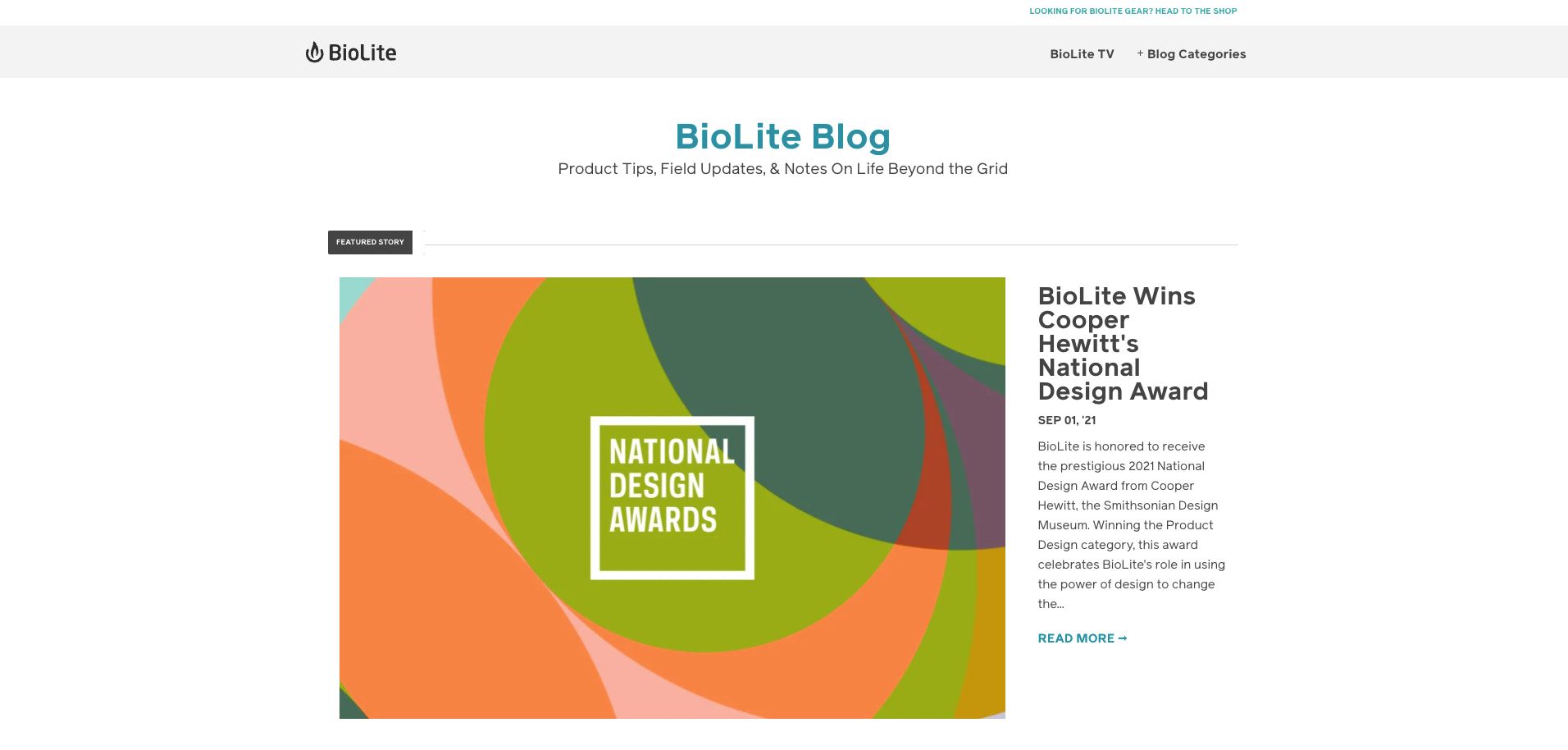
BioLite sells outdoor energy gear like solar panels and camp stoves. The company aims to offset 3 million tons of CO2 by 2025 by providing people with access to clean, renewable energy. Its blog does an excellent job quietly promoting its products and offering value to its readers.
If you’re looking to create a blog that features several types of content and showcases your products without turning into a sales pitch, the BioLite blog is a great example. Read through in-depth guides like “Can you control fire with your mind,” adventure tips, recipes, and product-focused posts that help readers get the most out of their purchases.
BioLite’s blog has a conversational and friendly brand voice, a simple design, and articles that tell stories, educate readers on outdoor activities (starting a fire, anyone?), and offer behind-the-scenes looks at products for prospective customers. It’s a well-rounded, thoughtful approach to blogging that blends infographics, videos, and storytelling into genuinely helpful reads.
Many of its posts fall into the evergreen category, which means readers can bookmark them for future use. They could also rank on Google for certain key terms, which would increase website traffic.
BioLite’s blog excels at guiding and building reader trust. It brings in experts to tell the story, offer advice, or walk you through the “how-to,” and they’re always cited somewhere in the post.

Au Lit Fine Linens sells everything to help you get a good, relaxing night’s sleep: luxury sheets, bath linens, pillows, and more. Starting in 1981, the shop uses high-quality natural fabrics from Europe and crafts them in its factories.
Its blog, Between the Sheets, follows this same trend, offering helpful articles that discuss how readers can improve sleep quality. This content is directly relevant to its target audience and its products, which is an immediate plus because it means users who click through and read are already somewhat qualified to buy.
Between the Sheets is one of the more search engine optimization–driven blogs, which means its content strategy centers around getting its blog posts to rank on Google.
Many posts mention their products as a solution to the problem the searcher is trying to solve. For example, if users are trying to figure out what duvet size is suitable for their bed, there’s a good chance they’re in the market for one.
Between the Sheets strikes the right balance between promotional and helpful so that when it does drop a product link, it feels more like a recommendation from a friend than a sales pitch.
It also has a second blog, which is found under a Tips & Advice section, featuring content created to help users make buying decisions. There might be overlapping content between this section and the main blog. Still, by giving this content its destination, it can focus on helping interested buyers make informed purchasing decisions.

Who Gives a Crap offers sustainable paper products. Starting with a line of recycled and bamboo toilet paper, the company has since expanded to “forest-friendly” paper towels and facial tissue. Who Gives a Crap donates 50% of its profits to improving sanitation and building toilets in developing countries.
Talking Crap has a simple design, custom hero images with bright colors, and quick-hit posts. Topics include a letter from the CEO, updates on the company’s progress in building toilets, the history of paper towels, and an answer to the question, “What is bamboo toilet paper?” The style of each post is different, but most are quick reads. The team even wrote one in the style of a poem.
Building on the brand’s silly personality, its voice and tone are comedic, lighthearted, and fun. For example, the “History of paper towels” post starts with: “Paper towels are one of the few things specifically made for clumsy people. Red wine on shirts, soda on keyboards, pasta sauce on our new white carpet … Eric!”
Talking Crap makes talking about toilet paper fun. It also provides accurate information for consumers looking to learn more about why sustainable paper products are essential and what they are. Posts also offer crafting ideas for leftover toilet roles—puppy chew toy, anyone?
If you’re stuck on how to build a blog around the products you offer, this one should inspire thoughts on how to create something that’s brand adjacent, witty, and honestly helpful.
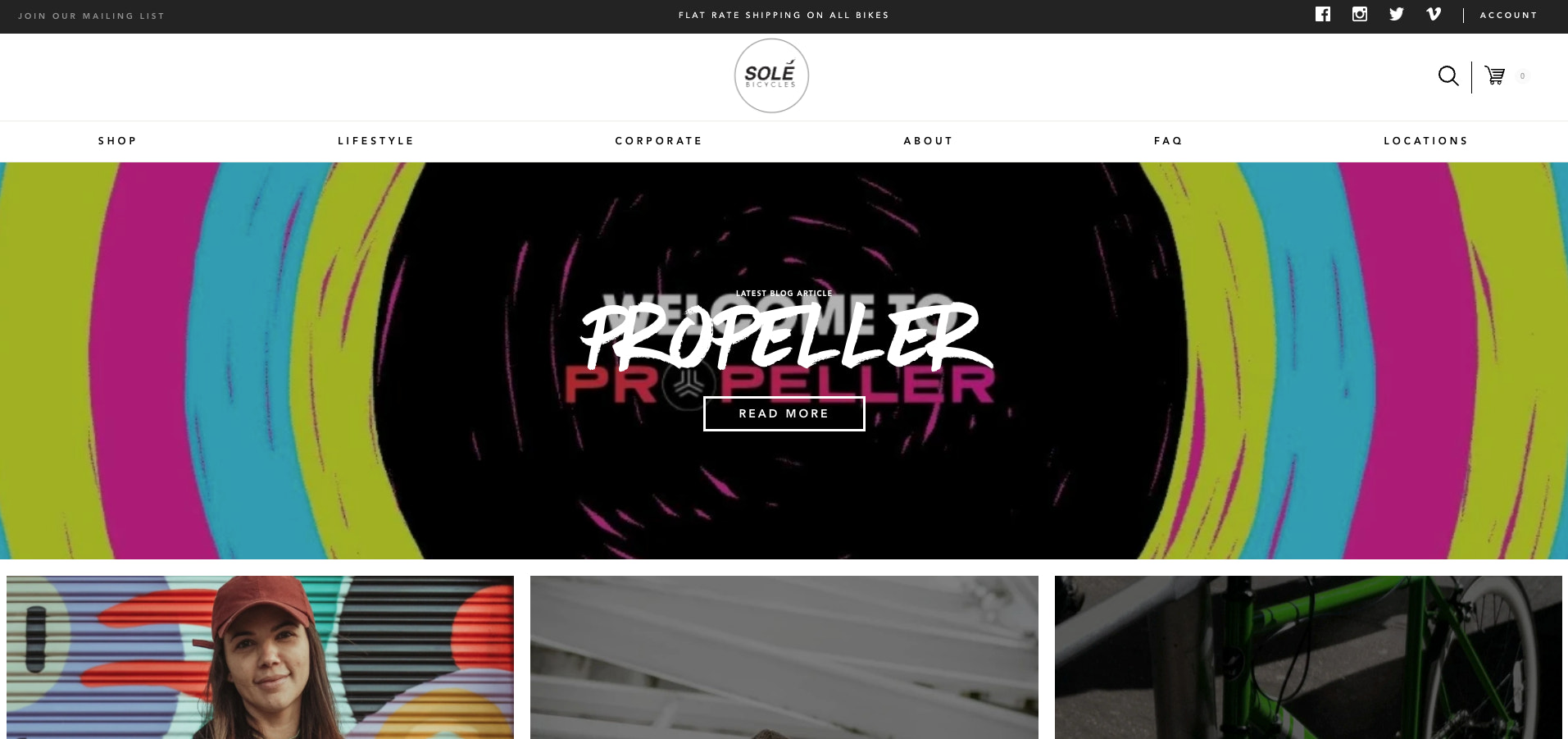
Solé Bicycles is a California-based shop that sells bikes and accessories. The shop will ship bikes to your doorstep, 90% assembled, so customers can avoid the pain of going into a bike shop.
Solé’s blog uses a visual storytelling approach, using vibrant images, videos, and curated playlists instead of words.
The posts are rich and dynamic (even though short), evoke good vibes, and showcase Solé bikes front and center. From launching new collections to showing the custom art on the outside of their retail stores, articles are engaging because they’re so different and fun to look at because they’re creative. A post about its Chasing Aloha collection even comes with a playlist ready to put you in the perfect mindset.
Solé also produces a series called Fixtape, curated playlists on Soundcloud from different artists. These are perfect for summertime cruises along the boardwalk.
A vital part of an organic marketing strategy is building a blog, whether educational, SEO-driven (get traffic from Google!), simply fun, or chock full of stories from customers or influencers.
Organic marketing is when you advertise on your channels, so you’re not paying for eyeballs—you’re creating content on your social media channels or your website without putting dollars behind them. That means it’ll take longer for folks to see your content, but as you gain traction, the traffic or people coming to look at what you’ve created compounds on itself. Over time, potential customers will look at your content for free to help them make purchasing decisions, big or small.
To reach your content, you need to develop a blog strategy. In addition to developing your strategy, your blog posts will be more successful if they accomplish these four things.

Brands that can attract an audience through education, inspiration, or entertainment can generally benefit from blogging in some form or other.
Blogging has a lot of potential if you want to build your brand, increase email subscribers, establish relationships with potential customers, and drive sales. But it can only yield these benefits when you put consistent effort into every post.
The ecommerce blogs we examined are all from vastly different industries, targeting different audiences, each using different approaches that worked well for them. As you get started, remember that your blog will need to speak to your customers and target audience in ways that are most interesting and accessible to them. Setting up some interviews with your customers to gauge what they’re interested in is a great place to begin.
Blog examples showcase blogs that are exceptionally good at providing engaging and interesting content for readers. A key part of an organic marketing strategy is to build a blog, whether it’s educational, SEO driven, simply fun, or chock full of stories from customers or influencers.
Your blog should contain content that your target audience wants to read. Entertain them, educate them, share news, or do a little of all three.




