

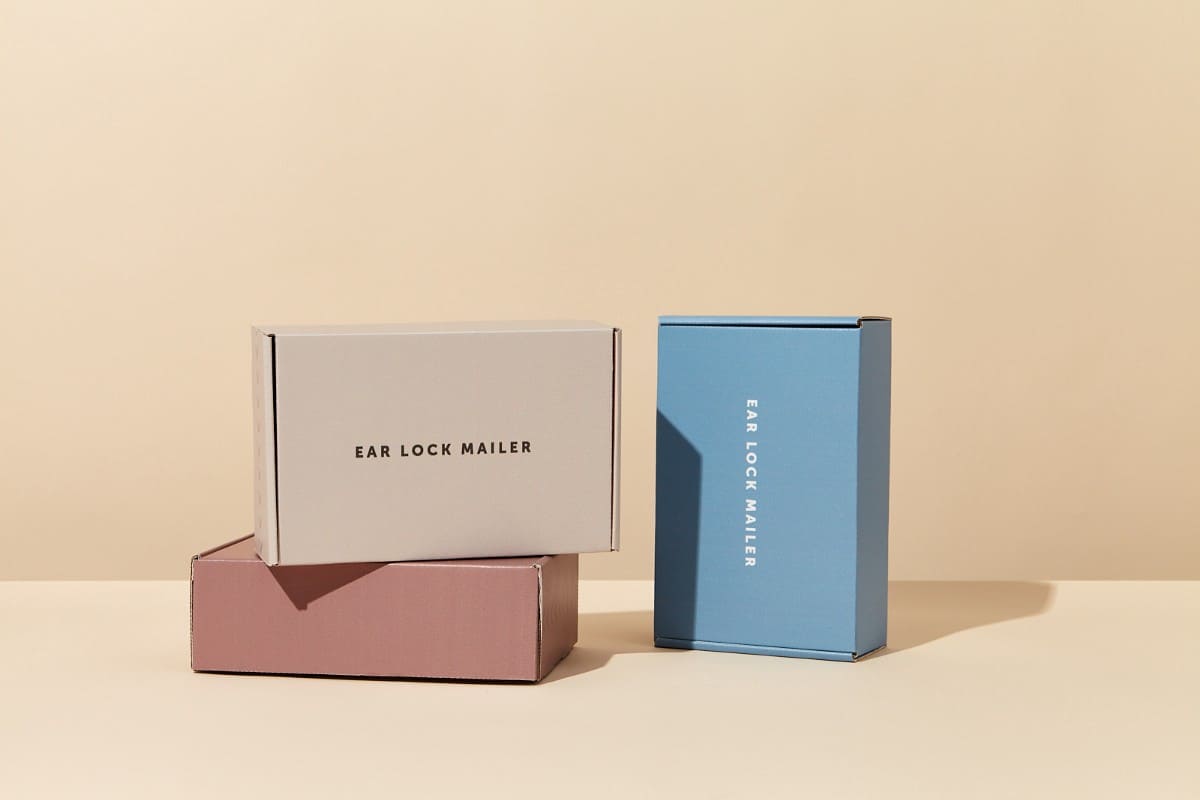
Custom packaging increases repeat purchases by turning delivery into a branded moment customers remember, but the payback is clearest for direct to consumer brands with repeat purchase models and mid to higher priced products. Under roughly $50K a year, branded inserts and tissue usually beat full custom boxes.
The return on better packaging tends to show up in your retention data before it ever appears in share counts or impressions, in whether the customer actually comes back.
Most Shopify brands obsess over traffic. They run ads, test creatives, tweak product pages, and spend hours optimizing their checkout flow. All of that matters. But there’s one moment in the customer journey that almost everyone ignores — the moment someone actually receives their order.
That moment is where repeat purchases are either won or lost.
Think about it from a customer’s perspective. They ordered something online. They waited for it. And now it’s sitting on their doorstep. What happens next — what they see, feel, and experience when they open that package — is going to shape how they think about your brand from that point forward.
A plain brown box says nothing. But a custom-printed box that reflects your brand — your logo, your colors, your personality — says everything. It tells the customer that you take your business seriously. That you thought about them beyond just the transaction. And that feeling, subtle as it seems, is exactly what makes someone come back and buy again.
Let’s break down why this happens, and how you can make it work for your store.
In physical retail, a customer walks into your store and the environment does the selling before they touch a single product – the lighting, the displays, the way things are arranged. In ecommerce, you don’t have that. The closest thing you have is your packaging.
When someone receives your order, that box is the first time your brand exists in their physical world. Before that, everything was pixels on a screen. Now it’s real. And how that moment feels will either confirm what they hoped about you, or quietly disappoint them.
Brands that understand this use packaging as a deliberate extension of their identity. The size of the box, the quality of the print, the finish on the material – none of it is accidental. It’s all communicating something to the customer, whether you intend it to or not.
So the real question isn’t whether your packaging sends a message. It’s whether you’re in control of what that message is.
Repeat purchases don’t happen because someone remembered your store URL. They happen because something in the experience stuck with them. Maybe the product was great. Maybe the delivery was faster than expected. Or maybe — and this is where most brands leave money on the table — the unboxing itself was genuinely satisfying.
There’s real psychology behind this. Opening a package activates the same anticipation-reward cycle as unwrapping a gift. When your packaging amplifies that feeling — through clean design, a structured interior, a personal touch like a thank-you card — it creates a positive emotional association with your brand.
That association matters more than most people realize. Because the next time that customer needs something you sell, they’re not searching cold. They’re thinking of you specifically. They already know how the experience feels. And they want to feel it again.
First purchases are always a gamble for the customer. They don’t fully know you yet. But if your packaging arrives in perfect condition, looks exactly as premium as your website suggested, and feels considered rather than rushed — you’ve just eliminated the biggest barrier to a second purchase: uncertainty.
Custom packaging that looks professional signals that you’re a real brand, not just a dropshipper. It builds the kind of quiet confidence in a customer that makes them say, without thinking much about it, “I’d order from them again.”
Memory is everything in brand loyalty. Customers don’t return to brands they remember vaguely — they return to experiences that left an impression. A well-designed custom box, paired with clean tissue paper, a branded insert, or even just a simple thank-you note, creates a complete experience that sticks.
This is especially important for new customers. Their first order is essentially a trial. If the packaging alone makes them feel like they made a good decision, you’ve already won half the battle before they’ve even tried the product.
Here’s something most Shopify brands haven’t considered: the inside of the box is the highest-attention real estate you have. The customer is already engaged, already holding your product. A small printed card with a “welcome back” discount code, a product recommendation, or a loyalty message placed right inside the box gets read. Compare that to an email sitting in an inbox with a 2% open rate.
Brands that add a simple next-purchase incentive inside their packaging consistently see higher repeat order rates within the first 60 to 90 days. It’s not a complicated strategy — it just requires intentional packaging.
When someone shares their unboxing on Instagram or TikTok, they’re not just promoting your product — they’re endorsing the full experience. The people who discover your brand through that content already have a warm introduction. They know what it looks like to receive your order. And when they buy for the first time, they’re more likely to stick around because their expectations are already set correctly.
This creates a cycle: great packaging earns shares, shares bring new buyers who are already pre-sold, and those buyers — because of the same packaging — tend to come back.
There’s a difference between packaging that looks nice and packaging that works. Here’s what matters when you’re making decisions about your boxes:
Material that fits your product. A rigid box makes sense for a high-end cosmetic or gift item. Kraft works well for brands leaning into sustainability. Corrugated is the right call for heavier products or anything fragile. The material sets the tone before the box is even opened.
Print quality that matches your brand standards. If your website looks premium but your box looks like it came off a budget printer, there’s a disconnect — and customers feel it even when they can’t articulate it. Sharp, accurate colors and clean printing reinforce the story your product page already told.
Sizing that actually fits. An oversized box filled with excess filler looks careless. A box that fits your product correctly communicates precision and reduces the risk of damage in transit — both of which matter to the customer.
Something personal inside. It doesn’t have to be expensive. A small card — even a simple one — that acknowledges the customer, offers them something, or just reflects your brand’s voice goes a long way. It’s the difference between a transaction and a relationship.
Eco-conscious options where possible. A growing number of buyers pay attention to how brands handle their environmental footprint. Sustainable materials aren’t just a nice-to-have anymore — for many customers, they’re a deciding factor in whether to order again.
The good news is that switching to custom packaging doesn’t require a massive upfront investment or a complicated process. The starting point is simpler than most brands expect.
Before anything else, get clear on what you want the customer to feel when they open your box. Premium? Playful? Minimal and clean? That answer should drive every decision — the material, the color, the finish, what you put inside.
From there, work with a manufacturer who understands ecommerce. Urgent Custom Boxes is built specifically for brands like yours — they supply custom printed packaging to both new and established companies across cosmetics, food, home fragrance, and ecommerce. More importantly, they’ll walk you through the process: from choosing the right material and box style, to reviewing a 3D mockup, to ordering samples before you commit to bulk production. That last step matters more than people think — seeing and feeling the actual box before you place a large order saves a lot of regret later.
Once your packaging is dialed in, test what you put inside it. Try a discount insert for one month, a product recommendation card the next. Track which version drives more second purchases. The data will tell you exactly how much your packaging is contributing to your retention numbers.
The results of upgrading to custom packaging tend to show up in a few predictable ways. Customer reviews start mentioning the packaging — which almost never happens with generic boxes. Social media posts and stories featuring the order increase without any prompting from the brand. Return rates go down because products arrive better protected and presented.
More importantly, repeat purchase windows shorten. Customers who had a standout unboxing experience tend to come back sooner. Not because they were pushed by a retargeting ad, but because the experience itself reminded them that this was a brand worth returning to.
And over time, that compounds. A 5% improvement in repeat purchase rate might not sound dramatic in isolation. But when you calculate that across an entire customer base, factoring in higher lifetime value and lower acquisition cost for returning buyers, the impact on revenue is significant.
Custom packaging isn’t a luxury that only big brands can afford. It’s a decision that any Shopify brand — at almost any stage — can make, and one that pays back in ways that are genuinely measurable.
Your box reaches your customer at the exact moment they’re most engaged with your brand. The product is in their hands. Their attention is completely yours. What you do with that moment either deepens the relationship or lets it go flat.
If you’re ready to make that moment count, Urgent Custom Boxes is a practical place to start. Request a sample, review the quality firsthand, and see what it feels like to hold a box that actually represents your brand the way it deserves to be represented.
Because in ecommerce, the brands that keep customers coming back aren’t always the ones with the best product. They’re the ones that made the customer feel something — and packaging is often where that feeling begins.
Custom packaging can increase repeat purchases, but the effect is conditional rather than guaranteed. It works by raising perceived value and creating a memory the customer carries to the reorder decision. Survey data shows nearly 40% of online shoppers have shared a product image after unboxing, and 60% are more likely to share when an order arrives in a gift like box rather than a plain one, which fuels both loyalty and new customer acquisition. The lift is strongest for direct to consumer brands with a repeat purchase model and for higher priced, higher consideration products. Be wary of blogs claiming a fixed “50% repeat rate increase,” since that figure rarely traces to a primary source. Treat packaging as one retention lever among several, not a standalone fix.
For most stores under roughly $50K a year, full custom printed boxes are usually not worth it yet, and branded inserts are the smarter first move. At that stage, branded tissue, a printed sticker, and a thank you card inside a standard mailer capture most of the emotional payoff for a fraction of the cost. The risk early on is premature complexity: spending on packaging before product market fit and unit economics are solid. Minimum order quantities have fallen and some suppliers now offer no minimum runs, so custom is more accessible than it used to be, but the spend should stay proportionate to your average order value and margin. Once you are reliably getting repeat orders, usually past $50K a year, custom mailers start to earn their place.
Put one clear next step inside the box, not five. The single most effective insert is a printed card with one ask: a welcome back discount code, a recommended companion product, or a loyalty reminder. The customer is holding your product at peak engagement, so a focused message lands. A card cluttered with multiple offers gets ignored the same way a cluttered email does. Pair the insert with a thank you note in your brand voice so the moment feels personal rather than transactional. Then reinforce that same offer in a post purchase email a few days later, so the doorstep message and the inbox message say the same thing. The insert and the email work together; they are not substitutes for each other.
Custom packaging cost varies widely by box type, material, finish, and order volume, so the honest answer is to request quotes rather than rely on a single figure. As a rough hierarchy, mailer boxes cost less than rigid presentation boxes, kraft and corrugated cost less than specialty finishes like foil or soft touch lamination, and per unit price drops as volume rises. Suppliers that offer no minimum order let you start with a small run to test before committing capital, which matters most for newer brands. Before any bulk order, request physical samples from two or three suppliers so you can compare board, print, and fit directly. The cost that actually matters is cost relative to your average order value: a $4 box on a $30 product is a different decision than on a $120 product.
No, branded inserts do not replace post purchase emails, and treating them as competitors is a common mistake. The insert works on the doorstep at the moment attention is highest, while the email follows up at the right interval days later, when the customer has used the product. Post purchase email remains one of the highest performing channels in ecommerce, with well built flows generating substantially higher revenue per recipient than average campaigns. The strongest approach runs both and keeps them aligned: the same offer or message appears inside the box and in the email, so the two reinforce each other rather than sending mixed signals. Use the insert for immediate emotional impact and the email for timing, repetition, and measurable follow up.
Measure packaging by testing one SKU at a time and tracking repeat purchase rate against a baseline over 30 to 60 days. Change one variable per test, since altering the box, the insert, and the email at once makes attribution impossible. Watch three signals: reviews that mention the packaging unprompted, social posts and stories featuring the order without you asking, and a shorter gap between the first and second purchase. Generic packaging almost never gets mentioned in reviews, so any uptick in packaging comments is a meaningful early signal. Keep in mind that the return often shows up in retention data before it shows up in shares or impressions, so do not judge a packaging change purely by social activity. The real scoreboard is whether the customer comes back sooner.





