

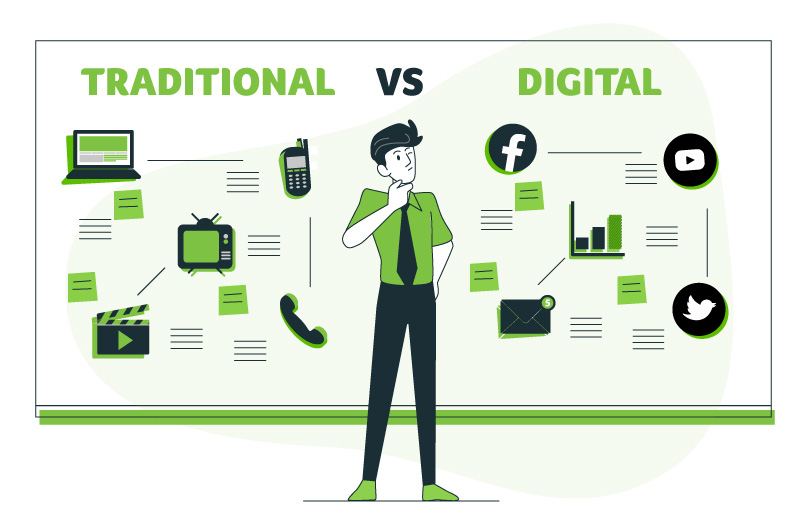
Link acquisition has never been binary.
“Traditional” link building – cold outreach, guest posts, resource-page pitches – grew up in an era when PageRank-like signals dominated and editorial review was lighter. Digital PR evolved later, borrowing newsroom discipline: timely stories, original datasets, expert quotes, and collaborations that earn coverage because they’re newsworthy, not because a placement fee changed hands. In 2025, with AI-driven ranking systems and tougher spam policies, the gap between these approaches is wider – and the risk/reward profile is very different.
Two shifts define the new baseline. First, Google’s 2024 policy and ranking updates tightened the net on manipulative distribution: scaled content abuse, expired-domain abuse, and site reputation abuse (the “parasite” pattern) are all explicitly policed now. That matters because old-school link game relied on sheer numbers, borrowed some clout, or barely watched over third-party stuff. AI Overviews are changing up how we find stuff on search engines by picking out a few key sources from a bunch of them. You don’t just need a link; you need to be the link a synthesis wants to quote. There’s also a long-running recalibration of link weight. In late 2023 Google’s Gary Illyes said links hadn’t been a “top-3” factor “for some time,” a reminder that raw backlink volume can’t compensate for weak usefulness or trust. Links still help discovery and rankings, but they now compete with a broader set of quality and intent signals.
Reaching out for real, useful stuff is still a go-to even if your guide, tool, or method is like a missing puzzle piece, a smart pitch can still get you those editorial links you’re after. Even though it’s kinda overlooked, internal linking is super key for making stuff easy to find and clear on topics But the old, unclear stuff from the past is super fragile now.
Large-scale guest posting aimed at passing PageRank – especially with keyword-stuffed anchors – has been on Google’s radar for years and is treated as a link scheme when executed at scale or without clear editorial value. Private Blog Networks aren’t named explicitly in policy, but they fall squarely under the umbrella of unnatural links intended to manipulate rankings. If value exchange is involved, links should be qualified (rel=”sponsored”/nofollow), and user-generated links should use ugc. Anything else risks being ignored, devalued, or penalized.
The second failure mode is reliance on weak host oversight. If your strategy depends on publishing third-party pages on high-authority domains with minimal editorial control, you’re now inside the definition of site reputation abuse – Google began enforcement on this policy in 2024. Even if you escape a manual action, algorithmic systems are improving at discounting the authority “borrowed” by such pages.
Digital PR earns links by making news or evidence. the asset is the story: data that settles a debate, an expert’s take that makes a complicated change clear, a teamwork that brings to light info we’d never see otherwise editors mention it ’cause it upgrades their piece; AI systems reference it ’cause it boosts their AI-generated response. That alignment with editorial usefulness and contextual relevance is exactly what recent updates are trying to reward.
In real life, the top-notch Digital PR formats in 2025 are:
All these sources are legit. They don’t play the PageRank game when there’s a deal or sponsorship going on, make sure to label the links right.
When AI Overviews appear, the first thing a user sees is a synthesis with a few “learn more” sources. That makes it clear and elevates the standard for being cited. Reports also say Google’s trying out more ads in their AI stuff, which means less space for regular ads. Being a top-notch source, not just someone who’s relevant, is more valuable than ever. Digital PR’s bias toward unique evidence and clarity maps well to this environment; generic guest posts do not.
Before any outreach, create assets that deserve links: benchmarks, teardown analyses, failure case libraries, calculators, mini-datasets from your product telemetry (aggregated/anonymous), or FOIA-based datasets. These are the sources editors and AI systems need to justify claims.
Once you have the story, pitch contextually: target reporters who’ve covered the topic in the past 6–12 months, reference their prior work, and offer a quote + embargoed charts. This is not the same as “guest post?” blasting – it’s newsroom workflow.
Clarify your topic hubs and use descriptive anchors that mirror user intent (“cost breakdown,” “limitations,” “setup steps”). Give your authors full bios and link to verifiable profiles. These steps increase the odds that your page looks like the right citation.
If there’s compensation or a value exchange, label it. If you host third-party content, keep real oversight or block it from Search. Treat guest contributions as editorial features (with standards), not link vehicles.
Count the publications that matter to your buyers and peers, not just the domains. Track the proportion of links embedded in paragraphs (vs footers/boilerplates), branded mentions without links (still useful for entity-level reputation), repeated citations of your recurring studies, and visibility as a “learn more” source in AI Overviews for priority queries. Correlate all of this with assisted conversions and direct/brand search growth. That paints a truer picture of impact in 2025’s search reality.
Treat digital PR like a full-on product line, not just a one-off thing. A tight, productive team is made up of a strategy lead who picks the stories and angles, a data analyst/researcher who digs into datasets and surveys, an editorial designer who crafts charts and tables, a PR operator who handles usually, a monthly plan sets aside money for one big investment and one quick-turnaround investment we’ve got the cash for the research, whether it’s through survey panels or buying data, plus we’ve budgeted for design work and a little extra for expert fees. A media database, a simple CRM/PR pipeline, survey tools, and a stack for analysis that lets you rerun or build on a study without having to start over from the beginning.
Greenlight stories with a quick scorecard: Novelty (is there a fresh angle?), Evidence (credible data/method), Who it helps/hurts (clear audience stakes), Specificity (tight claim, not vague trends), Window (time-sensitive hook), Originality (can others easily copy?), Reusability (series potential), Title test (compelling headline in 12–14 words), Yield (likely number of quality placements). Kill ideas that fail on evidence or novelty, even if they pass the headline test; they won’t earn citations from serious editors.
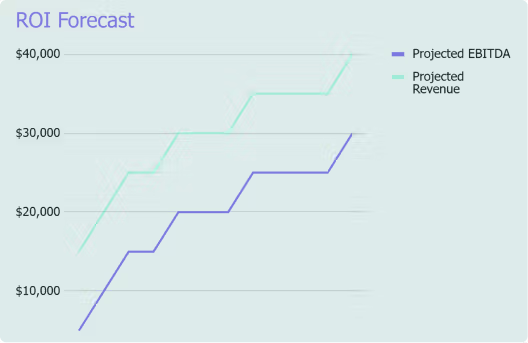
Forecast before you build. Expected visits ≈ (projected impressions × realistic CTR) across target publications. Expected links ≈ (placements × in-body link rate). Pipeline ≈ visits × qualified-visitor rate × conversion to meaningful action (demo/trial) × ACV (or LTV for self-serve). Add an assist multiplier for content that reliably shows up in multi-touch paths (benchmarks, calculators). Use conservative baselines for first runs; after two cycles, replace assumptions with cohort medians. This model prevents “viral-or-bust” thinking and helps you justify repeatable series that compound.
Most stories have a stronger second life when localized. Convert units, currencies, and examples; add regional quotes; and carve the dataset into country-specific cuts. Build press lists by language and vertical, then syndicate with staggered mini-embargoes to avoid identical headlines landing on the same day. Package micro-assets (single-chart posts, carousel slides, short explainers) so partners, communities, and newsletters can pick them up with minimal friction – each a new pathway for qualified referral traffic and new, context-rich links.
If a launch underdelivers, salvage fast. Split the story into narrower angles aimed at specialty outlets; publish a methods note that clarifies constraints (editors trust transparency); or convert the dataset into a tool (calculator, lookup) that naturally attracts deep links over time. If facts change, issue a visible correction and notify editors – owning the update often earns a second wave of coverage. Finally, run a tight retro: did we miss timing, proof, or stakes? Fix the weakest link first (often the headline and visual lead), then relaunch a refined cut rather than abandoning the asset.
If “works” means durable visibility that survives core updates and earns real audience trust, Digital PR wins. It produces links that are context-rich, policy-compliant, and editorially defensible – exactly what Google’s systems aim to surface, and exactly what AI Overviews prefer to cite. Traditional outreach still has a place when it amplifies truly helpful resources and when it’s done with restraint and integrity. What no longer scales is the middle: templated guest posts, thin listicle insertions, and authority-borrowing on loosely overseen hosts. The opportunity now is to build the sources everyone else – journalists, analysts, and AI systems – wants to cite.
Material from the website https://buylinkco.com/
Traditional link building focuses on placements through outreach, guest posts, and resource pages. Digital PR earns coverage by creating newsworthy assets, like original data, expert commentary, and timely explainers. In 2025, Digital PR aligns better with Google’s policies and AI-driven ranking, so it tends to produce higher-trust, longer-lasting citations.
Yes, but not in the old way. Links help with discovery, crawl paths, and credibility, especially when they sit inside relevant paragraphs on trusted pages. They now work alongside stronger signals like content usefulness, intent match, and author/entity trust.
Large-scale guest posts with keyword-stuffed anchors, PBN footprints, and publishing on loosely overseen third-party pages are high risk. Google’s site reputation abuse policy targets “parasite” pages that borrow authority without real editorial control. Value-exchange links must use the right qualifiers, such as sponsored or nofollow, and UGC should be tagged ugc.
AI Overviews surface a short list of “learn more” sources drawn from high-quality evidence. To be cited, your page needs unique data, clear methods, and expert context that answers the query cleanly. Digital PR assets like benchmarks, mini-datasets, and explainers map well to this standard; generic guest posts usually do not.
Create citable proof: benchmarks, teardown analyses, failure case libraries, calculators, and anonymized, aggregated product telemetry. Add transparent methods, caveats, and downloadable CSVs. Reporters and AI systems prefer sources they can verify and quote with confidence.
This is a common myth. Paid placements and sponsorships can be part of a media plan, but links from them should be qualified as sponsored or nofollow. Trying to pass PageRank through paid or lightly overseen pages risks devaluation or penalties and rarely drives durable rankings.
Pick one “evidence gap” in your niche and measure it with a simple, valid method. Publish a clean landing page with 2–3 charts, a short explainer, and a downloadable file. Soft-pitch three reporters who covered the topic in the past year and include a quotable takeaway and an embargoed graphic.
Track in-body link rate, repeat citations of recurring studies, and mentions without links that build entity reputation. Monitor appearances as a “learn more” source in AI Overviews for priority queries. Tie these signals to assisted conversions and branded search growth to see real impact.
Keep real editorial standards for any third-party content you host or block it from search. Use correct link attributes for sponsorships and user-generated content. Give authors full bios, link to verifiable profiles, and strengthen internal linking with descriptive anchors that mirror user intent.
Run Digital PR like a product line. Use a small team with a strategy lead, data analyst, editorial designer, and PR operator, and score ideas with a NEWSWORTHY checklist for novelty, evidence, timing, and yield. Plan a 90-day cycle that ships one quick commentary asset and one data-backed study, then localize, syndicate, and rerun proven series.





