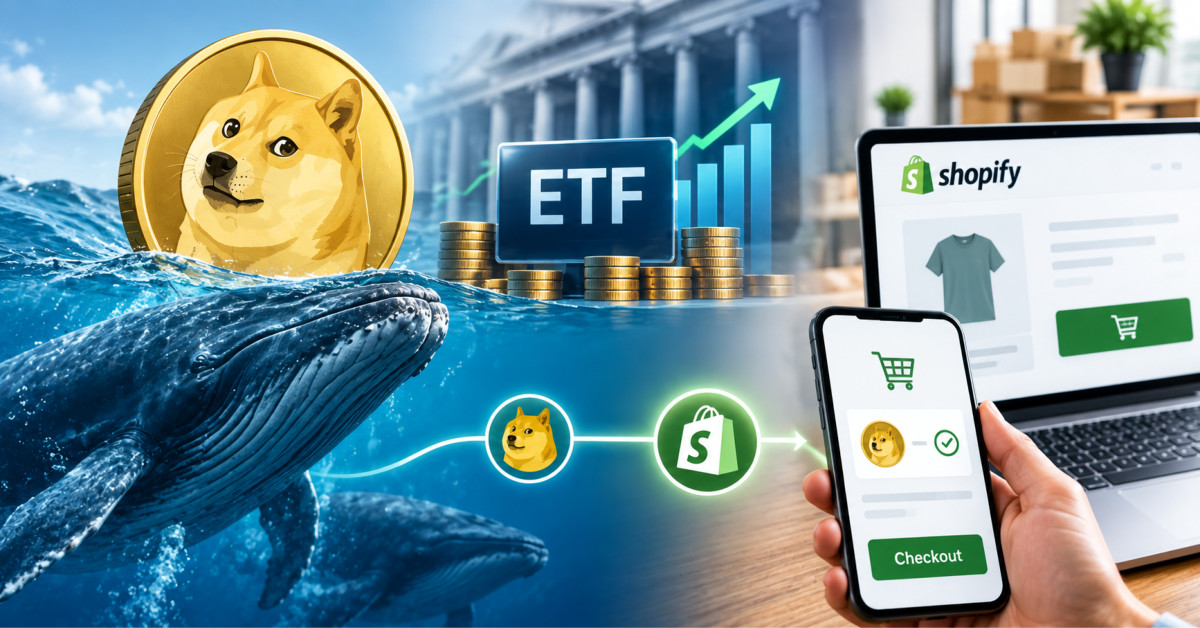
The biggest Dogecoin holders just moved 410 million coins, and connecting those dots to your business, your payments strategy, and that crypto wallet sitting on your phone could completely reframe how you think about digital currency.
Dogecoin began as a playful internet meme with practically zero serious intentions. A few years later, it’s an asset class with its own Nasdaq ETF, a payment method inside Shopify checkouts, and whale activity that makes Wall Street analysts pay attention. For e-commerce entrepreneurs running actual storefronts, these on-chain developments could affect revenue streams more directly in the future.
Over 410 million DOGE shuffled between large wallets last week, and that kind of volume doesn’t happen by accident. On-chain tracking accounts lit up late Tuesday night, flagging a repositioning that retail traders rarely spot in real time (whales don’t broadcast their next move). As of early July 2026, Binance shows the price of dogecoin near $0.075 with a market cap of approximately $10.8 billion, according to the exchange’s historical data. Compare that to the all-time high of $0.7376 from May 2021, and current levels look deeply discounted. The Fear and Greed Index reads a cautious 28, far from euphoric territory.
Ever notice how the price of something you want always jumps right after you finally buy it? According to Changpeng Zhao, founder of Binance, “most people will end up buying Bitcoin at the price they deserve, meaning those who wait for confirmation and hype will pay far more than the early believers who took the risk.” Dogecoin traders face a pretty similar dynamic. Waiting for CNBC headlines often means paying the price whales locked in weeks ago. Back in January, 21Shares, in collaboration with the House of Doge, launched the TDOG Dogecoin ETF on Nasdaq.
TDOG was actually the first to receive formal approval from the SEC for a Dogecoin ETF product. The ETF is also backed by the Dogecoin Foundation. Turning a meme into a regulated asset class gives traditional investors a clean on-ramp. Yet Dogecoin still trades about 88% below its 2021 peak, creating an odd mix of institutional credibility and deeply marked-down prices.
Some analysts have projected 2026 targets in the $0.15–$0.30 range if broader market conditions turn bullish, though forecasts vary.
Pull up a Dogecoin chart on a slow afternoon and the headline is still red. But look past the price and the MACD histogram has been shrinking bar by bar for a while now, which usually means the aggressive selling pressure we saw earlier isn’t what it was. The CVD number, essentially the gap between buyers and sellers in real volume terms, is still negative but it’s been quietly narrowing over the past few sessions. That tells me the bears aren’t necessarily wrong, they’re just not adding to their positions with much conviction anymore.
A lot of traders are still calling for a retest of the recent lows. But if Dogecoin can hold the range it’s been chopping around in and just absorb the remaining sellers, a run toward thirty cents looks less far‑fetched than it did a month ago.
“Shopify merchants may now see Dogecoin listed alongside credit cards and PayPal. Third‑party providers handle the backend, so a customer can pay with DOGE and you settle in dollars or hold the crypto. Those 410 million coins that whales repositioned nudge price, which nudges the spending power of anyone holding DOGE. Then there’s the market basket analysis, a technique that spots which products customers buy together, becomes surprisingly useful when you add crypto payments. Integrating DOGE into your check-out is like adding a new product line to your inventory. DOGE checkout might just unveil a whole new level of consumer habits.
TDOG started trading on Nasdaq on January 22, 2026. Approval from the SEC with backing from the Dogecoin Foundation means this product carries real weight. Institutional custody opens the door for funds that previously couldn’t touch meme coins. A fresh pool of buyers enters, though CZ’s principle suggests many of them will pay the price they deserve after the early positioning finishes. Additional Dogecoin ETFs have already begun trading, which could tighten oversight and deepen liquidity over time. Whale redistribution occurring right after the ETF launch doesn’t look random; it looks like chess moves while everyone else plays checkers.
Dogecoin still trades inside a bearish structure, but ETF adoption, Shopify payments, and persistent whale activity make the market tough to brush aside. For merchants, the practical takeaway is that crypto payments are inching from experimental to everyday, and Dogecoin keeps appearing in the checkout flow.
Depends on your customers and your comfort level with crypto swings. Allowing integration as a payment through a third-party would help simplify the technical aspects of implementation.
Indirectly, yes. Whale moves often rattle the price, which can change how willing crypto holders are to spend. When sentiment flips, spending behavior tends to follow, and offering a Dogecoin payment option can pull in buyers eager to transact with their holdings.
It’s both, and that strange pairing is what keeps it sticky. The meme factor supplies cultural staying power, the ETF adds institutional legitimacy, and the Shopify integration creates real-world utility. For ecommerce, that curious overlap could produce tangible opportunities for merchants who are intrigued by the idea.