Ecommerce customer messaging works best when it answers the question blocking a purchase or resolves a timely post-purchase need. Give shoppers a way to reply, staff that conversation, and measure helpful outcomes alongside sales. Do not treat a phone number collected for delivery as permission to send promotions.
A cart reminder can bring a shopper back to the checkout. It cannot tell them whether the jacket will arrive by Friday unless someone can answer the question.
Once a customer has a jacket in the cart, it’s not that easy to make the final order. They want to know if it will arrive by Friday, and a reminder about the abandoned checkout won’t answer that question. What they need at this point is a useful reply. Ecommerce customer messaging works best when it helps shoppers make a decision at the moment they’re stuck.
The message needs a reason to arrive: answering a question before purchase, following up on an unfinished checkout, or reminding someone when it’s time to reorder. The customer also needs a simple way to respond.
When a shopper asks, “Will this arrive by Friday?” they are telling you what stands between them and the final decision. If you send a message that only brings them back to the product page, you’re leaving them with the same question.
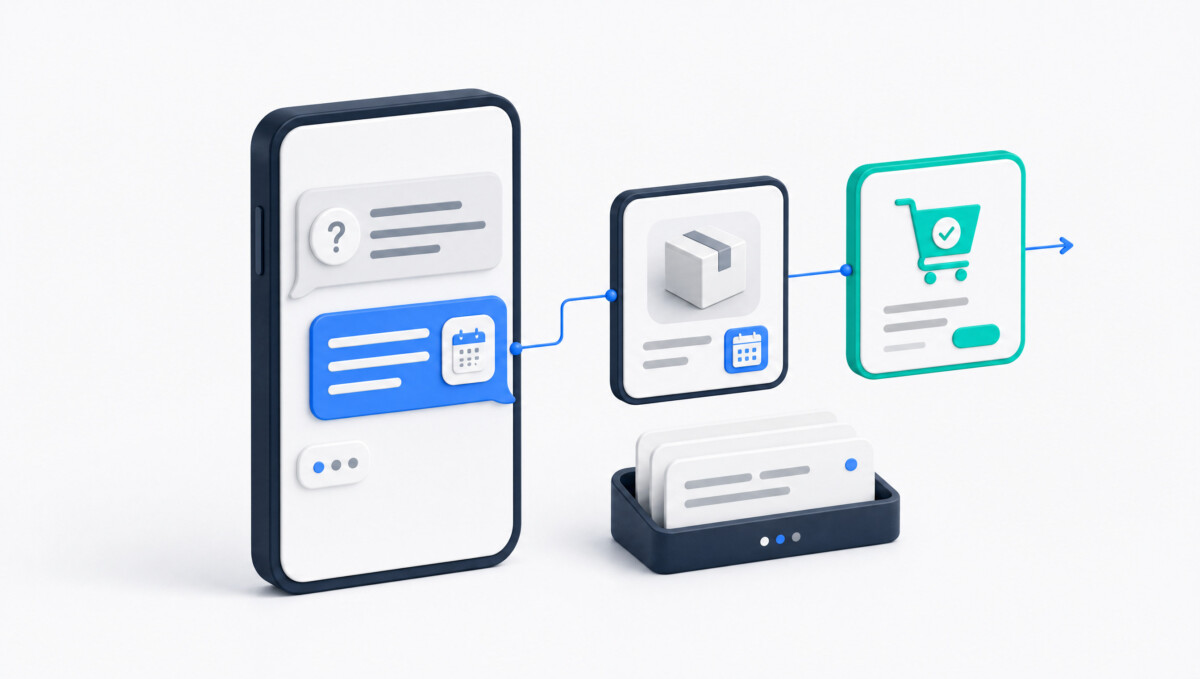
This is why customer messaging needs space for a reply. With Clerk Chat, the customer support team can send and receive messages through SMS, WhatsApp, RCS, and other channels. The conversations are collected in a shared inbox. A customer can ask about the delivery, and someone on the team can answer while the product is still on their mind.
The answer doesn’t have to push for a sale. “Order by 2 p.m. and standard delivery should reach you on Thursday.” That’s a useful answer that gives an accurate deadline for the shopper’s location. If Friday delivery isn’t possible, just say so. In any case, the customer has the information they need to decide.
The best time to message a customer is when you have something useful to say about their next step. Before a purchase, you can deliver an answer about sizing or returns. After an unfinished checkout, the message can be a reminder with a direct link back to the order. But if they reply with a question about delivery costs, answer it before sending another link. Fastlane’s guide to cart abandonment SMS explains how texts can fit into that follow-up.
You can stick by the same principles after the purchase. A skincare brand can send a replenishment reminder when the product is likely to run low. The timing should be related to what the customer bought. It’s not just a date on the marketing calendar.
A shopper asks you a simple question: can they return a dress if the fit is wrong? Before answering, the customer support agent must check the returns policy. If unworn items can be returned within 30 days, the message can say that and include the policy link. If sale items are excluded, mention that, too! Offering a discount without a direct answer to the question would leave the shopper with the same doubt.
In these situations, the customer indicates what’s holding them back. We can address that very concern with a personalized text.
If the team answers the same sizing question all week, the size guide is probably hard to find. If several people ask about delivery costs after reaching checkout, you need to provide this information sooner. The exchanges are useful for overall store improvement.
Now look at the purchases after those conversations, as well as the number of people who opted out. If your customers respond well to a delivery update but leave the list after a promotional text, you have a reason to change what you’re sending.
Speaking of promotional texts, make sure your customers agreed to get them via SMS. If they gave you a phone number for the sake of delivery, you cannot use it for marketing purposes without their explicit permission.
When customers can reply, someone has to handle the messages. Agree on who checks the inbox, when they check it, and who takes over if a question needs help from another team member.
You’re definitely getting routine questions. Save those answers, so nobody will have to rewrite the same thing every single time. Even if it’s a copy-paste answer, the person replying should still check the customer’s order.
And what if the message arrives outside working hours? You can set an expectation for when customers will hear back. This makes the channel manageable for the team and predictable for shoppers.
Remember: a message doesn’t have to lead to an immediate sale. It’s also effective if it prevents a return or corrects delivery expectations. Those are useful outcomes that give your store something specific to improve.
The person handling replies needs room to give an honest answer, even when it doesn’t close the sale. Your customers should trust what the store tells them no matter if they buy today or come back later.
Two-way messaging is useful only when the store can answer accurately, respect the customer’s contact preferences, and handle the reply. These are the questions to settle before launching a workflow.
Use SMS for an abandoned Shopify checkout only when the shopper is eligible to receive that message under the applicable rules and your recorded consent. Keep the reminder relevant to the unfinished purchase and make it easy to return to the checkout. If the shopper replies with a question about fit, delivery, or returns, answer that question before sending another recovery message. Do not assume abandonment means the customer wants a discount. They may be waiting for information. Test the full workflow, including the reply and the point where a conversation should pause further automated follow-up.
A phone number supplied for delivery should not automatically be treated as consent to receive promotional texts. Whether a particular service message or marketing message can be sent depends on its content, the customer’s consent, and the rules in the relevant jurisdiction. In Canada, the CRTC cautions merchants not to assume an abandoned checkout creates permission for commercial messages and recommends securing express consent when collecting contact details. Keep records of consent, separate delivery communications from marketing lists, and have your compliance owner review the program before sending campaigns.
When a shopper replies to a marketing text, answer the question they actually asked and route it to someone who can check the necessary information. A delivery promise needs current fulfillment and shipping details. A return answer needs the policy that applies to the item. Pause an automated sequence when continuing it would ignore an open question. If the issue requires an exception or information the agent cannot verify, give the shopper a clear next step and escalate it. Save the conversation so another team member can continue without making the customer start again.
Measure two-way ecommerce messaging through response time, resolved questions, purchases after conversations, opt-outs, and recurring customer objections. Compare results by message purpose rather than treating all texts as one campaign. A delivery update should be judged partly on whether it reduced confusion; a cart follow-up should be judged on both recovered orders and the quality of replies. Review unanswered conversations and complaints as well. Start with a baseline from your own store, then change one workflow at a time so you can tell whether it improved the customer experience.
You do not need to promise around-the-clock replies if your team cannot provide them, but you do need to tell customers when a person will respond. Assign an inbox owner for each coverage period, use an after-hours acknowledgment that states the expected response window, and make urgent cases easy to identify when the team returns. Test the handoff before sending large campaigns. If customers can reply to a promotional or service message but their questions disappear into an unmonitored inbox, the channel is not ready for more volume.