

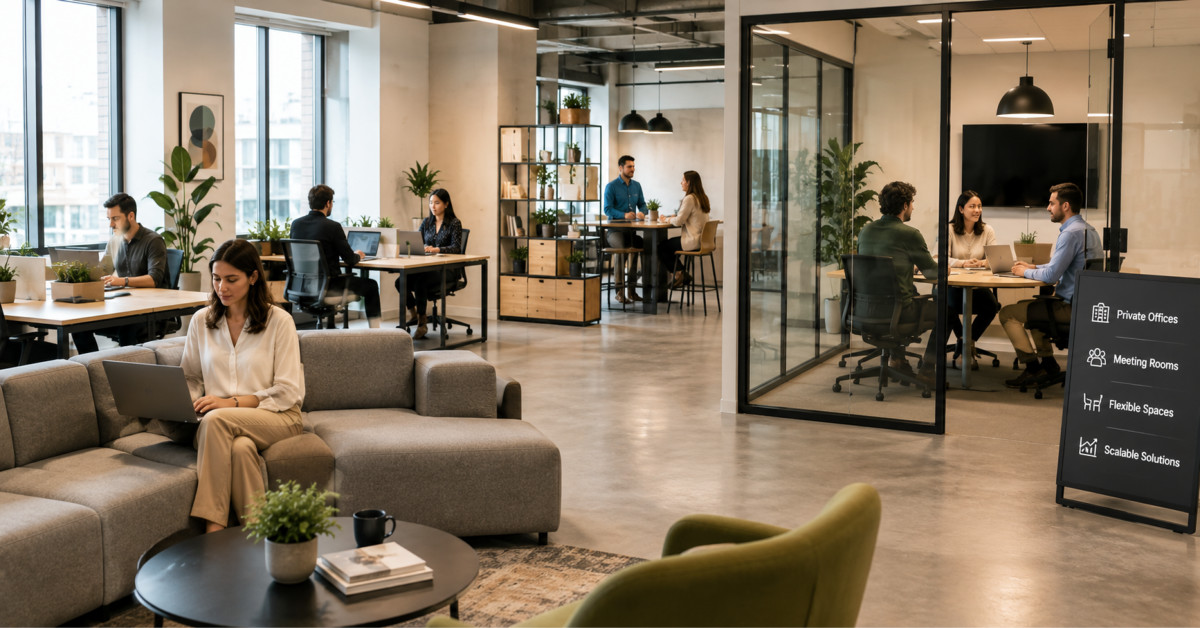
Flexible office space makes business change easier because it lets teams add desks, meeting capacity, private work areas, and shared amenities without committing to a permanent layout before their hiring, hybrid-work pattern, and client needs are clear. It works best when flexibility solves a proven operational constraint, not a vague desire for a nicer office.
The office decision is not about how many desks you can afford today. It is about how much friction your workplace creates when the next hire starts, the client arrives, the team needs to collaborate, or your operating model changes again.
A business can look very different after only a few years. A small team may add new departments, remote employees may begin visiting more often, and growing companies may suddenly need additional meeting rooms or dedicated project areas. That is why choosing an office should involve more than finding enough desks for today. A flexible workplace gives businesses room to respond as priorities change without turning every adjustment into a major relocation. For many companies, a Coworking Space can provide that adaptable environment by offering professional facilities, shared amenities, and layouts that can evolve alongside changing needs. When the workplace can change with the company, growth often feels more manageable, practical, and less disruptive.
Business growth is rarely predictable. A company may hire several people quickly after winning a major client, then maintain the same team size for months while developing new services. Traditional offices can make these changes difficult when every square foot is fixed by a long lease or rigid floor plan.
Flexible office arrangements allow companies to respond more naturally. Additional desks, meeting rooms, or private areas may be available when needed, while unused space does not have to become a permanent expense. That flexibility gives decision-makers more room to plan around actual business conditions instead of trying to predict exactly how large the team will be years in advance.
The way people work continues to evolve. Some tasks require concentration, others depend on group discussion, and certain projects need temporary spaces where teams can gather around shared ideas.
An adaptable workplace can support all of these situations. Private offices may provide focused working areas, while larger tables, lounges, and conference rooms make collaboration easier. As teams change, the layout can often be adjusted without expensive remodeling.
This matters because office design affects daily routines. A workplace that matches how employees actually work can reduce frustration and make it easier for people to move between individual tasks, meetings, and group projects throughout the day.
Hiring decisions sometimes happen faster than real estate decisions. A company may find the right candidate and need a workstation within days, while expanding a conventional office could require planning, construction, furniture purchases, and negotiations.
Flexible office options can reduce that delay. Businesses may be able to add workstations or move into a larger suite as the team grows, helping new employees settle in without creating unnecessary disruption.
This adaptability can also support hybrid teams. Employees who work remotely part of the week may not need permanent desks, but they still benefit from professional spaces when they come together for meetings, training, or collaborative work. The office becomes more responsive to how the workforce is actually structured.
Every business needs a different amount of meeting space. A small company might need a conference room only a few times each month, while a growing team could suddenly require regular client presentations, workshops, or internal planning sessions.
Maintaining several private meeting rooms in a traditional office can be expensive when those rooms sit unused for long periods. Flexible workplaces often make shared meeting facilities available as needed.
That arrangement can help businesses maintain a professional setting without paying permanently for every room they may occasionally use. When an important presentation or larger team gathering appears on the calendar, having access to appropriately sized space can make planning much simpler.
Moving into a traditional office often involves more than signing a lease. Internet service, furniture, utilities, printers, kitchen facilities, reception arrangements, cleaning, and maintenance may all need to be organized separately.
Flexible offices can simplify many of these responsibilities by providing essential amenities as part of the working environment. That allows businesses to concentrate more attention on employees, customers, and operations rather than spending time arranging everyday office services.
For growing companies, this can be particularly useful. Expansion already brings enough decisions, so having practical workplace essentials ready can remove several items from the list. A well-prepared office can feel welcoming from the first working day instead of becoming another ongoing project.
The ideal office location may also change over time. A young company might initially prioritize affordability, while a more established business may later need easier access for clients, employees, or transportation connections.
Flexible arrangements can make location decisions less permanent. Rather than committing to one property for many years, businesses may have more freedom to reconsider where they operate as new priorities emerge.
This can be valuable when entering a new market, building a team in another part of a city, or testing whether a certain business district suits employees and customers. Being able to adapt location without a major long-term commitment gives companies another way to respond to opportunity.
Office expenses can become complicated when rent is only the beginning. Utilities, maintenance, repairs, furniture, internet, cleaning, insurance, and other costs may all need separate budgets.
Many flexible workplaces combine several of these expenses into a simpler payment structure. While every arrangement is different, having more workplace costs grouped together can make monthly planning easier.
Predictability is useful for businesses that are growing or managing changing revenue. Leaders can compare the cost of additional space with hiring plans and operational needs without as many unexpected office expenses. This does not remove the need for careful budgeting, but it can make real estate costs easier to understand and manage.
The best office is not simply the one that fits the business right now. It should also make tomorrow’s changes easier to handle. New employees, different working patterns, client growth, expanding services, and unexpected opportunities can all change what a company needs from its surroundings.
Flexible office options give businesses room to adjust without treating every change as a property problem. Extra desks can be added, meeting requirements can shift, and teams can use different spaces as their routines develop.
That adaptability can bring a welcome sense of control. Instead of forcing the business to fit a workplace designed for an earlier stage, the workplace can respond as the company moves forward. For businesses that expect change, and most successful companies eventually experience plenty of it, choosing an adaptable office can support growth while keeping daily operations comfortable, professional, and easier to manage.
Flexible office space is a workplace arrangement that lets businesses access desks, private offices, meeting rooms, phone booths, lounges, event areas, and shared amenities with more adaptable capacity and commitments than a conventional long-term office lease. It can include coworking memberships, dedicated desks, furnished private offices, short-term suites, shared meeting-room access, and move-in-ready office space. Flexible space is most useful when a company’s headcount, hybrid-work schedule, client-meeting demand, or location needs may change within the next 12 to 24 months. The right format depends on actual team usage, privacy requirements, budget, and long-term plans.
Coworking space can be cheaper than a traditional office lease when a business needs limited dedicated space and benefits from shared meeting rooms, furniture, internet, cleaning, security, and amenities that would otherwise require separate contracts and setup costs. It is not automatically cheaper at every size or over every timeframe. A traditional lease can provide better long-term economics for stable, larger teams that consistently use dedicated space and can justify buildout costs. Compare total 12-month costs, including furniture, utilities, meeting capacity, parking, setup, management time, deposits, and unused space, rather than comparing only advertised rent or desk rates.
A business should move from coworking to a private office when recurring privacy, focus, storage, customer, security, or team-collaboration needs exceed what shared workspace can reliably provide. Common signals include employees regularly struggling to find meeting rooms, confidential conversations occurring in unsuitable areas, teams needing dedicated equipment or inventory storage, frequent client visits, or a stable number of employees who work together in person several days each week. A private office may still exist inside a flexible workplace, allowing the company to add dedicated space while retaining access to shared amenities and meeting rooms.
A company should audit team headcount, expected hires, office-attendance patterns, private-call demand, meeting-room demand, client visits, collaboration needs, location preferences, commute data, required amenities, technology requirements, privacy needs, and total workspace budget before choosing flexible office space. Run the audit for at least 30 days so the decision reflects normal work, not one unusually busy week. Ask employees which activities require office time and which can happen remotely. Then compare that evidence with the space’s actual desk availability, room-booking rules, Wi-Fi, access hours, parking, transit, security, lease terms, and total cost.
An ecommerce team should prioritize reliable Wi-Fi, private phone rooms, bookable meeting rooms, video-conferencing capability, secure access, mail and package handling, parking or transit access, storage options, and spaces for product reviews, vendor meetings, customer interviews, and team planning. The priority changes by business model. A remote-first team may value meeting rooms and event space for occasional gatherings. A local brand may need client-facing rooms and sample storage. A content-heavy team may need quiet recording space and dependable upload speeds. Do not pay for amenities that look attractive but do not support a recurring operational need.
Catalyst Omaha supports flexible office needs through coworking desks, furnished offices, private suites, traditional office options, shared meeting rooms, phone rooms, lounges, event space, kitchens, secure Wi-Fi, parking, bike storage, fitness facilities, and 24/7 member access to building amenities. The facility is located in Omaha’s EDGE District near the University of Nebraska Medical Center campus. Catalyst states that tenants have access to 10 meeting rooms, including an executive boardroom, and that meeting or event space can be available for day use. Confirm current availability, pricing, membership inclusions, access terms, and lease details directly with Catalyst before signing.




