Free every Thursday · 60,261 Readers
Fastlane Insider Newsletter: What's working for Shopify in the AI era?
Free every Thursday · 60,261 Readers
Fastlane Insider Newsletter: What's working for Shopify in the AI era?
A Framer storefront is only as good as the Shopify plumbing underneath it, and only some studios have actually laid that pipe.
An ecommerce site carries a heavier load than a marketing site. Product pages have to sell, collection pages have to load dozens of images, and checkout has to hold up on a phone during a sale. Plenty of Framer studios build beautiful brochure sites; far fewer have shipped stores, and the difference only shows up after launch, when a new SKU breaks a layout or a collection page crawls on mobile data.
This guide compares five studios that have built, or package, Framer storefronts on a Shopify backend. It is not a ranking. The first four are studios sized for launch and rebuild projects and are listed alphabetically by name; Fightclub, a full service agency built for scaling brands, closes the list as its own stage. The comparison grid and the stage guidance further down are there to help you find the one that fits your situation.
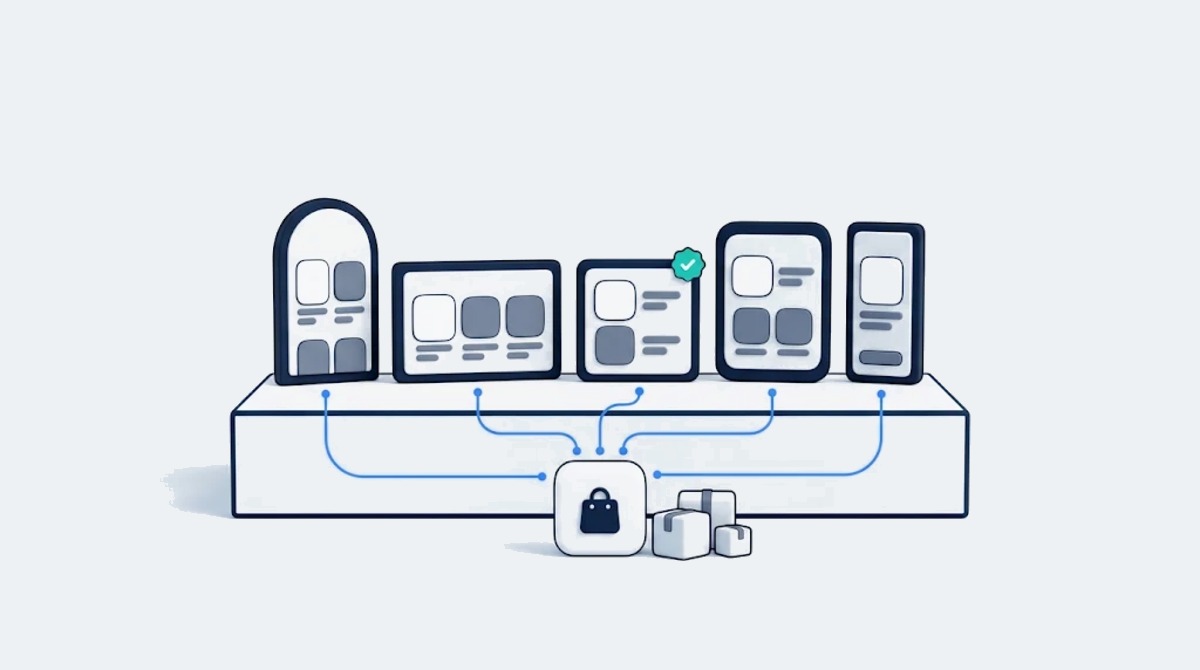
Framer can run an ecommerce storefront, but only as a headless front end, because it has no native cart or checkout of its own. In these builds Shopify holds products, inventory, payments and checkout, while Framer renders everything the shopper sees. If the architecture is new to you, Fastlane’s breakdown of the technical and business benefits of headless commerce covers the trade offs in more depth.
A plugin keeps the two systems in sync. Framer Commerce, which describes itself as the winner of Framer’s Best Plugin award, ships with more than 40 Shopify components, including filters, search, subscriptions, variants and cart tools. As of November 2026 it has a free tier for up to 25 products on a Framer domain and paid plans from $12 a month. Frameship and Framerfy cover similar ground with different pricing models.
Goodspeed’s Framer ecommerce guide, updated in May 2026, puts the sweet spot at design-led brands with curated catalogs of under 200 products. It estimates running costs from roughly $80 a month for Framer Pro, Shopify Basic and a plugin, before any build fee, and lists 500 or more SKUs with complex inventory rules as a reason to look at alternatives. Whichever studio you hire, the first conversation should establish where that line sits for your catalog.
Every studio on this list publishes Framer work connected to a Shopify backend, either as a live project, a packaged service or its own plugin. Each was then judged against the same four criteria, drawn from what breaks first on a headless store: whether its public profile shows commerce work rather than only marketing sites; how it handles the Shopify connection, and which plugin the build depends on; whether its pricing and timeline are published; and how well it fits a small team that has to edit the site after launch. Facts come from each studio’s own site and its public profiles on Clutch, Contra and Framer, checked in November 2026. Goodspeed, a London Framer Enterprise studio, was considered and excluded because it states plainly that it is not a Shopify agency and does not build online stores. Generalist Shopify theme agencies were excluded because they do not build in Framer. The site’s footer disclosure pages cover any commercial relationships.
The five studios differ most on starting price, timeline and the kind of brand they fit, as the grid below shows; prices are published starting points as of November 2026 and move with scope.
Phase56 is a design and development studio in Niš, Serbia, that suits smaller DTC brands needing sharp launch pages and product storytelling. Founded in 2022, it lists a team of 10 to 15 people on its Clutch profile and offers UX and UI design, product and 3D design, branding, web development, video editing and motion ads under one roof.
Phase56 works in Framer and Webflow, and holds Webflow partner status. Its verified client reviews cover conversion focused marketing sites for agencies, the UI and brand work for a banking and credit card platform, and a real time energy dashboard built around data visualization and 3D interaction. That range matters for a product brand: a studio that can make a dense financial product feel simple, and add 3D and motion work in house, has the toolkit to make a hero product page do real selling. The reviews shown on its Clutch profile score Phase56 5.0 for quality and schedule.
Pricing: as of November 2026, Phase56 projects start at around $5,000, with hourly rates listed at $50 to $99, and the most common project size in its Clutch reviews sits under $10,000.
Phase56’s strengths are breadth and price. Brand, motion and build sit with one team, so a launch campaign and the pages it points to come out looking like the same brand, and the entry price sits inside the range of the smaller packaged studios on this list.
There are two limits to weigh. Phase56’s public portfolio leans toward SaaS, fintech and service businesses, and its verified reviews describe Webflow builds, so a brand set on a Framer storefront should ask to see a live Framer project with a Shopify connection before signing. A brand with a large Shopify catalog should also ask how the team structures product and collection templates at scale.
Phase56 is the best fit for a DTC brand launching or relaunching a product line that wants brand, motion and site built together for roughly $5,000 to $10,000. Skip it if your priority is a long track record of high SKU Shopify stores.
Satto Studio is a Warsaw design studio that sells a fixed scope Framer and Shopify package for small DTC brands wanting design and build from one team. Its Design and Development E-commerce package on Contra bundles art direction, web design and development into a single four week project, with longer term support available by arrangement.
Satto Studio’s visual instinct shows in its Framer template catalog, which leans toward image-led work for photographers, art directors and creative studios. That suits a brand whose product sells on photography and mood, such as apparel, homeware or beauty, where the collection page has to feel editorial rather than like a theme grid. On Contra, Satto Studio shows 13 paid projects and a 4.67 rating.
Pricing: as of November 2026, Satto Studio’s Framer and Shopify package starts at $5,900 for a four week project, the highest published entry price among the four smaller studios here.
Satto Studio’s main strength is predictability. A fixed price and a four week timeline make budgeting simple for a founder who has to plan a launch around inventory arrival, and design and development sitting with the same people removes the handoff where details usually get lost.
The limits are disclosure and depth. Satto Studio publishes less detail about team size and past stores than the other studios here, so ask for links to live stores it has built and test them on your phone. Its template work also leans toward portfolios, so confirm how it handles variants, inventory states and cart edge cases.
Satto Studio is the best fit for a small, image-driven DTC brand that wants a finished store in about a month at a known price. Skip it if you need a studio with a long, public list of Shopify launches.
The Design MVP is a Framer studio in Pune, India, and the team behind the Framerfy plugin, which makes it a fit for brands wanting a headless store on a tighter budget. Framerfy connects a Framer site to a live Shopify backend with products, variants, cart and checkout synced, and the studio built its own Shopify template on top of it.
The Design MVP’s Framer and Shopify package opens with discovery on store goals and product types and a review of the store’s Shopify data structure: products, variants and collections. It ends with an editable Framer project handed over, plus a Shopify admin walkthrough where needed. Building the plugin it deploys means the team knows exactly how the data moves between the two systems.
Pricing: as of November 2026, The Design MVP’s Framer and Shopify package starts at $3,200 over six weeks, the lowest published entry price on this list.
The Design MVP’s strengths are cost and data discipline. Starting with the Shopify data review catches the variant and collection problems that otherwise surface after launch, and the price leaves room in a small budget for photography or paid launch traffic.
Two limits are worth a direct question. Framerfy markets itself as free to start, but its public pages do not set out paid tiers, so confirm in writing what your build relies on and what, if anything, it will cost each year. A store also becomes dependent on a plugin maintained by the same small team, so ask what happens if you move to another studio later. Six weeks is also the longest timeline here.
The Design MVP is the best fit for an early stage DTC brand that wants a real headless Framer store for under $5,000 and can wait six weeks. Skip it if your launch date is less than a month away.
Vítrea Studio is a small Madrid studio run by Diego Colino that builds Framer stores on Shopify using Framer Commerce, and it suits brands that already have an approved design. Its Framer Ecommerce Development package is written for exactly that handoff: a brand that worked with a designer or agency and now needs the store built without losing quality or breaking the commerce layer.
The build covers a pixel-accurate Framer store, domain connection, analytics and tracking pixels, and a final pass to confirm orders, checkout and integrations work before launch. Vítrea Studio also sells a design plus development package for brands starting from scratch, and a Shopify to Framer migration service. Its portfolio includes a May 2026 Framer and Shopify build that Colino describes as his biggest Framer Commerce integration so far.
Pricing: as of November 2026, Vítrea Studio’s build from an existing design starts at $4,000 over three weeks, and design plus development starts at $5,000 over four weeks.
Vítrea Studio’s strengths are speed and focus. Three weeks is the shortest timeline on this list, a 5.0 rating across its Contra reviews points to consistent delivery, and a studio that tests checkout and pixels before launch is protecting the numbers a growth team will judge the site by.
The limits come with its size. A small studio may have little room in the run up to Black Friday, so check availability early. Vítrea Studio also builds the store rather than running ads or testing programs afterward, so plan who owns conversion work once the site is live.
Vítrea Studio is the best fit for a brand with signed off designs that needs a faithful Framer build on Shopify within a month. Skip it if you want one team to handle the store, paid media and testing.
Fightclub is a Benelux full service agency for scaling brands that want the store, advertising and conversion testing handled by one team. It lists more than 150 experts across Breda and Antwerp and more than 450 clients served, and it merged with growth and experimentation agency Upthrust in February 2025.
Fightclub’s partner page lists tiers with Shopify Plus and Framer alongside Google, Meta, TikTok, Channable and the testing platform VWO. That combination is the reason it sits apart from the other studios: Fightclub can scope a Shopify Plus store, a Framer front end, the paid media that feeds it and the experiments that tune it, all under one contract.
Pricing: as of November 2026, Fightclub does not publish prices, and projects are quoted on request.
Fightclub’s strengths are reach and accountability. One team owning the site and the traffic removes the familiar argument between an agency that built the pages and an agency that bought the clicks, and Fightclub says its partner tiers across commerce and media speed up setup and support.
The limits are cost and fit. A full service agency of this size is more than a small brand launching its first store needs, and unpublished pricing makes early budgeting harder. Because it can build either way, ask Fightclub directly whether it recommends a Framer front end or a native Shopify Plus theme for your catalog, and why.
Fightclub is the best fit for a scaling DTC brand that wants its store, paid media and testing run by one accountable team. Skip it if you are launching your first store on a five figure budget.
The right studio depends on where your brand is, what you already have, and who will run the site after launch. There is no single best choice, and the scenarios below show how the trade offs shift.
If you are pre-launch or relaunching a single product line and want the brand, motion and pages to arrive together, Phase56 and Satto Studio are the natural shortlist. Phase56 brings in house 3D and motion at an entry point around $5,000; Satto Studio offers a fixed $5,900, four week package. The trade off is evidence: ask both for live Framer stores with a Shopify connection, because neither publishes a deep record of them.
If budget is the constraint and you can wait, The Design MVP gives you a headless store from $3,200, with a Shopify data review built into the process. You accept a dependency on its own plugin, so get the plugin’s long term cost and support terms in writing.
If your designs are already approved, perhaps from a brand agency, Vítrea Studio’s build from design package is the most direct path, at $4,000 over three weeks. Book early in the year if you want it live before peak season.
If you are already scaling, spending meaningfully on paid media and running tests, Fightclub is the option built for that stage. You trade a lower price for one team that owns pages, traffic and experiments.
Whichever stage you are at, judge the portfolio from the shopper’s side first. Fastlane’s guide to human-centric design thinking sets out that mindset, and it suggests a practical test for any studio’s work: check how quickly you can find a size, a price and a returns policy before you judge the visuals.
Look for four things in a Framer ecommerce studio: evidence of conversion results, reusable product and collection templates, a clear Shopify integration plan, and fast image-heavy pages on mobile. Those four separate studios that build stores from those that build brochure sites.
Start with conversion performance. Ask for before and after numbers from a live store, such as add to cart rate or mobile conversion, and ask what the studio changed to move them. A studio that only shows screenshots is showing you design, not commerce.
Next, check the templates. A good studio designs one product template and one collection template that work for every SKU, so adding a product never needs a designer. Fastlane’s explainer on what a product detail page has to do is a useful checklist for that template.
Then pin down the Shopify integration. Ask which plugin the build uses, who pays for its subscription, and what happens to the store if that plugin changes its pricing or stops being maintained. Framer Commerce, Frameship and Framerfy each price differently, and the answer affects your running costs for years.
Finally, test page speed where Framer sites tend to slow down: collection pages with 40 product photos. Open a live example on a phone over mobile data. The steps in Fastlane’s five step Shopify product page speed audit apply just as well to a headless front end.
Brief a Framer studio with numbers rather than mood boards: SKU count, variants per product, monthly order volume, and how often collections change. Those figures tell an experienced studio whether a headless Framer build makes sense at all, and they let you compare quotes on the same basis.
List every Shopify app the business depends on, including subscriptions, reviews, loyalty and bundles, because each one has to work in a headless setup and some do not. Say who will edit the site after launch, since Framer’s May 2026 billing change introduced a Content Editor seat at $10 a month for people who only update CMS content, alongside full editor seats at $20 a month.
Ask for a staged launch, with product and collection templates live first and campaign pages after. It is also worth noticing which studios turn the work down. Goodspeed, a London Framer Enterprise studio, says plainly in its own comparison pages that it is not a Shopify agency and does not build online stores, and a studio that is clear about what it does not do is easier to trust on what it does.
No single Framer studio is right for every DTC brand, which is why this list is unranked. The four smaller studios cover a published price range from $3,200 to $5,900 as of November 2026 and differ mainly in timeline, how much design they do, and which plugin they build on. Fightclub sits at a different stage, for brands that want the store and the traffic run together. The right choice comes down to your catalog size, whether your designs are already approved, how soon you need to launch, and who will maintain the site afterward. Before you sign with anyone, confirm that a headless Framer build suits your catalog in the first place, see a live store with a Shopify connection, and get the plugin’s ongoing cost in writing. If you are still deciding, the stage guidance above is the place to start.
There is no single best Framer studio for a small DTC brand; the right one depends on budget, timeline and whether your designs are ready. As of November 2026, The Design MVP has the lowest published entry price at $3,200 over six weeks, Vítrea Studio is fastest at three weeks from $4,000 for an approved design, Satto Studio offers a fixed $5,900 four week package, and Phase56 starts around $5,000 with brand and motion work in house. Whichever you choose, ask to see a live Framer store with a Shopify connection, test it on a phone, and confirm which plugin the build depends on before you sign.
A Framer ecommerce site typically costs a one time build fee of roughly $3,200 to $5,900 with a small studio, plus running costs from about $80 a month. Those build figures are the published starting prices of the packaged studios in this guide as of November 2026, and larger agencies quote on request. Goodspeed’s May 2026 estimate puts running costs at around $80 a month for Framer Pro, Shopify Basic and a sync plugin before any build fee. Add Framer editor seats if several people will update the site; since May 2026 a Content Editor seat costs $10 a month and a full editor seat $20.
Framer can replace a Shopify theme as the storefront, but it cannot replace Shopify itself, because Framer has no native cart or checkout. In a headless build, Shopify keeps products, inventory, payments and checkout, and Framer renders the pages shoppers see, connected by a plugin such as Framer Commerce, Frameship or Framerfy. The approach suits design-led brands with curated catalogs; Goodspeed’s 2026 guide puts the sweet spot under 200 products. Brands with 500 or more SKUs, complex inventory rules, or apps that lack headless support are usually better served by a native Shopify theme.
The main Framer plugins that connect to Shopify are Framer Commerce, Frameship and Framerfy. Framer Commerce syncs products, variants, collections and metafields and ships with more than 40 storefront components; as of November 2026 it has a free tier for up to 25 products and paid plans from $12 a month. Frameship takes a different pricing approach, and Framerfy, built by The Design MVP, markets itself as free to start. Whichever plugin a studio proposes, ask who pays for it, what it costs at your product count, and what happens to the store if it changes or stops being maintained.
A brand should choose a native Shopify theme over Framer when its catalog is large or complex, or when it depends on Shopify apps that do not work headless. Goodspeed’s 2026 Framer guide flags 500 or more SKUs with complex inventory rules as a reason to look elsewhere. A theme also makes sense when speed to launch matters more than custom design, or when no one on the team can own a second platform. Framer earns its cost when design is part of what you sell and the catalog is small enough for one product template and one collection template to cover it.