

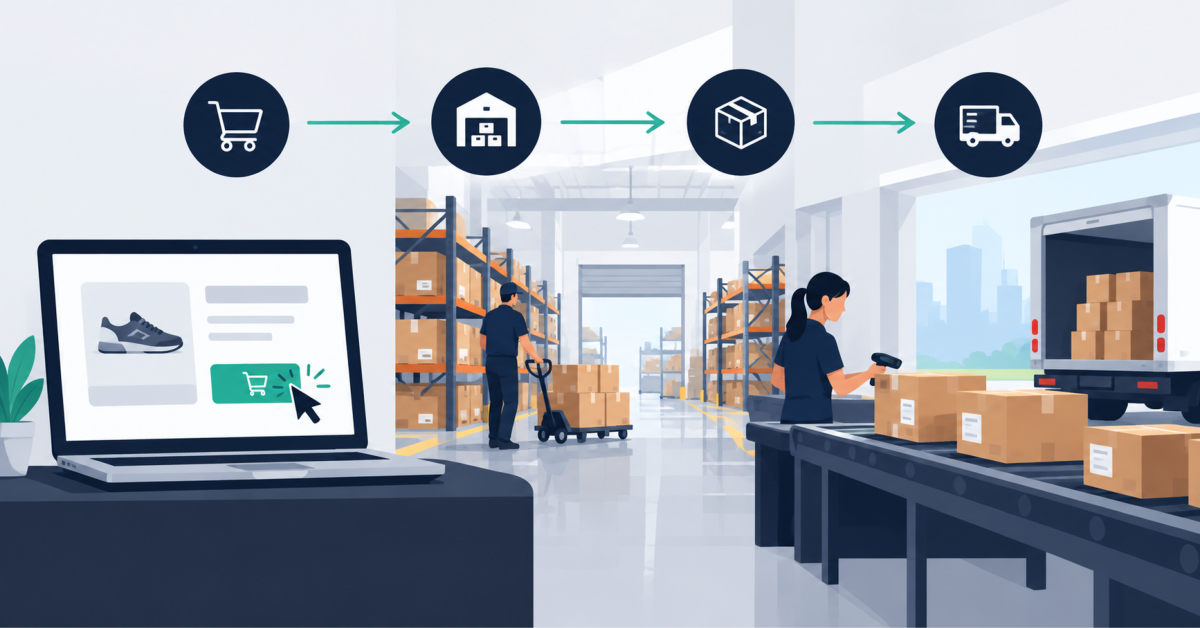
Warehouse resilience is a customer-experience requirement: a drainage failure, utility outage, roof leak, or facility access problem can halt fulfillment even when your Shopify storefront, inventory system, and carrier network are operating normally.
Your checkout can convert perfectly and your warehouse management system can show every unit in stock, but neither matters when your team cannot safely pick, pack, or release orders from the building.
A smooth checkout won’t save your delivery SLAs if your warehouse goes dark. Discover why commercial facility resilience and utility health matter for direct-to-consumer fulfillment.
When e-commerce founders and operations leaders analyze friction in their conversion funnel, attention naturally gravitates to digital metrics: page speed, checkout drop-offs, return on ad spend, and automated re-engagement flows.
Yet the fastest headless storefront and cleanest inventory software cannot deliver a single package if physical fulfillment operations grind to an abrupt halt.
For growing direct-to-consumer (DTC) brands and multichannel retailers operating private distribution centers, regional micro-hubs, or dedicated packaging facilities, physical infrastructure reliability is just as critical to the customer experience as uptime on your web servers.
In high-volume fulfillment environments, facility and utility failures quickly ripple into the bottom line:
Central distribution corridors—such as logistics hubs across the Midwest and the Kansas City metro area—handle enormous daily freight traffic serving national two-day ground delivery zones. In heavy-use commercial properties and older warehouse districts, utility networks and deep drainage lines endure continuous strain from heavy equipment vibrations, seasonal freeze-thaw cycles, and continuous industrial discharge.
Proactive facility managers prioritize regular video pipe diagnostics and preventative utility checks. When heavy structural deterioration or ground collapses compromise drainage networks, bringing in qualified contractors for commercial sewer line replacement in Kansas City keeps fulfillment floors dry, dock doors turning, and delivery promises intact.
A truly resilient modern brand aligns digital efficiency with a dependable physical foundation. Keeping warehouse operations uninterrupted guarantees that the customer experience promised at checkout is delivered at the door.
A warehouse utility failure can affect ecommerce delivery SLAs by stopping picking, packing, labeling, staging, or carrier handoff before daily cutoff times. Drainage problems, sanitation issues, electrical outages, water leaks, access restrictions, and safety shutdowns can all prevent orders from leaving the facility. The customer experiences the resulting delay as a brand failure, so operations teams should use an incident workflow that protects staff and inventory, identifies at-risk orders, and sends proactive delivery updates. Review missed-cutoff orders separately after every incident so you can determine whether the root cause was building infrastructure, process design, staffing, or carrier timing.
Before peak season, a DTC brand should inspect drainage and wastewater systems, supply lines, backflow controls, pumps, roof drains, electrical service, loading access, safety systems, and water-exposed inventory zones. The audit should focus on systems that can halt safe fulfillment, damage inventory, prevent carrier pickups, or restrict employee access. Review the facility against your expected peak-day volume, not your average shipping day, and document which vendors and internal leaders respond to an outage. If a recurring issue has generated prior maintenance calls, treat it as a known operational risk rather than a minor facilities inconvenience.
Protect warehouse inventory from a drainage backup or leak by storing stock, corrugated cartons, labels, electronics, and packing materials above floor level on pallets, shelves, or tiered racking. Map low points, drains, roof-leak zones, and areas with prior water incidents, then avoid using those areas for sensitive inventory or critical equipment. Keep containment materials and a response plan accessible, and define who can move or quarantine stock when water exposure occurs. Your team should also know how to identify potentially affected orders, pause shipment of compromised inventory, and document losses for insurance or supplier claims.
An ecommerce business should create a facility continuity plan as soon as a warehouse disruption could cause missed carrier cutoffs, delayed orders, inventory damage, or unsafe working conditions. Even a small team needs a documented first-four-hours plan covering staff safety, inventory protection, alternate work areas, vendor contacts, customer communication, and reopening criteria. The plan becomes more important as order volume, fulfillment complexity, paid-media spending, and customer delivery expectations increase. Do not wait for a large warehouse or a major outage before writing it. A simple operating plan created early becomes much easier to improve as the business scales.
A commercial contractor response agreement for a warehouse should include service scope, licensing and insurance verification, coverage area, emergency and after-hours availability, target response times, escalation contacts, pricing terms, documentation requirements, access procedures, and coordination rules for landlords or property managers. For plumbing, drainage, electrical, roof, and safety-system providers, confirm the contractor can support commercial facilities and understands how an outage affects fulfillment operations. Review the agreement before an emergency, not during one. Keep the finalized vendor contacts in the warehouse incident playbook and give relevant managers access to it.




