

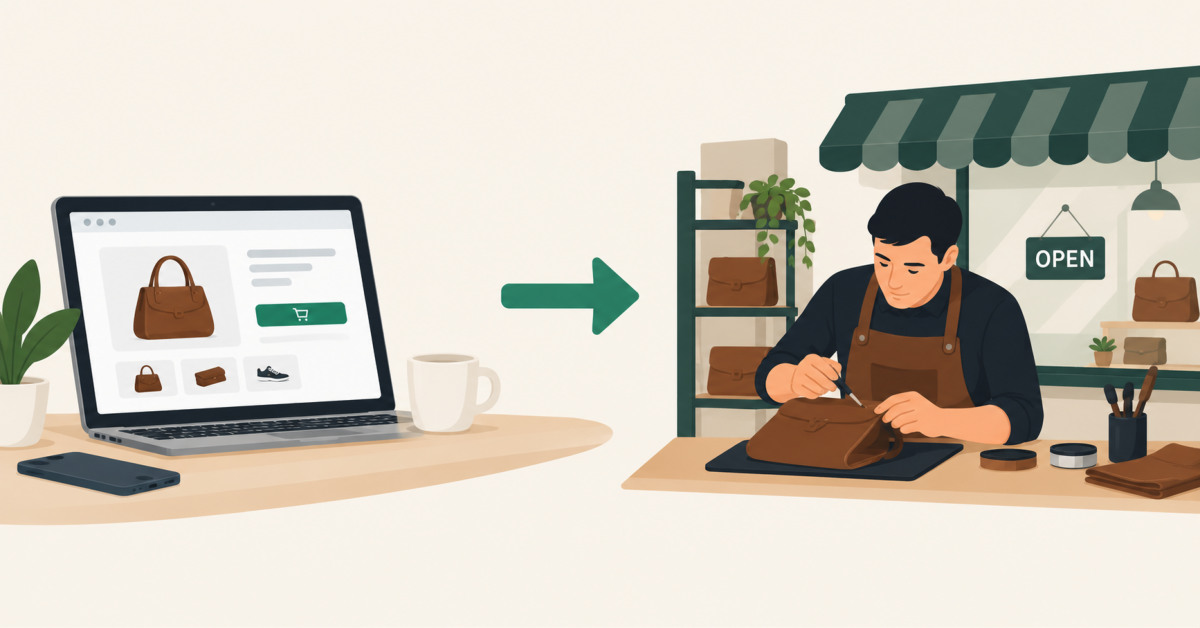
Ecommerce entrepreneurs can use their customer acquisition, service, pricing, and operations experience to build a local leather restoration business, but durable growth depends on learning the craft, scoping jobs accurately, and building repeatable quality controls before expanding into new service areas.
The opportunity is not simply to learn a repair technique. It is to combine a skilled local service with the customer acquisition, fulfillment discipline, and operating systems that ecommerce entrepreneurs already understand.
An Austin restoration company is combining museum experience, online retail know-how, and professional training to help entrepreneurs build a business in their own city.
An ecommerce entrepreneur already knows how much has to happen before a customer clicks ‘buy.’ The offer must make sense, the images must earn attention, and the business must deliver what it promises. Those same skills can be valuable a few miles from home, where a customer is searching for someone to restore a leather sofa or repair a favorite handbag.
For immigrants who began their American business journey online, that is a practical avenue for expansion. Running an online store can provide experience with American customers, advertising, payments, and daily operations. A local service business offers a way to apply that experience to work delivered in person, with a reputation that develops within a community.
Leather repair is one such opportunity. It brings together a learnable craft, items that customers have a reason to preserve, and the need for a reliable local provider. For an entrepreneur considering an offline business, the useful question is how to combine the technical work with a system for attracting customers and managing jobs.
Austin-based Lerega is developing its answer around professional restoration, business training, and partnerships in other cities. Its story connects two backgrounds that rarely appear together in a traditional repair workshop: museum restoration and ecommerce.
In online retail, a strong product page helps a buyer understand what they will receive. In leather restoration, clear service pages and photographs of completed work perform a similar function. A customer needs to see the kind of damage a specialist handles and understand the likely result before handing over a valuable possession.
The purchase process changes, but much of the commercial discipline carries over. An inquiry becomes a request for photographs, an assessment, a written estimate, and a scheduled job. Experience with customer support helps an owner explain options and set expectations. The operational habits used to track orders can also help track furniture pickups, workshop progress, and delivery.
There is a useful difference in the way competition works. A local customer must find someone who can serve their area and handle the actual item. An entrepreneur who combines skilled work with prompt communication and dependable scheduling gives that customer concrete reasons to choose the business. Digital marketing remains part of the model, while the service itself creates the evidence for future marketing.
According to the founders, the team’s ecommerce experience dates to 2013. They also brought experience in museum restoration from Eastern Europe. After developing their understanding of business in the United States, they applied that commercial experience to a field in which they already had specialist knowledge.
The restoration operation began with leather items such as handbags and expanded into leather furniture repair and upholstery. Today, Lerega combines work on sofas, chairs, and other furniture with leather handbag restoration and reupholstery services. The founders describe an operating base in Austin, existing branches, and a growing opportunity for partners to establish businesses in additional cities.
The museum background informs the company’s approach to assessing materials and preserving what can be retained. On a leather sofa, visible wear may involve damaged color and protective finish as well as deterioration of the leather itself. A handbag may require careful treatment of contamination or a localized repair. Identifying the problem determines what treatment is appropriate and what result can reasonably be promised.
One published Lerega project involved extracting embedded oil from a JACQUEMUS handbag while preserving its original finish. Another involved replacing damaged leather sections on a sofa and restoring its color and protective coating. Such cases give trainees a useful perspective on the trade: superficially similar wear can call for very different treatments.
The case for restoration begins with the item. A sofa may fit a room perfectly, a chair may have sentimental value, or a handbag may be a piece its owner would struggle to replace. When the underlying material is suitable for repair, restoration can give a customer a way to keep something they already value.
This creates several possible starting points for a business. An owner might focus on residential leather furniture, develop a handbag repair service, or work toward relationships with businesses that maintain upholstered seating. Each direction has different requirements for tools, transport, workspace, and technical ability. Choosing a clear initial service makes those requirements easier to plan.
The financial assessment should happen at the job level. The price must cover the time required for inspection and repair, materials, customer acquisition, and any collection or delivery. An experienced ecommerce operator will recognize the discipline: understand the full cost of fulfilling a sale before deciding whether more sales will improve the business.
For someone entering the trade, learning the repair technique is one part of becoming a service provider. The owner also needs to evaluate jobs, prepare estimates, explain limitations, and organize the work. These decisions affect both customer satisfaction and the viability of the business.
Lerega presents its leather repair course as an entry point into that broader model. The published curriculum combines material identification, damage assessment, repair, color restoration, and protective finishing with pricing and client communication. Beginners can start with the core training and develop their abilities through practice and further qualification.
The founders say instruction is available in English, Russian, and Spanish, with online and in-person learning options. That matters for people building a business after moving to the United States: studying technical processes in a familiar language can make it easier to understand the material and discuss unfamiliar problems.
The company also describes support for establishing a business and training employees. This gives prospective owners two ways to participate. They can learn to perform the restoration work themselves, or build a team while taking responsibility for customer acquisition and operations. In either case, the owner needs enough knowledge to recognize sound work and maintain consistent standards.
The distinguishing proposition is the connection between instruction and an operating business model. A student is learning within a framework that extends to how the service is offered and delivered. That is particularly relevant to entrepreneurs who understand selling but need a structured route into a specialist trade.
A repair business becomes easier to expand when the standard of work can be taught to another person. Clear assessment methods, repeatable procedures, and quality checks allow the owner to train employees and supervise results. The customer should receive the same care as the team grows.
Lerega’s regional partner path is intended to support that development. Its published training information makes clear that completing a course and becoming an approved partner are separate steps. Partnership requires evaluation, suitable skills, and business readiness. For a prospective owner, the distinction explains how the company intends to maintain standards across locations.
Ownership is another central part of the founders’ proposition. They describe the franchise model as a business purchase intended to provide permanent ownership, allowing an owner to develop the operation in their city, build its value, and sell it when they choose. The rights governing duration, termination, use of the brand, and transfer must be set out in the franchise agreement.
The commercial appeal is the opportunity to build an asset over time. A trained team, documented operations, and established customer relationships can contribute to a business that a future buyer can assess. Its eventual value will depend on its performance and the terms under which ownership can transfer.
The first step for an interested entrepreneur is to examine one city and one initial service. Look at the providers customers can already find, the work those providers show, and whether their services match the items a new business plans to restore. Conversations with potential customers can help clarify what they need and what would make them comfortable booking a repair.
Training and supervised practice should then establish which jobs the new operator can handle confidently. That creates a sensible basis for choosing equipment, organizing a workspace, and building an initial portfolio. A wider service offering can follow as skills and capacity develop.
For ecommerce entrepreneurs, the advantage is that part of this preparation is familiar. They already understand the work involved in turning attention into an inquiry and delivering a satisfactory purchase. A local restoration business gives those abilities a practical application in their own community.
Those interested in Lerega’s approach can review the training program and contact the team with their city, preferred language, and intended role as a technician or business owner. That starts a specific conversation about learning the craft, training a team, and exploring a regional partnership. The opportunity begins with a skill and becomes a business through the way it is delivered.
An ecommerce entrepreneur can start exploring a leather repair business without prior restoration experience, but they should not begin taking paid jobs until they have training, supervised practice, and a clear understanding of which repairs they can handle safely. Ecommerce skills help with marketing, customer support, pricing discipline, and workflow design, but they do not replace technical ability. Start with a focused training program, build a small practice portfolio, and define a narrow initial service offering. The fastest way to damage a local reputation is to accept complex work before you can reliably assess the material, explain limitations, and deliver a consistent result.
The best leather repair service for a new local business is the one that matches your training, tools, local demand, and ability to deliver consistent results. Residential leather furniture can create larger job values but may require transport, workspace, and more extensive repair capability. Handbag and accessory restoration can be more portable and specialized, but it requires detailed finishing knowledge and high-value-item handling. Start with one narrow category, such as leather sofa surface restoration or handbag cleaning and color repair, then expand only after you have enough examples, pricing data, and repeatable procedures.
A leather restoration business should price its first jobs by accounting for inspection, labor, materials, transport, customer acquisition, administration, and a realistic allowance for rework. Do not set prices only by comparing competitors or guessing what a customer will pay. Track the actual time involved from first inquiry through final delivery, including photographs, estimates, travel, preparation, repair, cleanup, and follow-up. Early jobs are also learning opportunities, so keep the service scope narrow and document every cost. A low price that fails to cover labor and operational friction is not market validation. It is an expensive way to discover weak unit economics.
Lerega’s leather repair training includes foundational instruction in leather types and diagnostics, tools and materials, cleaning and repair methods, color restoration, finishing, replacement basics, pricing logic, estimating, and client communication. Its published program describes online and in-person core training, with advanced hands-on training and qualification available for people who continue their professional development. The program is designed to support beginners as well as professionals who want to develop their restoration skills and business readiness. Prospective students should confirm current course format, language availability, location, pricing, and qualification requirements directly with Lerega before enrolling.
Completing a leather repair course is not the same as becoming a Lerega partner because Lerega describes training completion and partner approval as separate steps. Its published information says prospective partners must meet training, evaluation, quality-standard, and business-readiness requirements before approval. That separation is a positive signal for anyone evaluating a regional partnership model. It means the network can set standards beyond attendance or a certificate. Before making a business purchase or signing any agreement, review the complete contract, territory terms, brand-use conditions, fees, ownership provisions, renewal rights, termination clauses, and transfer rights with qualified legal and financial advisers.




