


The ecommerce sector is evolving faster than ever, with spending expected to exceed $8.5 trillion globally by 2025.
For Direct-to-Consumer (DTC) brands, this rapid transformation presents opportunities to innovate and challenges in staying competitive. Strategies that worked yesterday may no longer cut it as consumer expectations grow, privacy regulations tighten, and digital technologies reshape businesses’ operations.
This guide is designed to help DTC founders and marketers confidently navigate these changes. From personalized customer experiences to leveraging data ethically, you’ll uncover actionable insights tailored specifically for your unique needs. Ready to future-proof your marketing approach? Let’s get started by exploring emerging trends and timeless strategies.
➡️ See 6 Effective E-Commerce Marketing Ideas To Implement
📹 Check out this video for more on the future of ecommerce marketing

As competition in the DTC market intensifies, relying on guesswork or broad marketing strategies isn’t enough to stand out. Personalization, powered by robust data insights, has become the cornerstone of meaningful customer experiences. Here’s how DTC brands can make personalization strategies sharper and more ethical while meeting shifting consumer expectations.
Traditional demographic segmentation, such as age or geography, is no longer sufficient to truly understand customer needs. Modern personalization pivots toward behavioral and psychographic segmentation. By analyzing how customers interact with your brand—what they click on, browse, or buy—you can paint an accurate, actionable picture of their preferences.
To collect this advanced data ethically, DTC brands can leverage zero-party and first-party data. Zero-party data is information that customers willingly share, such as survey answers or quiz results, while first-party data stems directly from something like browsing activities or purchase history. Tools like Shopify’s built-in analytics or advanced platforms like Klaviyo allow brands to map these behaviors into actionable insights.
Key steps to boost your segmentation strategy:
Adding such refined segmentation allows smart brands to tailor every page interaction—not just marketing campaigns. Find out how data-driven marketing can transform your approach.
Generic “recommended for you” suggestions and broad email blasts still have value but pale in comparison to hyper-personalized marketing. Tackling this requires analyzing real-time data so that every product recommendation feels intentional. Brands like Stitch Fix and Bombas succeed through personalization by curating product lists that seem more handpicked than algorithmic.
DTC brands can really boost relevance by:
For example, Bombas uses post-purchase data to suggest complementary items via email, seamlessly driving repeat purchases. Leveraging AI-driven platforms such as Insider can take your efforts up a notch by delivering personalized experiences across customer touchpoints. Learn more about how AI and personalization elevate customer experience.
Personalization is powerful, but it comes with immense responsibility. With increasing focus on data privacy, customers are wary of brands that fail to disclose how data is collected or used. Complying with laws like GDPR and CCPA ensures your practices remain transparent, but going a step further builds trust.
Here are best practices to build transparency:
Brands that demonstrate transparency will not only retain loyal customers but also stand out in an era where trust matters more than convenience. For an in-depth look into aligning ethical data use to boost personalization efforts, explore how data can shape ecommerce growth.
Incorporating hyper-personalized insights while staying ethical creates a win-win: customers feel understood and respected, while brands enjoy higher retention rates and bottom-line growth. Ready to take your personalization strategy to the next level?
In a highly competitive ecommerce market, fostering strong connections with customers is no longer optional—it’s essential. Authentic brand communities provide direct-to-consumer (DTC) brands with the opportunity to transform customers into advocates by nurturing relationships built on trust, shared values, and active participation. Below, we’ll examine strategies that DTC brands can adopt to create thriving brand communities that drive loyalty and engagement.
User-Generated Content is a powerful tool for creating authenticity and building trust. When customers see others posting about your products, it humanizes the brand and makes it more relatable. In fact, UGC acts as modern word-of-mouth marketing, amplifying the credibility DTC brands need to thrive in a saturated market.
Actionable steps to encourage UGC:
Enhancing your UGC strategy not only boosts your visibility but also instills a sense of belonging within your audience.
Immersive, memorable experiences are increasingly important to cultivating lasting loyalty. While digital-first strategies dominate ecommerce, experiential marketing—both online and offline—provides fresh avenues to connect more deeply with your customers.
Successful experiential initiatives can look like:
These strategies go beyond a transactional relationship—when customers feel emotionally connected to your brand through shared moments, they’re more likely to stay engaged long-term.
Brands that align their values with those of their audience tend to build stronger, more genuine relationships. Value-led communities are bound not by purchases but by shared beliefs and goals, fostering a loyalty that no discount or ad can match.
How to create your own value-driven ecosystem:
For a deeper dive on actionable ways to engage your audience and build loyalty, review seven strategies for creating loyal customers, which include delivering exceptional service and encouraging constant feedback loops.
By leading with authenticity and purpose, your DTC brand won’t just sell products—it will forge a community deeply emotionally connected to your business.
Embracing these approaches helps future-proof your brand by building a loyal, engaged customer base eager to grow with you every step of the way.
The intersection of social commerce and influencer marketing is redefining how customers interact with direct-to-consumer (DTC) brands. Social platforms are no longer just places to connect but have evolved into robust sales channels where buying happens at the speed of a double tap. At the same time, DTC brands are seeing the power of micro- and nano-influencers, whose authentic connections with their audiences create trust and drive targeted campaigns. Let’s look closely at these transformations and how they can shape a successful ecommerce strategy.
Social media platforms have integrated shopping features that allow a seamless transition from discovery to checkout. Features like shoppable posts, Instagram Shop, TikTok Shop, and live shopping events enable DTC brands to meet consumers where they’re already spending time.
For example:
Social commerce removes the friction between inspiration and action. For brands interested in testing this channel further, mastering your approach to sales on social media could be immensely valuable. Explore strategies for boosting sales through social commerce.
The trend in influencer marketing is shifting towards collaborating with micro- (10k–100k followers) and nano-influencers (<10k followers). Why? Because these influencers maintain closer, more genuine relationships with their followers, often boasting higher engagement rates than traditional celebrity influencers.
Finding niche influencers is about relevance and trust:
For example, skincare brands like The Ordinary have successfully worked with small creators to reach highly specific audiences. If you’re exploring how influencer marketing can shape commerce strategies, discover best practices for aligning influencer campaigns with your goals.
Influencer marketing has evolved past one-off transactions. DTC brands are now opting for enduring relationships with a select group of influencers to build consistent messaging and credibility over time.
Why focus on long-term partnerships?
Brands like Gymshark have pioneered this strategy by fostering long-term collaborations with fitness influencers, effectively creating a loyal army of brand advocates. Want to explore the future of influencer marketing? Dive into evolving trends shaping this space.
By embracing these shifts, DTC brands can maximize their reach and ROI while authentically engaging with their audience. Social commerce and influencer marketing are no longer just supplementary—they’re central pillars of a forward-thinking ecommerce strategy.
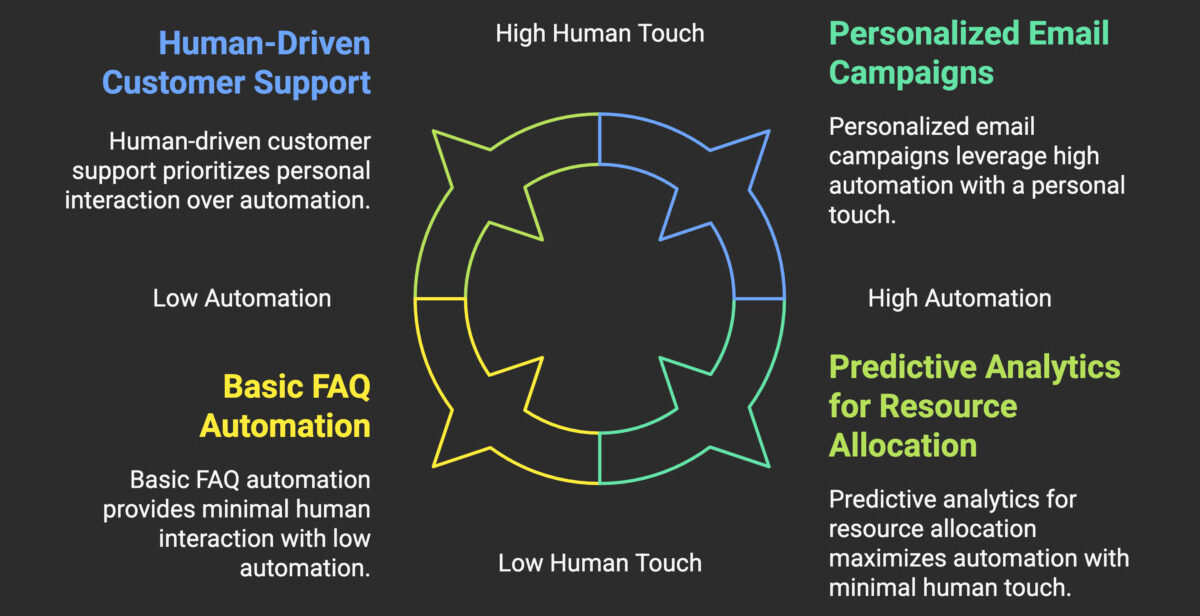
Artificial Intelligence (AI) and advanced analytics have redefined marketing, empowering Direct-to-Consumer (DTC) brands to make more informed decisions, drive customer engagement, and create personalized experiences at scale. No longer just futuristic concepts, these tools are indispensable for brands aiming to retain market edge while navigating a competitive landscape. Below, we’ll explore three core ways DTC companies can harness AI and analytics effectively.
AI capabilities offer a game-changer for automating personalization—something every DTC brand striving for loyal, satisfied customers should prioritize. Isn’t it remarkable how platforms can now deliver hyper-targeted marketing efforts in ways previously only possible with massive manpower? For instance:
Integrating these elements into your strategy ensures customers feel valued and understood. Want to deep dive into related methods? Check out how AI boosts conversions and engagement in e-commerce.
Predictive analytics transforms mountains of complex data into actionable insights, guiding decisions that balance revenue growth and brand longevity. DTC brands increasingly rely on metrics like customer lifetime value (CLTV) to craft sustainable long-term strategies.
Take, for example:
For a detailed analysis on consumer behavior prediction capabilities, explore how AI is revolutionizing forecasting. Those who grasp predictive power position themselves to lead rather than lag in their respective markets.
While automated tools streamline repetitive tasks, authentic customer connections cannot solely rely on machine efficiency. Striking the right balance between employing AI and maintaining genuine human touchpoints safeguards customer loyalty while enhancing efficiency.
Steps to blending automation with authenticity:
Brands that understand this synergy grow relationships that last. Looking for practical applications? Harvard explores why balancing analytics efficiency with human intuition works in this insightful overview on data-driven marketing operations.
By deploying AI responsibly and strategically alongside predictive analytics, DTC businesses ensure growth founded not just on efficiency but also on building true, lasting customer bonds. Ready to implement these strategies in your operations?
The ecommerce industry has always thrived on innovation, but emerging technologies are setting new benchmarks for how brands can engage with customers, streamline operations, and adapt to changing market trends. From visual immersion to tech-powered flexibility, staying ahead of these advances is no longer optional—it’s the rule for competitive DTC brands. Let’s break down three key technologies shaping the future of online retail.
Augmented Reality is redefining product discovery by allowing customers to visualize items in their real-world context. It’s particularly beneficial for DTC brands in segments like fashion and home decor, where customers often face hesitation over fit, color, or overall compatibility with their aesthetics.
Take furniture or homeware brands—AR applications can enable consumers to project a potential couch, table, or even artwork directly onto their living spaces through their smartphones. In fashion, innovative AR apps let users “try on” outfits or accessories virtually, minimizing returns and driving confidence in their purchase decisions.
How can DTC brands harness AR?
For more insights, explore How Emerging Technologies Are Reshaping Business Strategies, which emphasizes AR alongside other impactful tools.

Live shopping is more than a trend—it’s becoming a cornerstone of the digital storefront experience. This broadcast-meets-commerce model capitalizes on real-time customer engagement by letting viewers shop while watching live demos of products.
Picture a skincare brand showcasing its products via live video: customers can see textures, hear detailed explanations about use cases, and even ask questions that get answered on the spot. It’s interactive retail, bridging the gap between in-store assistance and online convenience.
Why should DTC brands use live shopping?
Want to refine your approach? See what experts say about The Future of Ecommerce: Trends and Technologies.
Ecommerce is no longer reliant on monolithic platforms to drive results. With composable commerce, brands can mix and match APIs, tools, and microservices to build a customized, agile infrastructure without being confined to the limitations of all-in-one solutions.
Why is this relevant now? The rapid development of consumer expectations means flexibility is imperative. For example, a fashion DTC brand planning to integrate AR “try-ons” can plug in a specialized AR module to existing systems without re-platforming their entire ecommerce setup.
Advantages of composable commerce:
For a perspective on achieving agility through scalable infrastructures, we recommend diving into Emerging E-Commerce Technologies and Their Impact on Sales.
By adopting these transformational technologies, DTC brands can create tailored, immersive, and scalable experiences that align with rising customer expectations.
Ecommerce marketing is advancing at lightning speed, requiring direct-to-consumer (DTC) brands to adapt quickly to meet rising consumer expectations and technological changes. Personalization has shifted from a competitive advantage to a necessity, demanding a smarter use of zero-party and first-party data. By treating customer insights ethically and weaving transparency into data practices, brands can foster trust while delivering highly tailored experiences that stand out in crowded markets.
Building meaningful connections with customers is crucial for long-term success. DTC brands can embrace strategies like showcasing user-generated content, hosting virtual events, and fostering brand communities united by shared values. These approaches build loyalty and transform satisfied buyers into engaged advocates.
Emerging tools, such as AI and AR, further equip brands to automate personalization and create immersive shopping experiences. Meanwhile, leveraging social commerce and collaborating with micro-influencers ensures you connect with your audience authentically on the platforms they use most. Flexibility in technology, like composable commerce, lets brands adapt swiftly to trends and innovate without overhauling their operations.
Actionable steps include refining how you gather customer data, investing in interactive experiences like live shopping, and integrating technologies that simplify scaling. Following these strategies equips your DTC business to not only compete but excel, delivering growth while retaining customer loyalty.
Now is the time to take these insights and transform your marketing plans into action. Focus on what connects with your audience, invest in tools that make smarter personalization easy, and stay agile as the ecommerce environment continues to evolve. For additional ideas and inspiration, explore resources that dive deeper into AI, personalization, and building brand loyalty. Ready to future-proof your marketing strategy and create lasting success? Let’s start today.
Ecommerce marketing for DTC brands is a dynamic and evolving landscape, where innovation is essential to staying ahead. The trends explored—from hyper-personalization and omnichannel experiences to AI-driven insights and the rise of social commerce—outline a path for brands looking to thrive in this competitive sector.
Adapting to these changes means prioritizing actionable strategies, leveraging ethical data practices, and fostering authentic customer connections. When one step ahead of consumer expectations, DTC brands can create memorable experiences that transcend the transactional.
As we look ahead, the question remains: Which of these innovations will define your DTC brand’s success in the coming year? Engage with us and explore what’s shaping the future of ecommerce marketing.

Personalization helps brands deliver relevant and tailored experiences that resonate with individual buyers, fostering loyalty and driving repeat purchases. It allows ecommerce businesses to stand out in saturated markets by connecting more meaningfully with customers.
DTC brands collect data ethically by relying on zero-party data, which customers willingly share, and first-party data from direct interactions like browsing history. Transparent practices, clear privacy policies, and customer consent are key to building trust.
Zero-party data is information provided directly by customers through surveys, quizzes, or feedback forms. First-party data comes from customer actions, such as purchases or website navigation. Zero-party data offers deeper insights since it reflects intentional customer input.
Smaller brands often have the agility to implement hyper-personalized strategies faster than larger companies. Using tools like AI-driven recommendation systems and lean tech solutions, they can create tailored, memorable shopping experiences without extensive resources.
AR enhances the buying process by letting customers visualize products in real-world settings, such as trying furniture in their living room or virtual fashion try-ons. It boosts confidence in purchases, reduces returns, and increases customer satisfaction.
Consumers trust brands that are clear about what data is collected and why, and that allow them control over how personal information is used. Transparency, strong privacy policies, and visible security measures build trust and foster long-term relationships.
A common myth is that only mega influencers drive results, but micro- and nano-influencers often have stronger connections with their followers. These smaller influencers provide authentic endorsements that result in higher engagement and conversions.
Encourage loyalty by creating authentic brand communities, leveraging user-generated content, and aligning your values with customers’ beliefs. Build value-driven relationships by offering perks or engaging events to keep customers connected and loyal.
AI simplifies complex tasks like personalized recommendations, predicting customer behavior, and managing ad targeting. By analyzing trends and patterns, it helps optimize campaigns and create experiences that feel unique to each shopper.
After implementing new technologies, brands should continuously analyze performance to refine their approach. Monitoring metrics like conversion rates and customer feedback ensures the tech enhances user experiences and meets business goals effectively.




