

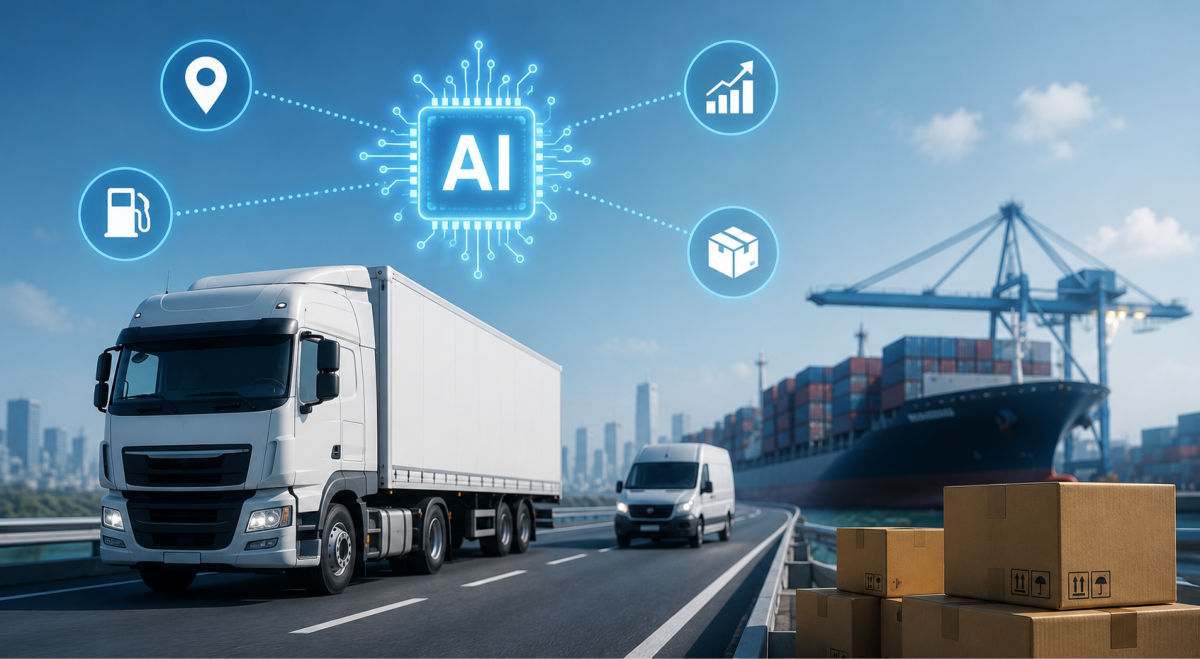
AI helps businesses reduce transportation costs by optimizing routes and loads, forecasting demand, selecting better carriers, and continuously learning from logistics data so every mile, vehicle, and shipment is used more efficiently.
AI does not eliminate transportation costs; it turns them into an optimization problem, using real-time and historical data to cut waste in routing, loading, planning, and procurement.
Transportation costs have become one of the biggest operational challenges for businesses that move products regularly. Rising fuel prices, labor shortages, shifting customer expectations, and increasingly complex supply chains all make it harder to keep shipping expenses under control. While companies cannot eliminate every external cost, they can make smarter decisions that reduce waste and improve efficiency. That is where artificial intelligence has started to make a meaningful difference.
Instead of relying solely on historical data or manual planning, AI analyzes massive amounts of information in real time to identify patterns that people might overlook. It can recommend faster routes, improve load planning, predict disruptions before they happen, and help businesses make better transportation decisions every day. Whether a company ships a few dozen packages or manages a nationwide freight network, AI-powered tools can uncover opportunities to lower costs without sacrificing service quality.
One of the most practical ways AI reduces transportation costs is through intelligent route optimization. Traditional route planning often depends on static maps or basic GPS systems, but those methods cannot always account for changing traffic conditions, construction, weather events, or unexpected delays.
AI continuously evaluates real-time information and adjusts routes as conditions change. Drivers spend less time sitting in traffic or traveling unnecessary miles, which lowers fuel consumption and reduces vehicle wear. Over weeks and months, even small improvements in routing can add up to significant savings.
For businesses with large delivery fleets, optimized routing also improves productivity. Drivers can complete more deliveries within the same shift, reducing overtime expenses while improving customer satisfaction through more accurate delivery windows.
Empty space inside trucks, trailers, or shipping containers represents wasted transportation capacity. AI helps businesses maximize available space by analyzing shipment dimensions, weights, destinations, and delivery priorities before loads are assembled.
Instead of relying on manual planning, AI identifies combinations that improve trailer utilization while maintaining safety and delivery requirements. Better load planning means fewer partially filled vehicles on the road, which lowers the cost per shipment and reduces unnecessary trips.
This becomes especially valuable during peak shipping seasons when transportation capacity is limited and freight rates are higher. Businesses that consistently maximize each shipment often see meaningful reductions in overall transportation expenses.
Unexpected disruptions often create some of the highest transportation costs. Equipment failures, severe weather, traffic incidents, supplier delays, and labor shortages can quickly throw carefully planned schedules off track.
AI uses predictive analytics to identify potential problems before they become major disruptions. By monitoring historical trends alongside current conditions, the system can alert transportation managers when shipments are at risk of delays or when alternative routes may be necessary.
This proactive approach allows businesses to make adjustments before costs begin to escalate. Instead of reacting after delays occur, companies can reroute shipments, adjust schedules, or allocate resources more efficiently.
Many businesses work with multiple transportation providers, each offering different pricing structures, service levels, and delivery capabilities. Selecting the right carrier for every shipment is not always straightforward, especially when rates fluctuate frequently.
AI compares available carrier options using current pricing, transit times, delivery performance, and historical reliability. Rather than choosing based solely on the lowest quoted rate, businesses gain a more complete picture of overall transportation value.
This balanced approach often reduces hidden costs associated with delayed deliveries, damaged shipments, or inconsistent service. Companies can also negotiate more effectively by understanding carrier performance over time and identifying where additional savings may be available.
Transportation costs often increase when businesses underestimate or overestimate shipping demand. Last-minute shipments, emergency freight, and underutilized transportation resources all add unnecessary expense.
AI improves forecasting by analyzing sales history, seasonal trends, promotional activity, inventory levels, and external market factors. These insights help businesses anticipate future shipping volumes more accurately.
With better forecasts, transportation managers can schedule capacity earlier, consolidate shipments when appropriate, and avoid premium shipping charges that frequently accompany urgent deliveries. Better planning creates a more predictable transportation operation while reducing avoidable costs throughout the year.
Transportation teams make countless decisions every day. Without accurate, up-to-date information, those decisions often rely on estimates or incomplete data.
AI-powered visibility platforms combine information from GPS devices, warehouse systems, transportation management software, and carrier updates into one centralized view. Managers can quickly identify delayed shipments, monitor fleet performance, and respond to changing conditions before problems become expensive.
The growing use of AI in logistics is giving organizations greater visibility across every stage of the transportation process, allowing faster decisions that improve both efficiency and cost control.
Greater visibility also strengthens communication between transportation teams, warehouses, customer service representatives, and customers themselves. Everyone works from the same information, reducing confusion and improving coordination across the supply chain.
Unlike traditional software that follows fixed rules, AI continues learning as it processes additional transportation data. Every shipment, delivery, and route provides new information that helps improve future recommendations.
Over time, AI becomes better at identifying recurring inefficiencies, recognizing seasonal patterns, and recommending operational improvements. Businesses benefit not only from immediate cost reductions but also from ongoing optimization that becomes more accurate as additional data is collected.
This continuous improvement helps organizations remain competitive even as transportation markets evolve. Instead of repeatedly redesigning processes from scratch, companies can adapt more quickly using data-driven insights that support smarter operational decisions.
As supply chains become increasingly complex, organizations that embrace AI-driven transportation strategies are better equipped to control costs while maintaining reliable service. By improving efficiency, reducing waste, and helping teams respond proactively to changing conditions, AI has become a valuable tool for businesses looking to build more resilient and cost-effective transportation operations for the future.
The AI use case that most often delivers fast transportation cost savings is route and load optimization, because it directly reduces fuel consumption, mileage, and fleet wear with relatively low implementation risk. By analyzing traffic, historical routes, and shipment characteristics, AI can quickly recommend more efficient paths and loading patterns that lower variable costs per trip. Many logistics case studies report double-digit reductions in fuel and travel time within months of deploying AI-driven routing and load consolidation, even before more advanced forecasting or procurement models are added.
Small and mid-sized businesses can benefit from AI in transportation, especially when they use SaaS-based tools embedded in TMS or delivery management platforms, rather than building custom systems. While very large fleets see the biggest absolute dollar savings, smaller operations still gain from better routing, load planning, and visibility, because fuel, time, and service quality matter at any scale. The key is to start with one or two focused use cases aligned to clear pain points, such as repeated delays on a core lane or underutilized vehicles, instead of attempting a full AI overhaul at once.
Companies should measure ROI from AI-driven transportation cost optimization by tracking changes in cost-per-shipment, fuel spend, empty miles, on-time performance, and frequency of rush or premium freight before and after deployment. It is important to set baselines and test windows for specific lanes, fleets, or modes so improvements can be tied to AI interventions rather than general market shifts. Many practitioners also include softer metrics such as reduced planning time, fewer manual interventions, and customer satisfaction gains, because these outcomes often correlate with sustained cost efficiency over time.





