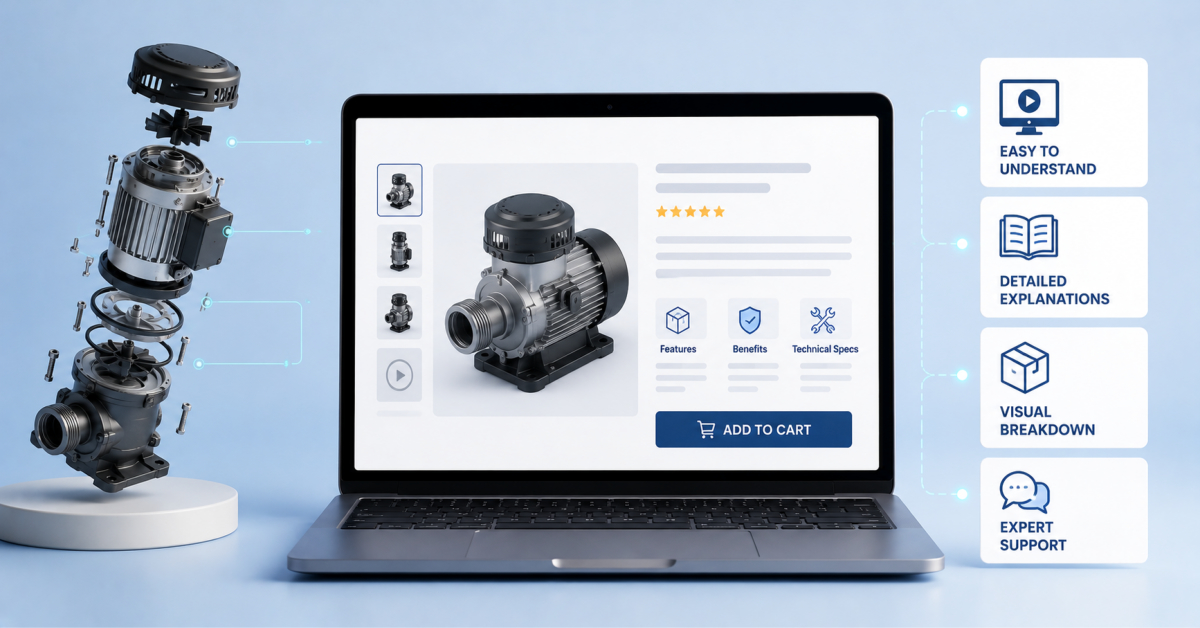
To sell a complicated product online, organize the store around the buyer’s first question, use education to build confidence before the product page, answer practical purchase and installation concerns clearly, and measure whether shoppers can move from uncertainty to the right product without needing a sales call.
Complex products do not lose sales because customers need more information. They lose sales when the store makes customers work too hard to find the information that determines whether the product fits.
Some products need one good photo and a price. Then there are products like HVAC systems, where the shopper has to work through capacity, zones, voltage, climate, and installation before they can even tell whether a product fits their home. Most store owners look at that list and see friction. The stores doing well in this category see something else: a chance to win on merchandising while competitors win on nothing at all.
The playbook they use is repeatable, and it works far beyond HVAC. Here is what it looks like.
Key takeaways
Nobody discovers an HVAC store by browsing. They arrive with a specific situation: a hot garage, a new addition, a bedroom that never cools down. Their first question is almost always about size. “What capacity do I need for this room?” comes before brand, before features, before price.
Stores that organize their catalogs around that question give shoppers an immediate foothold. A collection built around 12000 BTU mini split options meets the visitor at the exact thing they came to figure out. From there, narrowing down by zones, room type, or heating needs feels like progress instead of work.
Compare that with the default approach in the category: a grid of model numbers, each one a string of letters and digits that means nothing to a first-time buyer. The shopper who can’t map a product to their situation has no reason to stay. The one who lands on “this is roughly my room size” has every reason to keep clicking.
The lesson transfers to any complex catalog. Figure out the first question your buyer asks, and make that the top level of your navigation.
Complex purchases come with a research phase, and it happens weeks before anyone compares prices. Shoppers read up on how the product category works, what the jargon means, and what mistakes to avoid. Stores that publish this material get two benefits: they show up during the research phase, and they arrive at the product page with a shopper who already trusts them.
Content that explains how a mini split system works, what the indoor and outdoor units do, and what installation involves catches buyers while they are still forming their shortlist. Pair that educational hub with capacity-led collections and you have a clean path: article answers the question, collection shows the options, product page closes the sale.
Notice what the content is doing here. It exists to move someone one step closer to a decision, and every piece knows which page comes next. Traffic that never touches a product page is a vanity metric in this category.
By the time a shopper reaches a product page for a complex product, their remaining questions are practical. Good stores answer them on the page, before they get asked:
None of this requires cleverness. It requires putting yourself in the checkout line and answering the questions that come up there.
For most ecommerce categories, the job ends when the carrier scans the package. For HVAC, the package on the doorstep is the middle of the customer’s journey. They still need the system on the wall and running, and stores that acknowledge this in the buying experience stand out.
The practical version is simple: say what installation involves before checkout, point buyers toward qualified installers or partner networks, send a prep email after purchase so the technician visit goes smoothly, and check in once the system is running. None of it requires hiring technicians. It requires treating the customer’s finished outcome as your responsibility, and customers notice the difference in the reviews they leave.
There is a retention angle too. A store that guides someone through a complex purchase becomes that buyer’s first stop for accessories, filters, and the next project. The stores that treat delivery as the finish line never see that revenue.
Everything above applies to any product where the buyer has to learn before they can choose. Mattresses ask shoppers to understand firmness, materials, and sleep positions. Saunas ask about electrical service, indoor versus outdoor placement, and capacity. Appliances ask about dimensions, fuel types, and hookups.
In each case, the winning structure looks the same: a catalog organized around the buyer’s first question, educational content that builds trust during the research phase, product pages that answer practical questions before they get asked, and support that continues past delivery. The categories differ. The playbook doesn’t.
The results show up in metrics you already track:
Selling a complicated product online comes down to this: your competitor’s complexity problem is your merchandising opportunity. The store that makes the decision feel manageable gets the sale, and in high-consideration categories, that store can charge full price while everyone else discounts.
You sell complicated products online by organizing the store around customer questions, publishing education before the product page, using collections that map real situations to relevant options, and answering fit, compatibility, installation, and ownership questions clearly on the product page. The goal is to help shoppers move from uncertainty to a confident product choice without relying on a sales call. For high-consideration categories, the merchant that makes the decision understandable usually earns more trust, fewer wrong-fit orders, and stronger conversion than a merchant that lists technical specifications without context.
A complex product page should include practical fit guidance, technical compatibility requirements, a complete list of included and separately purchased components, installation expectations, operating limits, clear specifications, FAQs, delivery details, and support options. For HVAC, that includes capacity guidance, voltage, breaker and circuit requirements, heating and cooling conditions, line-set details, professional-installation requirements, and what ships with the unit. The page should answer the questions a shopper would otherwise ask support after they have already hesitated or abandoned the cart.
Ecommerce collections should be organized by customer questions because shoppers usually understand their problem before they understand a retailer’s product taxonomy. A customer may know they need cooling for a 500-square-foot room but not know which model series, efficiency rating, or voltage configuration fits. A collection organized around capacity, room type, placement, or use case gives that shopper a practical starting point. It reduces decision friction, improves product discovery, and creates a clearer path from search intent to a relevant product page.
Ecommerce stores can reduce returns for technical products by making compatibility, sizing, installation, and included-component information obvious before checkout. Show measurements, voltage, required circuits, capacity guidance, climate limits, installation expectations, delivery requirements, and all components that are included or sold separately. Review support tickets and return reasons regularly, then move repeated answers into collection pages, product pages, visual diagrams, FAQs, and post-purchase email. The strongest return-reduction strategy is preventing a wrong purchase before the customer places the order.
Ecommerce stores should offer installation guidance for complex products when setup is necessary for the customer to receive the promised outcome. The merchant does not need to become an installation company, but it should clearly explain whether professional installation is recommended or required, what the buyer should prepare, what components are included, and where qualified help can be found. For products such as HVAC equipment, appliances, saunas, and technical systems, installation support reduces uncertainty before purchase and helps prevent frustration, support tickets, returns, and negative reviews after delivery.