

The oral care aisle is one of the most commoditized shelves in retail. DTC brands that escape that gravity do it by selling the routine, not the toothbrush.
Walk into any big-box store and find the oral care aisle. Rows of nearly identical blue-and-white packaging, claims about whitening and sensitivity, prices clustered within a dollar of each other. It is one of the most commoditized categories in consumer goods, and it has been that way for decades.
DTC brands have a real shot at changing that. Not by making a fancier toothbrush. By rethinking what the relationship between brand and customer actually looks like when you remove the retailer from the middle.
The brands that figure this out are not just selling products. They are building daily routines. That is a different kind of business. Longer lifetime value, stronger retention, and actual word of mouth instead of paid shelf space. This piece breaks down how the mechanics of that shift work, and what Shopify merchants in the personal care space can take directly from the playbook.
Most consumers genuinely cannot explain the meaningful difference between two mid-range electric toothbrushes from competing brands. The list of features on the box looks the same. The bristle patterns look similar. The claims are nearly identical.
That is not always a product failure. Sometimes it is a communication failure. The product is meaningfully different, but the brand has not found a way to make that difference feel real to someone standing in a store aisle for 45 seconds. Online, you have the entire screen and the customer’s full attention. That is a different opportunity, and most brands waste it by replicating the retail shelf experience on their product pages.
When products look equivalent, price wins. And once a category trains consumers to buy on price, breaking out of that pattern requires something more than a slightly better product. It requires a reason to care that is not about the toothbrush itself.
Retail environments make this worse. The shelf is designed around unit economics, not brand stories. A DTC environment is the opposite. Every touchpoint from the homepage to the unboxing can carry meaning. The brands that use that space deliberately are the ones that escape commodity pricing.
The standard oral care purchase cycle looks like this: buy a toothbrush, replace it when the bristles look terrible, repeat. No loyalty. No relationship. The brand that sold the first brush has no more connection to the customer than the brand that sells the next one.
DTC changes the math only if brands actually use the access they now have. Most do not. They replicate the retail experience online, product page, cart, checkout, without building anything on top of it. The access is there. The infrastructure to use it is not.
A single toothbrush purchase is a transaction. A brush head subscription is the beginning of a relationship. That is not just a revenue model. It is a behavioral one. The customer who gets a replacement head every three months is being reminded every three months that they have a brushing routine worth maintaining.
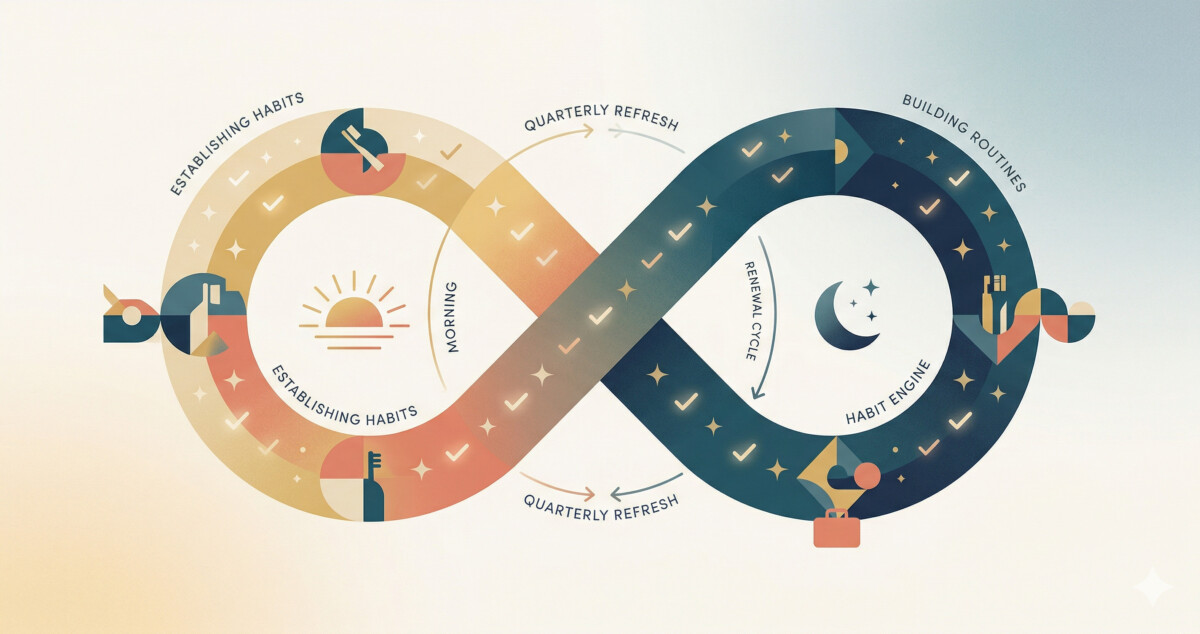
Research on habit formation in consumer behavior consistently points to three elements: consistent cues, established routines, and reliable rewards. Brands that understand this design their product ecosystems around those three elements, not just the device. The brush is the cue. The routine is the twice-daily habit. The reward is the cleaner feeling that compliance actually produces.
The most successful oral care DTC brands do not just sell a toothbrush. They sell the morning and night routine the toothbrush anchors. That is a subtle but important shift. It means the product’s job is not just to clean teeth. It is to make brushing feel like something you do, not something you have to do.
Consistency is the actual value driver. NIH data on oral health outcomes and compliance consistently point to brushing twice daily, every day, as the variable that matters most for long-term results. Any product feature that improves compliance directly enhances the product’s core value proposition. This is worth stating plainly on your product pages, not buried in a FAQ.
Habit engines work because they create interlocking products. The brush needs a head. The head needs replacing. The charger stays home when you travel, so you want a travel option. The kids see the parents using it, so now there is a family consideration. None of these are upsells in the traditional sense. They are the natural next step in a routine that is already working. The merchandising job is to make those next steps obvious and frictionless.
A starter kit that includes the brush, two heads, and a travel case is not just convenient. It is a routine in a box. The customer does not have to think about what they need. They have everything required to get started and to maintain the habit. Brands using Rebuy Engine on Shopify can surface these bundles dynamically based on what a customer is already viewing, turning a single product page visit into a full routine discovery moment.
Bundles also reduce the friction of decision fatigue. Separately choosing between a brush, three head options, and two accessories is a lot of work. A curated kit removes that work and signals to the customer that someone has already thought about what goes together. That signal is itself a form of brand authority. For a deeper look at how to structure these offers across your Shopify store, the guide on mastering Shopify upsells to increase average order value covers the mechanics of bundle placement before and after checkout.
Three-month brush head replacement is not just a hygiene recommendation. It is a merchandising calendar. Brands that remind customers at the right interval, make reordering easy, and price replacement heads accessibly are turning a one-time device purchase into an ongoing relationship.
The brands that ignore this are leaving both revenue and retention on the table. The ones that get it right turn their brush head into a recurring touchpoint, a mini brand moment every quarter. Pair that cadence with a subscription option and you have the foundation of a retention program. The full playbook for building that kind of recurring revenue on Shopify is covered in depth in this guide to boosting customer loyalty with subscription models.
Tiering done well is not about squeezing more money from each customer. It is about having a clear next step for someone who is already using the product and wants more from it. The alternative is they look elsewhere when they are ready to upgrade, even when you have exactly the product they need.
The core insight here is that DTC brands growing on retention rather than acquisition have something in common. Their products are designed for everyday use, and their merchandising is designed to support that daily use, not just the initial sale. Each tier in the table above should have a clear collection page, a clear upgrade path email, and a clear replacement cycle. If any of those three are missing, the tier is incomplete.
A two-minute timer is not a gimmick. Studies repeatedly show that most people brush for under a minute without one. The timer closes the gap between intention and behavior, which is exactly what habit-forming products do. Quadrant alerts, pressure sensors, and post-brush feedback all do the same thing. They make the user more aware of how they are brushing, which improves compliance and makes the product feel more valuable over time.
From a merchandising perspective, these features deserve explicit real estate on your product pages. Not buried in a spec sheet. The message is not “this brush has a timer.” The message is “most people brush for 47 seconds. This brush gets you to two minutes. That is the difference that actually matters for your gum health.” That framing earns the feature its price premium.
Complicated products get abandoned. An electric toothbrush with six modes and no clear indication of which one to use for what situation creates uncertainty. Uncertainty creates avoidance. The best-designed oral care devices are the ones that feel obvious from day one. Lightweight handles, intuitive controls, clear charging indicators. These are not premium features. They are baseline requirements for a product people will use twice a day for years.
A brush that needs charging every three days disrupts the routine. A brush that lasts three to five weeks does not. This is a meaningful product decision, not just a spec. Lower charging friction means fewer gaps in the habit, and fewer gaps in the habit means higher compliance, better outcomes, and stronger retention. If your product page does not lead with battery life as a retention feature rather than a convenience feature, you are underselling your most important habit-protection mechanism.
A brand selling through retail has essentially no visibility into how the product is used after purchase. A DTC brand can collect reviews, support tickets, and behavioral data, and actually do something with it. McKinsey research on DTC brand growth consistently identifies customer feedback integration as a key differentiator between DTC brands that sustain growth and those that plateau after their initial acquisition phase.
For Shopify merchants, this means building feedback collection into your post-purchase flows, not just your product pages. A 30-day post-purchase email asking “how is your brushing routine going?” is not just a retention play. It is market research that your retail competitors cannot run. The patterns you find in those responses should directly inform your next product iteration and your next collection architecture.
Retail shelf cycles are slow. Launching a product update through a retailer involves planogram reviews, buyer approval, and sometimes a year of lead time. DTC brands can test a new brush head design, gather real feedback, and iterate within a quarter. That speed is a structural advantage, but only if brands actually use the feedback they are collecting rather than treating product development as a separate function from customer experience.
DTC brands decide what goes on the homepage, what appears in the cart drawer, and what email arrives after purchase. That is a complete merchandising environment that retail simply cannot match. Used well, it is how brands guide customers from a single purchase to a full routine. The work of turning one-time DTC buyers into long-term customers starts with that post-purchase sequence, and oral care brands have one of the most natural replenishment cycles in consumer goods to build that sequence around.
Organizing by product type, adults, kids, accessories, is the minimum. It is useful for navigation, but it does not do much for habit formation. Customers who land on an adult toothbrush page and see nothing suggesting what goes with it miss the ecosystem entirely. Category pages are a starting point, not a strategy.
Travel kits, family bundles, sensitive gum collections. These are more interesting than category pages because they answer a different question. Not “what product is this?” but “is this product for someone like me?” Travel-friendly collections remove the decision about what to bring, the kit is already curated. Family bundles create multi-user purchase moments that a single-product page never generates. Condition-specific collections (sensitive, whitening-focused, post-dental work) signal that the brand understands the customer’s actual situation.
The merchandising table below shows how these collection types map to customer intent and the retention mechanism each one activates:
New customers need a clear starting point. Returning customers need a clear next step. Both are merchandising jobs. A brand that nails entry but has no obvious upgrade path loses customers to competitors when those customers are ready to spend more, even when the brand has exactly the product they need. The upgrade path email sequence, triggered at the 90-day mark after initial purchase, is one of the highest-leverage automations an oral care DTC brand can run. It is also one of the most commonly skipped. Understanding how to prevent that drop-off is covered in detail in this breakdown of churn prevention strategies for DTC brands.
A child who starts using an electric toothbrush at age four and keeps brushing with one through adolescence is a different kind of customer from someone who switches at thirty. The habit is deeper, the brand relationship is longer, and the lifetime value is substantially higher. Kids’ oral care products also tend to have strong word-of-mouth dynamics. Parents who found something that actually worked recommend it to other parents with the same problem. That is acquisition through genuine satisfaction rather than paid channels, and it compounds in a way that performance marketing does not.
A household where parents and kids both use products from the same brand is fundamentally different from a single-user purchaser. Multiple brush heads. Multiple replacement cycles. Potentially multiple device upgrades over the years. The per-household value compounds in a way that single-user LTV calculations never capture. When you are building your collection architecture on Shopify, the family bundle page is not a nice-to-have. It is a revenue multiplier that most brands underinvest in.
Brand loyalty built in childhood is durably sticky. It is not sentimental. It is behavioral. The brand someone associated with a positive morning ritual at age seven has a head start on any competitor trying to reach that person at thirty-five. The kids’ product line is not a lower-margin concession to a niche audience. It is a long-term customer acquisition channel with dramatically lower churn than adult acquisition through paid media.
The clearest way to see how this works is to look at a brand that has built around it rather than around individual products. Usmile organizes its product line around the full brushing household, adults, kids, accessories, and replacements, rather than around a flagship device with optional extras. That is a meaningfully different architecture. It assumes the customer has a routine, or wants one, and that the brand’s job is to fit into and support that routine, not to sell a single transaction.
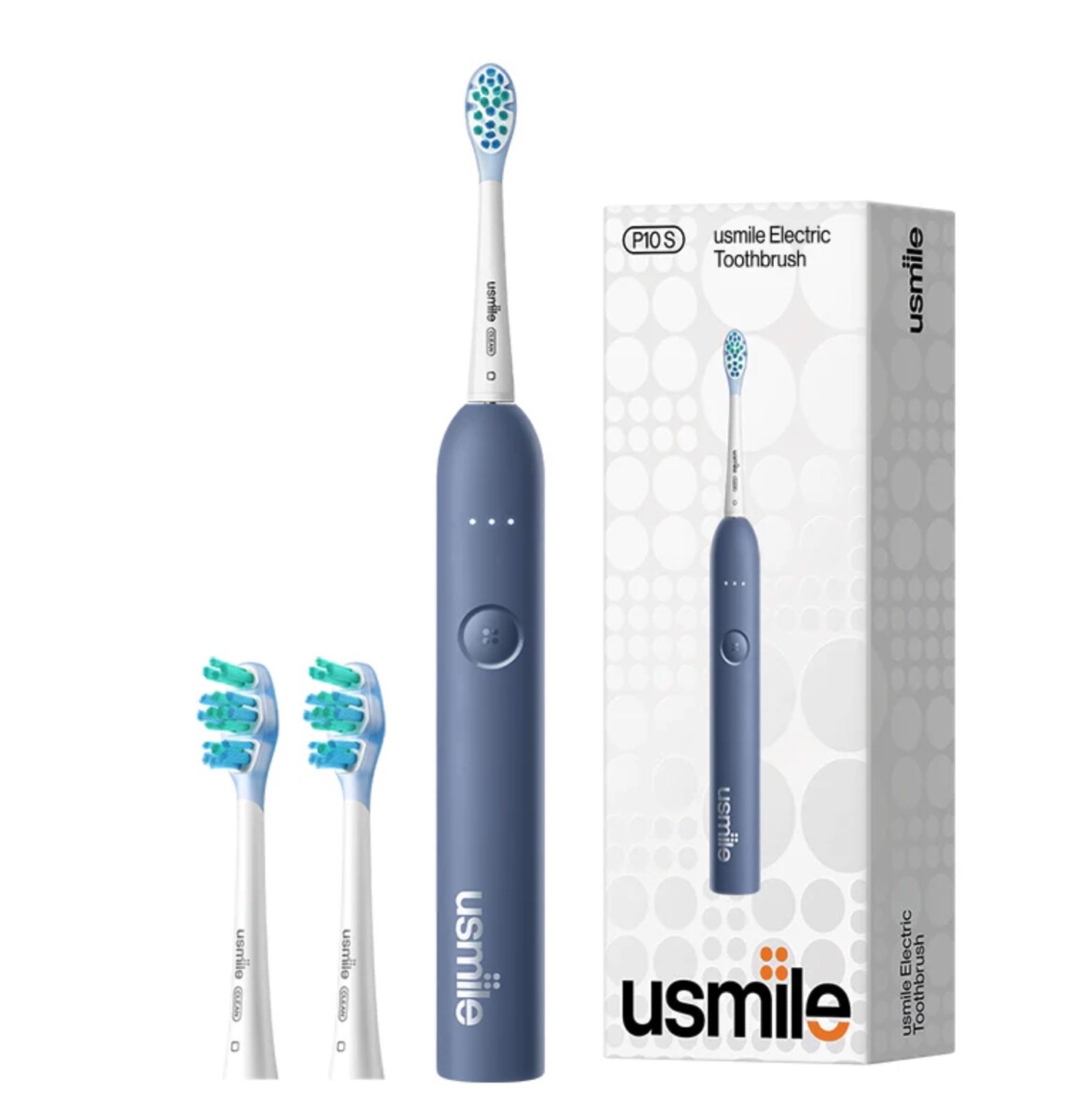
The kids’ product serves as a household entry point. The adult devices, ranging from standard to AI-guided, create a clear upgrade path. The Electric Toothbrush Collection organizes that range to make the options clear without overwhelming first-time visitors. Accessories and replacement heads close the loop. The purchase cycle does not end at the device. It continues every three months, which is exactly the kind of ongoing engagement that separates habit-engine brands from commodity ones.
For Shopify merchants building toward this model, the practical starting point is your collection architecture. Map every product in your line to a customer stage: new to electric, experienced user, family household, travel-focused. Then ask whether your current navigation and collection pages make those stages visible and navigable. Most do not. That gap is the merchandising opportunity.
The product is not the toothbrush. The product is the two-minute routine, twice a day, every day. Everything in the merchandising strategy, bundles, collections, replacement reminders, should support that routine rather than just the device sale. If your homepage leads with product features rather than routine outcomes, the framing is working against you.
Every product in the line should have a clear relationship to the others. The kids’ brush leads to the adult device. The adult device leads to replacement heads. The replacement heads lead to the travel kit. None of this happens by accident. It requires deliberate ecosystem thinking at the product and merchandising level, and it requires your Shopify collection architecture to make those relationships visible to a first-time visitor.
The three-month brush head cycle is the best habit-reinforcement mechanism an oral care brand has. Reminder emails, easy reordering, auto-replenishment options. These are not just revenue streams. They are the mechanism that keeps the customer in the routine and keeps the brand top of mind. Brands that treat replacement as an afterthought are leaving their most powerful retention lever untouched.
Long battery life, intuitive controls, travel-friendly formats. These are not premium features. They are the difference between a product that gets used consistently and one that gets used occasionally and eventually abandoned. Daily-use products have to earn their place in the routine every single day. Your product development priorities and your merchandising copy should both reflect that standard.
The escape from commodity pricing comes from reframing what you are selling. A toothbrush positioned against other toothbrushes will always compete on price. A toothbrush positioned as the foundation of a daily health routine competes on a different dimension entirely. On Shopify, this means your product pages, collection architecture, and post-purchase sequences all need to reinforce the routine, not just the device. Brands that lead with compliance outcomes, “most people brush for 47 seconds, this gets you to two minutes,” and build their merchandising around that frame consistently outperform brands that lead with feature lists. The DTC environment gives you full control over that framing. Retail does not.
Replenishment subscriptions built around brush head replacement are the highest-retention model in oral care because the replacement cycle is already built into the product’s design. A three-month cadence maps directly to the dentist-recommended replacement interval, which means the subscription is not manufactured convenience. It is genuine compliance support. Brands that frame it that way, and price replacement heads accessibly, see significantly lower churn than brands that treat subscriptions as a revenue optimization play. The key operational requirements are a frictionless customer portal where subscribers can skip, pause, or swap without contacting support, and a dunning automation that recovers failed payments before they become cancellations.
Each tier needs three things to drive organic upgrades: a clear audience (who is this for), a clear differentiation from the tier below (what does this add to the routine), and a clear trigger for when a customer is ready to move up. The entry tier is for first-time electric toothbrush buyers. The mid tier is for users who have built the habit and want more from it. The premium tier is for invested daily users who want AI guidance or full ecosystem compatibility. The upgrade trigger is typically the 90-day mark after initial purchase, when a customer has established the routine and is receptive to a “what is next” conversation. That email, sent at the right moment with the right framing, is one of the highest-ROI automations an oral care brand can build.
Kids’ products are a household entry point, not a niche addition. A family that uses the same brand for both adults and children generates multiple replacement cycles, multiple device upgrades over time, and strong word-of-mouth to other parents facing the same challenge of getting kids to brush consistently. The lifetime value of a household that enters through a kids’ product is substantially higher than a single adult purchaser, because the relationship starts earlier, compounds across more users, and benefits from the durability of habits formed in childhood. For Shopify merchants, this means a family bundle page and a kids’ collection are not optional extras. They are a multi-year revenue architecture.
The post-purchase window is where most oral care DTC brands leave their biggest retention lever untouched. A 30-day check-in email asking about the brushing experience is not just a customer service touch. It is market research your retail competitors cannot run. The patterns in those responses should directly inform your next product iteration, your collection messaging, and your upgrade path timing. Brands that integrate this feedback loop into their product development cycle, rather than treating customer experience and product as separate functions, consistently outperform those that do not. On Shopify, tools like Klaviyo make it straightforward to build triggered post-purchase flows that collect this data systematically and feed it back into your segmentation and merchandising decisions.





