Dotdigital blog
Ad costs are rising, and new customers are harder to win. Here’s how to build a loyalty program that gets them spending more, coming back more, and bringing their friends along too.

Sometimes it feels like all marketers are hearing is that ad costs are rising, search visibility is getting harder, and getting AI to recommend or cite your brand should be your team’s number one focus. After all, how can you grow if potential customers can’t find you in the first place?
It’s a good question, but not the only one you should be asking. A better question would be, how can we grow more organically? Or how can we make our existing customers spend more? What can we do to keep customers coming back? The answer to all of these is simple: build a loyalty program.
Loyal customers spend more, buy more often, and bring new customers with them at no extra cost to you. There’s solid data supporting this, too:
We’ve got a full breakdown of the business impact of loyalty if you want to dig deeper into the numbers.
The case for having a loyalty program is strong, but knowing how to build one that actually delivers big numbers is harder. This article dives into the details. We’ll walk you through the earning rules you can build into your program, the business goals you can hit with a well-structured program, and five ready-to-use templates you can adapt to your brand.
Trying to reward everything devalues your loyalty program and tells customers that you’re not quite sure what you’re trying to achieve. The most effective loyalty programs are built backward, starting with the goal you want to reach first.
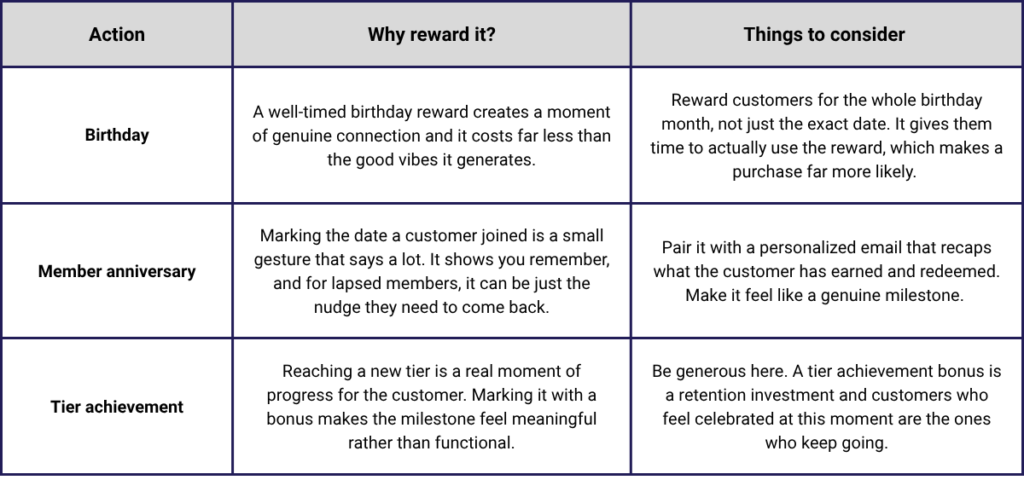
Here’s a breakdown of the earning rules worth building into your program and the thinking behind each one.

This is the foundation of most loyalty programs. Spend-based rewards are easy for customers to understand, easy for marketers to communicate, and they reinforce the behavior that matters most – repeat purchases.
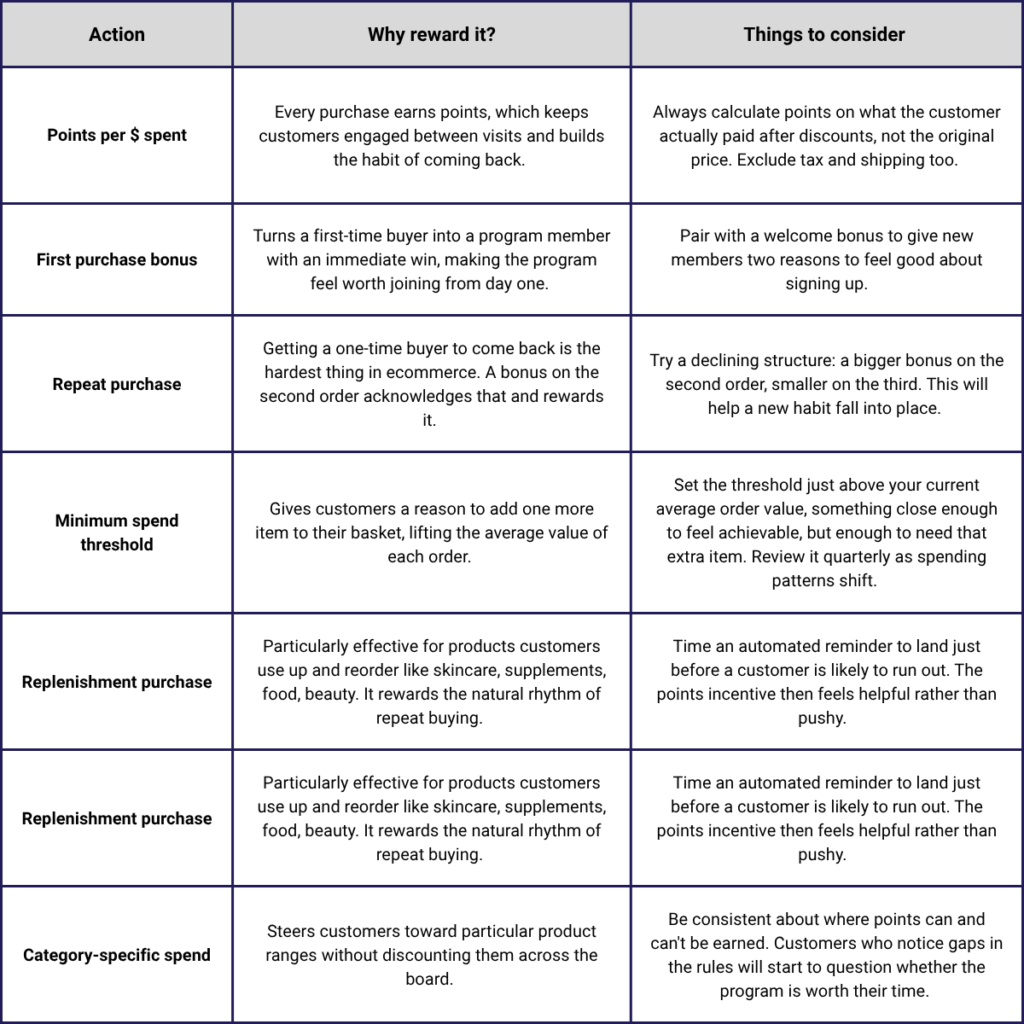

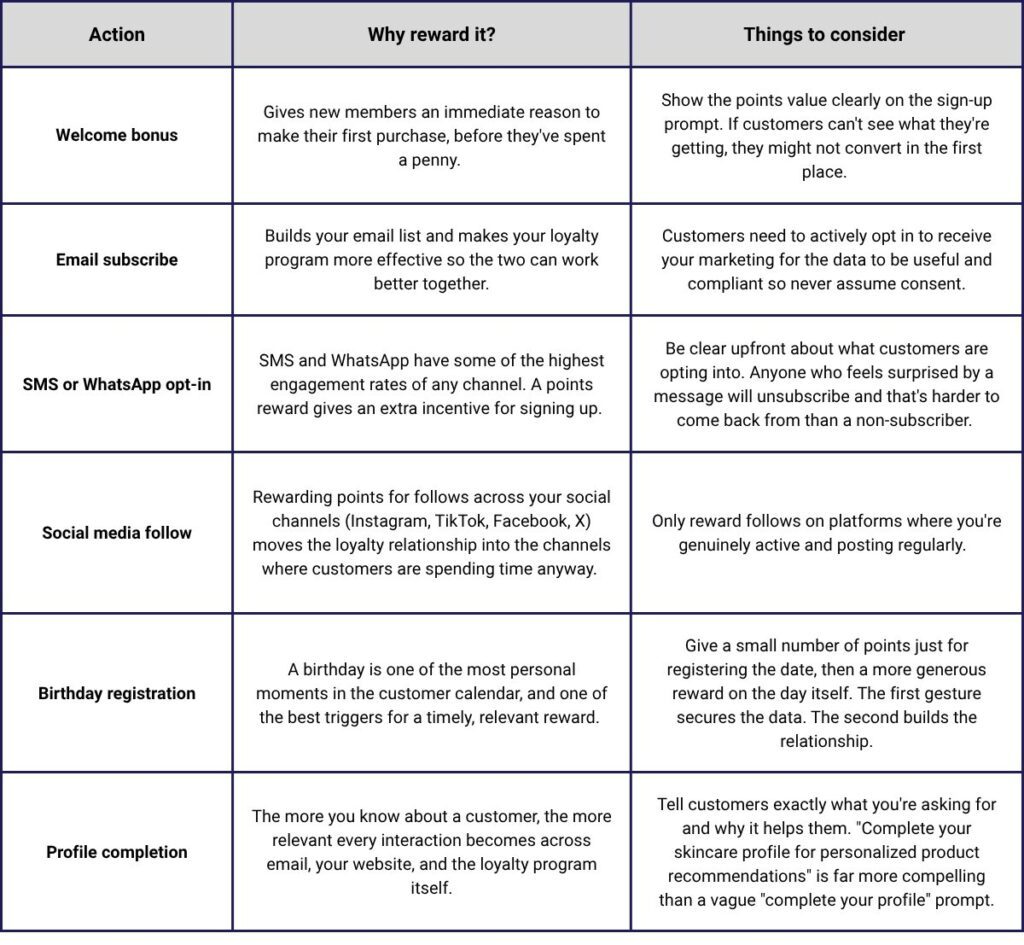

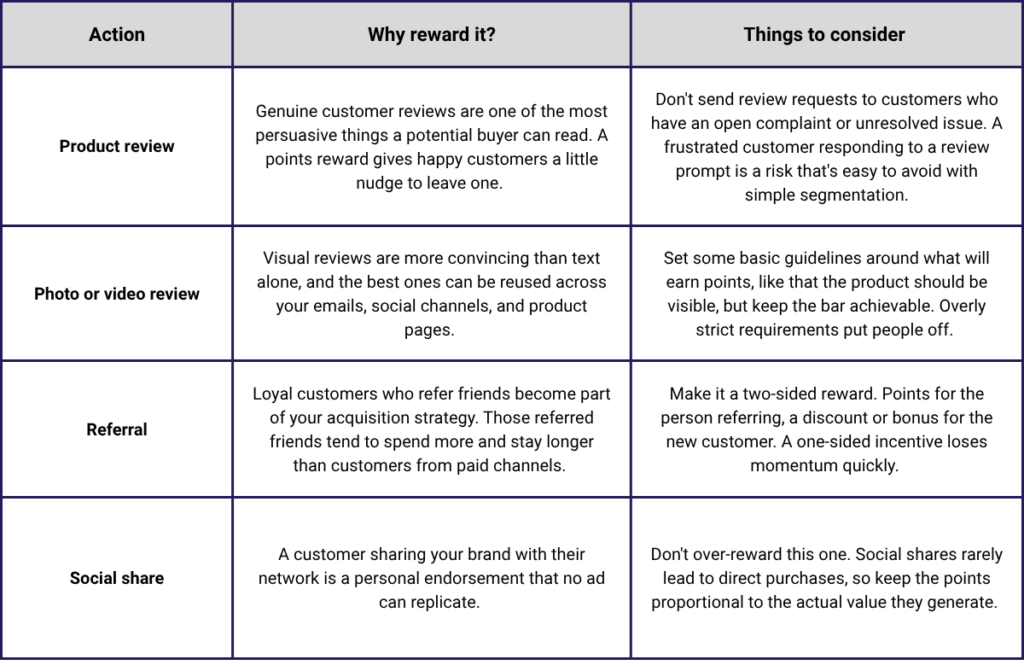
Loyalty programs aren’t one-size-fits-all. The most effective ones are built around specific business objectives, rather than points for purchases. Here are seven ways you can tailor your loyalty strategy based on your team’s goals.
Customer lifetime value (CLV) is the total revenue a customer generates over their entire relationship with your brand. Your highest-value customers tend to share a few things in common: they buy regularly, they engage with your communications, and they feel a genuine connection to your brand. A loyalty program strengthens all three.
Every brand has customers who go quiet. The question is whether they’ve moved on or just lost momentum. Loyalty programs give you a way to find out and a reason for lapsed customers to return that doesn’t rely on discounting.
Loyalty programs are one of the most effective tools for encouraging customers to spend a little more per visit without offering blanket discounts that reduce what you make on every sale.
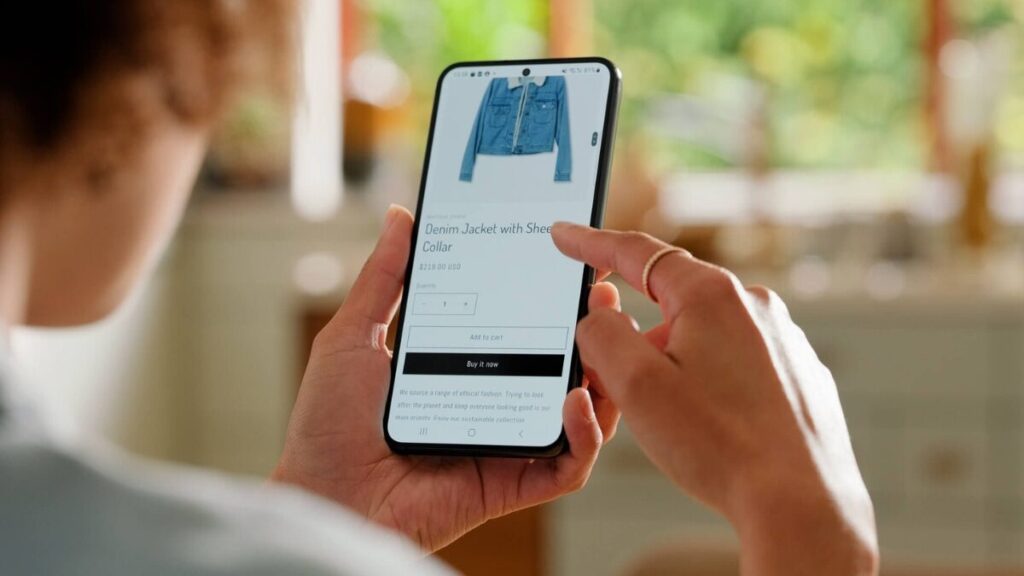
A loyalty program gives you something extra to show customers at the moments they’re most likely to hesitate. Sometimes that’s all it takes to tip them toward completing a purchase.
The most underrated output of a great loyalty program is advocacy. Customers who feel genuinely rewarded talk about it, and that word of mouth carries a level of trust that paid advertising simply can’t buy.

When you have something new to launch, your loyalty program gives you a ready-made audience of people who already like you and a way to reward them for being first purchasers or early adopters.
Genuine customer reviews are one of the most persuasive things a potential buyer can come across. A loyalty program gives you a reliable way to collect them without resorting to tactics that undermine their authenticity.
The best loyalty programs are built around how your customers shop. Most follow recognizable patterns, though, and that’s what makes them a good starting point. Here are five templates worth adapting, each designed for a different type of ecommerce business, with a structure you can pick up and make your own.
Best for: Brands launching loyalty for the first time. Simple to build, easy for customers to understand, and effective at building the habit of returning.
Earning rules
Rewards and tiers
Dotdigital tip: Set up an automated welcome email that fires the moment a customer enrolls, showing their starting balance and exactly how many points they need to reach their first reward. When customers can see where they’re headed, the journey feels worth starting.
Best for: Brands with customers who buy four or more times a year. Tiers give your most loyal customers something to work toward and benefits that go well beyond a discount.
Earning rules
Rewards and tiers
Tiers are evaluated on a rolling 12-month basis.
Dotdigital tip: Set up an automated email that goes out 30 days before a customer’s tier is reviewed, showing them exactly how much they need to spend to hold or improve their status. Customers who can see the finish line are far more likely to push for it.
Best for: Brands where customers buy frequently and feel genuinely invested in the product or category.
Earning rules
Rewards and tiers
Tiers: Newcomer > Enthusiast > Expert
Dotdigital tip: Use your loyalty data to send replenishment reminders just before a customer is likely to run out or re-engage. A well-timed message with a points nudge is relevant and helpful rather than promotional, and that distinction is what keeps customers coming back.
Best for: Brands where customers spend more per order but don’t buy as often.
Earning rules
Rewards and tiers
Tiers: Member > Insider > Partner
Dotdigital tip: For categories where customers don’t buy very often, tie points expiry to inactivity rather than a fixed date on the calendar. Points that expire after 12 months of no activity feel fair. Points that disappear on January 1, regardless of behavior, feel random, and that frustration sticks.

Best for: With ongoing delivery cycles or regular engagement like subscriptions, refills, or membership-based services.
Earning rules
Rewards and tiers
Tiers: Newbie > Regular > Devotee
Dotdigital tip: A quarterly loyalty summary showing what subscription customers have earned and redeemed, alongside personalized recommendations based on their history, is a low-effort way to remind them that the relationship is worth keeping.
A loyalty program is only as good as the thinking behind it. The earning rules you choose, the rewards you offer, and the moments you decide to recognize all send a message to your customers about how well you understand them and how much you value the relationship beyond the transaction.
The templates and frameworks in this article are a starting point. To get the most from your loyalty strategy, you need to treat it as a living strategy, testing what works, acting on what the data tells you, and continually finding new ways to make customers feel like staying is the obvious choice.
If you’re thinking about what that could look like for your brand, Dotdigital Loyalty is coming soon. Register your interest and be the first to know when it’s ready.