


Dotdigital blog
Find the right marketing automation platform for your team, goals, and customers with our practical guide to choosing, testing, and comparing options.

The key to choosing the right marketing automation platform is about finding a platform that works for your goals, your team, and your customers. Although, that’s probably not a surprise to you and your team.
With so many options out there, choosing the right platform can feel overwhelming. But don’t worry, we’ve broken it down into practical steps to give you a clearer picture of how to prioritize your requirements.
In this guide, we’ll show you how to:
Before you start comparing marketing platform features or booking demos, it’s a good idea to review what you already have. If you’re using an existing platform, or even just managing email campaigns manually, document your current workflow and think about:
Once you’ve reviewed your current setup, have a think about the outcomes that matter the most to you and your team because the right marketing automation platform depends on what you’re trying to achieve. Every platform can look impressive at first glance, and it’s easy to get distracted by flashy features.
Some questions to think about are:

Once you know what you want to prioritize, you can map them to platform capabilities.
For example:
It also helps to separate:
Maybe today you’re focused on email automation. But if you know you’ll soon invest in SMS, loyalty programs, or advanced personalization, you’ll want a platform that can grow with you.
Being clear on what you need helps you pick the right tier or package, or spot an all-in-one solution so you don’t end up juggling multiple tools. Think about the ways you want to connect with your customers, then use that to guide your search.
Many successful teams focus on a few core areas:
This is how you make sure the right message lands with the right person, rather than just sending everything to everyone.
Automated journeys and triggered messages that respond to customer behavior can save a lot of time.

People like when messages and product recommendations feel like they’re written personally for them. Using customer data to tailor content, like including their first name or past purchases, can help drive campaign engagement.
Your audience isn’t consuming content in just one place, so it helps when your platform can handle email, SMS, WhatsApp, social, and web campaigns all together.
Keeping your key systems connected makes workflows smoother and keeps everyone on the same page. But also, it’s best to consider your full tech stack. Instead of focusing only on your CRM, have a think about what other platforms your marketing relies on every day. That might include:
Seeing what’s working (and what’s not) makes it easier to tweak your strategy as you go.
If you’re a small team and need to manage multiple brands, you’ll want to choose a marketing automation platform that’s easy to handle multiple accounts within one account.
One way to narrow down your options is to make a list of “must-haves” versus “nice-to-haves.” to help you spot the features that will make your life easier and help you hit your goals.
Platforms structure their fees in different ways. For example, some charge per contact, others charge per feature, and some just have a flat subscription.
When considering your budget, think about how your business might grow over the next year or two. A platform that fits perfectly right now could feel restrictive if your contact list doubles or you want to expand into new channels.
Also, keep an eye out for the hidden extras like:
Of course, the goal isn’t to pick the cheapest option – it’s about choosing one that gives you flexibility.
Having all the features and capabilities in the world won’t matter if you and your team find it difficult to use the platform.
Take a look at the platform interface and the learning curve and ask:
Having access to helpful customer support makes a big difference too. The best platforms guide you with things like onboarding, training materials, and an active community where you can ask questions and pick up tips from other users. It’s also helpful when you can contact real people (not bots), and in your time zone, who can walk you through issues, run live demos, or answer questions as they come up.
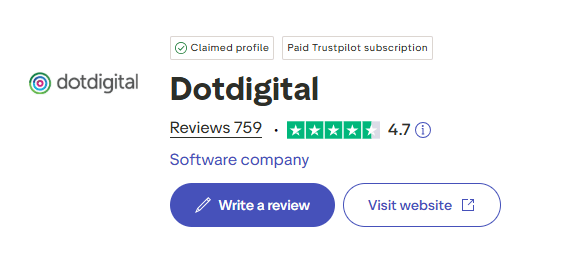
You can also check third-party review sites like Trustpilot to see how other businesses rate a platform’s usability and support. Dotdigital, for example, has consistently positive reviews from marketers, showing that marketing teams find it easy to get up and running while getting the help they need.
When a platform feels intuitive and you know help is easy to reach, it keeps your team confident, stress-free, and focused on getting results instead of wrestling with the tool.
Your marketing automation platform needs to work with the tools you already use and rely on. That means things like your CRM, ecommerce platform, analytics software, and anything else you’re using day to day.
When everything talks to each other, your data stays clean, workflows run smoothly, and campaigns perform the way you want them to.
Not every platform makes it easy to stay compliant. They need to help you meet legal data protection requirements across the regions you operate in, whether that’s:
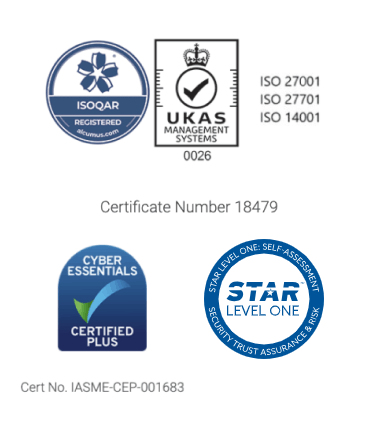
Check that the platform has solid security in place and the right certifications. That could mean things like ISO 27001 or SOC 2 certifications, SSL encryption, regular security audits, or even two-factor authentication for your team.
Once you’ve narrowed down your options, it’s time to try them out. Most marketing automation platforms offer demos or free trials, so you can use that to your advantage.
Play around with things like workflows, check integrations, and see how easy it is to get things done. It also helps if you bring your team into the process too if they’re going to be using it most.
Check that the platform works with businesses like yours and review things like references or case studies in your sector. Seeing how it’s helped similar companies to yours can give you confidence it will meet your needs.
Dotdigital‘s marketing automation platform is built for teams that want marketing automation to work, to be impactful, and be easy to use. It brings together the essentials you care about like email, SMS, multi‑channel journeys, and personalization, in a way that feels intuitive instead of being overwhelming.
Whether you’re syncing contacts from your CRM or pulling in ecommerce data, the integration tends to feel seamless.
You’re not left to learn everything from trial and error or buried in generic help articles. From the moment you start, you get guidance that’s tailored to your setup and goals. Dotdigital is designed to be easy to use for any marketer, without needing to rely on designers, developers or data teams.
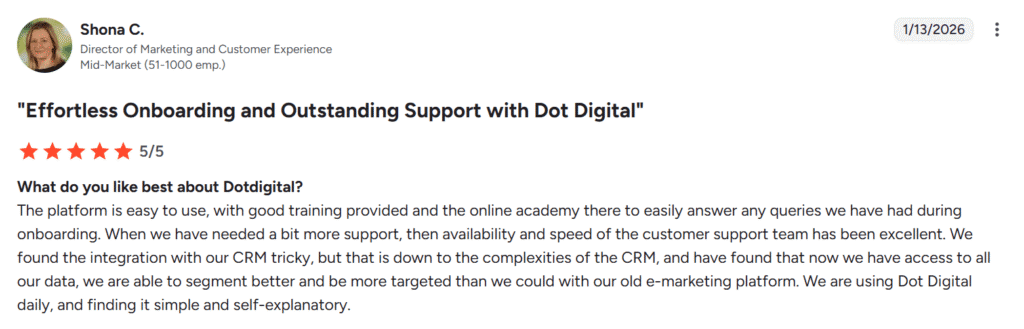
As your contact list increases or you expand into new channels, Dotdigital grows with you instead of locking you into confusing pricing tiers. Managing multiple accounts through one platform is easy and you can add extra child accounts at any time. We also develop new features based on what marketers tell us they need, so the platform keeps evolving alongside your business.
The platform is designed to help you stay on top of data protection requirements. With robust safeguards and adherence to key regulations, you can feel confident that customer data is protected. If you want a deeper look at how this works in practice, you can explore more here.
It’s one thing to tick every box on paper. It’s another to pick a platform that feels good to use every day, that your team enjoys working with, and that frees you up to focus on strategy rather than troubleshooting.





