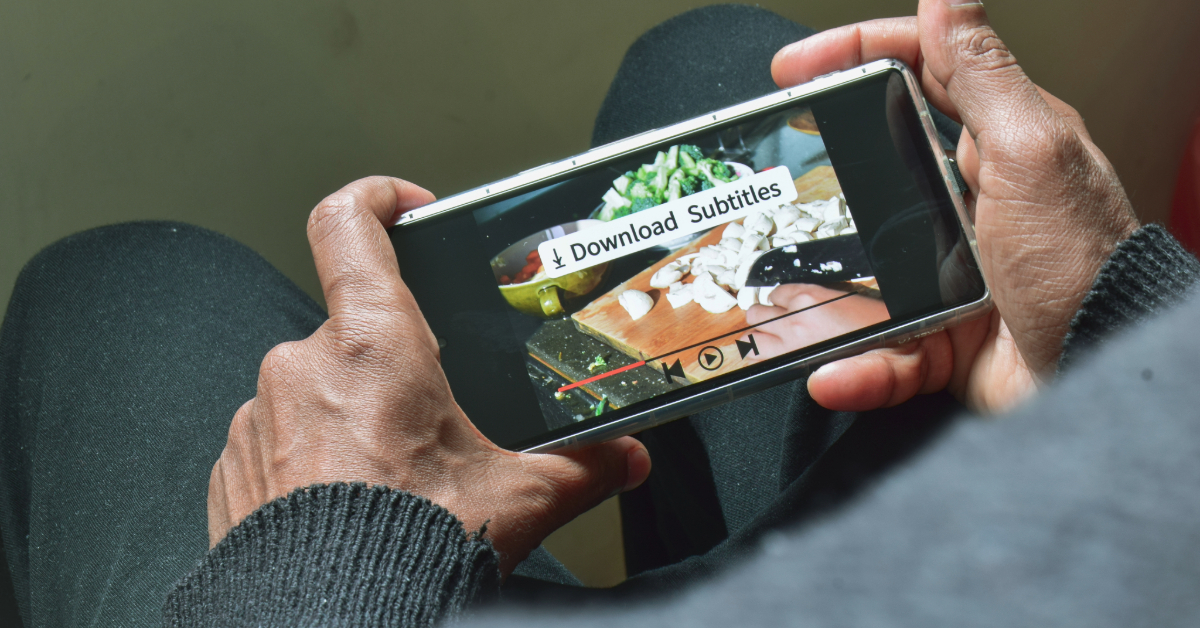
A transcript is a written or printed version of the audio or video content that has been spoken.
Speech transcription and audio converter can be saved as a document that is kept distinct from the video and audio files but can be kept or shown close by on the same site. This is where audio to text AI-powered captioning and transcription come into play, enabling accessibility of material for everyone, including those who are non-native speakers of the language and those with hearing loss.
The e-commerce industry experienced rapid growth, and video marketing is becoming more and more important every day. Customers are so used to seeing videos that 54% of them stated they would like to see more from the brands they like most. Video marketing may affect your audience, and customers find branded video content to be the most memorable, according to HubSpot.
E-commerce websites can increase user engagement and reach a wider audience by using accessible videos. Captions not only increase access to e-commerce videos, but they also have the potential to increase behavioral intent, awareness of the brand, and brand memory. This is where video to text AI, which is frequently used, comes into action, making content accessible to all. Non-native English speakers and others with hearing problems can also profit from it.
Automatic captioning is the method of rotating spoken words in a video into text and viewing them on the screen as captions. On the other hand, transcription involves turning spoken words into a written document that can be viewed self-sufficiently of the video. To produce exact and fast written versions of spoken content, both procedures make use of cutting-edge technologies like artificial intelligence and machine learning.
Although videos are a potent tool in and of themselves, their potential gets even greater when they are made public to all viewers. Here are the top 5 reasons for captioning e-commerce videos:
It may wonder you to learn that more than 5% of people worldwide have knowledge earshot loss. It suggests that when watching videos, more than 360 million individuals rely on captions. This huge potential audience disappears when video content is not available. Individuals who have hearing loss are also consumers, and they wish to support companies that value them as human beings and clients.
However, the ability to see and hear video content equally is helpful to persons with learning disabilities, neurological diseases, and more. As such, the D/deaf and hard-of-hearing communities are not the only ones who benefit from captions. Using captions ensures that you won’t miss any opportunities to engage with these communities, and having your videos accessible is always a smart video marketing move.
Speaking spoken content is usually difficult for non-native speakers, especially when it involves fast-paced dialogue or industry-specific jargon. These viewers can follow along more easily with captions and transcripts, which helps to bridge the language gap and improve knowledge of the data at hand.
Transcripts and captions are gold mines for search engine optimization. They provide search engines with more text to index, which can raise a website’s ranking. More interested parties will be enabled to discover your movies through organic search thanks to enhanced visibility.
Plenty of tools are available for transcribing and captioning automatically. Popular ones are Rev, Otter.ai, and Google’s Speech-to-Text. These products make the process easier and more beneficial to companies by providing accurate and swift transcriptions using AI and machine learning. Even while automatic transcription and captioning have advanced significantly, there are still a few challenges. False transcriptions and problems involving various speakers or accents are common problems.
All viewers can be made available by captioning and transcription, regardless of their language or hearing capability. It ensures that viewers in noisy situations or with distractions can follow along and allows people with hearing impairments or language barriers to engage fully with your material. Further, adding captions to your movies might improve their visibility and SEO. You are proactively trying to create an inclusive and accessible viewing experience for everyone by using captions in your video content.