Free every Thursday · 60,261 Readers
Fastlane Insider Newsletter: What's working for Shopify in the AI era?
Free every Thursday · 60,261 Readers
Fastlane Insider Newsletter: What's working for Shopify in the AI era?
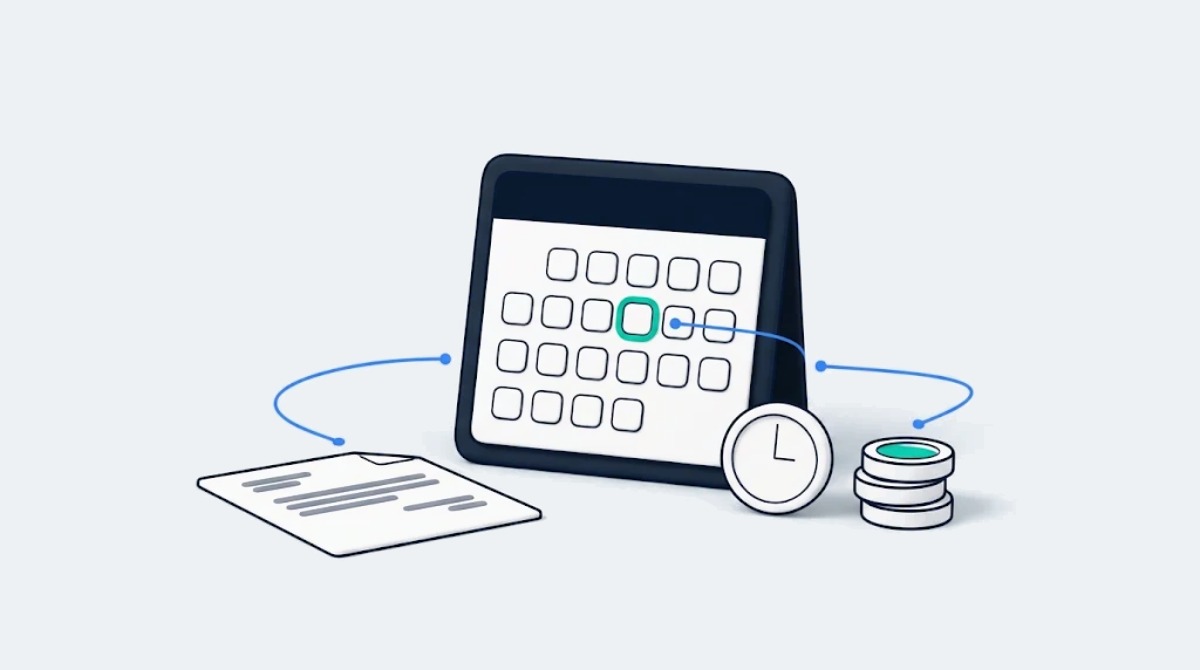
Two contracts can both say Net 30 and still pay you weeks apart. The gap hides in definitions most people skim until the invoice is already late.
Payment terms are a negotiation, and most clients open with boilerplate. A wholesale buyer sends a vendor form, an agency client attaches its standard services agreement, and somewhere on page four sits a line that says Net 30. It looks settled. It rarely is.
The details inside that boilerplate decide when cash actually arrives. A Net 30 clause looks identical across contracts until you check what starts the clock, how days are counted, who signs off, and how the money moves. Each of those definitions can add days, and they stack.
The questions below are the ones to settle before work begins, while the client still wants the order and the conversation is easy. If you are Growing and just opened your first wholesale accounts, start with the first three sections. If you are Scaling with dozens of accounts on terms, the sections on approvals, staged billing and the cost of waiting are where the money is.
The payment clock starts at whatever trigger the contract names, and contracts rarely agree on which one, so ask and write the answer into the agreement. Some terms start at service completion. Others start at the invoice date. Some start when the client receives the bill, and that version can add a week of routing time before the term even begins.
A term counted from client receipt always starts later than the same term counted from issuance. The invoice date is usually the easiest trigger for both sides to verify, because it sits on the document itself. If the client insists on receipt, define what receipt means. An invoice sitting unread in a general inbox is not the same as one logged by accounts payable, so the definition should name the destination and the event, for example “received at [email protected].”
Your platform may already pick a trigger for you. If you sell wholesale through Shopify’s B2B payment terms, net terms from Net 7 to Net 90 are counted from the day the order is placed. That is a clean, verifiable trigger, and it means your contract and your admin settings should say the same thing. If the contract says “from receipt of invoice” while Shopify counts from the order date, you have two due dates and a built in argument.
State the trigger on the invoice itself, next to the payment terms. A line that reads Net 30 from invoice date leaves less room for reinterpretation than “Net 30” on its own. Then send invoices the day work is delivered or the order ships. A trigger tied to issuance only helps a business that bills promptly, and every day an invoice waits in drafts is a day added to your own wait. Fastlane’s guide to writing an invoice email that gets paid covers what belongs in that first send.
Disputes over the trigger tend to surface after the invoice is already overdue, when both sides reread the contract for the first time. One sentence agreed up front settles the question before it costs anything.
The right term length is the one your own cash cycle can carry, because a Net number is interest free credit from your business to your client. Net 30 is the common default in B2B invoicing, with Net 15 and Net 60 at either end. Payroll, supplier invoices and ad spend arrive on their own schedule regardless of when clients pay, so the question is how long you can fund the gap.
When your obligations come due before your receivables, you are lending money to your client. A Net 60 term from a slow payer can mean covering two months of costs before the first dollar lands. A quick way to size this, the same arithmetic Fastlane uses in its guide to getting wholesale stockists to pay on time, is monthly B2B sales divided by 30, multiplied by the average number of days clients actually take to pay.
Stated terms also understate the real wait. Illustrative example, assuming $30,000 a month in B2B sales: on Net 30 paid on time, roughly $30,000 is out at any moment. If clients pay 11 days late on average, the Net 30 invoice becomes a 41 day wait, and about $41,000 is out instead. Late payment is common enough to plan for. In its 2026 survey of more than 600 businesses in the US, Canada and Mexico, Atradius found that overdue invoices make up an average 23% of B2B receivables.
Money held in receivables also loses value the longer it sits, since a dollar arriving in 60 days buys less than the same dollar arriving this week. That is a reasonable basis for asking for shorter terms, and some clients accept Net 15 when the ask comes before work starts rather than after the first invoice. Be careful about extending terms casually, because they are hard to reverse. Once a client is used to Net 60, shortening it later feels like a penalty.
A client that refuses to discuss term length at all is giving you useful information. How the negotiation runs is often how the relationship runs.
An agreed term only works once it resolves to a specific calendar date, so confirm whether Net 30 means 30 calendar days or 30 business days. Business day terms skip weekends, and public holidays too where the agreement says so, which makes them run longer on the calendar. Holidays also differ between countries and regions, which adds confusion when the client is in another market.
The choice matters most on short terms. On Net 15, the weekends and a holiday can stretch the window by several days, a large share of the whole term. Ask which count applies and write it into the agreement. Then ask what happens when the final date lands on a Saturday. Some terms roll the deadline to the next business day. Others hold it firm and expect payment early. The difference is small and causes real disputes.
Counting the deadline by hand invites errors, especially across holidays. A due date calculator for invoices calculates a date from the term and start day, and can skip weekends for business day terms. Check the applicable holiday calendar separately if holidays affect the count.
Put the computed date on the invoice itself. “Due April 14” is harder to dispute than “Net 30,” because nobody has to agree on the arithmetic. Shopify supports this too: orders with deferred payments can carry either a net term counted from the issue date or a fixed term with a specific due date, and you can schedule up to five reminder emails around it.
Use that same date to schedule your own reminders and to apply any agreed late fees. A date everyone can read off the invoice is the anchor for everything that follows.
Ask who approves and releases payment, because a due date only works if the invoice reaches the people who can pay it. A company does not pay an invoice; an accounts payable clerk with a queue does. Many late payments trace back to a bill that landed in the wrong inbox or reached the right inbox missing one required detail.
Ask where invoices should be sent and who approves them. Some clients require a purchase order number before their system will accept an invoice at all. Others route approval through a project manager or a buyer who travels, goes on leave or changes roles. Each handoff can add days that never appear in the written terms, and knowing the chain lets you address the bill correctly the first time.
Ask whether the client pays on fixed weekly or monthly payment runs. An invoice that is approved one day after a monthly run can wait a full cycle for the next one, which can turn Net 30 into something closer to Net 60 without anyone breaking the contract. If you know the run date, you can time your invoices to land a few days before it.
Payment history predicts the wait better than the client’s brand name. A large retailer with a slow accounts payable department can strain your working capital harder than a small boutique that pays by card the day the invoice arrives. Ask peers and suppliers who already bill the client how it actually pays. A short conversation can reveal more than its stated policy.
If the client uses a vendor portal, learn it before the first invoice. Portals can reject bills over formatting details, and a resubmission usually puts the invoice back at the start of the queue.
On long projects, bill in stages so the balance at risk never grows to the full value of the work. Good routing fixes delivery, but it does not shrink exposure. A single invoice at the end of a three month project means three months of unpaid work, plus the payment term on top.
Deposits move part of the payment ahead of the work. A common structure collects a portion at signing and the balance at delivery. For a Shopify brand taking a large wholesale or custom order, that deposit can cover materials before production starts, so you are not financing the client’s inventory out of your own bank account.
Retainers suit ongoing arrangements. The client pays a fixed amount each month, and you work against that prepaid balance, which is why agencies and service businesses lean on them. Milestone billing splits a project into invoice sized deliverables. Each completed stage triggers its own invoice with its own due date.
When each stage is paid before the next one starts, milestone billing limits your exposure to the value of one stage. It also smooths your cash flow, since revenue arrives in steps rather than in one lump months away. If you are Growing, one deposit plus one final invoice is usually enough structure. If you are Scaling, standardize the stages in your contract template so every project is billed the same way and nobody negotiates it from scratch.
Ask for staged billing before the project starts, not halfway through. A client who refuses any upfront payment may be signaling how it will treat your invoices later. Whatever you agree, put the amounts and triggers in the contract. If the contract says “completion of phase two,” define phase two as well.
Set late payment consequences before work starts, because a due date with no consequence attached is easy for an accounts payable queue to treat as flexible. Definitions protect the work while it runs. The contract also needs to cover what happens when payment does not arrive.
Late fees give the due date force. The rules on what you can charge, and how, vary by jurisdiction and by the type of client, so any proposed late payment arrangement merits discussion with an appropriately qualified adviser before it goes into the agreement. The principle that holds everywhere is to agree it in writing up front, rather than announcing it after the invoice is overdue.
Agree on who to contact when payment runs late and how the two sides will raise it. A named person and a set channel keep the conversation short. This conversation is far easier before work starts than after an invoice goes stale, so ask the question early, while the client still wants the work.
Overdue invoices also need a follow up plan on your side. The accounts receivable aging report lists every open invoice by how overdue it is, and a weekly review keeps the picture current. Send the first reminder the day after the due date. Waiting two weeks can signal that the terms were never firm. A steady dunning process of reminder emails and then phone calls keeps the invoice visible, and Fastlane’s wholesale collections guide linked above lays out a monthly rhythm of statement, follow up, call and pause that works for accounts on terms.
Keep a record of every reminder and every promised payment date. Documentation helps if the dispute ever reaches collections, and it stops each conversation from starting at zero.
Price an early payment discount before you offer it, because it is a direct payment for speed and it is more expensive than it looks. The classic structure is 2/10 Net 30: 2% off if the client pays within 10 days, with the full amount due at 30. Fastlane’s explainer on early payment discount structures covers the common variations, from 1/10 Net 30 to end of month terms.
Run the arithmetic on what you are buying. On a 2/10 Net 30 invoice paid on day 10 instead of day 30, you give up 2% to get the cash 20 days sooner. As an annual rate, that is 2 divided by 98, multiplied by 365 divided by 20, or roughly 37% a year. Very few businesses would borrow at 37% to get paid three weeks early, which is why the discount only makes sense when it solves a real problem.
The discount is useful when it changes behavior. If a client already pays in 12 days, the 2% is pure margin loss, because you were getting the cash early anyway. If it moves a client from paying at day 45 to day 10, the calculation changes: 2% for 35 days sooner works out to roughly 21% a year, and it frees cash that would otherwise sit in receivables. So run the numbers on the client’s actual payment date, not the stated term. The distance between the discount date and the day the client really pays sets the true cost.
Some large clients run standing early pay programs with set rates. Asking about one costs nothing and may replace a discount you would otherwise negotiate. Watch for the other edge case too: some clients take the discount and still pay late, so state in the agreement that the discount applies only to payment received inside the window.
Trace how the money arrives, because every payment method adds its own delay between the client’s account and yours, and the written term accounts for none of it. Checks add mailing and clearing time. Card payments settle fast but carry processing fees that reduce the amount you actually receive on the invoice.
Bank transfers fall between those options. A domestic transfer can take a day or more to land, and the client’s internal release schedule runs before that. Cross border payments take longer at several steps: currency conversion and intermediary bank handling can add several days to an international transfer, so the due date can arrive while the money is still in transit.
Ask which method the client will use before agreeing on terms. Also ask which side absorbs transfer fees and conversion costs. An international wire that arrives short by its intermediary fees is a common source of small unpaid balances that nobody wants to chase but everybody has to reconcile.
The invoice should name the methods you accept and any charges that apply. Surprises at the payment stage are a frequent cause of short payments. The answers can also justify shorter terms for distant clients, to offset the transit time, or billing in your own currency with conversion left to the client.
Decide what the wait costs you, because every dollar parked in receivables is a dollar that cannot cover payroll or buy inventory, even when the invoice eventually pays in full. Waiting has a price, and the clearer you are about it, the easier the terms conversation becomes.
Invoice factoring shows that price directly. Factoring companies buy receivables at a discount, and that discount is roughly the market rate for waiting. Fastlane’s breakdown of how invoice financing turns receivables into cash puts typical factor rates at 1% to 5% of the invoice value, depending on the term and the client’s credit. Set that against the 2% a 2/10 discount gives away on each invoice, and you have two real prices to compare against what a long term is worth to you.
A business that knows its cost of waiting can judge terms more clearly. Some clients justify Net 60 through volume, reliability, or both. Others do not. If you are Scaling, this is where a rolling cash forecast earns its keep: Fastlane’s guide to why a record month can drain your cash shows how inventory, payouts and payment terms combine in the bank balance, and every new set of terms should be tested against the lowest cash week it creates.
The terms conversation is where that gets decided, not the collections call months later. Consistently enforced shorter terms strengthen your position with every account. The businesses that get paid fastest tend to be the ones that asked the most questions before work began.
Net 30 on an invoice means the full amount is due 30 days after a starting point the agreement defines, usually the invoice date. The term on its own does not say whether those are calendar days or business days, or what starts the count, so two clients can read the same Net 30 differently. To remove the ambiguity, write the trigger next to the term, for example Net 30 from invoice date, and print the calculated due date on the invoice itself. A specific date is harder to dispute than a term, and it gives both sides one clear deadline for reminders and any agreed late fees.
A small business should offer the shortest term its clients will accept, because every extra day is credit funded from its own cash. Net 30 is the common default for B2B invoicing, and some clients accept Net 15 when it is agreed before work starts. Treat a Net 60 request as a negotiation and ask what it buys you, such as a larger order or a guaranteed reorder. Before agreeing, estimate the cash it ties up: monthly B2B sales divided by 30, multiplied by the days clients actually take to pay. If that number would squeeze payroll or inventory, keep the shorter term or ask for a deposit.
A 2/10 Net 30 discount is worth offering only when it changes how quickly a client actually pays. Giving up 2% to be paid 20 days sooner equals an annual cost of roughly 37%, which is expensive money. If a client already pays within about two weeks, the discount is mostly lost margin. If it moves a client from paying at day 45 to day 10, the annual cost falls to roughly 21% and frees cash that would otherwise sit in receivables. Run the calculation on each client’s real payment history, and state in the agreement that the discount applies only to payment received inside the window.
To calculate an invoice due date with business days, start from the agreed trigger date and count forward only weekdays, skipping public holidays if the agreement includes them. That makes a business day term longer on the calendar than the same number of calendar days. Counting by hand is error prone across weekends and holidays, so an invoice due date calculator that can skip weekends is the faster route, with the relevant holiday calendar checked separately. Also confirm what happens when the result lands on a weekend, since some agreements roll the deadline forward and others expect payment on the last business day before it.
A contract should state what happens when payment is late, who to contact, and how the two sides will raise it, all agreed before work starts. That usually means a defined due date, any late fee or interest the parties agree to, a named accounts payable contact, and the channel for reminders. Because the rules on late fees and interest vary by jurisdiction and client type, have a qualified adviser review the clause before it goes into the agreement. On your side, review an accounts receivable aging report weekly and send the first reminder the day after the due date, so the terms read as firm from the start.