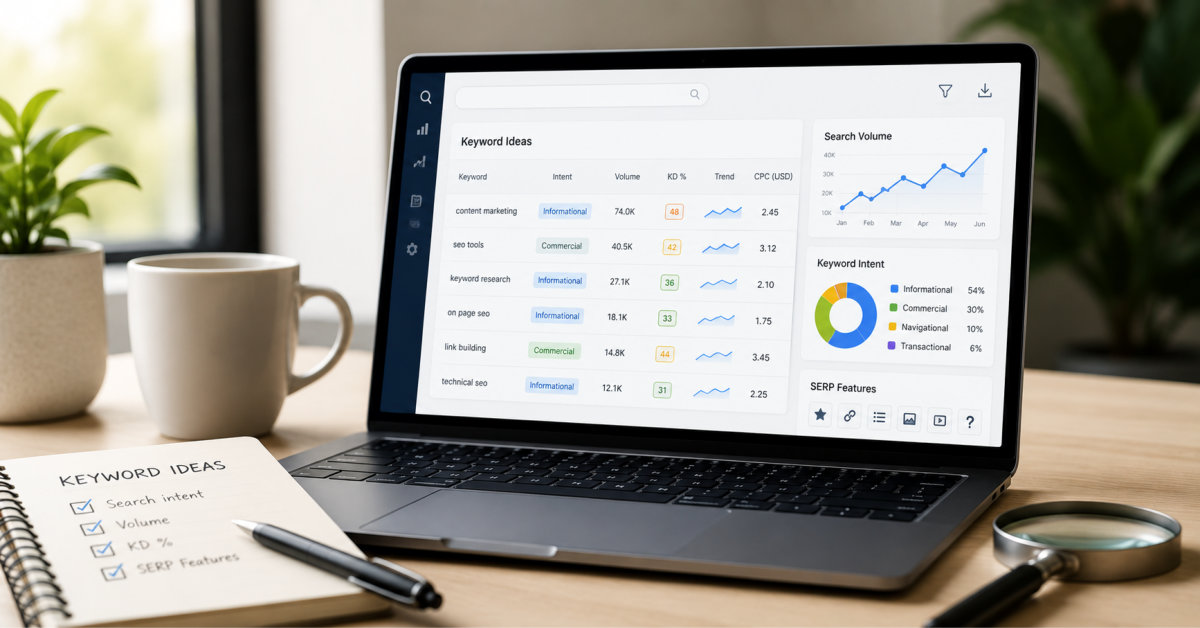
In 2013, the keyword tool meant a desktop widget that counted density and returned exact-match volumes, chasing a number Google would soon deprecate. The pattern rhymes. It rhymed again in the all-in-one suite era of 2017 to 2021, when keyword research tools became one tab inside a broader platform. Now, in the AI-search era, the question has moved from “how many people type this” to “what intent sits behind it, and does my content have a shot at the answer surface.” What is structurally different this time: the SERP itself generates prose, so the tool has to map AI Overviews and SERP features, not just rank strings.
For most teams the strongest all-round pick in 2026 is SE Ranking, because it pairs a large keyword database with intent tagging at ingest, SERP-feature data that includes AI Overviews, and API plus MCP access on every plan. One honest nuance: if your single priority is raw programmatic data at scale, a data-API-first option goes deeper on that axis. Everything else favors an integrated platform. The ranked list sits below, starting with SE Ranking’s keyword research module.
Yes, because the job changed shape rather than shrank. A modern keyword research tool no longer just returns volume; it maps intent, SERP features, and AI-answer presence so a team knows which queries are winnable and which are already absorbed into a generated answer. Free lookups exist, and they stay deliberately shallow.
Follow the incentive: a free keyword tool is a funnel, not a product, so it shows enough to interest you and little enough to frustrate you. The paid tier is where intent classification, historical trends, bulk analysis, and SERP-feature filtering live, the inputs that separate a defensible content bet from a guess. Heads of SEO are not paying for volume in 2026; they pay for the layer that says whether a query resolves to ten blue links or to an AI Overview that answers before anyone clicks.
Data breadth has largely converged. Most serious platforms index billions of keywords across the same major markets, so raw count no longer decides anything. What separates keyword research software in 2026 is workflow: intent at ingest, bulk analysis, clean export or API, SERP-feature filtering, and a handoff into content production.
The archive says every maturing tool category competes on integration once its data commoditizes, and search tooling is following that curve. Four categories now sit on the market. All-in-one platforms fold keyword research into ranking, auditing, and content workflow. Raw-data APIs hand you the numbers and expect you to build the interface. Question and PAA miners surface the phrasing real users type. Market-intelligence tools model demand at the domain level, not the query level. The differentiator that matters is how fast a classified, filtered keyword set becomes a brief a writer can act on, because that is where the production bottleneck sits.
Match the category to the team, not the feature list. All-in-one platforms suit in-house teams and agencies that want intent, SERP features, and content handoff in one place. Raw-data APIs suit organizations with engineering support. Question miners suit content-led teams. Market-intelligence tools suit strategy functions rather than day-to-day keyword work.
An in-house team at a mid-market or enterprise company usually wants an all-in-one platform, because the SEO lead is accountable for rankings, content velocity, and reporting at once, and context-switching taxes a small team. SE Ranking is the clearest exemplar: keyword research, SERP-feature data, and a Content Editor handoff live under one login. Agencies lean the same way. A team with data engineers can justify a raw-data API, while market-intelligence tools belong to the strategist mapping demand and category share, not the practitioner building next quarter’s calendar. Buy for the workflow your team actually runs, because a tool that fits the org chart gets used and one that fights it gets abandoned by Q3.
You are paying for the data layer, the classification layer, and the access layer, and the third hides the real cost differences. Entry tiers cluster between roughly $99 and $140 a month across the category. The structural line to watch is whether API access is included in the plan or billed as a separate, often much larger, contract.
Follow the incentive: a vendor that charges separately for API access has found a second revenue line, and it lands on exactly the teams that scale. That is the clause that turns a $129 sticker into a five-figure annual reality once a team automates. A head of SEO weighs cost against seats and export limits, not the headline number. The variance lives in what gets metered: API calls, historical depth, bulk limits, and seats. Read the metering, not the headline, because that is where a tool that looks affordable in January becomes an invoice you did not model in June.
The ranking weights all-round fit for heads of SEO and agency leads: data breadth, intent and SERP-feature depth, workflow, and how access is priced. One analyst’s read, not a lab benchmark, and I hold no vendor stake in any row.
| Rank | Tool | Category | What it’s best at | AI/SERP-feature data | Pricing |
| 1 | SE Ranking | All-in-one SEO + AI-search | Intent at ingest, SERP features, API + MCP on every plan | 35+ SERP features incl. AI Overviews | $129/mo (Core) |
| 2 | Ahrefs | All-in-one, backlink-led | Discovery via large link index | SERP overview, feature flags | $129/mo (Lite) |
| 3 | Semrush | Broad all-in-one | Wide toolset, Keyword Magic | SERP features, volume buckets | $139.95/mo (Pro) |
| 4 | Moz Pro | All-in-one | Priority scoring, Domain Authority | SERP features, moderate | $99/mo (Standard) |
| 5 | Serpstat | Value all-rounder | Clustering, SERP data, API | SERP data, uneven by region | $50/mo (Individual) |
| 6 | Similarweb | Market intelligence | Demand and traffic modeling | Market-level, not per-keyword | Free tier; enterprise custom |
| 7 | SpyFu | Competitor PPC + organic | Ad and organic history | Limited SERP depth | $39/mo (Basic) |
| 8 | DataForSEO | Raw-data API | Programmatic keyword/SERP data | Raw SERP feature data via API | Usage-based API |
An all-in-one SEO and AI-search platform that treats keyword research as the front of a workflow, not a lookup screen.
Best for: In-house SEO leads and agencies wanting intent, SERP-feature data, and content handoff under one login.
Standout feature: The database spans 5.5 billion keywords across 188 country databases, with history back to February 2020 and per-keyword difficulty, volume, CPC, competition, intent, and estimated traffic. Intent is classified at ingest, SERP-feature filtering covers 35+ features including AI Overviews, and bulk analysis handles 100 keywords per pass.
Pros:
Cons:
Pricing: Core $129/mo ($103.20/mo billed annually); Growth $279/mo ($223.20/mo annually).
What changes for practitioners: API-plus-MCP on every plan is the structural tell, removing the metering cliff that turns cheap entry tiers into large invoices once a team automates. For most in-house and agency teams the full keyword toolkit covers the workflow end to end. Google-only data is the real limit to weigh.
A backlink-led platform whose large index makes it strong for discovery, with a free Keyword Generator and Webmaster Tools as an on-ramp.
Best for: Teams whose keyword strategy is anchored in competitive backlink and content-gap discovery.
Standout feature: The link index feeds keyword discovery in a way few rivals match, so surfacing the terms a competitor ranks for, and the pages earning them links, happens in one motion. A free Keyword Generator and Webmaster Tools give a taste first.
Pros:
Cons:
Pricing: Lite $129/mo (Standard $249, Advanced $449).
What changes for practitioners: If your process starts from competitor link profiles, this fits the mental model well. Read the row and export caps on Lite first, since a discovery tool you cannot export from stalls at the handoff, and model the separate API line for automation.
A broad all-in-one with one of the wider toolsets in the category, anchored by the Keyword Magic Tool and a large database.
Best for: Teams wanting maximum surface area across SEO, PPC, and content in one subscription.
Standout feature: The Keyword Magic Tool sits on a large database and generates expansive keyword sets with grouping, suiting teams running research across many domains at once. Breadth is the pitch, reaching into PPC, content, and competitive analysis alongside keyword work.
Pros:
Cons:
Pricing: Pro $139.95/mo ($117.33/mo annual).
What changes for practitioners: Breadth is the reason to buy and to budget carefully, since seat costs compound and bucketed volumes add friction to keyword-first work. For a team wanting one tool across many jobs, the surface area earns its place.
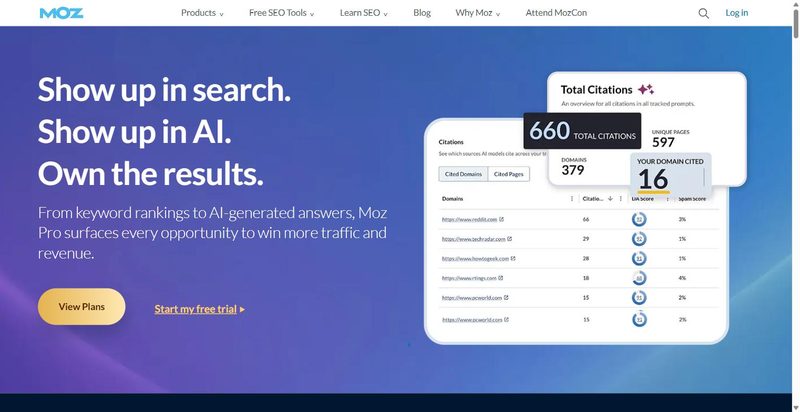
A long-standing all-in-one whose Keyword Explorer and Priority score help teams rank opportunities rather than just list them.
Best for: Teams that value opportunity scoring and a familiar, approachable research interface.
Standout feature: The Priority score blends volume, difficulty, and organic click-through into one number, turning a raw keyword list into a ranked queue faster than manual triage. Domain Authority, the metric Moz popularized, remains common industry shorthand.
Pros:
Cons:
Pricing: Standard $99/mo ($79/mo annual); Starter $49/mo.
What changes for practitioners: The Priority score is a real time-saver for triage, and the interface lowers onboarding cost for a growing team. The smaller index is the tradeoff on long-tail and non-US work, so it fits where clarity matters more than index size.
A value-oriented all-rounder that bundles keyword clustering, SERP data, and API access into an accessible package.
Best for: Teams wanting clustering and API access without stepping up to enterprise pricing.
Standout feature: Automated clustering groups a large keyword set by SERP similarity, shortening the path from raw list to topic map and brief. API access sits within reach of the standard plans rather than behind an enterprise wall.
Pros:
Cons:
Pricing: Individual $50/mo.
What changes for practitioners: Clustering plus reachable API access is a useful combination for teams building topic maps at scale. Test the regions you actually work in, because depth varies, and where it fits it delivers most of what the larger platforms do more lightly.
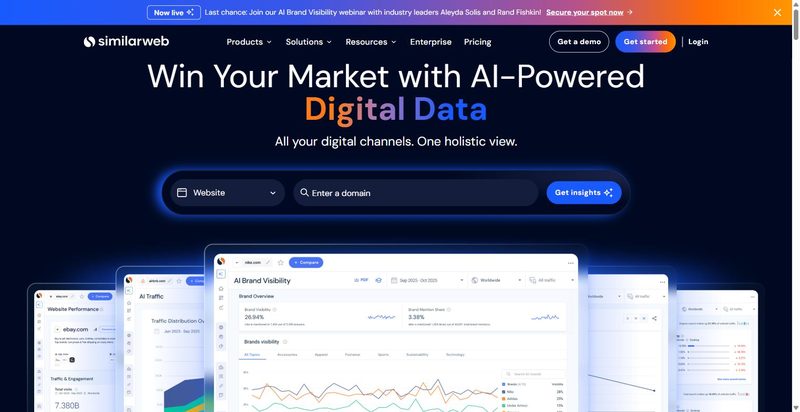
A market-intelligence platform that models demand and traffic at the domain level rather than the individual keyword.
Best for: Strategy and competitive-analysis functions mapping category demand rather than building content calendars.
Standout feature: The traffic and demand modeling estimates how audiences move across a market, answering category-share and competitor-momentum questions a keyword-level tool cannot. This is market intelligence first, keyword research second.
Pros:
Cons:
Pricing: Free limited tier; enterprise custom.
What changes for practitioners: Treat this as a demand and competitive-intelligence layer, not a keyword research tool; it earns its seat for strategists. Ask for pricing early, since the useful data sits in enterprise tiers, and pair it with a dedicated keyword platform.
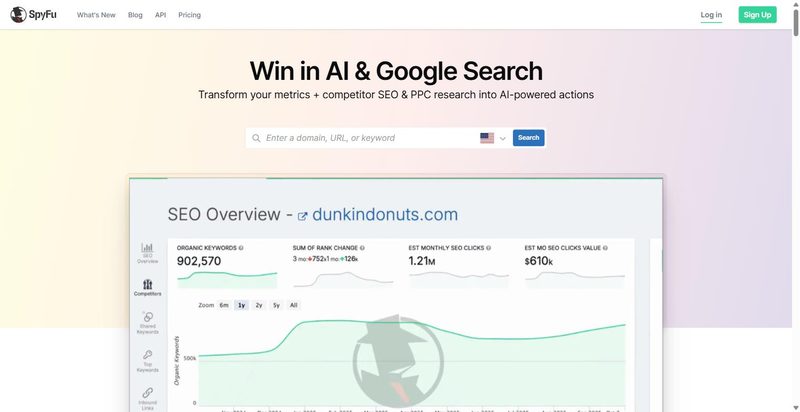
A competitor-focused tool built around PPC and organic history, priced at the accessible end of the category.
Best for: Teams reverse-engineering competitor paid and organic keyword history in US and UK markets.
Standout feature: The historical view of a competitor’s paid and organic keywords stretches back years, strong for reconstructing what rivals have tested and where they persisted. That competitive archive is the specialty, though the database is thin for a primary program.
Pros:
Cons:
Pricing: Basic $39/mo ($33/mo annual).
What changes for practitioners: Use it as a competitive-intelligence supplement, not the foundation of a research program. The US and UK strength is the geographic limit to plan around; as a second tool it earns a place, as a primary it falls short.
A raw-data API delivering keyword and SERP data programmatically, with no dashboard and no interface: a data pipeline, not a product you log into.
Best for: Organizations with engineering support that will build their own reporting on the data.
Standout feature: The API delivers keyword and SERP data, feature flags included, at the scale and granularity a data team needs to build its own tooling on its own terms. There is no UI by design; you buy a feed, not a product.
Pros:
Cons:
Pricing: Usage-based API, pay per request.
What changes for practitioners: This is the right tool only if you have engineers to build on it, the wrong one for everyone else. The pay-per-request model is honest and scales with use, and judged as a data pipeline it is the deepest option on its single axis.
For most teams the strongest all-round pick in 2026 is SE Ranking, because the category now rewards integrated workflow over any single data axis, and it carries intent at ingest, SERP-feature data with AI Overviews, and API plus MCP on every plan.
Skip the mismatches: do not buy a raw-data API like DataForSEO without engineers to build on it, and do not treat a market-intelligence tool as keyword research; demand modeling and query-level research answer different questions.
Two forecasts, labeled. Near-certain: SERP-feature and AI-Overview data becomes table stakes within two quarters, and any keyword research tool that cannot filter for answer-surface presence reads as dated by mid-2026. Likely: API-included pricing spreads as a competitive lever, as buyers now ask about metered access upfront. Speculative, and I’ll own it: intent classification, not volume, becomes the headline metric vendors lead with by year end. Volume was always the easy part.
A keyword research tool is software that finds the search terms an audience uses and reports metrics like volume, difficulty, cost per click, competition, and intent. Modern keyword research tools also map SERP features and AI Overviews, so teams can judge which queries still send clicks and which resolve inside a generated answer.
Free keyword tools, including Google’s own Keyword Planner and free generators from major platforms, return basic volume and idea data at no cost. They stay deliberately shallow because free tiers act as funnels to paid plans. For intent classification, SERP-feature filtering, and historical depth, a paid keyword research tool remains the practical choice for serious teams.
Yes. The job moved from volume lookup to intent, SERP-feature, and AI-answer mapping, and those layers sit behind paid tiers. Heads of SEO now pay for data that shows whether a query is winnable at all, which makes accurate keyword research software more valuable as generated answers absorb informational search, not less.