

Your ad costs are climbing, conversion paths are a tangled mess, and you’re done trusting last-click Google Analytics or messy Shopify reports. The real problem isn’t your channels. It’s that your core numbers are wrong, so you’re optimizing ad spend on guesswork, not ground truth.
I’m Steve Hutt from eCommerceFastlane. We exist to close these gaps for scaling Shopify brands—because better attribution means a better P&L. Today, we’re reviewing Littledata, a platform purpose-built to solve tracking pain for founders, operators, and agencies playing above the basics.
If you’re tired of wasting budget due to hidden tracking failures and tired reports, you’ll want to see what Littledata can really deliver. This review gives you hard proof, not hype, so you can make a smart, fast call.

When you’re weighing a data investment for your Shopify brand, choosing the right tool comes down to your goals, pain points, and operational reality. Littledata.io is not a mass-market solution. It’s a tool built for brands (and the agencies that serve them) who care about precise attribution and scalable growth. Your brand stage, resources, and technical appetite will decide if this is your ace-in-the-hole or a better fit down the road.
Let’s break down who gets the most ROI from Littledata—and who should probably look elsewhere, at least for now.
If you fall into any of these groups, you’ll see a clear, sustained value from Littledata:
Dig deeper into how Littledata powers reliable analytics across attribution channels on their Why Littledata page and compare the platform to alternatives for Shopify growth in their direct comparison guides.
Key Takeaways for the Right Fit:
Littledata isn’t right for everyone. Here’s who should probably wait or choose a lighter-touch tool:
See how Littledata stacks up against other platform options and where it offers unique value for Shopify brands in their feature comparison guides.
Merchants with 6+ months on the platform highlight three things: the drastic drop in tracking headaches (even with iOS 14+, ad blockers, and cookies in play), quick setup, and five-star customer support. However, those same brands warn that if you break a flow or pixel, you need someone on-call to fix issues—or you’re just throwing money at cleaner data you never act on.
The bottom line: If you’re a growth-minded Shopify brand tired of asking, “Why are our numbers off?” or fighting attribution wars between platforms, Littledata moves you to signal not noise. If you’re still getting your first repeat customers or just dabbling in paid ads, keep it simple for now.
For more details on how Littledata supports Shopify analytics maturity, visit the main Littledata site.
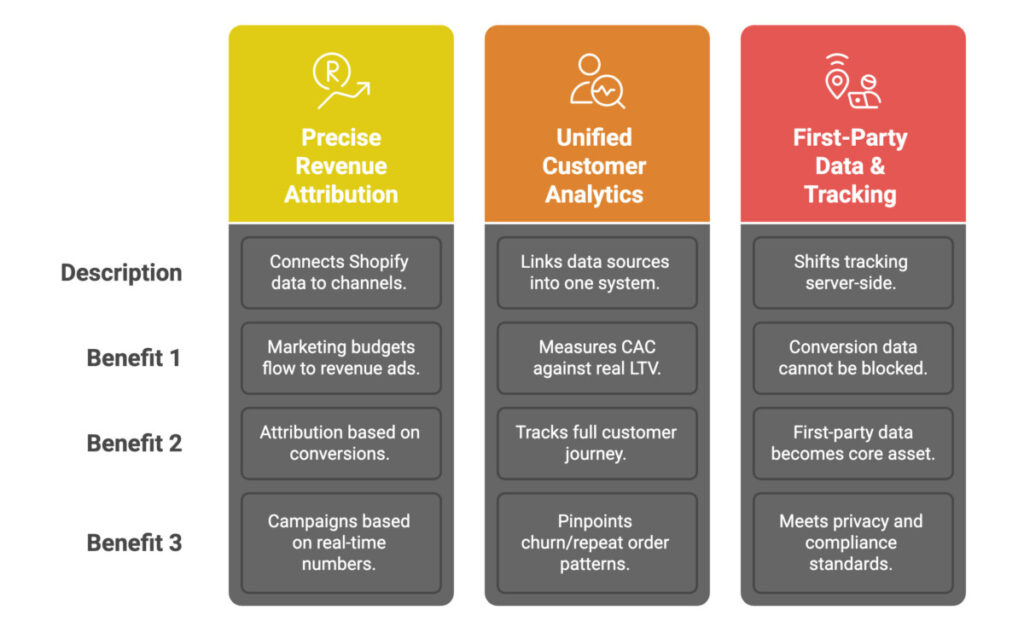
When you start scaling on Shopify, raw channel data and patchwork reporting become huge blockers. Reliable attribution, unified analytics, and future-ready tracking aren’t just “nice to haves” — they are what separate growth brands from those stuck on the sidelines. Littledata doesn’t just patch your reports. It changes the way you see, understand, and act on revenue signals, especially when every dollar counts for scaling up or reaching the next stage of efficiency.
Ask any brand running ambitious paid acquisition: the fastest way to waste money is guessing which ads actually convert. Littledata fixes that at the root. It connects first-party conversion data directly from Shopify into major channels like Google Ads, Meta, TikTok, and Klaviyo. The results are actionable:
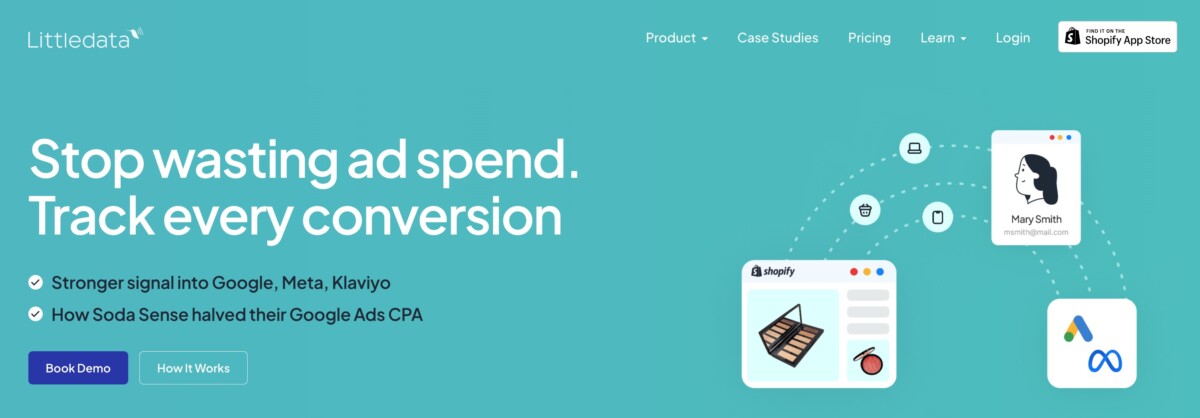
This isn’t theory. Brands like Soda Sense saw their Google Ads CPA cut in half after switching to Littledata’s server-side stream, which fed cleaner, event-level data to Google’s algorithm. Littledata also closes the loop for platforms hammered by iOS privacy changes and cookie restrictions. Consider Meta’s Event Match Quality Score: when you stream Shopify sales server-side, algorithms get a higher quality feed, making it easier for paid campaigns to reach real buyers, not just browsers.
For email, Littledata’s integration with Klaviyo means your abandonment flows don’t just guess who to target. Instead, it identifies real, opted-in customers—fueling retargeting and reclamation flows that recoup more revenue from the same audience. According to customer feedback, abandoned cart revenue often jumps when Littledata powers the trigger logic.
For more real-world proof, dig into the Littledata story around Shopify revenue tracking and see how brands are putting this capability to work.
It’s impossible to scale customer LTV if your analytics live in silos. Littledata links every source—storefront, subscription flows, recurring orders, and ad touchpoints—into a single, trusted reporting system. For power users, this means you can finally:
The payoff is clarity. Operators can segment customers based on high-intent actions, actual purchase events, or cohort behavior. Instead of making campaign decisions based on guesswork, you track how each improvement impacts real orders and subscriber retention.
Shopify Plus stores using Littledata unlock especially deep insights for recurring revenue. Gone are the days where failed renewals, one-off bulk buys, or partial refunds break your reporting. All conversion data feeds into Google Analytics 4 (GA4) with correct attribution—bringing you as close as possible to a true “source of truth” on revenue performance.
You’ll find detailed use cases and advanced breakdowns in Littledata’s full platform overview.
Scaling DTC brands know the risk of relying on cookies, browser-side pixels, and ever-changing privacy policies. Once easy wins in data collection are now fraught with loss after iOS 14, GDPR changes, and aggressive ad blockers. Littledata was built for this climate.
By shifting tracking server-side, Littledata ensures that:
As you prep for a future where third-party cookies are obsolete, server-side, first-party tracking lets your attribution and retargeting channels keep working. This isn’t just a technical fix—it’s a strategic move that reduces your customer acquisition costs and makes every workflow more reliable.
For a detailed breakdown on why top ecommerce brands are prioritizing first-party data and server-side tracking, check out this resource on why server-side tracking is vital for first-party data collection.
With easy implementation, real-time data integrity, and proactive customer support, Littledata positions brands to keep winning as the rules of ecommerce analytics keep changing.
Operational execution separates tools that look good in the app store from those that actually move your bottom line. Once you’re past the theory and convinced by the promise of clean attribution, the real work begins: how does Littledata fit into your daily stack, what’s the true cost, how quickly will your team run with it, and does the return match the spend and effort? Here’s what experienced Shopify operators need to know.
Littledata focuses on what matters most—clean, direct connections between Shopify, ad channels, and marketing automation. Instead of spreading itself thin, it offers plug-and-play integrations with the stack that growth brands rely on:
Operators tired of wrangling Google Tag Manager (GTM) scripts or fighting attribution gaps will appreciate that setup takes about 10-15 minutes. The experience is point-and-click, not dev-time heavy. The upshot: less firefighting, more focus on profit-driving actions. For a full list of integrations, check their integration page.
Growth teams know that true platform cost isn’t just the monthly bill. It’s hours saved, redundant tools cut, and the uplift in channel performance. Littledata’s pricing is deliberately flat and usage-based instead of nickel-and-dime chaos. Typically, you’ll find:
Compare this approach to the “Frankensteined” stack: managing separate attribution tools, heatmapping apps, dev resources patching GTM, data analysts troubleshooting mystery gaps. That hidden complexity often costs teams far more. For the latest pricing and to select the best plan for your scale, visit Littledata’s plan guide.
Let’s be clear—no modern analytics tool is a magic bullet without internal buy-in. The beauty with Littledata is in how quickly skilled operators can see value. Real-world feedback shows:
Long-term adoption sticks best when one team member “owns” analytics—triggering flows, validating conversions, and translating signal into strategy. Without that accountability, even the best stack gets dusty.
Operators want ROI on three fronts: do sales go up, do costs go down, and do decision-makers trust the numbers? Littledata ranks high for Shopify brands in all areas:
The trade-off? You need a dedicated analytics owner and a culture of rapid testing. If that’s your brand, the numbers—and the operational freedom—often speak for themselves.
Littledata carves its spot in the growth stack by focusing on integration, ownership, and real-world financial upside. For practical operators, that’s what matters.
Once you’ve sized up the tech and seen the data, the big question is simple: does Littledata move the needle for serious Shopify brands? Let’s break it down with honest pros, legitimate cons, and what to think about if you’re on the fence. This section puts real numbers and peer-tested insights right up front, helping you decide with the same clarity you use on channel spend or ops hires.
For scaling DTC brands and top-tier agencies, it isn’t about having the newest gadget—it’s about picking tools that make day-to-day operations smoother and provide a lasting advantage on the P&L.
What sets Littledata apart:
No solution fixes everything without trade-offs—you want those spelled out, not hidden in post-sale fine print. Here’s what seasoned teams report:
Littledata isn’t alone in the market, and the right call depends on where your brand sits and the goals you’ve set for this quarter. For brands specifically evaluating a switch from Elevar—particularly those frustrated by recent support quality issues—detailed feature and pricing comparisons can help clarify whether Littledata addresses your attribution gaps. If you’re weighing Elevar alternatives, Littledata’s server-side tracking approach and dedicated Shopify focus often deliver better results for scaling DTC brands.
Let’s compare the leading options:
| App/Platform | Best For | Key Trade-off |
|---|---|---|
| Littledata | Full-funnel, server-side attribution for Shopify, especially brands mixing paid + retention. | Fastest path to full attribution; requires analytics owner. |
| Klaviyo | Niche email/SMS flows, deep segmentation. | World-class messaging; weaker cross-channel attribution. |
| Triple Whale | Dashboard consolidation, creative analytics. | Strong for channel blend; less depth on first-party touchpoints. |
| Northbeam | High-end attribution modeling for advanced agencies. | Powerful, but can require more resources and onboarding time. |
If you want a more tactical guide on omnichannel strategy and how to choose, Shopify’s D2C strategy playbook is packed with scenario-specific frameworks.
Here’s what I’d share around the table with founders weighing a move:
For end-to-end guidance on building a data-first ecommerce strategy, Forbes’ ecommerce strategy guide is current and practical.
Bottom line: Littledata removes the guesswork from your P&L. It won’t “fix” weak creative or bad offers, but it gives the operators at the table the signal and control needed to back winners and drop losers in real time. Think of it as the analytics backbone you wish Shopify had out of the box—plug it in when you’re ready to scale with confidence.
Littledata stands out for scale-focused Shopify brands ready to stop guessing and start optimizing with accuracy. Reliable server-side tracking, seamless integration with core marketing tools, and responsive support take attribution from a constant frustration to a real strategic edge.
For brands running serious ad budgets or complex subscription flows, the improvement in data quality means smarter spend and fewer missed opportunities. You will get the most from Littledata if you commit an owner to analytics and have the appetite to act on what the numbers reveal.
If you’re at the point where every P&L decision counts and attribution mistakes cost real money, it’s time to make your analytics stack a strength, not a liability. Start with a trial, connect your store, and see firsthand how much cleaner signal can drive real lift. Already using Littledata? Share your best result or a tip for getting the most value in the comments—let’s keep raising the bar together.
Littledata is a Shopify analytics platform that provides accurate, server-side tracking and unified attribution data for DTC brands. It helps brands trust their numbers, make better marketing decisions, and avoid wasting money on unreliable reports or “last-click” guesswork.
Server-side tracking sends conversion and revenue data directly from your Shopify store to your ad platforms, bypassing browser issues like ad blockers and privacy changes. This leads to more reliable attribution, higher event match rates, and smarter budget decisions across Google, Meta, and Klaviyo.
Brands running serious paid campaigns, subscription flows, or multi-channel marketing gain the most from Littledata. If your team includes a dedicated marketer or agency focused on analytics and you’re growing past $100k per month, Littledata can unlock major improvements in data accuracy and ROI.
Yes, Littledata excels at connecting recurring orders and complex flows from Shopify and Recharge into your analytics stack. This gives brands a clear view of true lifetime value, reliable event tracking, and seamless reporting for high-repeat or subscription businesses.
Most brands report setup takes less than 30 minutes with little need for custom code. The app includes clear documentation and proactive customer support, so your team can troubleshoot issues quickly and get value fast, especially if someone owns analytics internally.
No, Littledata is not a campaign builder, but it improves the accuracy of triggers for email and SMS flows in Klaviyo. You’ll still need dedicated automation or messaging platforms, but Littledata powers their flows with more trustworthy trigger data.
Many Shopify brands believe platform or third-party reports show the full truth, even with iOS 14 privacy changes and ad blockers in play. The reality is most reporting misses conversions—Littledata fixes this at the source, ensuring you see real revenue, not partial data.
By providing cleaner attribution, brands can pause or double-down on campaigns based on actual conversions rather than guesswork. This means less wasted ad spend and more budget shifting to the channels truly driving revenue and customer growth.
Brands should have a marketing owner prepared to use and act on analytics insights. If no one is responsible for analytics or decision-making, even the best data can go unused, making any investment in tracking or attribution tools less valuable.
Ask how Littledata integrates with your exact tech stack, what support looks like during tracking breaks, and how competitors compare on cost and reliability. It’s also worth exploring if your brand is positioned to act on cleaner analytics or needs to first build internal expertise.




