

The brands that win on fulfillment speed are not the ones with the biggest budgets. They are the ones that removed the most distance between production and shipment.
A Shopify merchant I spoke with recently was losing sales on a trending design every single week. Not because demand was soft. Because her print partner was three states away and running a seven-to-ten day production queue. By the time her restock arrived, the moment had passed. She had the audience, the design, and the traffic. She just did not have the production speed to convert it.
This is the fulfillment problem that Arizona ecommerce brands selling custom apparel and merchandise face more often than they realize. The supply chain feels fine until it does not, and by the time it becomes visible as a problem, you have already lost the sales, the reviews, and in some cases, the customers. Fulfillment speed is not a logistics detail. It is a revenue variable.
Local DTF printing changes that equation in ways that are practical and measurable. Whether you are doing $10K months out of a home studio or $500K months with a warehouse operation, the logic is the same: shorter distance between production and shipment means faster turnaround, better inventory control, and a supply chain that bends without breaking when demand spikes unexpectedly.
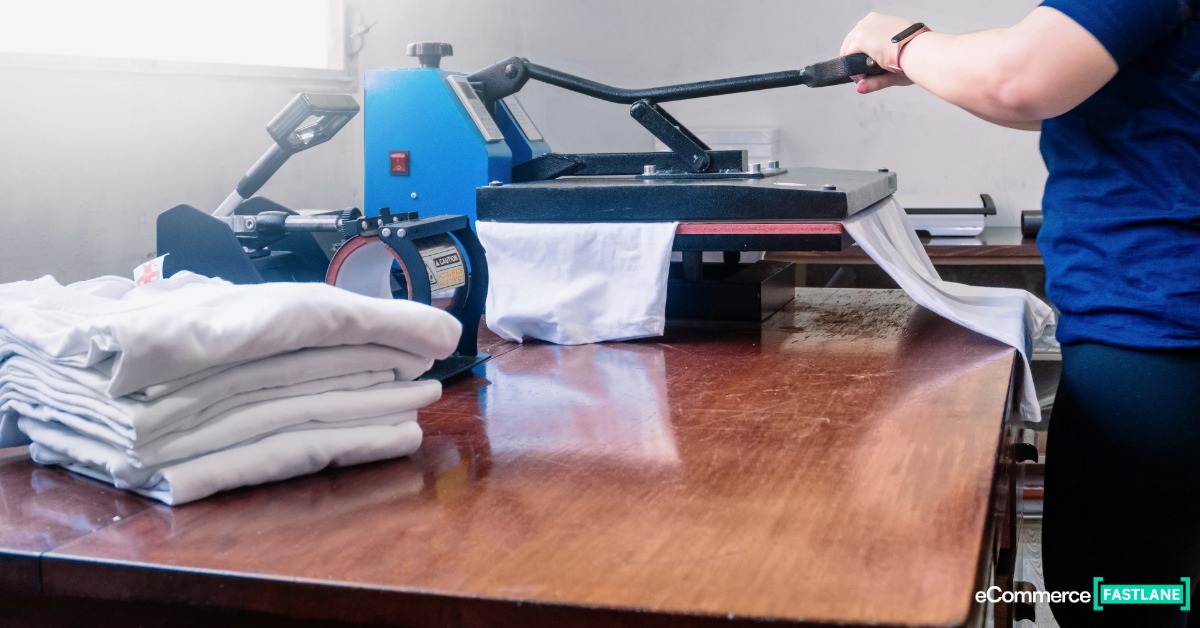
Direct-to-Film printing is a production method that transfers high-resolution designs onto garments and other substrates using a film transfer and heat application process. It does not require screens, setup plates, or bulk minimums. A design can go from file to finished garment in a fraction of the time that screen printing requires, with no meaningful quality tradeoff for most apparel applications.
For ecommerce brands, the operational implications are significant. Screen printing is optimized for large, predictable runs where setup costs are amortized across volume. DTF is optimized for flexibility. You can print one unit or one hundred with the same per-unit quality and without paying for setup time on a design that may or may not perform. This makes it the natural production method for brands that want to test new designs, respond to trends, or run limited collections without committing to inventory they might not sell.
The print quality holds up well across cotton, polyester, and blended fabrics. Wash resistance is strong when the transfer is applied correctly, and color accuracy is consistent across runs, which matters for branded merchandise where color fidelity is part of the brand identity. For a deeper look at how print-on-demand production models integrate with Shopify stores at different stages, the ultimate guide to print-on-demand for Shopify stores covers the setup, app integrations, and fulfillment options in detail.
The distinction that matters for Arizona brands specifically is the local versus remote production question. DTF technology is available from providers across the country and overseas. The advantage is not the technology itself. It is where the technology is located relative to your fulfillment operation.
Arizona’s geographic position in the Southwest makes it a natural distribution hub for regional and national shipping. Phoenix and Tucson both have strong carrier infrastructure, and the state’s road network connects efficiently to California, Nevada, New Mexico, and beyond. That infrastructure advantage is only fully realized, however, when production happens locally. If your garments are being printed in North Carolina or overseas before they reach your Arizona fulfillment point, you are paying for that geography in lead time every single order cycle.
Local DTF printing removes that distance. A design approved on Monday can be printed, quality-checked, and ready for pick-and-pack by Wednesday. For a brand running a Shopify store with automated order routing, that means a customer placing an order on Tuesday could realistically receive their item by Friday or Saturday with standard ground shipping. That is a customer experience that builds repeat purchase behavior. It is also a fulfillment standard that most brands relying on distant production partners cannot consistently achieve.
The restocking advantage is equally important. When a product sells through faster than expected, a local print partner can replenish within 48 to 72 hours rather than the one to three weeks that out-of-state or overseas production requires. For brands in trend-sensitive categories like fan merchandise, event apparel, or seasonal designs, that restock window is often the difference between capturing the demand spike and missing it entirely. Arizona brands partnering with regional providers like Custom Print AZ can build production timelines into their inventory planning that simply are not available to brands dependent on distant supply chains.
One of the less discussed benefits of local DTF production is what it does to your inventory planning accuracy. When production lead times are long and variable, forecasting becomes a guessing game. You are ordering inventory based on what you think demand will look like in two to four weeks, with limited ability to course-correct if you guess wrong. Overorder and you tie up working capital in unsold stock. Underorder and you miss sales and disappoint customers who waited.
Local production compresses that planning horizon to days instead of weeks. You can print in smaller, more controlled batches based on actual sales data rather than projected demand. If a design sells 40 units in the first 48 hours, you can have a restock in production the same day and on shelves within 72 hours. If a design underperforms, you have not committed to a large print run that you now have to discount or dispose of. This is the operational logic behind lean inventory models, and local DTF printing makes it practically achievable for brands at the $10K to $200K per month stage that cannot afford the carrying costs of large inventory buffers.
The financial impact compounds over time. Reduced overstock means lower storage costs. Faster restocking means fewer lost sales from stockouts. Tighter production batches mean less working capital tied up in inventory at any given moment. For brands managing cash flow carefully, these are not marginal improvements. They are structural advantages that show up in the P&L every month. If you want to go deeper on the inventory systems that support this kind of lean operation, the guide on mastering ecommerce inventory management covers the forecasting methods, safety stock calculations, and Shopify integrations that make it work in practice.
The product drop model has moved from streetwear into mainstream ecommerce because it works. Scarcity creates urgency, urgency drives conversion, and a sold-out product generates social proof that a fully stocked one never does. The problem for most brands is that executing a drop well requires production speed that traditional bulk printing cannot support. If it takes three weeks to produce a new design, you cannot run a drop strategy that responds to what is trending this week.
Local DTF printing changes that calculus. A brand working with a local Arizona print partner can go from design approval to a small batch of finished units in two to three days. That means you can run a limited drop of 50 to 100 units, sell through in 48 hours, gauge demand, and have a restock in production before the first buyers have even received their orders. You can test a new design without committing to a large run. You can collaborate with a local influencer on a limited collab drop and have product in hand within a week of agreeing on the design. You can create event-specific merchandise for a local market, festival, or sports moment while it is still relevant.
This flexibility also applies to design iteration. If a colorway is not selling, you can pivot to a different version without scrapping an existing inventory position. If a customer segment responds better to a different fit or fabric, you can test it in a small batch before committing. These are the kinds of product decisions that brands with long production lead times cannot make quickly enough to matter, and they are exactly the decisions that separate brands with strong gross margins from ones that are constantly discounting to clear slow-moving stock.
It is worth being direct about something that sometimes gets glossed over in conversations about production efficiency: speed without quality is a brand liability, not an asset. A garment that fades after three washes, a transfer that peels at the edges, or a print that loses color accuracy from run to run will generate returns, negative reviews, and customer churn that no fulfillment speed advantage can offset.
Professional DTF workflows address this through calibrated equipment, controlled curing temperatures, and consistent quality checks at the transfer and application stages. When evaluating a local print partner, the questions worth asking are specific: What curing temperature and dwell time do they use for heat application? How do they test wash resistance before releasing a new substrate combination? What is their process for color matching across repeat runs of the same design? A partner who can answer those questions with specifics is running a professional operation. One who cannot is a risk.
For Shopify brands doing $50K per month and above, it is worth requesting a production sample run before committing to a primary print partner relationship. Run the samples through three to five wash cycles, check color consistency across the batch, and evaluate the transfer adhesion on the specific fabric weights you use most. That 48-hour investment in evaluation protects you from a production relationship that costs you customers at scale.
The disruptions of the past several years have made one thing clear to every ecommerce operator who was paying attention: long, complex supply chains are fragile in ways that only become visible when something goes wrong. Port congestion, international freight delays, customs backlogs, and overseas production shutdowns have all caused real revenue damage to brands that had no alternative when their primary supply chain failed.
Local DTF production is a structural hedge against those risks. When your print partner is in the same state as your fulfillment operation, you are not exposed to international freight routes, port delays, or customs processing times. A disruption that would have taken a brand with overseas production three to six weeks to resolve can often be addressed in days when production is local. For brands that have experienced a supply chain failure firsthand, the value of that resilience is not abstract. It is the difference between a bad week and a quarter that does not recover. The full picture of how ecommerce supply chain challenges compound as brands scale is worth understanding before you need it, not after.
Arizona’s regional distribution infrastructure amplifies this advantage. The state’s position in the Southwest means that local production feeds directly into a carrier network that reaches major population centers in California, Nevada, Colorado, and Texas within two to three days via ground shipping. For brands with a West Coast or Southwest customer base, that combination of local production and strong regional logistics creates a fulfillment operation that is both fast and resilient.
The environmental argument for local production is straightforward and increasingly relevant to the customers buying from Shopify brands in the apparel and merchandise categories. Shorter supply chains mean fewer transportation emissions per unit. On-demand production means less overstock that ends up in landfill. Smaller batch printing means less waste from unsold inventory runs that get discounted and disposed of rather than sold at full margin.
For brands that have made sustainability part of their positioning, local DTF production is a concrete operational practice that supports that claim rather than a marketing statement without substance behind it. A customer who buys a garment knowing it was printed locally, in small batches, on demand, is receiving a product with a meaningfully lower environmental footprint than one produced overseas in bulk and shipped across multiple freight legs. That story is worth telling, and local production makes it true rather than aspirational.
For brands doing $100K per month and above, the sustainability angle also has a customer retention dimension. Research consistently shows that customers who align with a brand’s values have higher lifetime value and lower churn rates than those who are purely price-motivated. If your production practices genuinely support a sustainability narrative, communicating that in your post-purchase flow and product pages is a retention lever that costs nothing beyond the operational decisions you have already made.
DTF stands for Direct-to-Film, a printing method that transfers designs onto garments using a film intermediate and heat application. Unlike screen printing, DTF does not require screens, setup plates, or minimum order quantities. Screen printing is cost-effective for large, predictable runs because setup costs are spread across volume, but it becomes expensive and slow for small batches or frequent design changes. DTF produces comparable quality on cotton, polyester, and blended fabrics with strong wash resistance, and it can produce a single unit as efficiently as a hundred. For Shopify brands testing new designs or running limited collections, DTF is almost always the better production method because it removes the minimum order risk entirely.
The difference is significant and compounds across your entire order cycle. An out-of-state print partner typically adds seven to fourteen days of production and transit time before goods reach your fulfillment point. An overseas partner can add three to six weeks when production, quality control, and international freight are combined. A local Arizona DTF partner can have finished units ready for pick-and-pack within 48 to 72 hours of design approval. For a Shopify brand doing daily order volume, that difference translates directly into customer satisfaction scores, review ratings, and repeat purchase rates. It also means you can restock a selling product before the demand window closes rather than after it has passed.
Yes, when applied correctly by a professional operation. DTF transfers that are cured at the right temperature with the right dwell time produce prints that hold color and adhesion through repeated washing. The key variables are curing temperature, pressure consistency, and the compatibility of the transfer film with the specific fabric substrate. Before committing to a print partner, request a sample run and put the garments through five to ten wash cycles at normal temperatures. Evaluate color retention, edge adhesion, and print clarity after washing. A professional DTF operation will welcome that evaluation. The brands that have quality problems with DTF are almost always using an undercalibrated or underpriced partner, not the technology itself.
Start with four questions: What is their standard production turnaround from file approval to finished units? What fabric weights and substrate types do they regularly work with? How do they handle color consistency across repeat runs of the same design? And what is their process for resolving quality issues? Beyond those questions, request a sample production run before signing any agreement. Evaluate turnaround time against their stated timeline, assess print quality against your brand standards, and run the samples through wash testing. For brands doing $50K per month and above, also ask about their capacity during peak periods. A partner who can handle your normal volume but backs up during Q4 creates a fulfillment risk at exactly the wrong time of year.
It is one of the best production methods for executing drops well. A drop strategy requires the ability to produce small batches quickly, restock within days of selling through, and pivot to new designs without carrying obsolete inventory. Local DTF printing supports all three. A brand working with a local Arizona partner can go from design approval to finished units in two to three days, which means you can run a drop of 50 to 100 units, sell through in 48 hours, and have a restock in production before the initial buyers have received their orders. This is the kind of operational speed that turns a drop from a one-time event into a repeatable revenue model.





