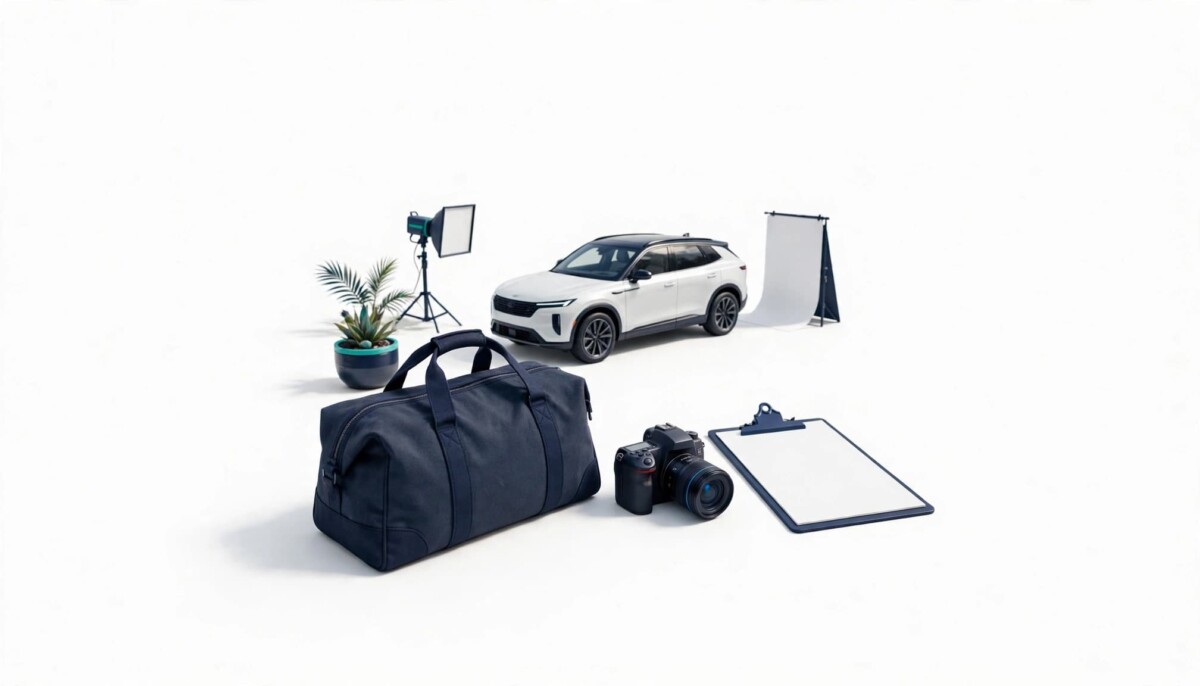
Rent a luxury car for an ecommerce photoshoot only when it clarifies the product story, fits a defined production budget, and has confirmed commercial-use permission. Evaluate the decision through usable assets and relevant campaign results, not the prestige of the vehicle.
The vehicle should make your product easier to understand, not become the product everyone remembers.
The shoot looks impressive on the mood board: a premium vehicle, a travel bag, and a polished arrival scene. The business question is less glamorous. Will the customer understand the bag better, and will the resulting assets justify the production?
For a founder protecting a limited budget, that question can rule out the rental immediately. For an established brand planning a specific lifestyle campaign, it creates a useful brief. Start there before reserving the backdrop.
A luxury car rental miami booking belongs in an ecommerce photoshoot only when the vehicle supports a believable product story, fits the production budget, and comes with confirmed permission for the intended use. Start with those conditions, not the badge on the hood.
Picture a luggage brand preparing a weekend-travel campaign. A vehicle can give the bag a useful setting: lifting it into a trunk, carrying it from a hotel entrance, or accessing a laptop between appointments. Those scenes connect a product to a customer situation. A dramatic car parked behind an unrelated skincare bottle provides a much weaker explanation of why someone should buy.
The distinction is product relevance versus borrowed prestige. Before contacting a supplier, finish this sentence: the vehicle helps our customer understand our product because it shows something specific about use, scale, access, or the intended setting. If the answer is simply that the campaign will look expensive, test a simpler concept first.
For a founder still establishing demand, clear product imagery should take priority over an elaborate backdrop. For an established operator with a defined customer, a distribution plan, and a specific creative hypothesis, a vehicle-based campaign can be considered as a controlled production investment.
The linked provider lists premium vehicles and delivery services on its website. That makes it a sourcing candidate, not a verified commercial-production partner. Confirm filming permission, the exact vehicle, delivery arrangements, and relevant contract conditions directly before committing crew time or treating any advertised service as part of your shoot agreement.
Choose a vehicle by the customer situation it helps explain, rather than by its status or apparent exclusivity. The best prop supports the merchandise without becoming the only thing the viewer remembers.
A travel-accessory brand might need a practical loading scene. An apparel label might need a believable arrival moment. A premium bag brand might need a close view showing how the product fits beside its owner. These are hypothetical creative applications, not examples of verified customer outcomes. Each starts with a product and a situation rather than a list of desirable cars.
Use the same discipline you would apply to planning authentic lifestyle photography: choose a setting your intended customer can understand, define the action, and make the merchandise visible. An aspirational setting can work, but it should still belong to the story your brand is telling.
Build a simple concept frame before booking. Photograph the product beside an ordinary parked vehicle or sketch the intended composition. Evaluate whether the product remains legible in the crop you plan to publish. If a bag disappears into dark upholstery, or reflective paint competes with your packaging, changing the vehicle may be less useful than changing the scene.
Treat exterior color, cabin materials, and available space as production requirements. Ask how substitutions are handled if the selected vehicle becomes unavailable. A replacement that is acceptable for transport may change the lighting, composition, and product contrast of an entire campaign. Put essential visual requirements into the booking discussion instead of assuming every premium vehicle will serve the same purpose.
Evaluate the shoot against its total production cost and planned usable assets, not the advertised vehicle rate alone. A low rental quote does not establish an economical campaign if delivery, crew delays, editing, or restricted usage undermine the result.
Build a written estimate that separates vehicle hire from delivery, collection, insurance arrangements, location access, talent, photography, editing, and contingency. Ask which charges apply to your specific booking. Keep refundable deposits separate from production expense while still accounting for the temporary cash commitment. Do not treat a supplier’s headline price as an all-inclusive production quote.
Here is a hypothetical planning calculation, not a Miami market-rate estimate. Assume a total shoot cost of $2,400 and a plan for 24 independently usable assets. The planned average cost is $100 per asset. If only eight assets meet the brief and have the required permissions, the realized average becomes $300. Those figures illustrate why approval criteria matter more than an impressive contact sheet.
Define usable before the camera comes out. An asset should show the product accurately, fit an intended placement, meet technical requirements, and have the permissions required for publication. Several near-identical crops should not automatically count as several distinct creative ideas.
Compare the vehicle concept with a simpler production that answers the same customer question. A studio session, customer setting, or existing location may produce enough context at lower complexity. If the brand is missing essential catalog images, a basic product photography setup may solve the more immediate problem. The correct budget is the one that buys useful evidence and deployable creative without displacing higher-priority work.
Confirm vehicle use, image licensing, location access, and relevant insurance arrangements before the shoot, because access to a car does not establish every right needed for an advertising campaign. Treat these as separate questions with separate written answers.
Ask the rental supplier whether the planned activity is permitted, including stationary photography, interior shots, moving footage, and any equipment attached to the vehicle. Describe the intended distribution, such as paid advertising, product pages, email, and organic social. Ask who may drive and what arrangements apply if the vehicle is only a stationary prop. Do not assume permission for one activity extends to all the others.
Separately, agree on the rights to the photographs. The U.S. Copyright Office explains that the photographer generally owns the copyright initially, with limited exceptions including qualifying works made for hire. Paying for a shoot is therefore not a reliable substitute for an explicit agreement on your permitted uses.
Discuss delivery of final files, editing rights, campaign channels, duration, and any geographic limits with the photographer. Ask a qualified professional to review unclear terms rather than relying on a verbal understanding. This article is a production-planning guide, not legal advice or an assessment of your coverage.
Visible trademarks and background material deserve attention too. The World Intellectual Property Organization’s overview of commercial photography explains that trademark concerns can arise when an image creates confusion about sponsorship or affiliation. Its guidance is general and jurisdiction-dependent, not clearance for a particular vehicle or campaign. When a concept depends on a recognizable third-party brand, obtain an appropriate review before publication.
Build the shot list around customer questions and distribution needs, then use the vehicle only where it adds context. This prevents a production day from turning into an attractive collection of car photographs with too little merchandise visibility.
Start with the purchase decision. A customer evaluating a bag may need to understand its size, opening, carry options, and compartments. A customer considering clothing may need a clear view of fit and movement. Decide which of those questions the vehicle scene actually answers. A trunk-loading sequence can demonstrate scale; a wide exterior shot may communicate little about the item itself.
Our guide to different types of ecommerce product photos distinguishes lifestyle imagery from detail, scale, and other supporting shots. Apply that distinction rather than expecting a single aspirational image to explain everything. Keep clear product views in the production plan even if the campaign’s most dramatic frame uses the car.
Plan the intended crops before shooting. A composition for a wide website banner may leave too little product detail when cut into a vertical ad. Give the photographer examples of actual placements and identify areas that need room for copy. Capture variations deliberately rather than hoping every frame can be repurposed later.
Avoid making the most complicated shot essential to the entire campaign. Plan a stationary version of the scene and a product-focused fallback that can be completed without the vehicle. Keep driving footage outside the plan unless a competent production team has established the appropriate permissions and safety arrangements. The priority is useful creative, not a more difficult shoot for its own sake.
Plan the Miami shoot around confirmed access, realistic timing, weather alternatives, and a fallback location rather than a list of recognizable backdrops. A location only helps when the team can use it safely and complete the intended work there.
Scout the actual site instead of choosing it from a social post. Check where the vehicle can legally stop, where the crew can work, and whether the property owner or relevant authority requires permission. Confirm requirements for the specific location and production rather than assuming that public visibility means unrestricted commercial use. Do not obstruct access or improvise a roadside setup to recreate a reference image.
Agree on a delivery window that allows inspection and setup before the first essential shot. Confirm who receives the vehicle, who can authorize changes, and how the supplier handles delays or substitutions. Ask about the return deadline and any overtime or collection implications in the actual contract. Keep those terms with the call sheet so the production lead is not reconstructing them during the shoot.
Give weather and lighting changes a practical response. An indoor product sequence, sheltered approved location, or rescheduling arrangement is more useful than a vague promise to adapt. Identify which shots require the vehicle and which can be completed while the team waits.
At handover, document vehicle condition with the supplier and follow the agreed process for reporting concerns. Keep food, styling materials, and equipment use within the supplier’s conditions. Assign a person to manage these logistics so the photographer and talent can focus on the brief. A reliable plan reduces avoidable uncertainty; it does not guarantee that a particular provider or location will meet your needs.
Judge the campaign by product communication, usable deliverables, and relevant commercial results, not by whether the vehicle makes the images look expensive. A polished production can still fail to answer the customer’s buying question.
Before launch, compare the finished creative with the brief. Can someone identify the product quickly? Does the scene show a useful context? Is the merchandise represented accurately? Can the team use the files in the planned channels without additional rights negotiations? If those conditions are missing, fix them before trying to solve the problem with more media spend.
For an established advertiser, compare the vehicle concept with a credible existing creative approach under reasonably similar conditions. Keep the offer, audience, landing page, and timing as consistent as the test allows. Record where those conditions differ. A result from a different promotion or audience cannot cleanly establish that the backdrop caused a performance change.
Track the measures that match the placement. An ad may be evaluated through qualified visits and purchase outcomes alongside attention metrics. A product-page image has a different job and should not be judged solely by social engagement. Small samples produce uncertain results, so avoid declaring a winner from a handful of purchases or a short burst of likes.
The strongest counterargument is straightforward: the same resources may produce more useful product demonstrations without a luxury vehicle. Keep that alternative in the decision. If the car adds a relevant customer setting and the production is controlled, it may earn its place. If it mainly adds visual status, remove the prop and strengthen the product story. The campaign should make your merchandise easier to understand, not make someone else’s vehicle the most memorable thing you sell.
These answers cover the main production, budgeting, and permission questions to resolve before booking a vehicle for an ecommerce campaign.
An ecommerce brand should consider a luxury car when the vehicle helps demonstrate a relevant customer situation and the production has a clear budget, distribution plan, and permissions. Travel accessories, apparel, and selected lifestyle products may have a credible use case, but category alone does not justify the expense. Write the intended product story first and compare it with a simpler setting. If the vehicle contributes only a sense of status, a product demonstration or customer-focused scene may provide a clearer reason to buy.
Do not assume an ordinary rental agreement permits your planned commercial photoshoot; ask the supplier to confirm the specific activity in writing. Explain whether the vehicle will remain stationary, whether interiors will appear, and whether footage will involve driving or attached equipment. Confirm permitted drivers and discuss relevant insurance arrangements with the appropriate provider. Separately address location access, the photographer’s license, and any third-party rights concerns. A booking confirmation is not a substitute for a production-specific understanding of what you may do.
Calculate cost per usable campaign asset by dividing the relevant total production cost by the number of distinct deliverables that meet your brief and have the required usage permissions. For a hypothetical shoot costing $2,400 that produces 24 usable assets, the average is $100 per asset. If only eight qualify, the average is $300. This is a planning calculation, not a market benchmark or a prediction of sales. Define usable deliverables before production and avoid inflating the count with near-identical crops.
Paying a photographer does not automatically mean your brand owns the copyright to the photos. The U.S. Copyright Office explains that the photographer generally starts as the copyright owner, with limited exceptions including qualifying works made for hire. Establish the actual arrangement in writing, including any ownership transfer or license, the permitted channels, editing, duration, and other restrictions. Obtain qualified advice when terms are unclear. Your vehicle rental, location access, and photography agreement address different parts of the production and should not be treated as interchangeable permissions.
Keep the product central by defining the buying question each image must answer, then limiting the vehicle to the context needed to answer it. Use a loading scene to show bag size or a close view to show an accessory in use, rather than relying only on wide vehicle shots. Capture clear detail and scale images separately. Review the intended mobile crop before approving the composition. If the product becomes difficult to identify or the customer remembers only the car, simplify the scene.