

The fastest way to become uncopyable isn’t a bigger ad budget or a flashier website. It’s letting your customers build the product themselves.
There are over 4 million active Shopify stores right now. Most of them are selling the exact same products, running the exact same playbook, and wondering why margins keep shrinking. But a growing segment of merchants has figured out something the rest are missing: the fastest way to become uncopyable isn’t a bigger ad budget or a flashier website. It’s letting your customers build the product themselves.
That single shift is quietly reshaping entire categories. Personalized jewelry. Made to order sneakers. Custom supplements. And nowhere is the momentum more obvious than in the corporate and events space, where branded merchandise has grown into a multi-billion dollar industry built almost entirely on customization. The brands winning here aren’t competing on price or speed. They’re competing on something Amazon structurally cannot replicate: the ability to make every order feel like it was created for one specific person or one specific moment.
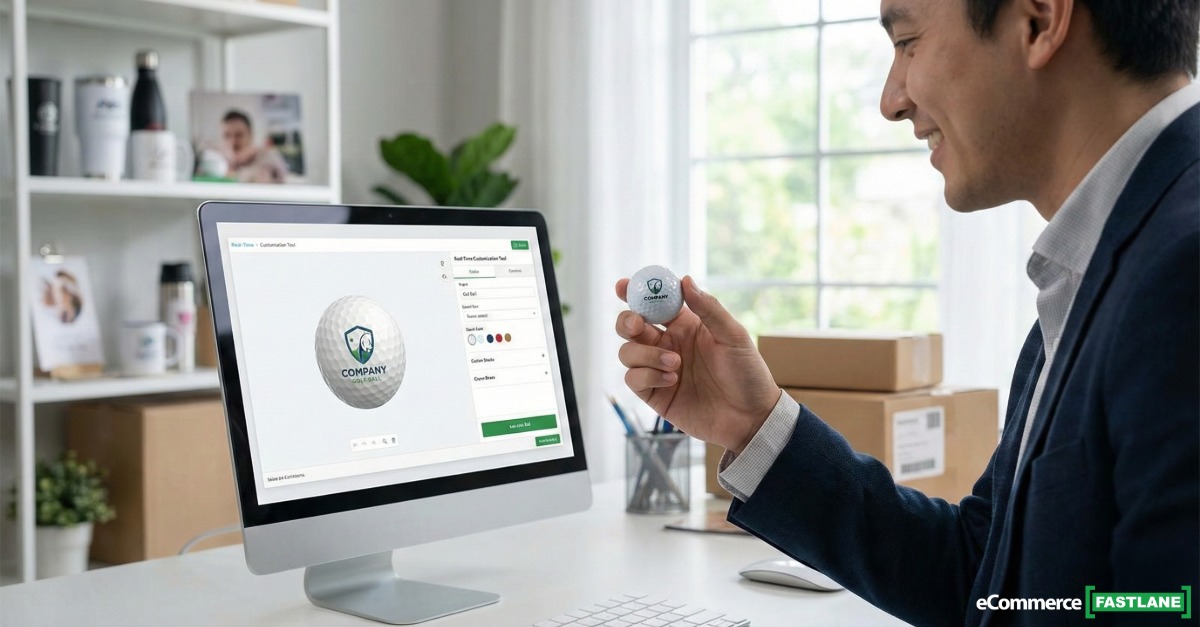
Generic products are a race to the bottom on price. Custom products flip that dynamic entirely. When a customer uploads their company logo and sees it rendered on a product in real time, they’re no longer comparison-shopping — they’re invested in the experience. That emotional investment translates directly into higher average order values, lower return rates, and stronger repeat purchase behavior.
The data backs this up. Deloitte research found that one in five consumers who expressed interest in personalized products were willing to pay a 20 percent premium for them. In the B2B space, that premium is even more pronounced because the buyer isn’t spending their own money — they’re spending a marketing or events budget, and the perceived value of a branded item far exceeds its unit cost.
This is why niche e-commerce stores that specialize in customization consistently outperform generalist competitors. They’ve built their entire fulfillment pipeline around handling one-off orders with unique artwork, variable quantities, and tight deadlines. A general retailer bolting on a “personalize it” option as an afterthought can’t match the speed, quality, or customer experience of a purpose-built operation.
The promotional golf products market is a case study in how customization drives e-commerce success. Every year, thousands of companies host golf tournaments, client outings, and charity events — and nearly all of them need branded merchandise. Golf balls with a company logo, tees printed with an event name, towels embroidered with a sponsor’s brand. These aren’t impulse purchases. They’re planned, budgeted, and reordered year after year.
Retailers like Custom Made Golf Events (custommadegolfevents.com) have built their entire business model around this demand for custom logo golf balls and tournament supplies. Rather than trying to compete with Amazon on generic golf accessories, they’ve carved out a defensible niche by offering deep customization options — full-color logo printing, brand-name ball selection from Titleist to Callaway, and the kind of hands-on service that corporate buyers expect when placing orders for hundreds of units.
The lesson for other e-commerce entrepreneurs is clear: find a product category where personalization is the default expectation, not an add-on, and build your operations around delivering it better than anyone else.
If you’re considering building or pivoting toward a customization-focused online store, these are the operational foundations that separate the winners from the rest.
First, invest in a visual proofing experience. The single most important conversion driver for custom product retailers is letting the customer see exactly what they’re going to get before they commit. This means building or licensing a product designer tool that renders logos, text, and artwork on the actual product in real time. Stores that rely on “submit your artwork and we’ll send a proof in 24 hours” lose buyers to competitors who show an instant preview.
Second, master the fulfillment complexity. Custom orders are inherently more complex than shipping a standard SKU. Every order has unique artwork, specific color requirements, and often a hard deadline tied to an event date. The retailers who thrive in this space have built internal workflows — or partnered with print providers — that can handle this variability without sacrificing turnaround time. Rush production options aren’t a luxury; they’re a competitive necessity.
Third, build for repeat business from the start. The most profitable custom product retailers aren’t chasing one-time buyers. They’re building systems to capture and retain corporate accounts that reorder quarterly or annually. Saved artwork files, dedicated account contacts, volume pricing tiers, and reorder reminders are the infrastructure that turns a single golf tournament order into a decade-long customer relationship.
One of the underappreciated advantages of customization-first e-commerce is that it naturally serves both business and consumer buyers through the same storefront. A company ordering 500 logo golf balls for a corporate retreat and an individual ordering a dozen personalized balls for a retirement gift are both looking for the same core capability — they just differ in quantity and budget.
Smart retailers structure their product pages, minimum order quantities, and pricing to accommodate both segments without creating a confusing user experience. The B2B buyer sees bulk pricing, logo upload tools, and corporate-friendly payment terms. The B2C buyer sees lower minimums, text personalization options, and gift-oriented messaging. Same products, same fulfillment pipeline, two revenue streams.
Perhaps the most compelling reason to pursue a customization-focused e-commerce strategy is the competitive moat it creates. Amazon and other marketplace giants are optimized for standardized, high-volume SKUs. Their infrastructure isn’t designed for one-off logo printing, rush production, and the consultative sales process that corporate buyers require.
This means that a well-run niche customization retailer isn’t just differentiated — it’s protected from the competitive threat that keeps most e-commerce entrepreneurs up at night. When your entire business is built around doing something that the biggest players structurally cannot do well, you’ve found a sustainable position in the market.
The e-commerce brands that will thrive in the next decade aren’t the ones with the most products. They’re the ones that make the buying experience feel personal, deliver on the promise of customization without compromise, and turn that capability into a relationship that keeps customers coming back.
Customization creates a competitive moat that marketplace giants like Amazon cannot easily replicate. When customers personalize products, they become emotionally invested in the experience, leading to higher average order values, lower return rates, and stronger repeat purchase behavior. Research shows one in five consumers are willing to pay a 20% premium for personalized products.
The three pillars are: 1) Visual proofing experience – letting customers see their customized product in real-time before purchase, 2) Mastering fulfillment complexity – building workflows that handle unique artwork and tight deadlines without sacrificing turnaround time, and 3) Building for repeat business – creating systems like saved artwork files and volume pricing that turn one-time buyers into long-term accounts.
Customization naturally serves both business and consumer buyers through the same storefront. B2B buyers see bulk pricing, logo upload tools, and corporate payment terms, while B2C buyers see lower minimums, text personalization, and gift-oriented messaging. This dual approach uses the same products and fulfillment pipeline to serve two revenue streams effectively.
The promotional golf products market demonstrates how customization drives repeat business. Corporate buyers order branded golf balls, tees, and towels for annual tournaments and events. These purchases are planned, budgeted, and reordered year after year, creating long-term customer relationships rather than one-time transactions.
Amazon and marketplace giants are structurally optimized for standardized, high-volume SKUs. Their infrastructure isn’t designed for one-off logo printing, rush production, and the consultative sales process that corporate buyers require. This creates a sustainable competitive advantage for niche customization retailers.





